

Hair loss is often described as a problem of “weak roots,” but the biology behind hair growth is far more complex. Each hair follicle is a living mini-organ that depends on communication between stem cells, dermal papilla cells, blood vessels, hormones, growth factors, and surrounding tissues.
This complexity has led researchers to explore regenerative biology as a potential way to improve hair growth. One of the most interesting areas is the use of stem cells and stem-cell-derived factors to influence the hair follicle environment.
But can stem cells actually reactivate dormant hair follicles?
The answer is promising but not yet as simple as many advertisements suggest. Research has reported improvements in hair density and thickness with several stem-cell-derived approaches, but protocols vary considerably and larger, longer-term studies are still needed.
What Are Hair Follicle Stem Cells?
Hair follicles contain their own populations of stem and progenitor cells. These cells participate in the normal cycling and regeneration of the follicle.
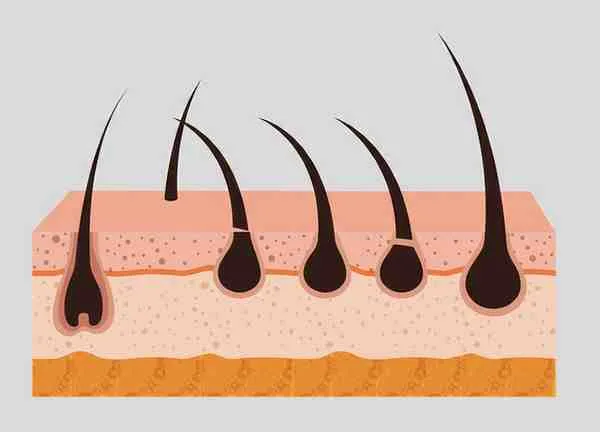
A healthy follicle repeatedly moves through different phases:
- Anagen: active hair growth
- Catagen: a transitional phase
- Telogen: resting phase
- Exogen: shedding of the hair shaft
The follicle does not simply “switch off.” Instead, its activity is controlled by a complex network of cellular signals.
Researchers are particularly interested in the stem-cell populations around the follicular bulge and the interaction between these cells and the dermal papilla.
What Does “Dormant Hair Follicle” Really Mean?
The term dormant follicle is commonly used in hair-restoration discussions, but it can mean different things.
A follicle that is temporarily resting may still be biologically active and capable of producing another hair during a subsequent growth cycle.
However, a follicle that has undergone severe miniaturization or has been permanently destroyed is a different situation.
This distinction is extremely important.
Regenerative treatments may influence follicles that remain biologically viable, but it should not be assumed that every completely bald area contains thousands of intact follicles waiting to be “woken up.”
How Could Stem Cells Support Hair Growth?
Stem-cell-based approaches are being investigated because they may influence the follicle through several biological mechanisms.
1. Growth-Factor Signaling
Stem cells and their surrounding environment can produce signaling molecules that communicate with nearby cells.
Some of these signals may influence follicular activity, blood-vessel formation, cell survival, and tissue repair.
Research into mesenchymal stem-cell-derived therapies has particularly focused on these paracrine effects, where secreted factors influence neighboring cells rather than the transplanted cells simply becoming new hair follicles themselves.
2. Supporting the Dermal Papilla
The dermal papilla plays an important role in regulating hair-follicle growth.
Researchers are studying whether regenerative signals can improve the interaction between dermal papilla cells and follicular stem/progenitor cells.
This is one reason stem-cell-derived therapies are being investigated for androgenetic alopecia.
3. Influencing the Hair-Growth Cycle
One area of interest is the transition from the resting phase toward the active growth phase.
Experimental evidence suggests that some stem-cell-derived factors may influence pathways involved in this transition, including Wnt/β-catenin signaling.
However, biological activity in experimental models should not automatically be interpreted as guaranteed hair regrowth in humans.
What Types of Stem Cells Are Being Studied?
“Stem cell therapy” is not one single treatment.
Researchers have investigated several sources, including:
Hair follicle-derived stem cells
These cells originate from the hair follicle itself and are of interest because of their direct relationship with follicular regeneration.
Adipose-derived stem cells
These are associated with fat tissue and are being studied extensively because adipose tissue contains cells and signaling molecules with regenerative properties.
Mesenchymal stem cells
Mesenchymal stem cells are being investigated for their ability to influence tissue repair and cellular signaling.
Stem-cell-derived secretome
Instead of introducing whole cells, researchers are also studying the substances released by stem cells, including growth factors, cytokines, and extracellular vesicles.
This cell-free approach is particularly interesting because some of the observed effects may come from the signals produced by stem cells rather than the stem cells themselves.
Can Stem Cells Create New Hair Follicles?
This is where expectations need to remain realistic.
Regenerating an entirely new, fully functional human hair follicle is considerably more complicated than stimulating an existing follicle.
Hair follicles require coordinated interaction between multiple cell types and signaling pathways. Researchers are investigating follicle reconstruction, organoids, stem-cell induction, and even bioprinting, but complete functional follicle regeneration remains a major scientific challenge.
Therefore, stimulating an existing miniaturized follicle and creating a completely new follicle are two very different goals.
What Does the Clinical Evidence Show?
There is growing clinical research, but the evidence is still developing.
A systematic review published in 2023 included 15 studies involving 653 people with androgenetic alopecia. The authors reported improvements in hair density across different stem-cell approaches but emphasized that the findings needed confirmation in larger and more representative studies.
A 2024 systematic review focused specifically on randomized controlled trials and identified 12 trials involving 514 patients. It found that cellular and cell-free stem-cell-derived approaches showed potential for improving hair regeneration and density, while also noting that some benefits may be temporary and that treatment protocols need further optimization.
More recent research continues to investigate adipose-derived stem-cell secretomes and their potential effects on follicular signaling. A 2026 systematic review described promising experimental and preliminary clinical findings but also highlighted major differences in production methods, doses, and study designs.
Stem Cells and Exosomes: Are They the Same?
No.
The terms are sometimes used interchangeably in hair-treatment marketing, but they describe different things.
Stem cells are living cells capable of self-renewal and, depending on their type, differentiation or signaling functions.
Exosomes are extracellular vesicles released by cells. They can carry biological molecules and participate in communication between cells.
Researchers are investigating whether exosomes and other stem-cell-derived products can influence the hair follicle without directly transplanting stem cells.
The clinical evidence for these approaches is still evolving, and the quality and standardization of commercial treatments can vary.
Can Regenerative Biology Help Miniaturized Hair?
This is one of the most interesting possibilities.
In pattern hair loss, susceptible follicles can gradually become smaller and produce thinner, shorter hairs.
A regenerative approach aims to improve the biological environment surrounding the follicle rather than simply covering the area cosmetically.
Researchers are investigating whether regenerative signals can:
- Support follicular stem-cell activity
- Influence dermal papilla function
- Improve the follicular microenvironment
- Encourage the anagen growth phase
- Support blood-vessel formation
- Reduce unfavorable cellular signaling
- Improve hair density and shaft thickness
These mechanisms are scientifically plausible and are being actively studied, but the response will depend on the condition and remaining viability of the individual follicles.
What About Gene Biohacking?
Gene biohacking is another emerging concept in regenerative hair medicine.
Hair growth is controlled by numerous biological pathways rather than one single “hair-growth gene.” Researchers study signaling pathways involving processes such as Wnt/β-catenin, growth factors, cellular metabolism, inflammation, and tissue regeneration.
The goal of a biologically informed approach is to understand which pathways influence follicular activity and how the surrounding environment might be modified.
However, it is important to distinguish research into molecular pathways from proven clinical gene-editing treatments for hair loss.
At present, claims that lifestyle changes or a particular supplement can simply “switch on” specific hair-growth genes should be treated cautiously unless supported by appropriate human clinical evidence.
Can Stem Cells Replace a Hair Transplant?
Not necessarily.
A hair transplant and regenerative therapy address hair loss in fundamentally different ways.
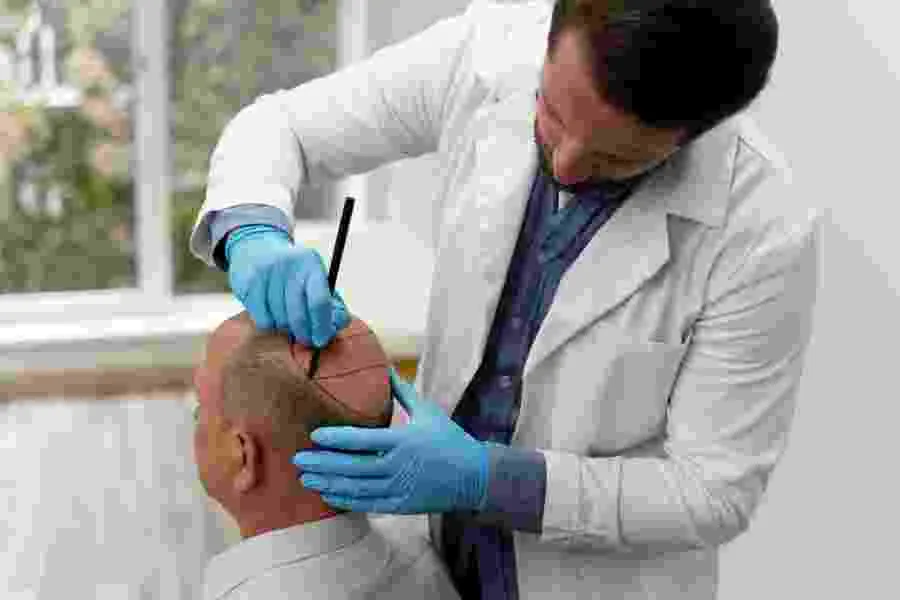
A transplant physically moves viable hair follicles from a donor region to an area where density has been lost.
Regenerative approaches aim to improve the biological activity of existing follicles or their surrounding environment.
This means they may eventually become complementary rather than mutually exclusive approaches.
A 2024 systematic review specifically suggested that regenerative treatments could potentially serve as adjuncts to traditional hair transplantation, although further research is required.
When Might Regenerative Treatment Be More Relevant?
The potential role of regenerative treatment depends on the condition of the scalp and follicles.
It may be particularly interesting when there are:
- Miniaturized hairs
- Reduced density
- Early or moderate pattern hair loss
- Existing but weakened follicles
- Areas where follicular activity remains
However, an area with complete and long-standing follicular loss may require a different strategy.
A detailed scalp assessment is therefore more useful than simply assuming that every thin area contains dormant follicles.
Where Does FuseHair Transplant Fit In?
fusehair transplant combines the concept of surgical hair restoration with an interest in regenerative approaches to hair biology.
The FuseHair website describes FUE/FUSE transplantation and regenerative techniques as part of its hair-restoration approach. Its published material also discusses the use of growth-factor-based approaches alongside transplantation.
However, regenerative therapy should not be presented as a guaranteed way to restore every lost follicle.
The appropriate strategy depends on factors such as donor availability, the pattern and extent of hair loss, follicular miniaturization, scalp condition, age, and the individual's treatment goals.
Choosing a Hair Transplant Doctor in Delhi
Patients researching the best hair transplant doctor in delhi should look beyond a simple online ranking.
Important questions include:
Who actually performs the procedure?
Ask whether the doctor personally performs key surgical steps or whether significant portions are delegated.
How is the donor area assessed?
A good evaluation should consider the quality and long-term stability of donor follicles rather than focusing only on the number of grafts.
Is the diagnosis clear?
Hair loss can have different causes. A treatment plan should be based on the actual diagnosis rather than simply treating the visible bald area.
What are the realistic expectations?
A consultation should explain what can reasonably be achieved with existing follicles, regenerative approaches, or transplantation.
FuseHair's consultation material emphasizes questions about who performs the surgery, donor density, treatment planning, and realistic expectations.
Are Stem Cell Hair Treatments Safe?
Safety depends heavily on the specific treatment, source of cells, preparation method, dose, administration technique, and clinical setting.
The published randomized-trial review found generally favorable safety findings across the studies it evaluated, but the researchers also emphasized variability between protocols and the need for further research.
A recent review of regenerative therapies also highlights concerns surrounding inconsistent protocols, limited long-term data, and the evolving regulatory landscape.
Patients should therefore ask exactly what is being administered rather than accepting the broad label “stem cell treatment.”
The Future of Hair Regeneration
The future of hair restoration may involve a combination of approaches rather than one universal treatment.
Scientists are investigating:
- Hair follicle stem cells
- Mesenchymal stem cells
- Adipose-derived cells
- Stem-cell secretomes
- Extracellular vesicles
- Dermal papilla regeneration
- Tissue engineering
- Hair-follicle organoids
- Bioprinting
- Molecular signaling pathways
The ultimate goal is not simply to move existing hair from one location to another but to understand whether damaged or miniaturized follicles can be biologically restored.
Research into functional hair-follicle regeneration is advancing, but complete regeneration of human follicles remains technically challenging.
Frequently Asked Questions
Can stem cells reactivate dormant hair follicles?
They may influence the activity of viable or miniaturized follicles through cellular signaling and growth factors, but there is currently no basis for saying that stem-cell therapy can reliably reactivate every dormant follicle.
Can stem cells create completely new hair follicles?
Researchers are working on follicle regeneration and tissue engineering, but creating fully functional new human hair follicles remains an unresolved scientific challenge.
Are stem-cell hair treatments proven?
Clinical studies are encouraging, but the field is still developing. Different studies use different cell sources, preparations, doses, and treatment protocols, making direct comparisons difficult.
Can regenerative treatment replace a hair transplant?
Not necessarily. Regenerative treatments and transplantation work differently. In suitable patients, future treatment strategies may combine regenerative approaches with transplantation rather than replacing one with the other.
Does every bald area contain dormant follicles?
No. Some areas may contain miniaturized or inactive follicles, while long-standing hairless areas may have significantly reduced or absent viable follicles. Individual assessment is necessary.
Final Thoughts
Stem cells and regenerative biology represent an exciting area of hair-restoration research, but they are not a magic switch for hair growth.
The strongest scientific interest currently centers on how stem cells, growth factors, extracellular vesicles, and follicular signaling can influence existing hair follicles and their surrounding environment.
Clinical studies have reported improvements in hair density and thickness, but treatment protocols remain heterogeneous and long-term evidence is still developing.
The future may therefore be less about choosing between regenerative medicine and hair transplantation and more about understanding which follicles can still respond biologically and which areas require physical restoration.
For anyone considering fusehair transplant or researching the best hair transplant doctor in delhi, the most important first step is a detailed assessment of the scalp, donor area, follicular condition, and pattern of hair loss. Regenerative biology can be a promising part of that conversation—but realistic expectations should remain central to any treatment plan.


























Sign in to leave a comment.