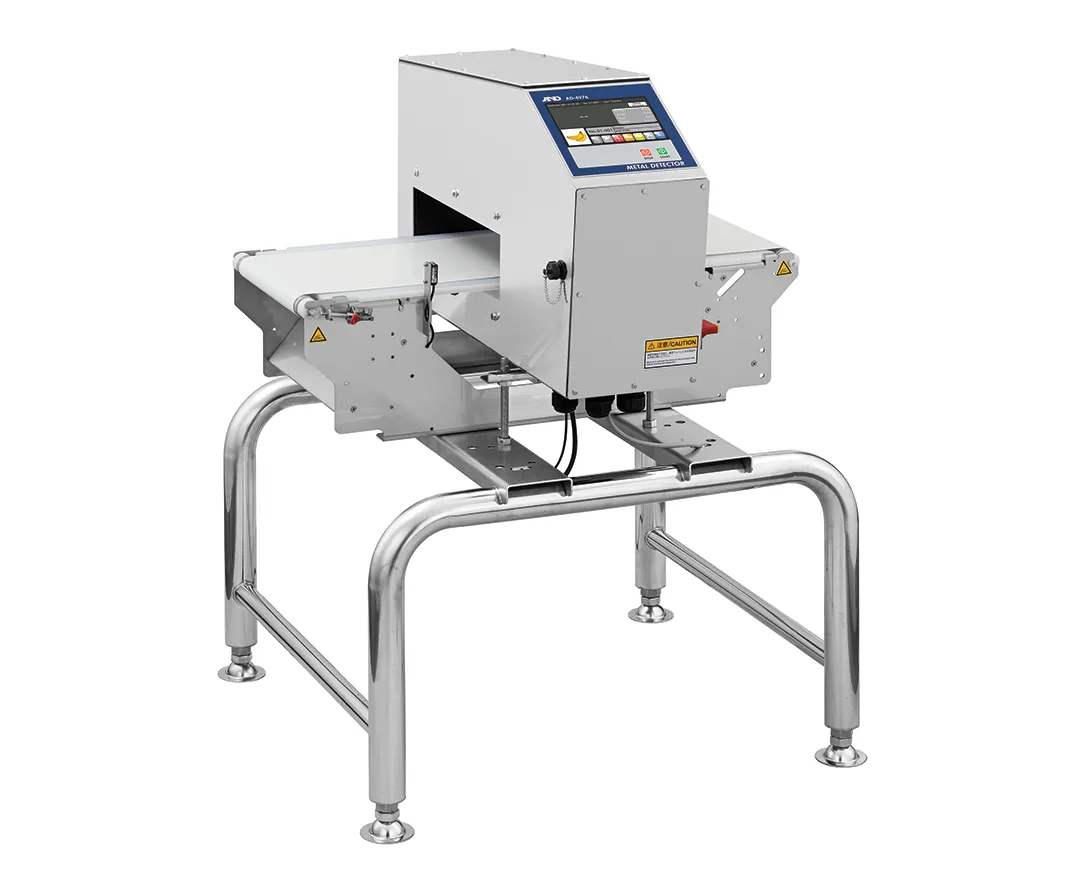

Industrial metal detectors play an important role in product safety and quality control. They are widely used in food manufacturing, pharmaceuticals, packaging and other production environments to identify unwanted metal contamination before products reach customers.
However, installing a metal detector is only the beginning. Regular metal detector servicing helps maintain detection performance, identify developing faults and support reliable operation. A professional service process involves more than simply testing whether the detector can find a metal sample. It includes inspection, cleaning, testing, adjustment, documentation and verification.
Step-by-step Guide to a Professional Industrial Metal Detector Service process:
1. Review the Equipment and Service History
A professional service visit should begin with a review of the metal detector's history.
The technician may check:
- Equipment model and serial number
- Previous service reports
- Calibration and verification records
- Previous faults or repairs
- Product applications
- Detection sensitivity settings
- Reject system configuration
- Previous contamination incidents
Understanding the equipment's history helps the technician identify recurring problems and determine whether performance has changed over time.
For food manufacturers, this information can also help demonstrate that the metal detection system is being maintained as part of the site's quality and food safety procedures.
2. Conduct a Visual and Physical Inspection
The next step is a thorough inspection of the metal detector and surrounding production equipment.
The technician checks the detector head, conveyor, belt, controls, sensors, cables, connections and reject mechanism for signs of damage or wear.
Particular attention should be given to areas where product residue, moisture or cleaning chemicals could accumulate.
Mechanical problems can sometimes cause false rejects or inconsistent performance even when the detector electronics are operating correctly.
Professional tip: Metal detector servicing should consider the complete system—not just the detector head.
3. Inspect the Conveyor and Installation
A metal detector can only perform reliably when it is correctly installed and mechanically stable.
The technician may check:
- Conveyor alignment
- Belt condition and tension
- Product spacing
- Detector aperture
- Vibration
- Nearby electrical equipment
- Earthing and bonding
- Mechanical contact points
- Product transfer areas
Vibration and electrical interference can affect detector stability. Similarly, poor product presentation can make reliable detection more difficult.
The goal is to ensure that the detector is operating in an environment suitable for accurate inspection.
4. Clean the Metal Detection System
Cleaning is an important part of professional servicing, particularly in food and pharmaceutical manufacturing.
Product residue, dust, moisture and other contaminants can build up around the conveyor, sensors and detector components. Depending on the application, these conditions may affect equipment performance or hygiene.
The technician should follow the equipment manufacturer's cleaning recommendations and ensure that cleaning does not introduce new problems.
For example, excessive moisture around electrical components can create operational issues.
5. Check the Detector's Basic Operation
After the initial inspection and cleaning, the technician checks the detector's basic functionality.
This may include checking:
- Power supply
- Display and controls
- Product detection
- Conveyor operation
- Signal stability
- Alarm functions
- Reject mechanism
- Safety features
- Error messages
The purpose is to establish whether the system is operating normally before more detailed performance testing takes place.
6. Verify Detection Sensitivity
Detection sensitivity is one of the most important aspects of an industrial metal detector.
Professional servicing typically involves the use of appropriate certified or controlled test pieces containing known ferrous, non-ferrous and, where applicable, stainless-steel contaminants.
The test pieces should be suitable for the product and application.
Testing helps establish whether the detector can reliably identify the required contaminant sizes under actual operating conditions.
It is important not to assume that a detector is performing correctly simply because it successfully detects one test piece. Different metals and products can produce different detection challenges.
7. Test the Detector Under Production Conditions
Dynamic testing is an important part of professional metal detector servicing.
The technician may test the system while representative products are moving through the production line. This helps determine whether detection performance remains reliable at the actual conveyor speed and with the normal product presentation.
Factors such as product effect, moisture, salt content, temperature and packaging can influence metal detection performance.
Testing under realistic conditions therefore provides more useful information than testing the detector in isolation.
8. Test the Automatic Reject System
Detecting contamination is only one part of the process. The system must also remove or identify the contaminated product correctly.
The technician should verify that the automatic reject mechanism operates as intended.
Depending on the equipment, this could involve:
- Air blast rejection
- Pushers
- Flap or diverter systems
- Stop-and-alarm systems
- Lockable reject bins
- Reject confirmation sensors
The technician should also check that a rejected product cannot accidentally return to the acceptable product stream.
A fault in the reject system can create a significant food safety or quality risk even when the metal detector itself is functioning correctly.
9. Check Fail-Safe Features
Modern industrial metal detection systems often incorporate fail-safe functions designed to alert operators when certain components fail.
These may include checks for:
- Reject confirmation
- Conveyor operation
- Detector faults
- Sensor faults
- Air pressure
- Reject bin status
- Power interruptions
A professional service should verify relevant fail-safe functions rather than focusing exclusively on detection sensitivity.
10. Investigate False Rejects and Intermittent Faults
False rejects can reduce production efficiency and create unnecessary product waste.
If a metal detector is generating unexpected rejects, the technician should investigate the cause rather than simply reducing sensitivity.
Possible causes include:
- Electrical interference
- Product effect
- Vibration
- Incorrect product settings
- Damaged cables
- Loose connections
- Poor product positioning
- Mechanical movement
- Environmental changes
Finding the root cause is generally more effective than repeatedly adjusting detector settings.
11. Make Necessary Adjustments and Repairs
Once testing is complete, the technician can make appropriate adjustments or repairs.
Depending on the findings, this could include mechanical adjustments, sensor replacement, software or parameter checks, belt adjustments or electrical repairs.
Any changes should be made according to the manufacturer's specifications and the site's approved procedures.
After an adjustment or repair, the metal detector should be retested to confirm that the issue has been resolved.
12. Complete Final Verification
The final stage is to verify that the complete system performs as required after servicing.
This should include appropriate detection tests, reject-system checks and any other tests specified by the manufacturer or the site's quality management system.
The objective is to establish that the equipment is ready to return to normal production.
13. Document the Service
Professional metal detector maintenance should always be supported by clear documentation.
A service report may record:
- Date of service
- Equipment identification
- Tests performed
- Test-piece details
- Results obtained
- Faults identified
- Repairs completed
- Parts replaced
- Adjustments made
- Recommendations
- Technician details
- Next service or verification requirements
Good records provide traceability and can be valuable during internal and external audits.
How Often Should an Industrial Metal Detector Be Serviced?
The appropriate servicing frequency depends on the equipment, operating environment, production volume, manufacturer's recommendations and the risk associated with contamination.
Regular verification should be incorporated into the site's quality and food safety program, while professional servicing should be scheduled according to equipment requirements and risk.
If a detector experience repeated false rejects, inconsistent sensitivity, unexplained alarms or mechanical problems, it should be investigated rather than waiting for the next scheduled service.
Conclusion
A professional metal detector service process involves much more than checking whether a detector can identify a metal test piece. A comprehensive service includes equipment inspection, cleaning, mechanical checks, sensitivity testing, dynamic product testing, reject verification, fail-safe testing, troubleshooting and detailed documentation.
For food and other high-risk manufacturing environments, regular industrial metal detector servicing can help maintain reliable contamination detection and reduce unexpected production interruptions.
Most importantly, servicing should be performed using documented procedures and equipment-specific requirements. Working with trained technicians can help identify issues early and keep the metal detection system operating reliably throughout its service life.

























Sign in to leave a comment.