

A worker picks up a carton.
Walks it across the factory.
Drops it at the next workstation.
Walks back.
And does it again.
Nothing seems wrong with this process. The factory is running, the material is moving, and the workers are doing their jobs.
But here is the question most factories don't ask:
How much is that “simple” movement actually costing every day?
Manual material handling rarely appears as a separate line item on a factory's expense sheet. Instead, its cost is scattered across labour hours, production delays, worker fatigue, product damage, loading time and lost productivity.
That is what makes it dangerous.
A process can look inexpensive while quietly consuming money throughout the day.
For manufacturers handling regular, repetitive movement of materials, this is where industrial conveyor systems can change the equation.
The Cost You Don't See on the Balance Sheet
When businesses calculate manual handling costs, they usually start with wages.
But wages are only the beginning.
If employees spend hours carrying raw materials, components, cartons or finished products between fixed locations, the company is paying for transportation work that could potentially be automated.
Then there are the secondary costs:
- Production waiting time
- Overtime during busy periods
- Worker fatigue
- Material handling errors
- Product damage
- Loading and unloading delays
- Additional labour as production grows
Individually, these may seem small.
Multiply them by every shift, every working day and every year, and the picture changes.
The real question isn't whether manual handling is cheap. It's whether it is still economical at your current production volume.
When Material Movement Becomes the Bottleneck
Here's a common factory problem.
A machine completes its operation quickly, but the material takes much longer to reach the next stage.
The machine is ready.
The next operator is ready.
But the material isn't there.
That waiting time may last only a few minutes, but repeated throughout the day, it can disrupt the entire production flow.
This is where a conveyor system can provide a major advantage.
A conveyor creates a defined route for moving materials between two or more points. Instead of depending on repeated manual trips, materials can move continuously at a controlled rate.
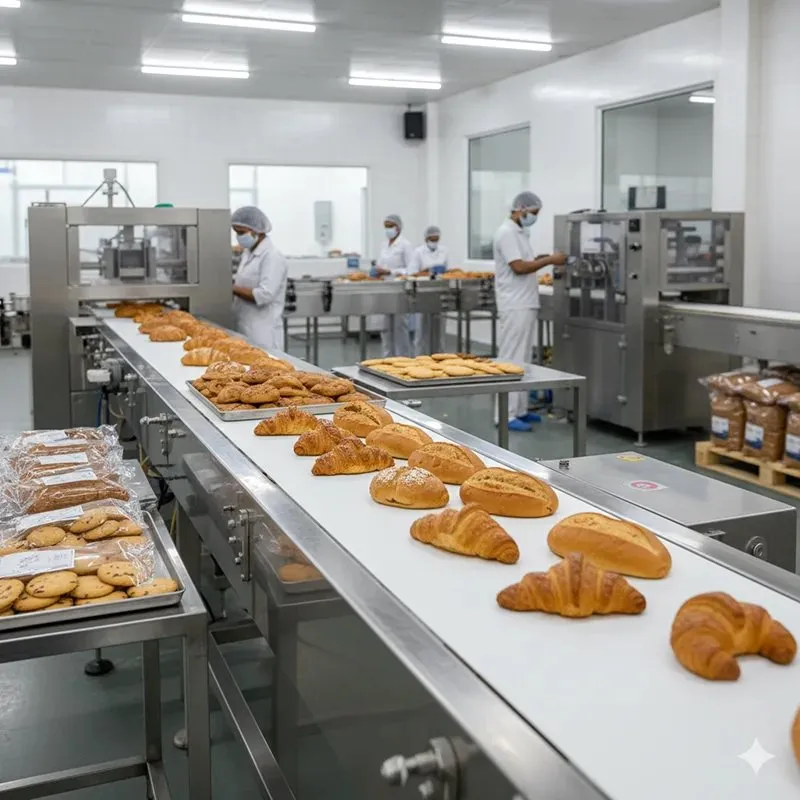
For general-purpose applications, standard belt conveyors can provide a practical way to maintain consistent movement across production and material-handling areas.
The benefit isn't simply that a machine is doing the carrying.
The bigger benefit is predictability.
The “More Production = More Workers” Problem
Manual handling often works until production starts growing.
Then the hidden weakness becomes obvious.
More orders mean more products.
More products mean more movement.
More movement means more labour.
Eventually, the factory may find itself adding people simply to keep materials moving from one point to another.
That isn't necessarily a sustainable way to scale.
A conveyor system can take over repetitive transportation routes while employees focus on activities that require human judgement, such as assembly, inspection, machine operation, supervision and quality control.
This doesn't mean automation has to replace an entire workforce.
In many cases, it is about moving people away from repetitive movement and toward higher-value work.
What About Worker Fatigue?
Think about the number of times a worker may lift, carry, push or pull something during a shift.
Now multiply that across an entire team.
Repetitive physical movement can be tiring, particularly in operations working multiple shifts or handling heavy or bulky products.
Fatigue can affect concentration and consistency. It can also make repetitive tasks harder to sustain as production volumes increase.
Reducing unnecessary carrying through automated material movement can therefore have an operational benefit as well as an ergonomic one.
The same principle applies in dispatch.
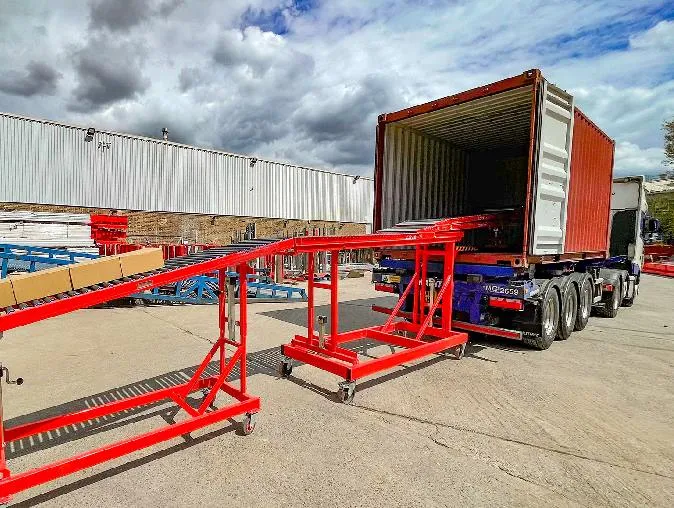
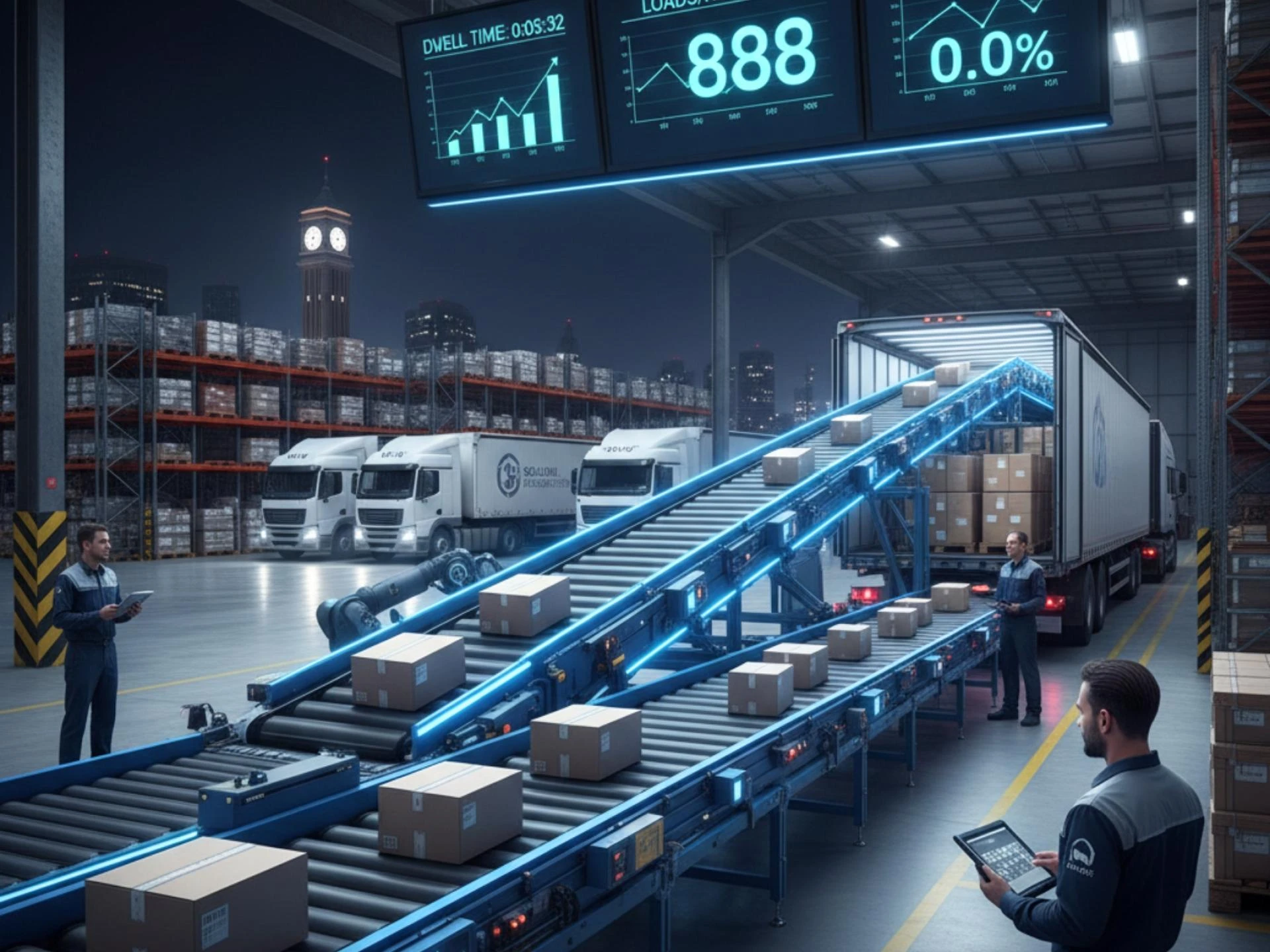
If employees are repeatedly carrying cartons from a warehouse to a truck, a truck loading conveyor can create a more direct and controlled movement path between the loading area and vehicle.
Sometimes the most useful automation isn't on the production line.
It is sitting at the loading bay, where everyone has simply accepted the delay as normal.
Product Damage Is Another Hidden Expense
Manual movement creates another problem: every extra handling step is another opportunity for damage.
A box can be dropped.
A component can be knocked against equipment.
A finished product can be moved several times before reaching packaging or dispatch.
The resulting cost isn't always limited to replacing the product.
It can also mean:
- Repacking
- Rework
- Additional inspection
- Dispatch delays
- Customer complaints
- Wasted labour
A conveyor provides a controlled movement path and can reduce unnecessary transfers.
But there is an important catch:
The right conveyor matters.
A system suitable for heavy industrial components may not be appropriate for delicate packages, food products or products requiring a particular handling environment.
Conveyor selection should therefore begin with the material and application, not simply the equipment price.
Your Factory Layout May Be Costing You Too
Walk through an older factory and look at how materials actually travel.
Are workers walking around machines?
Crossing production areas?
Moving products through temporary storage zones?
Using trolleys because there is no dedicated material route?
These movements may have developed gradually as the factory expanded.
What worked five years ago may no longer make sense today.
A properly planned conveyor can establish a dedicated route for material movement and help connect production, packing, storage and dispatch areas.
Where products need to move between different levels, inclined belt conveyors can help transfer materials while reducing manual lifting and carrying.
The goal is simple:
Don't make people compensate for an inefficient material-flow layout. Fix the flow.
Start With One Problem — Not the Whole Factory
This is where many businesses overcomplicate automation.
They hear “factory automation” and imagine a complete plant transformation involving robotics, software and expensive infrastructure.
That isn't necessarily where you should begin.
Look for one movement that happens repeatedly.
Ask:
- How many times does it happen every shift?
- How many employees are involved?
- How much time does it consume?
- Does it cause another process to wait?
- Is the movement always between the same locations?
If the same box is being carried between the same two points hundreds of times a day, you've probably found a good candidate for automation.
Start there.
Measure the improvement.
Then decide what comes next.
Conveyor Automation Doesn't Have to Stop at the Conveyor
Once repetitive material movement is automated, other opportunities often become easier to identify.
Conveyors can form part of a wider material-handling system involving sensors, sorting, warehouse automation and other industrial technologies.
This is where businesses can gradually move from basic material transportation toward a more connected operation.
The important point is not to automate for the sake of saying the factory is automated.
Automate the problems that are costing you the most.
That approach makes the investment easier to justify and the results easier to measure.
How Do You Know If a Conveyor Is Worth It?
Don't begin with:
“What's the cheapest conveyor machine available?”
Begin with:
“What is our current material movement costing us?”
Calculate the labour involved.
Then look at:
- Time spent moving products
- Overtime
- Production waiting time
- Loading delays
- Handling-related damage
- Additional manpower required during peak periods
- Physical effort involved in repetitive movement
Now compare that cost with the expected operating life and productivity benefits of a suitable conveyor solution.
The answer may surprise you.
A conveyor that initially looks like an expense can become a productivity tool when it removes a recurring operational cost.
Choosing the Right Conveyor System
There is no universal conveyor for every factory.
The right solution depends on factors such as:
Product: What are you moving, and how heavy, large or fragile is it?
Capacity: How many units need to move per hour?
Distance: How far does the material need to travel?
Speed: Does the process require controlled or faster movement?
Layout: Is the system moving through production, packing, storage or dispatch?
Elevation: Does material need to move between different levels?
Integration: Does the conveyor need to connect with existing machinery or automation?
These questions should be answered before selecting equipment.
This is where experienced conveyor system manufacturers in India can help assess the application and recommend a system based on actual operational requirements rather than a one-size-fits-all approach.
The Real Question for Your Factory
Manual material handling isn't automatically bad.
If a process is low-volume, irregular and inexpensive, automation may not make financial sense.
But if your employees are repeatedly moving the same materials, along the same routes, every day, it is worth calculating the cost.
Because the biggest expense may not be the conveyor you haven't purchased.
It may be the manual process you keep paying for.
That is the twist many factories discover only after they look closely at their material flow.
For manufacturers evaluating conveyor and material-handling solutions, Dynamic Industrial's Arrowcon range can support different industrial applications, from basic material transportation to more integrated automation requirements.
The first step isn't necessarily buying equipment.
It is identifying where your factory is losing time, labour and efficiency — and then deciding which of those losses can be removed through automation.
Frequently Asked Questions
1. How can conveyor systems reduce manual material handling?
Conveyor systems automate repetitive movement between defined locations. This can reduce the amount of time employees spend carrying materials and allow them to focus on production, inspection, packaging, machine operation and other value-added activities.
2. When should a factory consider installing a conveyor system?
A factory should consider a conveyor when materials are moved repeatedly between fixed points, manual transportation is consuming significant labour time, production is experiencing movement-related delays, or the business expects production volumes to increase.
3. Can conveyors help reduce production delays?
Yes. A properly designed conveyor can provide a consistent route and movement rate between processes. This can reduce waiting caused by materials not reaching the next workstation on time and help create a more predictable production flow.
4. How do I choose the right conveyor for my factory?
The selection depends on the product, weight, dimensions, required capacity, speed, distance, factory layout, elevation and operating environment. Integration with existing equipment and future expansion should also be considered before finalizing the conveyor.
5. Are conveyor systems useful for loading and unloading trucks?
Yes. Truck loading and unloading is a common application for conveyor systems. A suitable conveyor can provide a more direct movement path between the warehouse or dispatch area and the vehicle, helping reduce repetitive carrying and improve loading efficiency.























Sign in to leave a comment.