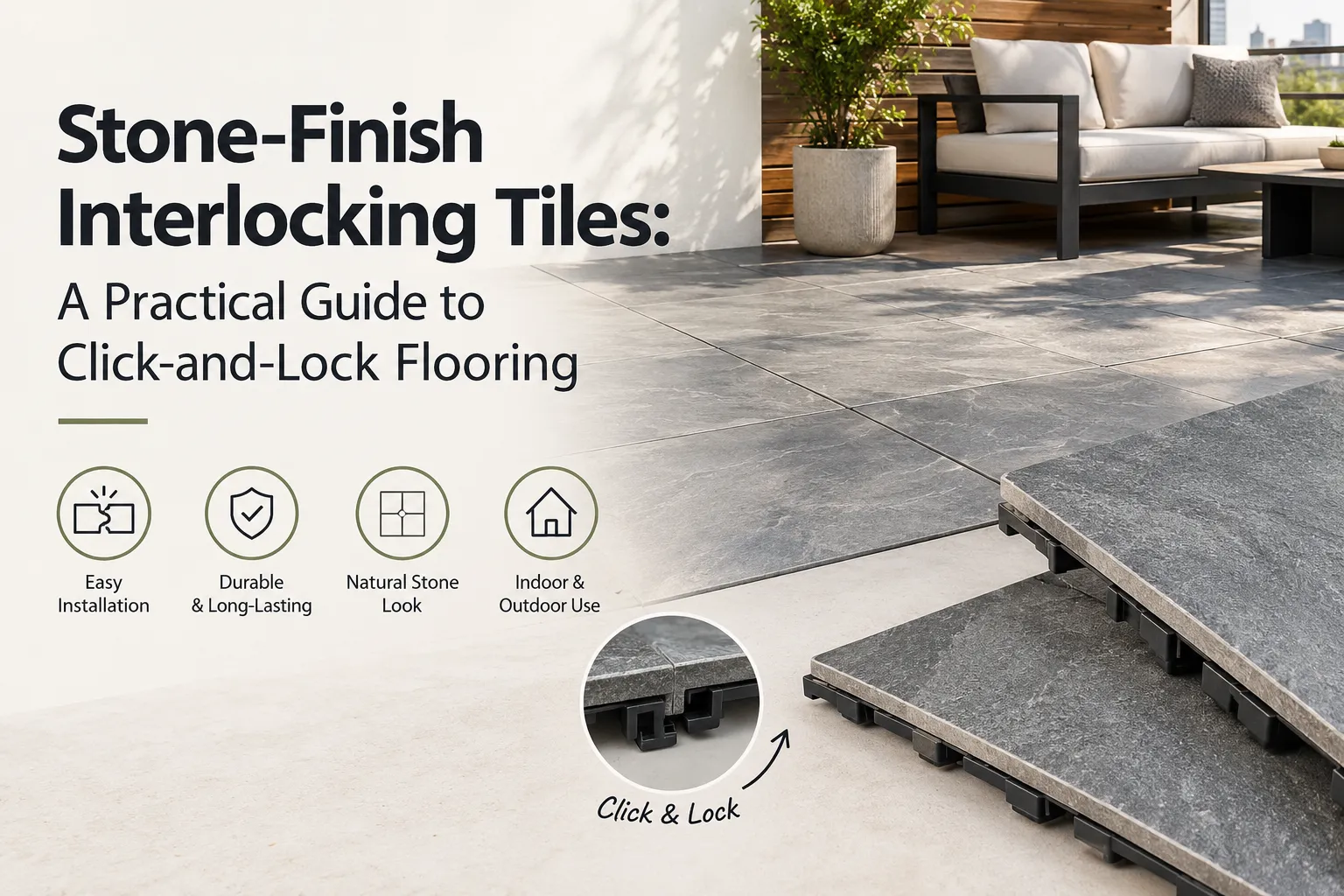

Natural stone flooring has always carried an air of luxury - but it also comes with a reputation for being expensive, heavy to install, and high-maintenance. Interlocking stone-finish tiles were developed to solve exactly that problem: they deliver the visual richness of marble, granite, or slate, without the mess, cost, or downtime of a traditional stone floor installation.
Here's a closer look at how this flooring category works, where it fits best, and what homeowners should know before choosing it.
What Exactly Are Interlocking Floor Tiles?
Interlocking tiles - sometimes called click-lock tiles or click-and-lock flooring - use a tongue-and-groove locking mechanism so each tile snaps securely into the next. There's no adhesive, no grout, and no nailing involved, which is what makes them so approachable for both professional installers and confident DIYers.
A few defining traits of this flooring style:
- No specialist labor required. The locking mechanism does the heavy lifting, so installation can often be handled without a professional crew.
- Clean installation. There's no wet cement, no drying time, and minimal dust.
- Reusable. Because there's no adhesive bonding the tiles to the subfloor, they can be lifted and relocated if a homeowner moves or renovates.
- Built for daily wear. The rigid core construction is designed to hold up under regular foot traffic.
Stone-finish variants take this a step further by replicating the texture and depth of natural stone in a lightweight, engineered tile - giving you the look without the structural demands of quarried material.
The Core Technology Behind Stone-Finish Click Tiles
Most premium interlocking stone tiles are built on an SPC (Stone Polymer Composite) core, which is what gives them their rigidity and durability. Layered on top of that core are a few functional components worth understanding:
- Décor film - this is the printed layer that replicates natural stone textures like terracotta, sandstone, or Kadappa graphite.
- Wear layer / scratch protection - a UV-cured coating that shields the design layer from scuffs and everyday abrasion.
- Stain-resistant surface - makes everyday spills easy to wipe away without staining or discoloration.
- Integrated underlayment (IXPE backing) - a cushioned backing bonded to the tile that improves underfoot comfort and reduces impact noise, which is especially useful in multi-story homes or apartments.
Together, these layers are what let a stone-look SPC tile outperform actual stone on maintenance and comfort, while still delivering a convincing visual finish.
Where Stone-Finish Interlocking Tiles Work Best
Because the tiles are waterproof and resist scratching and staining, they suit spaces where traditional hard flooring often struggles:
- Kitchens and dining areas - stain resistance makes cleanup straightforward.
- Living rooms and entryways - a marble or granite-look finish adds a premium first impression.
- Hallways and high-traffic corridors - the wear layer holds up to repeated use.
- Commercial spaces - showrooms, salons, and retail stores benefit from fast installation with minimal business disruption.
- Rental properties - since tiles can be lifted without damage, tenants or landlords aren't locked into a permanent floor.
They're generally not recommended for spaces with constant standing water or extreme temperature swings, so it's worth checking manufacturer guidance for outdoor or wet-area use.
Installing Click-and-Lock Stone Tiles: Step by Step
One of the biggest draws of this flooring type is how straightforward the installation process is - most jobs can be completed in a single day, even over an existing floor.
- Prepare the subfloor. It needs to be clean, dry, and reasonably level before you begin.
- Acclimate the tiles. Let them sit in the room for about 24 hours so they adjust to the local temperature and humidity.
- Start in a corner. Begin along the left-hand wall with the tongue side facing the wall.
- Click and lock. Align the tongue and groove edges of adjacent tiles and press down until they lock into place.
- Trim for edges. Use a tile cutter or sharp utility knife to fit tiles around corners and room edges.
- Finish with skirting. Edge trims or skirting boards give the installation a polished, finished look.
No adhesive curing time means the room is walkable almost immediately after installation.
What Do Interlocking Stone Tiles Cost?
Pricing varies by design and finish, but stone-look interlocking tiles typically fall in a mid-range bracket - generally cheaper than natural stone once you factor in labor, since there's no skilled masonry work or lengthy installation timeline involved. The reduced labor cost, combined with a fast turnaround, is often what tips the economics in favor of interlocking tiles over quarried stone, especially for renovation projects on a timeline.
Maintaining a Stone-Finish Interlocking Floor
Upkeep is intentionally low-effort:
- Sweep regularly with a soft-bristle broom to clear loose dirt.
- Mop with a neutral-pH cleaner - avoid acidic or ammonia-based products.
- Treat spills immediately with a mild, diluted cleaning solution.
- Skip wax, mineral oil, or abrasive "mop and shine" products, which can dull the wear layer over time.
Because there's no grout line to scrub, the floor stays cleaner for longer with far less routine effort than traditional stone.
Is Stone-Finish Interlocking Flooring Worth It?
For homeowners who want the visual weight of natural stone without the installation timeline, cost, or maintenance burden, stone-finish click-and-lock tiles are a compelling middle ground. They combine a durable engineered core, a realistic decorative finish, and a genuinely simple installation process - making them a practical option for both full home renovations and smaller, targeted upgrades like a kitchen or hallway refresh. Ranges such as Welspun Flooring's Click-N-Lock® Stone Collections are a good starting point for comparing finishes and specifications.
As with any flooring decision, it's worth getting a physical sample in your space to check how the finish reads under your own lighting before committing to a full-room installation.




















Sign in to leave a comment.