

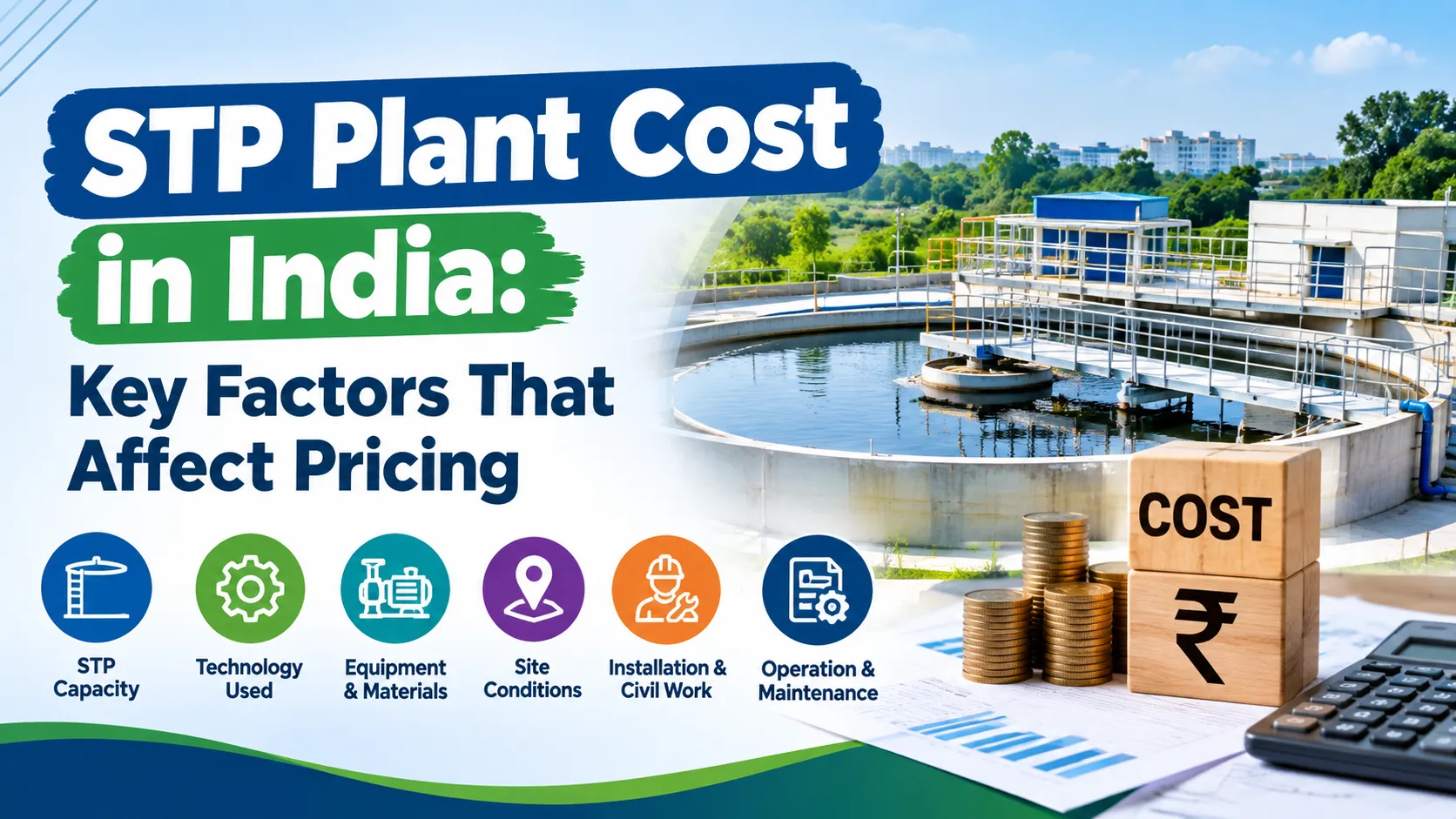
The cost of a Sewage Treatment Plant (STP) in India depends on several factors, including plant capacity, treatment technology, wastewater characteristics, site conditions, installation requirements and long-term operational needs. Because every project has different requirements, there is no single price that applies to every STP.
For businesses, institutions and project owners planning a sewage treatment system, understanding these cost factors before selecting a treatment provider can help in making a more informed decision. Instead of comparing quotations only on the initial price, it is important to consider the complete project requirement and the expected operating cost of the plant.
Understanding STP Plant Cost in India
An STP is designed to treat sewage through appropriate treatment processes before the treated water is discharged or considered for suitable reuse. The size and configuration of the plant depend largely on the quantity and characteristics of the sewage being generated.
The overall STP Plant Cost in India can be influenced by:
- Required treatment capacity
- Type of treatment technology
- Wastewater characteristics
- Equipment specifications
- Civil construction requirements
- Site conditions
- Automation and control requirements
- Installation and commissioning
- Operation and maintenance requirements
- Treated-water quality requirements
These factors need to be considered together when estimating the actual project investment.
Plant Capacity and Its Impact on Cost
One of the first factors considered when planning an STP is its required capacity. STP capacity is generally expressed in KLD (Kilo Litres per Day).
The required capacity should be calculated according to the actual sewage generation of the project. A plant with a higher capacity generally requires larger treatment units, pumps, blowers and other supporting equipment.
However, selecting a plant simply because it has a higher capacity is not always the right approach. An appropriately sized system should be able to handle the expected wastewater flow while also considering possible variations and future requirements.
Treatment Technology
The treatment technology selected for an STP can significantly affect both the initial investment and ongoing operating requirements.
Depending on the project, technologies such as MBBR, SBR, MBR and conventional biological treatment processes may be considered.
Each technology has different characteristics related to footprint, treatment performance, automation, energy consumption and maintenance.
For this reason, technology selection should be based on the wastewater characteristics, available space, required treated-water quality and operational objectives rather than selecting a technology only because it has a lower purchase price.
Wastewater Characteristics
Not all sewage has exactly the same characteristics. Variations in wastewater composition and loading can influence the treatment process and equipment requirements.
Parameters such as organic loading, suspended solids, flow variation and other wastewater characteristics may need to be evaluated before designing the treatment system.
A proper assessment of the incoming wastewater helps the treatment provider determine the appropriate treatment stages and plant configuration.
STP Installation and Civil Work
The overall project cost is not limited to the STP equipment itself. Installation and supporting civil work can also contribute to the final investment.
Depending on the project, installation may involve:
- Equipment placement
- Foundation work
- Tank installation or construction
- Piping connections
- Pump installation
- Electrical connections
- Control-panel integration
- Testing
- Commissioning
The amount of work required can vary according to the site layout, accessibility, existing infrastructure and selected STP configuration.
Therefore, businesses should check whether installation and civil work are included in the quotation before comparing different STP suppliers.
Packaged STP vs Conventional STP
The choice between a packaged STP and a conventional STP can also affect the overall project cost.
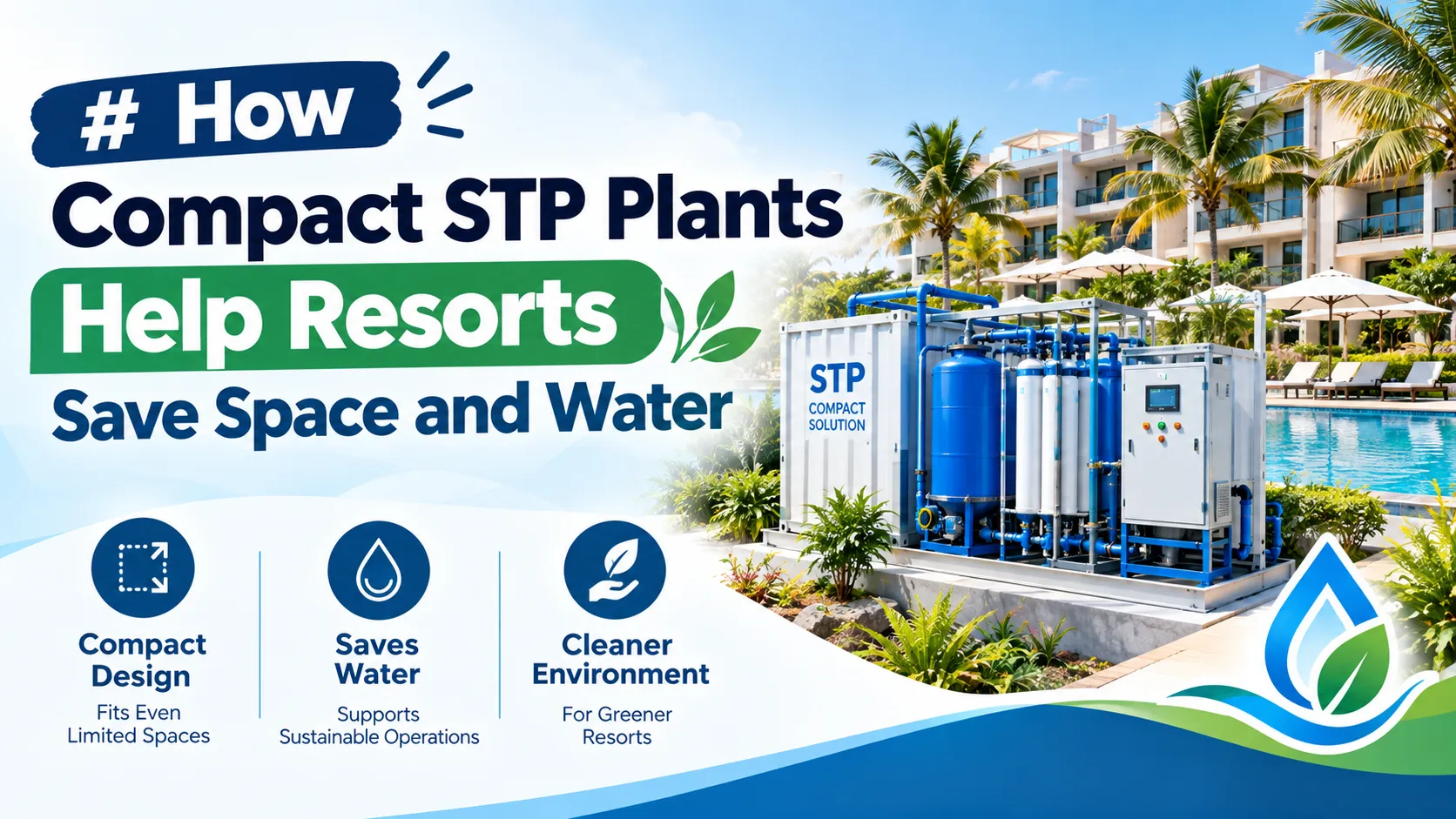
A packaged STP generally provides a compact and modular treatment approach and may reduce certain civil requirements depending on the project. Conventional STPs can involve greater site-based construction and dedicated civil infrastructure.
The right option depends on factors such as plant capacity, available space, site conditions, treatment requirements and project objectives.
Instead of choosing one option solely on price, project owners should evaluate which system is more practical for their particular site.
Operation and Maintenance Cost
The initial STP price is only one part of the overall expenditure. Once the plant is commissioned, regular operation and maintenance are required to maintain treatment performance.
Operating expenses can include:
- Electricity consumption
- Equipment servicing
- Pump and blower maintenance
- Sludge handling
- Cleaning
- Consumables
- Chemical requirements, where applicable
- Replacement of wear components
- Routine monitoring
Considering these factors during the selection stage can provide a clearer picture of the long-term cost of operating an STP.
How to Compare STP Plant Prices
When comparing an STP Plant Price in India, project owners should look at the complete scope rather than comparing only the quoted equipment price.
A useful evaluation can include:
Capacity → Technology → Equipment → Civil Work → Installation → Commissioning → Operation → Maintenance
Two plants with similar capacities may still have different prices because their technology, equipment specifications, automation and installation requirements can differ.
A detailed quotation should therefore clearly explain what is included in the proposed system.
Factors to Check Before Purchasing an STP
Before finalizing an STP, businesses should evaluate their wastewater-treatment requirements carefully.
Important considerations include:
- Current sewage generation
- Peak flow
- Future expansion
- Wastewater characteristics
- Required treatment capacity
- Available installation space
- Suitable treatment technology
- Required treated-water quality
- Energy requirements
- Maintenance requirements
- Installation and commissioning support
- Technical assistance
This approach can help project owners select a system based on actual requirements rather than choosing only on the basis of initial cost.
Choosing an STP Manufacturer
The treatment provider also plays an important role in the overall success of an STP project.
When selecting an STP Plant Manufacturer in India, businesses should consider the manufacturer's technical expertise, design capabilities, manufacturing experience, installation support, commissioning services and ability to understand project-specific wastewater requirements.
A reliable treatment provider should be able to explain the proposed plant configuration and how it relates to the project's capacity, wastewater characteristics and treatment objectives.
Neel Guard Aqua Systems
Neel Guard Aqua Systems is a water and wastewater treatment solutions provider established in 2011.
The company provides solutions including STP, ETP, WTP, RO, DM, UF, water softener and industrial water reuse systems.
Neel Guard Aqua Systems focuses on developing treatment solutions according to project requirements, including wastewater characteristics, treatment capacity, site conditions and intended treated-water use.
The company supports treatment projects through design, manufacturing, installation and commissioning, providing an integrated approach to wastewater-treatment system development.
Final Thoughts
Understanding the STP Plant Cost in India requires looking at the complete project rather than focusing on a single equipment price. Capacity, treatment technology, wastewater characteristics, civil requirements, installation, automation and long-term maintenance can all influence the final investment.
For this reason, businesses should first understand their wastewater-treatment requirements and then compare suitable solutions based on technical suitability, operating requirements, installation scope and long-term value.
A properly planned and appropriately sized STP can provide a more practical approach to sewage management while helping organizations manage wastewater efficiently over the long term.


























Sign in to leave a comment.