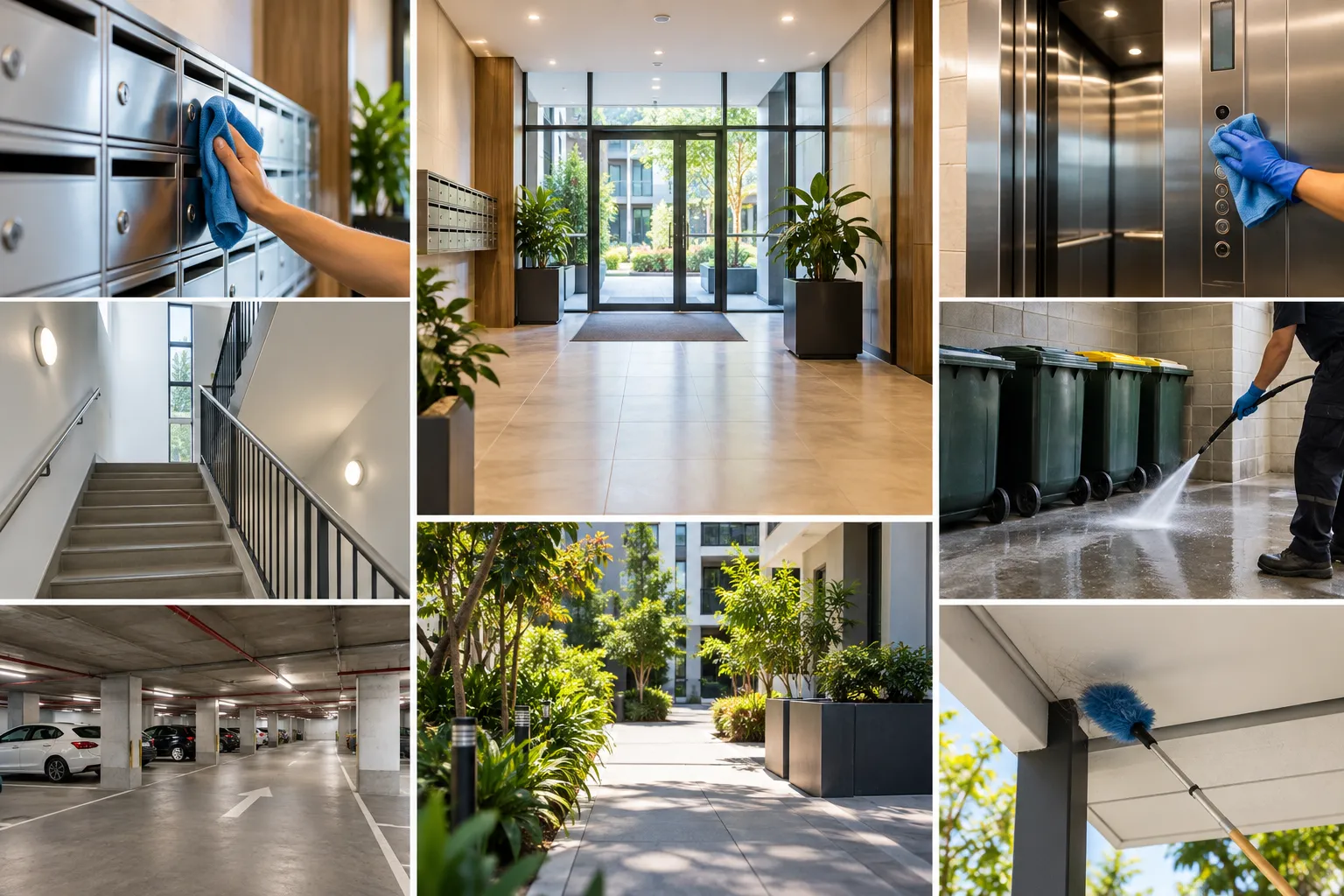

When people think about strata cleaning, the first areas that usually come to mind are the lobby, hallway floors and perhaps the lift. These are certainly important, but they are only part of the picture.
Apartment complexes, mixed-use developments and other strata properties contain dozens of shared spaces that residents and visitors pass through every day. Some are highly visible, while others sit quietly in the background until dirt, rubbish, dust or wear becomes difficult to ignore.
The challenge is that smaller areas are often the easiest to overlook. A foyer may be freshly mopped while fingerprints remain across the lift doors. The main hallway may look spotless while cobwebs gather in a stairwell that receives less foot traffic. A bin room may be emptied regularly but still develop odours because the surrounding floor is not being cleaned often enough.
A thorough strata cleaning checklist helps building managers, strata committees and residents look beyond the obvious and consider the entire shared environment.
Why Overlooked Common Areas Matter
Common areas shape the everyday experience of a strata property. Residents encounter them when they leave home, collect their mail, dispose of rubbish, park their car or welcome visitors.
Small details can therefore influence the way an entire property feels.
A dusty letterbox area, marked lift door or neglected stairwell may make a building appear poorly maintained even when the main entrance is presentable. Conversely, consistently clean secondary areas can create a stronger sense that the property is being looked after carefully.
This is one reason why professional cleaning matters in strata properties. Cleaning is not simply about making the most visible surfaces look tidy. It involves maintaining a dependable standard across numerous communal spaces.
Regular cleaning may also support broader property maintenance. When cleaners move through different parts of a building frequently, issues such as spills, dumped rubbish, damaged fixtures or unusual marks may be noticed earlier.
That makes cleaning one element of a wider approach to proactive building care.
1. Letterboxes and Mail Areas
Letterbox areas are used constantly but are surprisingly easy to forget during general cleaning.
Residents may spend only a few seconds collecting their mail, so gradual build-up is easy to overlook. Over time, however, dust may settle on top of letterboxes, fingerprints can accumulate on surfaces and unwanted advertising material may end up on the floor.
A strata cleaning checklist for the mail area may include:
- Dusting the tops and surrounds of letterboxes
- Wiping visible fingerprints and marks
- Removing cobwebs
- Clearing discarded junk mail
- Cleaning nearby skirting boards
- Checking corners for dust and debris
Because letterbox areas are often positioned close to building entrances, keeping them tidy also contributes to the presentation of the foyer.
2. Lift Interiors, Doors and Tracks
Lifts receive some of the heaviest traffic in multi-storey strata buildings.
It is easy to focus on vacuuming or mopping the lift floor while forgetting the many other surfaces people see and touch.
Stainless-steel doors may show fingerprints quickly. Mirrors can develop streaks. Control panels are handled throughout the day, while corners and door tracks may collect dirt that is less obvious at first glance.
A more complete lift cleaning routine may cover:
- Floors
- Mirrors
- Internal walls
- Stainless-steel doors
- Control panels
- Door surrounds
- Door tracks
- Corners and edges
The smaller and more enclosed a space is, the more noticeable individual marks may become. A single dirty mirror or heavily marked door can affect the appearance of the entire lift.
3. Stairwells and Handrails
Stairwells often receive less attention in buildings where most residents regularly use lifts.
That does not mean they stay clean.
Dust can settle along edges, cobwebs may form in ceiling corners, and marks may gradually accumulate on walls and doors. Handrails also receive regular contact, particularly in buildings where stairs are frequently used for access between nearby floors.
When reviewing a stairwell, look beyond the stairs themselves.
Areas worth including in a strata cleaning checklist include:
- Steps and landings
- Handrails
- Skirting boards
- Window ledges
- Fire-door surrounds
- Wall marks
- Corners
- Cobwebs
- Light fittings and surrounding surfaces
Stairwells may also act as emergency access routes, making it particularly useful to keep them clear of rubbish and unnecessary obstructions.
4. Bin Rooms and Waste Areas
Waste areas may require more than simply moving bins in and out on collection day.
Leaks, food residue and other waste may reach the floor, while bin surfaces themselves may develop odours and visible grime.
If this build-up is ignored, unpleasant smells may spread beyond the waste area and into nearby corridors, car parks or access points.
A regular cleaning routine may involve:
- Clearing loose rubbish
- Cleaning bin-room floors
- Washing bins periodically
- Addressing spills
- Deodorising the area where appropriate
- Checking surrounding walls and doors for marks
- Removing cobwebs and debris
The appropriate frequency depends heavily on the number of residents, the number of bins and how quickly the area becomes dirty.
A large residential complex may require much more frequent attention than a small block with relatively low waste volumes.
5. Entry Glass and Door Frames
Glass entry doors are among the first surfaces visitors notice, yet they can develop fingerprints almost immediately after being cleaned.
The glass itself is only one part of the entrance.
Frames, handles, edges and nearby walls may all accumulate grime. Dust may also settle along the base of door frames or in corners that standard glass cleaning does not address.
When inspecting entryways, check for:
- Fingerprints
- Streaks
- Dust around frames
- Dirty door handles
- Scuff marks on nearby walls
- Build-up at floor level
- Cobwebs around covered entrances
These small areas matter because entrances create the transition between the outside environment and the building interior.
6. Car Parks and Basement Areas
Car parks are rarely treated with the same attention as foyers, but they form a significant part of many strata properties.
Leaves, rubbish, dust and cobwebs may gradually accumulate around parking bays, walls and pedestrian entrances.
Particular attention may be useful around the areas residents actually walk through, such as:
- Lift entrances
- Stairwell access points
- Pedestrian paths
- Doorways
- Corners
- Storage-area entrances
- Shared access zones
Routine strata cleaning in car parks may include sweeping or removing loose rubbish and cobwebs. Periodic deeper cleaning may also be appropriate depending on the surface and the amount of grime present.
Pressure cleaning may sometimes be considered for hard outdoor surfaces, although the method needs to suit the material being cleaned. WriteUpCafe's discussion of common DIY property and garden maintenance mistakes highlights why excessive pressure may damage some surfaces.
7. Corners, Skirting Boards and Wall Marks
Floors naturally receive plenty of attention because dirt is easy to see underfoot.
The edges surrounding them may be another story.
Dust often collects along skirting boards and in corners. Trolleys, furniture, bicycles and everyday foot traffic may also leave marks on walls.
Common problem areas include:
- Hallway corners
- Areas beside lift doors
- Walls around rubbish rooms
- Skirting along corridors
- Spaces behind entrance doors
- Stair landings
These details may not be obvious from a distance, but collectively they influence whether a common area looks freshly maintained or slightly neglected.
8. Cobwebs Above and Around Eye Level
One simple reason cobwebs are overlooked is that people spend most of their time looking straight ahead or down at the floor.
Looking upwards often reveals an entirely different cleaning list.
Cobwebs may appear around:
- Ceiling corners
- Light fittings
- Covered entrances
- Stairwells
- Basement walls
- Car parks
- Exterior overhangs
- High corners around doors
They may be particularly noticeable in areas that receive less frequent foot traffic.
Adding a regular above-eye-level inspection to a strata cleaning checklist may help prevent gradual build-up.
9. Shared Outdoor and Utility Areas
Many strata complexes include outdoor areas that do not fit neatly into categories such as foyers or car parks.
Examples may include:
- Clothesline areas
- Courtyards
- Walkways
- Service entrances
- Loading areas
- Paths
- Shared utility spaces
These areas are exposed to weather, leaves, dust and general outdoor debris, but because they are sometimes away from the main entrance, they may receive less routine attention.
Cleaning requirements may also change with the seasons. Wet weather may increase dirt around entrances, while warmer periods may make bin areas and outdoor waste management more noticeable.
Turning the Checklist Into a Cleaning Schedule
Identifying every area is only the first step.
The next challenge is deciding how often each space should be cleaned.
There is rarely one schedule that suits every strata property. Cleaning frequency may vary based on building size, number of residents, visitor traffic, weather exposure, waste volumes and the way common areas are used.
A useful approach is to divide tasks into broad frequency groups.
Frequent Tasks
High-traffic areas may require regular attention, including:
- Entrances
- Foyer floors
- Lifts
- High-touch surfaces
- Visible rubbish
- Busy corridors
Weekly or Scheduled Tasks
Other areas may be suitable for regular scheduled attention, such as:
- Stairwells
- Letterboxes
- Bin rooms
- Wall marks
- Skirting boards
- Cobweb removal
Periodic Tasks
Some cleaning is more intensive and may only be required occasionally, including:
- Pressure cleaning
- Deep car park cleaning
- Window cleaning
- Tile and grout cleaning
- Detailed exterior cleaning
This type of structured approach complements broader property planning. An article on the benefits of having a maintenance plan at your property explains how proactive maintenance planning may help owners corporations consider the long-term needs of common property rather than responding only when problems arise.
Cleaning schedules may benefit from the same mindset.
When a Professional Strata Cleaning Schedule Makes Sense
Small buildings may have relatively straightforward common areas, while larger developments may include multiple floors, lifts, bin rooms, car parks, outdoor spaces and other facilities.
As the number of shared areas increases, keeping track of individual tasks may become more complicated.
A documented cleaning schedule may help clarify:
- Which areas need attention
- What work should be completed
- How often each task should occur
- Which areas require periodic deeper cleaning
- Whether the cleaning requirements change during different seasons
Property managers researching how professional services structure these tasks may find CJM Cleaning for trusted strata cleaning useful as one example of a service covering common-area cleaning and ongoing property upkeep.
The important principle is consistency.
Rather than waiting for individual spaces to become noticeably dirty, a planned schedule may help spread attention across the entire property.
A Practical Strata Cleaning Checklist
When reviewing the common areas of a strata building, consider checking:
- Entrances and foyers
- Entry glass
- Door handles and frames
- Lift interiors
- Lift doors and tracks
- Letterboxes
- Hallways
- Stairwells
- Handrails
- Skirting boards
- Wall marks
- Bin rooms
- Bins
- Car parks
- Pedestrian access points
- Cobwebs
- Clothesline areas
- Shared outdoor spaces
- Utility areas
- Windows
- Periodic deep-cleaning requirements
The exact checklist should reflect the layout and usage of the individual property.
Looking Beyond the Obvious
Good strata cleaning is often less about one dramatic clean and more about consistent attention to dozens of small details.
The areas that are easiest to miss are rarely hidden completely. They are simply so familiar that residents may stop noticing them: the dusty edge above a letterbox, fingerprints on lift doors, debris in the corner of a car park or cobwebs above a stairwell.
Looking at a building from the perspective of a first-time visitor may help reveal these areas.
Start at the entrance and walk through every shared space. Look up as well as down. Check the edges rather than only the centre of each room. Walk through less frequently used stairways and service areas.
A thorough strata cleaning checklist should account for all of these spaces, not just the ones that attract the most attention.
By combining routine cleaning with periodic deeper tasks and a schedule suited to how the building is actually used, strata properties may maintain a cleaner, more consistent standard throughout their common areas.




















Sign in to leave a comment.