

October in India brings changing weather, warmer afternoons, lingering humidity in some regions, and the transition from monsoon to post-monsoon conditions. While the skies may look clearer after the rains, sun protection remains an essential part of your daily skincare routine.
In its September 2026 outlook, the India Meteorological Department forecast below-normal rainfall across much of India during October, alongside above-normal maximum temperatures over most parts of the country. This makes daily sun protection particularly relevant as the weather changes. However, conditions vary by region, so your local weather and UV index also matter.
For everyday skincare, sunscreen SPF 50 offers a practical way to protect your skin from harmful ultraviolet (UV) radiation. Whether you commute to work, run errands, travel outdoors, or spend time near windows, choosing the right sunscreen can help protect your skin from sunburn, tanning, and premature skin ageing.
Why Is Sunscreen SPF 50 Important in India?
India experiences varied climates, from hot and dry regions to humid coastal areas and cooler mountain destinations. Regardless of where you live, UV exposure can affect your skin throughout the year.
Here are some reasons to make SPF 50 sunscreen part of your routine.
1. Helps Protect Against UVA and UVB Rays
UVB rays are primarily responsible for sunburn, while UVA rays contribute to premature skin ageing and can penetrate deeper into the skin. A broad-spectrum sunscreen helps protect against both types of radiation.
SPF measures protection against UVB-related sunburn. Therefore, when choosing a sunscreen, look for SPF 50 with broad-spectrum protection and a suitable UVA protection rating.
2. Helps Reduce Tanning and Uneven Skin Tone
Sun exposure can trigger increased melanin production, leading to tanning and making existing dark spots more noticeable. Regular sunscreen use helps minimise UV-related pigmentation and supports a more even-looking complexion.
This is especially relevant for people concerned about post-acne marks, sunspots, and hyperpigmentation. Sunscreen works best alongside a consistent skincare routine rather than as a standalone treatment.
3. Supports Healthy-Looking Skin
Repeated exposure to UV radiation contributes to visible signs of premature ageing, including fine lines, wrinkles, and uneven pigmentation.
Using sunscreen consistently, together with moisturising and gentle cleansing, helps support your skin's long-term appearance.
Sunscreen Trends in India: What Should You Look For in 2026?
Skincare preferences continue to evolve, with consumers paying greater attention to ingredients, texture, finish, and everyday comfort. Recent Indian beauty coverage has also highlighted lightweight gel sunscreens designed for humid conditions.
Here are some features worth considering when choosing your next SPF 50 sunscreen.
1. Lightweight, Non-Greasy Formulas
Heavy or sticky sunscreen can feel uncomfortable in warm weather. Lightweight gel, fluid, and lotion formulations may be easier to apply consistently, particularly for people with oily or combination skin.
Choose a formula that feels comfortable without compromising on the labelled sun protection.
2. No White Cast
A noticeable white cast can discourage people from applying enough sunscreen. Modern formulations offer different finishes, including transparent, tinted, and mineral-based options.
Look for a product that blends well with your natural skin tone and suits your preferred finish.
3. Skincare Ingredients Alongside Sun Protection
Another popular approach is combining sun protection with ingredients associated with hydration or skin conditioning.
For example, hyaluronic acid helps attract moisture, while niacinamide can support the skin barrier and improve the appearance of uneven skin tone. However, these ingredients do not replace the need for adequate UV protection.
Choose sunscreen based on its tested protection, suitability for your skin, and overall formulation—not marketing claims alone.
4. Formulas Designed for Different Skin Types
Personalised skincare remains important when selecting sunscreen.
- Oily skin: Consider lightweight gel or fluid textures.
- Dry skin: Look for moisturising lotions or creams.
- Sensitive skin: Choose a well-tolerated, fragrance-free formula where appropriate.
- Acne-prone skin: Consider non-comedogenic products and monitor how your skin responds.
The best sunscreen is one that provides reliable protection and feels comfortable enough for regular use.
How to Use Sunscreen SPF 50 Correctly
Even a high-SPF sunscreen may offer less protection than expected if you apply too little or fail to reapply when needed.
Follow these simple steps for an effective routine.
Step 1: Cleanse your skin. Use a gentle face cleanser to remove excess oil, sweat, and impurities.
Step 2: Apply moisturiser if needed. People with dry or dehydrated skin may benefit from moisturiser before sunscreen. Allow the layers to settle comfortably.
Step 3: Apply sunscreen generously. Cover your face, ears, neck, and other exposed areas. Do not forget the hairline and the tops of your hands.
Step 4: Apply it before sun exposure. Follow the product label for application timing, particularly before outdoor activities.
Step 5: Reapply when necessary. As a general guideline, reapply about every two hours while outdoors, and after swimming, heavy sweating, or towel-drying. Use additional sun-protective measures, such as shade, sunglasses, and protective clothing.
These practices are consistent with guidance from the American Academy of Dermatology.
Common Sunscreen Mistakes to Avoid
Even a good skincare routine can fall short if sunscreen is used incorrectly.
- Skipping sunscreen on cloudy days: UV radiation can still reach your skin when the sun is obscured by clouds.
- Applying too little: A thin layer may not deliver the protection indicated on the label.
- Ignoring the neck and ears: These areas are often exposed and easily overlooked.
- Choosing texture over protection: A comfortable formula matters, but adequate SPF and UVA protection should remain priorities.
- Relying only on sunscreen: Hats, sunglasses, shade, and protective clothing provide additional protection.
You can also check the daily UV index to understand when additional precautions are particularly important.
Conclusion
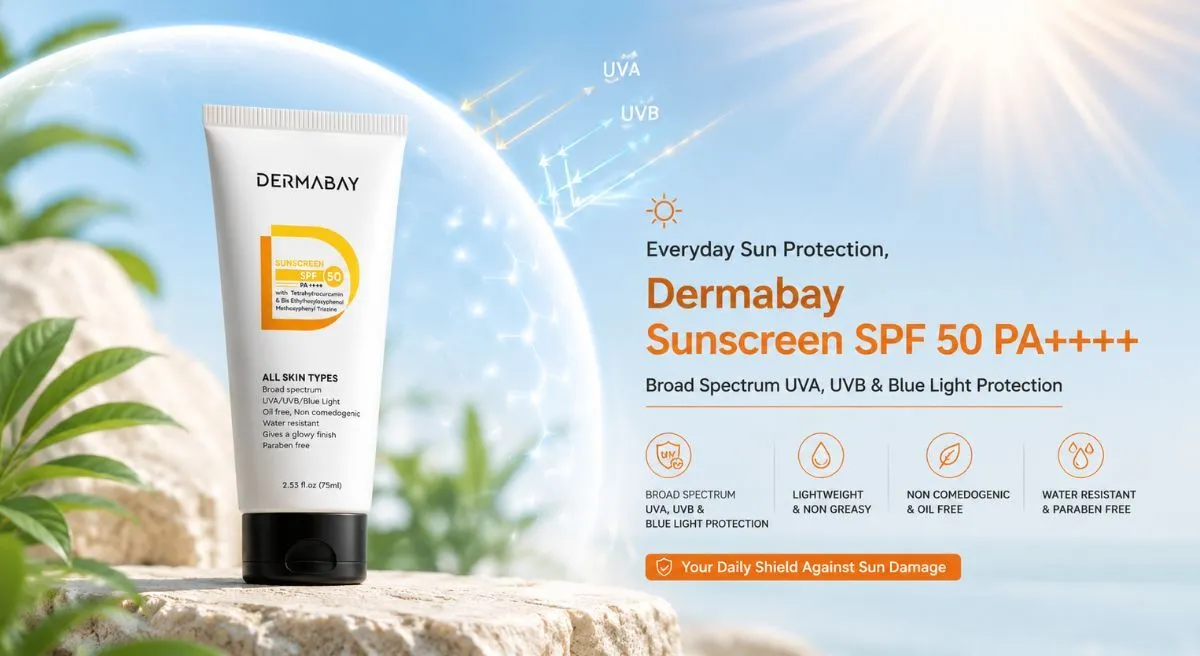
As India moves through October's changing weather, sunscreen remains an important part of a consistent skincare routine. Dermabay Sunscreen SPF 50 with broad-spectrum protection helps defend against harmful UV radiation while supporting efforts to reduce sunburn, tanning, and premature skin ageing.
Look for a formula that matches your skin type, feels comfortable in your local climate, and offers clearly labelled protection. Apply it generously, reapply when necessary, and combine it with other sun-safe habits.
Healthy-looking skin starts with consistency. Make sunscreen a daily essential—not just a summer skincare product.
Frequently Asked Questions
Is SPF 50 sunscreen suitable for daily use in India?
Yes. SPF 50 sunscreen can be suitable for everyday use, particularly when it offers broad-spectrum protection and suits your skin type.
Should I use sunscreen in October?
Yes. October is not a reason to stop using sunscreen. UV exposure continues throughout the year, although its intensity varies by location, time, and weather conditions.
Can oily skin use SPF 50 sunscreen?
Yes. Lightweight gel or fluid formulations may feel more comfortable on oily skin. Choose a product that suits your skin and does not cause irritation or breakouts.
Does sunscreen SPF 50 prevent tanning completely?
No sunscreen blocks all UV radiation. Correct and consistent application helps reduce UV exposure and tanning, but no product can guarantee complete prevention.












Sign in to leave a comment.