Surf Etiquette for Beginners: Lineup Rules in Morocco



Surf etiquette for beginners comes down to one idea: the lineup is a shared space with no referee, so surfers follow a few unwritten rules to keep each other safe. A surfboard is heavy and moves fast, and the RNLI warns that impacts between boards and surfers can cause serious injuries.
On Morocco's Atlantic coast, these rules matter even more. The famous waves around Taghazout are rocky and crowded in peak season, so learning how the lineup works before you paddle out will save you awkward moments and keep you out of trouble.
1. Know who has priority
The peak is the part of the wave that breaks first. The surfer closest to the peak has priority, and so does the surfer who is furthest out or already up and riding the wave. In practice, these rules usually point to the same person.
If you are paddling for a wave and someone is deeper than you, stop paddling and let them go. When it is not clear who has priority, wait a second. Missing one wave costs you very little, and a collision can cost a lot more.
2. Don't drop in
Dropping in means taking off on a wave in front of a surfer who already has priority. It is dangerous, and it ruins their ride. Beginners rarely do it on purpose. They usually do it because they are focused on their own take-off and forget to look towards the peak.
Check both ways before you commit to a wave. If you realize someone is already riding it, pull back.
3. Don't snake
Snaking means paddling around another surfer to move closer to the peak and take their place in the queue. It is the surf version of cutting in line, and it is one of the quickest ways to annoy a lineup.
Wait your turn, even when the lineup feels slow. There are waves for everyone.
4. Paddle wide, not through the peak
When you paddle out, it is your job to stay out of the way of surfers who are riding waves. Go around the side of the breaking waves instead of straight through the peak, where the takeoffs happen.
If you get caught inside, stay in the whitewater. Trying to cross in front of a surfer riding the wave is how most beginner collisions begin.
5. Control your board
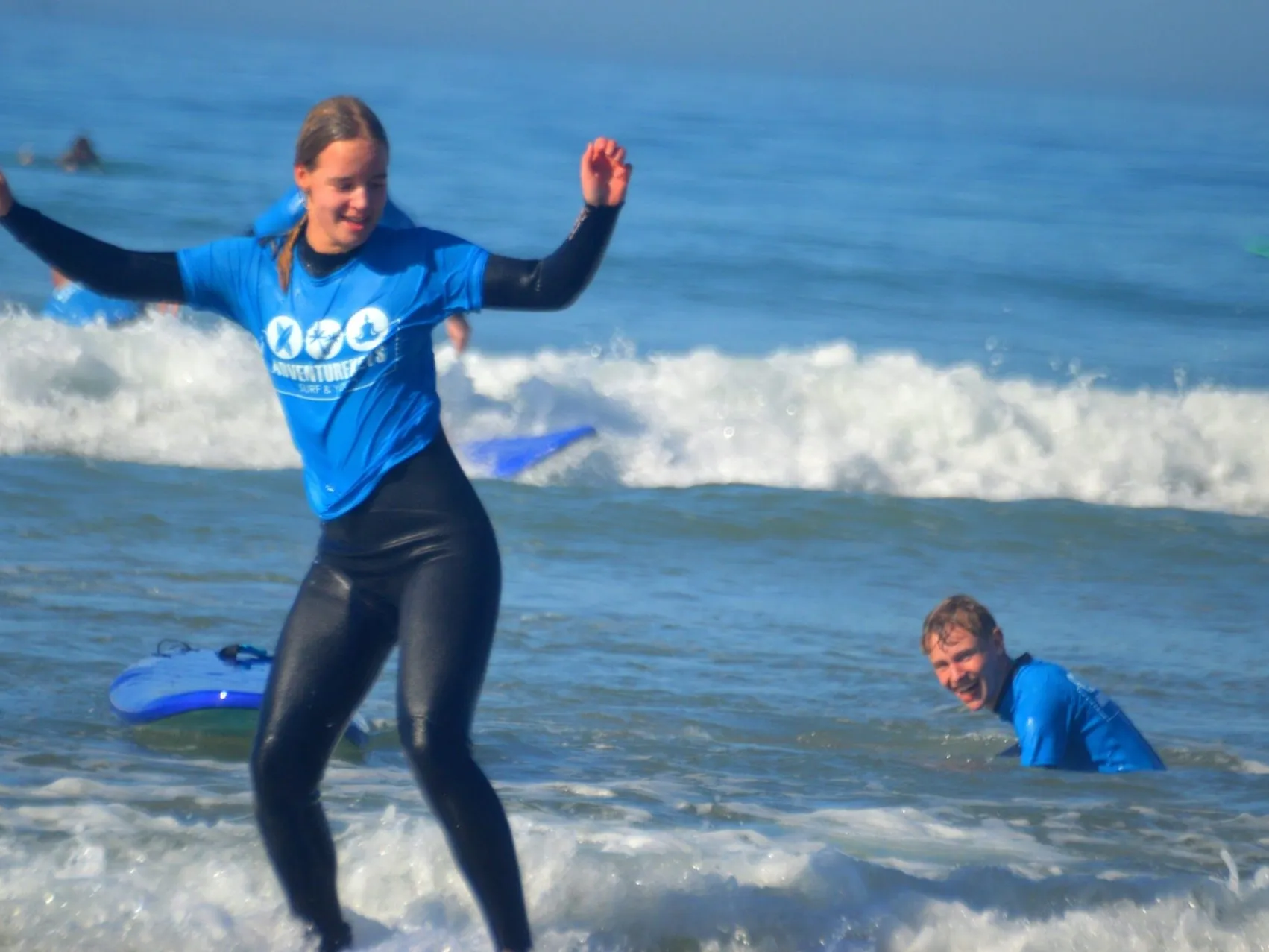
Always wear a leash, so you do not lose your board in a crowded lineup. Never throw your board away when a wave comes, and do not dive in head first. Hold on to your board when you duck under a wave.
A soft foam board is the best place to start, because it is thick and wide, which makes it easier to paddle and catch waves. It is also much kinder to everyone around you when you fall.
6. Communicate
Surfing is not a silent sport. When you take off, call "left" or "right" so other surfers know which way you are going. If you drop in by mistake or get in someone's way, say sorry. A quick apology settles most tension straight away.
7. Choose a spot that suits your level
Not every wave is meant for a first session. Around Taghazout, Anchor Point, Killer Point and Boilers are for experienced surfers only. Closer to the village, beginners and improvers spend most of their time on beaches such as Crocodile Beach and Devil's Rock.
Know your limits and do not paddle into a crowded, powerful wave just because you have seen it in a video. The right spot is the one where you can focus on technique and etiquette without feeling out of your depth.
8. Watch first, then share the waves
Spend a few minutes watching from the beach before you paddle out. Notice where surfers enter the water, where the waves break, and who is waiting where. Once you are in the water, take turns and do not hog every wave, even when you have the right of way.
When you travel to a new break, respect the surfers who are already in the water and know it well. The surf rules shared by Beachapedia put it simply: respect local surfers and their customs, without giving up your own right to a wave.
9. Look out for others
Surfing is safer with company. The RNLI recommends surfing with a friend, because surfers look out for one another. If someone is in trouble in the water, help them or get help.
Conclusion
Surf etiquette feels like a lot to remember at first, but most of it is common sense. Be aware of the people around you, be patient, and be respectful.
A good beginner lesson teaches these rules alongside the pop-up. At AdventureKeys, instructors choose the beach each day based on swell, wind and tide, so beginners start where conditions suit them. Learn the rules, watch the lineup, and enjoy the waves.







Sign in to leave a comment.