
A cluttered instrument tray slows a surgeon down at the exact moment speed matters. When tools sit in no clear order, the scrub team hunts for the right one, hand-offs stall, and the sterile field stays open longer than it should. Every extra second of open exposure raises infection risk and lengthens the case. Grouping tools by function solves this. When instruments follow a consistent logic, the scrub nurse anticipates the next hand-off, the tray restocks predictably, and counts run faster at closing. Clear surgical instruments categories turn a crowded tray into a system the whole team can read at a glance.
The Grey Medical Standard
GREY MEDICAL: Welcome to Grey Medical, your trusted partner in premium-quality surgical instruments. With decades of experience in the medical industry, we pride ourselves on delivering precision-crafted tools designed to meet the rigorous demands of surgeons, doctors, and medical professionals worldwide. That experience shapes how we group and build each instrument. We machine every tool to hold its edge or grip, we verify the finish survives repeated sterilization, and we test the moving joints under load. This means each category performs its job reliably, case after case.
Cutting and Dissecting Instruments
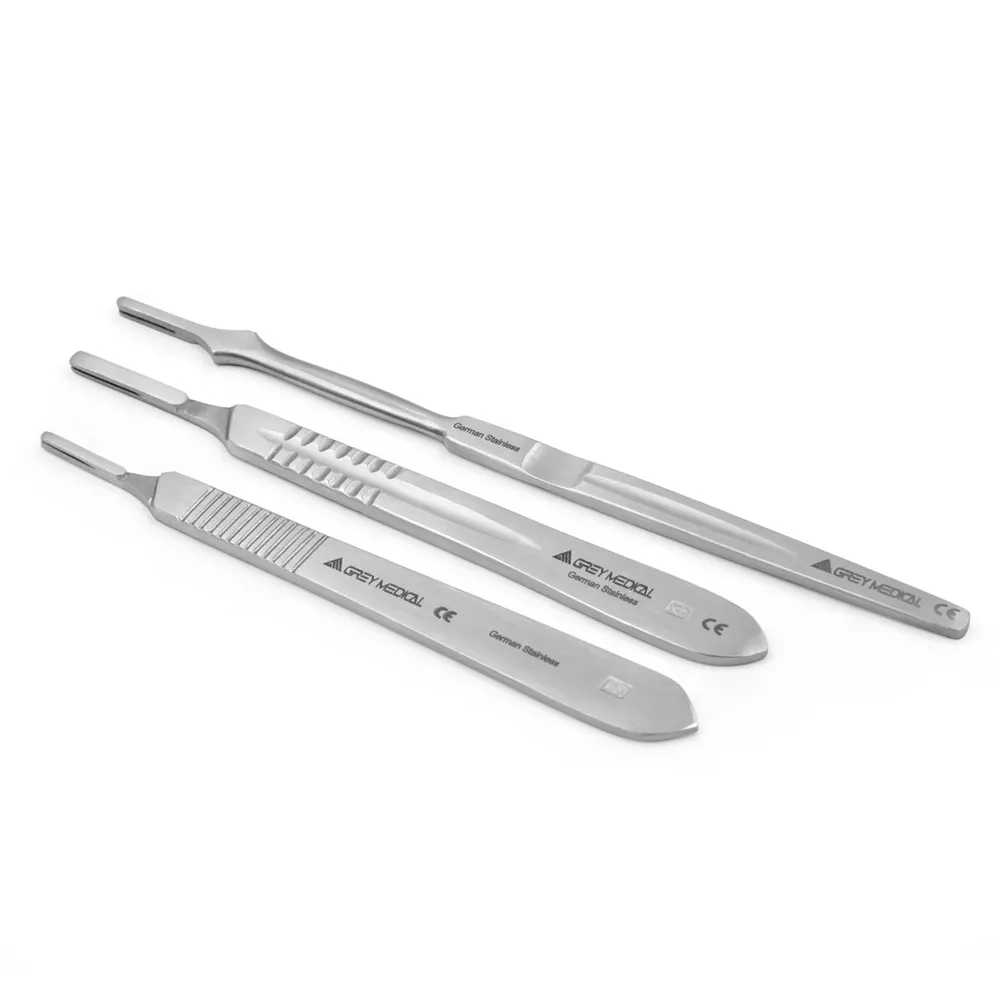
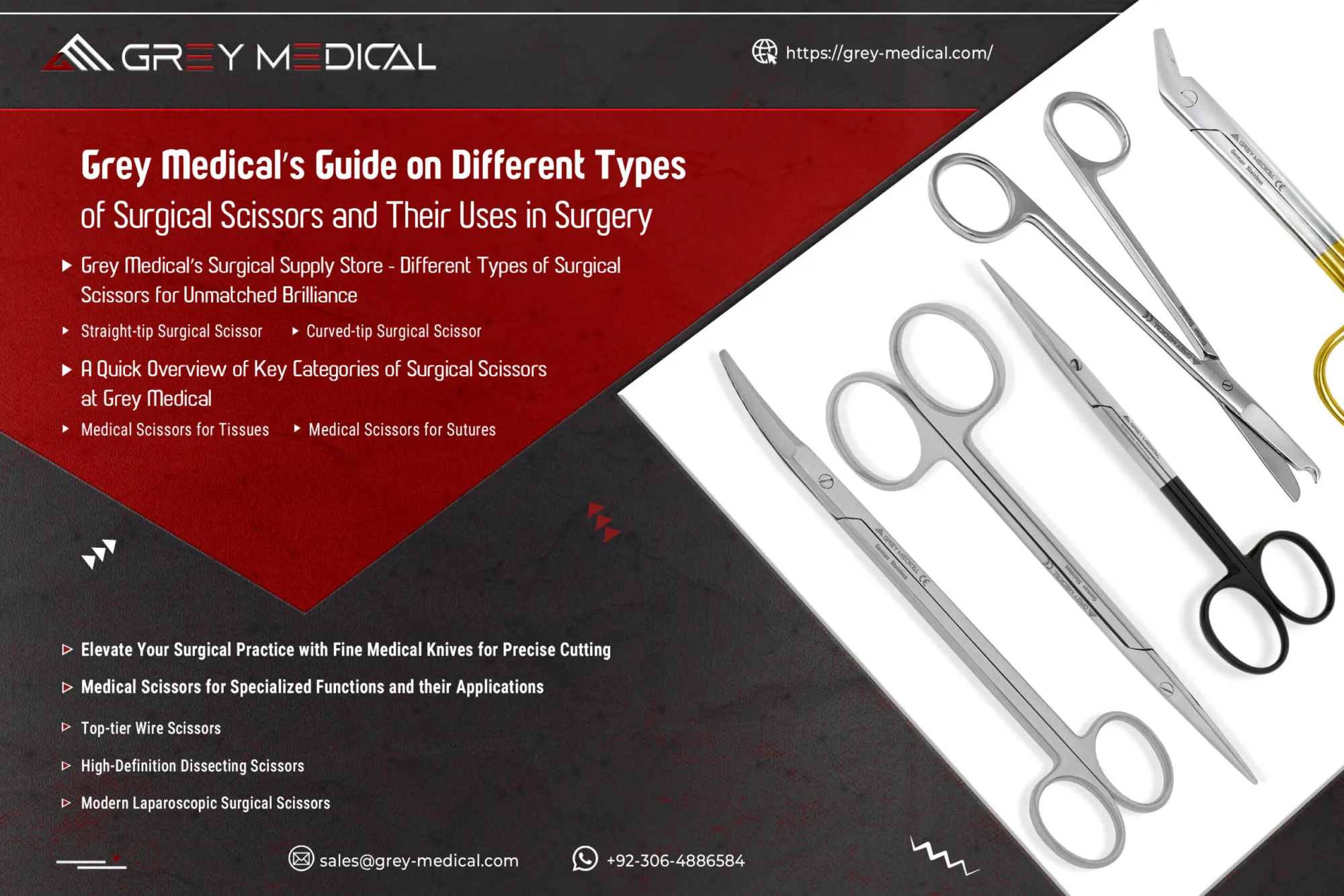
Cutting instruments open tissue and separate structures with controlled precision. This category includes scalpels for incision, scissors for trimming and dissection, and bone-cutting tools for orthopedic work. A dull edge tears rather than cuts, which damages surrounding tissue and complicates healing. Sharp, well-tempered steel keeps the cut clean and predictable. Mayo scissors handle heavy tissue, Metzenbaum scissors handle delicate dissection, and scalpels deliver the initial incision. Matching the blade to the task keeps the surgeon in control of the cut.
Grasping and Holding Instruments
Grasping instruments secure tissue so the surgeon can work against a stable structure. Forceps hold tissue during suturing, tenacula fix organs in position, and needle holders grip the suture needle through each pass. When a grasper forceps slips, the tissue shifts and the placement fails. The grip pattern determines the hold. Toothed forceps bite into firm tissue without crushing it, and smooth forceps handle delicate structures that tear easily. Reliable grasping gives the surgeon a fixed point to work from.
Clamping and Occluding Instruments
Clamping instruments compress vessels and tissue to control bleeding. Hemostats occlude small vessels, larger clamps hold vascular pedicles, and a ratchet lock keeps the jaws closed under tension. A clamp that slips floods the field with blood and hides the anatomy the surgeon needs to see. Even jaw closure and a clean ratchet lock hold the vessel securely until release. This category depends on precise jaw alignment across the full serration length. Consistent occlusion keeps the field clear and the case moving.
Retracting and Exposing Instruments
Retractors hold tissue aside to expose the surgical site. Handheld retractors give an assistant direct control, self-retaining retractors lock open to free the team's hands, and the choice depends on how deep the field sits. Poor exposure forces the surgeon to work blind, which raises the risk of error. The blade shape and reach must match the anatomy. A shallow field needs a short blade, and a deep cavity needs longer reach with a secure lock. Steady exposure keeps the target site visible throughout the procedure.
Suturing and Stapling Instruments
Suturing and stapling instruments close tissue at the end of the procedure. Needle holders drive and set the suture, staplers close skin and bowel quickly, and the method depends on the tissue and the case. A weak closure reopens the wound and undoes the work. A firm, non-slip grip on the needle keeps each stitch placed where the surgeon intends. Staplers deliver uniform closure across long incisions in less time than hand suturing. Secure closure protects the outcome the whole procedure worked toward.
Suctioning and Aspirating Instruments
Suction instruments clear fluid from the operating field. Suction tips remove blood and irrigation, aspirators clear smoke and debris, and both keep the anatomy visible during active work. A blocked or poorly designed tip leaves the field obscured at the worst moment.
Smooth internal channels resist clogging and clear easily during cleaning. A tip sized to the field pulls fluid without pulling in tissue. Clear suction keeps the surgeon's view unobstructed through the case.
Dilating and Probing Instruments
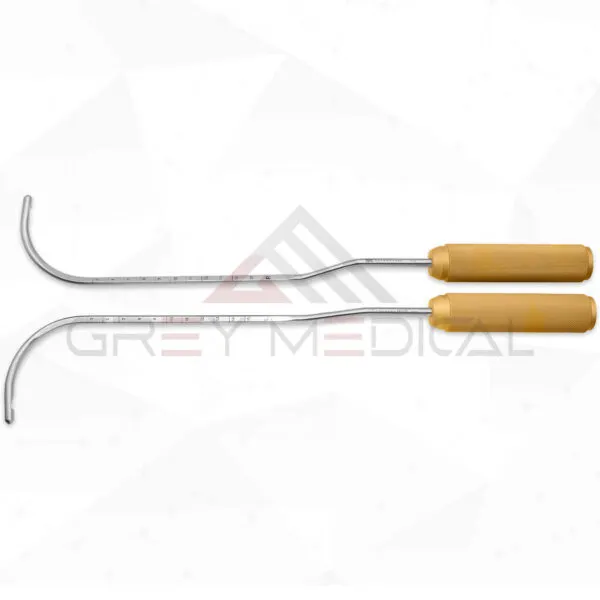
Dilating and probing instruments open and explore natural passages. Dilators widen ducts and vessels, probes trace channels and locate structures, and both guide the surgeon through anatomy that cannot be seen directly. A rough or missized tool damages the delicate lining it passes through. Polished, tapered tips advance gently without tearing tissue. Graduated dilators expand a passage in controlled steps rather than one forced motion. Careful dilation and probing protect the structures the surgeon works within.
Specialty Instruments
Specialty instruments serve procedures that standard tools cannot address. Ophthalmic instruments handle microscopic eye work, orthopedic tools shape and fix bone, and microsurgical instruments operate at scales the naked eye cannot judge. Using a general tool for specialized work compromises both precision and safety. These instruments demand tighter tolerances and specific geometries built for a narrow purpose. A microsurgical needle holder handles suture finer than a hair, and an ophthalmic blade cuts at fractions of a millimeter. Purpose-built tools make demanding procedures possible.
Material Quality Across Every Category
Material determines how long an instrument holds its function. Inferior steel dulls at the edge, loosens at the joint, and corrodes at the box lock. A tool that no longer performs its job puts both the procedure and the patient at risk. Medical-grade stainless steel resists corrosion and holds its shape under repeated stress. A passivated surface, meaning steel treated to resist rust, stays smooth through years of use and cleaning. Certified material separates an instrument that lasts from one that fails early. Sound material underpins every category on the tray.
Sterilization Durability
Sterilization protects the patient, and every instrument must survive it intact. Autoclaving exposes tools to high-pressure steam near 134 degrees Celsius across hundreds of cycles. Steel that cannot tolerate that heat pits and corrodes, and corrosion in a joint causes the mechanism to bind. Well-made instruments resist this damage. A corrosion-resistant finish withstands repeated cycles without pitting, and smooth surfaces clear residue easily during cleaning. Durability under sterilization keeps each instrument both safe and reliable across the surgical instruments categories on the tray.
Ergonomic Design and Handling
Handling matters when a surgeon uses an instrument hundreds of times through a long case. A stiff joint or an unbalanced tool turns each motion into effort, and that effort compounds over hours. Fatigue reduces precision at the moment it counts most. Careful construction addresses this. Balanced weight keeps the tool steady, textured grips resist slipping, and finger rings sized to the hand reduce strain. These details keep the instrument under precise control from first cut to final closure. Good ergonomics keep the surgical team's attention on the procedure rather than the tool.
Why Categorization Matters in Clinical Practice
Clear categories do more than tidy a tray. Standardized grouping speeds instrument counts, reduces retained-item risk, and shortens the learning curve for new scrub staff. Understanding the surgical instruments categories also guides purchasing, so teams stock complete sets rather than scattered duplicates. Consistent organization supports training as well. New team members learn tools by function, which builds understanding faster than memorizing individual names. Well-defined surgical instruments categories connect the tray, the count sheet, and the procedure into one predictable system.
Why Choosing a Trusted Supplier Matters
An instrument performs only as well as the process that made it, and inconsistent processes produce unreliable tools. A low purchase price means little if the edge dulls early, the joint loosens, or the finish corrodes in the autoclave. The real cost includes every replacement, every interrupted case, and every procedure complicated by a failing instrument. A trusted supplier removes that uncertainty. Consistent manufacturing means each tool matches the last, certified steel means the material performs as specified, and staged inspection means defects are caught before delivery. Sourcing complete surgical instruments categories from a proven supplier is a decision about reliability and long-term value, not initial price alone.
Conclusion
Organizing tools by function is the foundation of an efficient, safe operating room. Cutting, grasping, clamping, retracting, suturing, suctioning, dilating, and specialty instruments each carry a defined role, and grouping them clearly speeds hand-offs, counts, and training. Material quality, sterilization durability, and ergonomic design decide how well each category performs and how long it lasts. Choosing complete sets from a trusted supplier gives surgical teams tools they can rely on. Grey Medical builds each instrument to that standard, combining precise manufacturing with decades of clinical experience, so surgeons can trust the tray as much as the technique.

















Sign in to leave a comment.