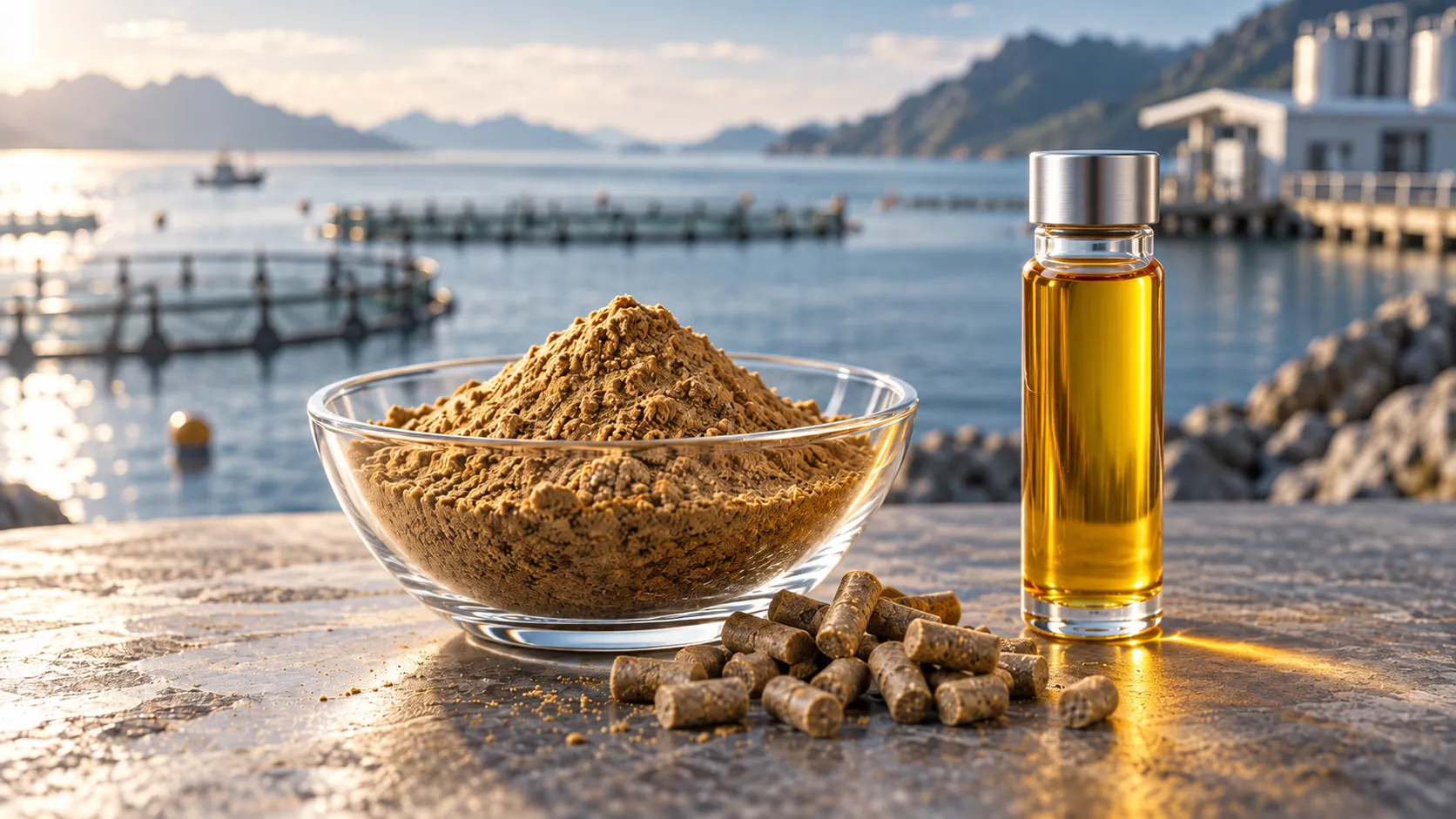

As global aquaculture and livestock farming adopt precision nutrition models, the demand for bioavailable protein and essential lipids has surged. Formulators and feed millers face the challenge of optimizing Feed Conversion Ratios (FCR) while ensuring animal vitality, disease resistance, and rapid growth.
Among conventional and alternative ingredients, marine-derived inputs—specifically high-grade fish meal, crude and refined fish oils, and soluble fish paste—remain the industry gold standard. Understanding their nutritional architecture explains why these ingredients are indispensable to commercial feed production.
Why Marine Proteins Are Critical for Aquafeed and Livestock Formulations
Fish meal is recognized as one of the most concentrated, digestible sources of complete animal protein available to commercial feed producers. Unlike terrestrial plant proteins, high-grade fish meal supplies a balanced amino acid profile that closely mirrors the dietary requirements of farmed aquatic species and young livestock.
- Superior Protein Concentration: Premium steam-dried fish meal typically yields between 60% and 65% crude protein, ensuring nutrient density without overloading digestive systems.
- Essential Amino Acid Balance: High levels of lysine, methionine, and threonine promote lean muscle accretion and skeletal integrity in species ranging from shrimp and salmon to poultry and piglets.
- Exceptional Digestibility: Low levels of indigestible fiber combined with specialized low-temperature steam drying processes keep amino acid chains intact, achieving digestibility rates above 90%.
The Functional Impact of Omega-3 Rich Fish Oil in Animal Health
Lipids serve as both concentrated energy reserves and critical biological regulators. Marine fish oils provide long-chain polyunsaturated fatty acids (LC-PUFAs), specifically eicosapentaenoic acid (EPA) and docosahexaenoic acid (DHA), which terrestrial animals and many marine organisms cannot synthesize efficiently on their own.
- Enhanced Immune Resilience: EPA and DHA modulate inflammatory pathways, reducing mortality rates during seasonal stress, pathogen exposure, and life-stage transitions.
- Improved Feed Conversion Ratios (FCR): Highly digestible fatty acids provide clean metabolic energy, allowing protein fractions to be spared for tissue growth rather than energy combustion.
- Bioavailability of Fat-Soluble Vitamins: Fish oils naturally facilitate the absorption of vital micronutrients, including vitamins A and D, accelerating developmental milestones in aquaculture hatcheries.
Expanding the Formulation Matrix: Fish Soluble Paste and By-Products
Modern processing facilities capture the full nutritional value of marine harvests by refining secondary streams into high-value feed additives.
- Fish Soluble Paste: A concentrated, semi-viscous nutrient concentrate containing around 50% to 60% soluble proteins and free amino acids. It serves as a potent natural attractant, stimulating feed intake in juvenile fish, shrimp post-larvae, and weaning livestock.
- Refined and Crude Marine Oils: Depending on application requirements—from bulk poultry rations to pharmaceutical-grade Omega-3 human supplements—controlled refining standards isolate target lipid fractions while stripping heavy metals, moisture, and impurities.
Sourcing Standards: Consistency, Processing, and Traceability
The functional performance of marine ingredients depends heavily on processing speed, freshness of raw materials, and strict temperature management. High-temperature rendering can denature sensitive proteins and oxidize polyunsaturated fats, compromising biological availability.
Working with experienced processors that prioritize cold-chain logistics, steam-drying technology, and international export certifications ensures batch-to-batch consistency. Leading suppliers such as Shireen Exports supply global markets with certified steam-dried fish meal, high-purity fish oil, and soluble paste processed directly at the coastal source to preserve volatile nutrients and guarantee regulatory compliance.
Frequently Asked Questions (FAQ)
What is the difference between steam-dried fish meal and flame-dried fish meal?
Steam-dried fish meal is processed at controlled, lower temperatures using indirect steam heat. This protects heat-sensitive amino acids such as lysine and cysteine from degradation. Flame drying exposes the raw material to direct combustion gases and higher heat, which often reduces overall digestibility and protein solubility.
How does fish oil improve growth performance in aquaculture?
Fish oil provides direct dietary sources of essential EPA and DHA fatty acids. These lipids support cellular membrane stability, improve hormonal regulation, and enhance energy density in aquafeeds, leading to reduced feed waste, lower FCR, and uniform weight gain.
What are the primary applications of fish soluble paste?
Fish soluble paste is primarily incorporated into aquaculture feeds, pet food, and specialized livestock rations as both a binder and an organic palatability enhancer. Its free amino acids stimulate feeding activity in species with sensitive appetites or during periods of environmental stress.


























Sign in to leave a comment.