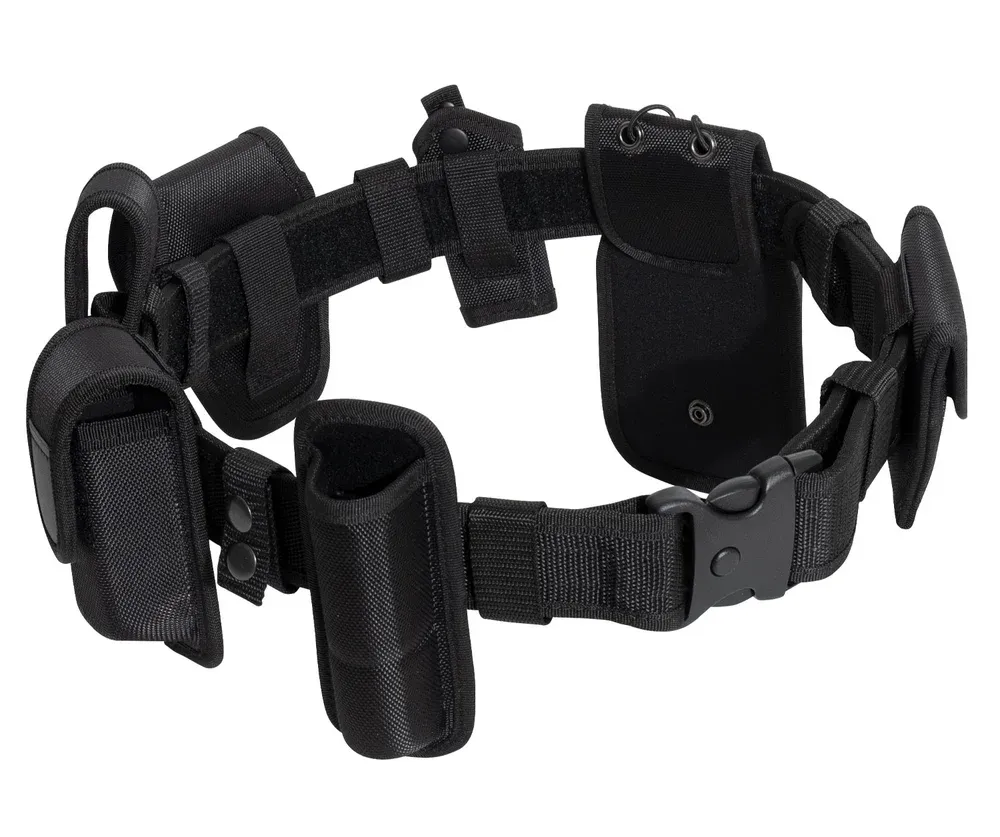

A belt is easy to overlook when you plan a loadout. It shouldn't be. It holds up your trousers, and for many professionals it is also the base that keeps tools, radios and accessories within reach. Pick the wrong one and you get sagging, sore hips and gear that shifts every time you move.
Tactical, duty, riggers and web belts look similar on a shelf, but they are built for different jobs. This guide covers the differences and what to check before you buy.
Why the Right Belt Matters
Your belt is the foundation of everything you wear at the waist. A good one spreads weight evenly, stays stable under load and doesn't wear out after a few months of daily use. A weak one stretches, twists and pushes your equipment out of position.
The right choice depends on how you'll use it: on duty, in the field, in training or on the job site.
Tactical Belt: The Everyday All-Rounder
A tactical belt is the most versatile of the group. Most are made from heavy-duty nylon webbing with a reinforced core, and they're designed to stay stiff enough to carry light equipment without the bulk of a full duty rig.
Best for: security professionals, outdoor use, range days, everyday carry, and people who want a rugged belt that still works with regular clothing.
What to look for:
- A semi-rigid core so the belt doesn't fold under weight
- A quick-release or heavy-duty buckle
- Adjustable sizing for layered clothing
Duty Belt: Built for Law Enforcement and Security
A duty belt is designed to carry a full working kit for long shifts. That usually means a holster, magazine pouches, a radio holder, handcuffs and other police duty gear. Duty belts are wider and stiffer than everyday tactical belts, and they're often used with an inner belt that keeps the outer one locked in place.
Best for: police officers, security teams, corrections staff and other law enforcement equipment users.
What to look for:
- Rigid construction that keeps the load steady
- Compatibility with holsters and pouches
- Comfortable, padded or well-contoured edges for 8–12 hour shifts
- Secure closures that won't loosen when you run or climb
A duty belt should feel solid. If it flexes under the weight of your gear, it's too soft for the job.
Rigger's Belt: Strong, Simple and Adjustable
A riggers belt is a straightforward, heavy-duty belt made from tough webbing with a metal cobra-style or quick-release buckle. It has no fixed holes, so you can adjust it to almost any waist size, and it's known for holding tight under stress.
Best for: tradespeople, outdoor work, military-style training and anyone who wants a durable belt that adjusts easily.
What to look for:
- Strong, tightly woven webbing
- A dependable buckle
- Enough length to fit over jackets or cold-weather layers
Military Web Belt: Lightweight and Classic
A military web belt is the classic choice: light, flat and simple, usually with a sliding metal buckle. It's not built to carry heavy equipment, but it is very comfortable and holds up well over time.
Best for: uniform wear, casual use, camping and light-duty carry.
What to look for:
- Consistent color and finish (important for uniform use)
- Reinforced stitching at the ends
- A buckle that resists rust and wear
Key Features to Compare Before You Buy
Whichever style you're leaning toward, check these first:
- Material. Look for heavy nylon webbing or full-grain leather. Thin, flimsy fabric loses its shape quickly.
- Rigidity. If you'll carry gear, choose a belt with a stiff core. If you won't, a flexible web belt is more comfortable.
- Buckle type. Quick-release buckles are fast and secure. Metal buckles are classic and durable. Check that whichever you pick is rated for your use.
- Sizing. Measure your waist over the clothing you'll actually wear. Duty belts are sized more precisely than adjustable riggers belts.
- Compatibility. If you use holsters, pouches or other tactical accessories, make sure the belt width matches them.
- Comfort. A belt you can't wear all day won't get used. Look for smooth edges and balanced weight distribution.
Mistakes to Avoid
- Buying too flexible. A soft belt sags under a loaded holster.
- Ignoring width. Pouches and holsters are made for specific belt widths.
- Sizing by pant size. Belt size and pant size are rarely the same. Measure your waist instead.
- Skipping the inner belt. For a duty setup, an inner belt keeps the outer one stable.
- Choosing on price alone. A belt is a daily-use item. Durability saves money over time.
Find Reliable Belts at PX Supply
If you're building a loadout for work, training or the outdoors, PX Supply carries belts in every style covered here, alongside packs, apparel and other military tactical gear. You can compare styles in one place and match your belt to the rest of your equipment. Explore the full range at PX Supply.
Takeaway
Match the belt to the job. A duty belt suits long shifts with a full kit, a tactical belt covers everyday and outdoor use, a rigger's belt offers adjustable strength, and a web belt keeps things light and traditional. Check the material, stiffness, and buckle before you buy, and you'll get a belt that lasts.
























Sign in to leave a comment.