
Global Tantalum Material Market: Strategic Trends and Commercial Opportunities Through 2032
Market Overview and Core Challenges
The worldwide tantalum material market has demonstrated consistent expansion, with revenues climbing from approximately 412 million USD in 2020 to reach 540 million USD in 2025. Projections indicate the market will advance to around 801 million USD by 2032, supported by a compound annual growth rate of 5.81 percent. This trajectory reflects steady demand across high-technology and industrial sectors, underpinned by the material's unique combination of corrosion resistance, high melting point, and superior capacitance properties. Capitalizing on this growth, however, requires navigating a landscape defined by geographic concentration, supply chain fragility, and evolving regulatory expectations.
A defining characteristic of the current market is the high degree of supply concentration. Three major producers control more than 58 percent of global output, while the top five entities account for nearly three-quarters of total revenue. Such concentration creates structural vulnerabilities. When production in key mining regions faces disruption, price spikes and allocation constraints ripple rapidly through downstream manufacturing networks. Industry participants have already experienced these pressures, with spot prices for tantalum ore reaching elevated levels amid operational setbacks and geopolitical tensions. Relying on a narrow supplier base exposes manufacturers to both cost volatility and continuity risk.
Geographic dependencies compound these vulnerabilities. A significant share of mined tantalum originates from the Democratic Republic of Congo and neighboring regions, where conflict, infrastructure limitations, and political instability can interrupt flows without warning. Recent trade measures, including sanctions targeting specific military actors and extended restrictions on materials from designated conflict zones, have introduced additional compliance complexity. Exporters and importers must now navigate overlapping due diligence requirements that span multiple jurisdictions, lengthening lead times and increasing administrative costs for cross-border transactions.
A second critical challenge lies in the rapidly advancing standards of end-use applications. Electronics designers, aerospace engineers, and medical device manufacturers increasingly demand higher purity, tighter dimensional tolerances, and consistent batch-to-batch performance. Meeting these specifications requires refined processing capabilities and rigorous quality assurance systems that not all suppliers can sustain. Companies operating at smaller scale or with outdated infrastructure risk being sidelined as procurement teams prioritize verified reliability and traceability over price alone.
Environmental, social, and governance expectations represent a third pressure point. Customers and regulators are scrutinizing the origin of minerals more closely, particularly where sourcing intersects with regions flagged for human rights concerns or armed conflict. Demonstrating responsible sourcing has shifted from a legal checkbox to a competitive differentiator. Firms that lack transparent supply chain mapping or credible certification pathways face mounting friction when bidding for contracts with multinational OEMs or government-backed programs. Together, these challenges create a market where resilience, compliance, and technical differentiation matter as much as cost efficiency.
Key Drivers Shaping Market Dynamics
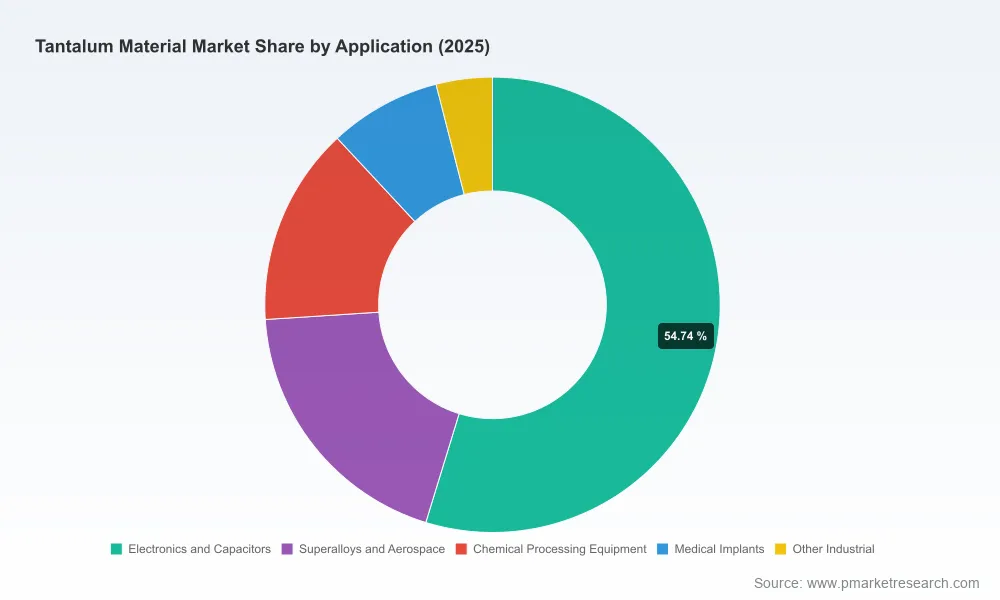
Several interrelated forces are propelling the tantalum market forward, each reshaping where value is created and how companies must position themselves. Technological innovation in electronic components stands as a primary catalyst. Tantalum capacitors continue to serve critical functions in devices requiring stable capacitance, high reliability, and compact form factors. Recent product introductions have extended the material's reach into military-grade surface-mount configurations, highlighting how incremental advances in material science and fabrication methods unlock new performance thresholds. As defense electronics, telecommunications infrastructure, and advanced automotive systems demand components that perform under extreme conditions, the appetite for high-grade tantalum powders and precision mill products continues to expand.
Parallel developments in high-temperature alloys carry equal weight. Aerospace and turbine applications increasingly rely on superalloy formulations that incorporate tantalum to enhance creep resistance and thermal stability. The push toward more efficient engines and next-generation spacecraft components drives long-term procurement commitments, creating a structural floor beneath demand. Chemical processing equipment also benefits from tantalum's corrosion resistance, particularly in environments handling aggressive acids or high-purity reagents. Manufacturers serving these segments are investing in capacity and process control to meet tighter material specifications, reinforcing a cycle where performance requirements lift the baseline for industry entry.
Policy and regulatory evolution exert a powerful influence from a different angle. Frameworks mandating supply chain due diligence have raised the cost of non-compliance while rewarding firms with established traceability systems. Regulations targeting conflict minerals require companies to document the origin of tantalum-bearing materials and implement risk mitigation measures throughout procurement. Although these requirements introduce operational overhead, they also create a moat for well-prepared suppliers. Organizations that invest in auditable sourcing protocols, third-party certifications, and transparent reporting gain preferential access to customers who prioritize risk reduction. Over time, this dynamic strengthens the position of vertically integrated producers and disciplined processors while squeezing out actors with opaque or fragmented supply networks.
PW Consulting
Supply chain restructuring and cost dynamics form a third driver. Recent price movements illustrate how quickly conditions can shift. Spot prices for tantalite climbed to multi-year highs following operational disruptions at major mining sites and broader geopolitical uncertainty. A landslide at a key mine, combined with regional instability, tightened available supply and pushed procurement teams to secure forward coverage. At the same time, strategic investments in refining capacity signal efforts to diversify processing options and reduce reliance on single regions. Facility expansions announced by leading refiners aim to increase throughput and capture value closer to end markets, while mine acquisitions in Europe reflect a broader interest in shortening supply chains and improving control over raw material quality. These moves suggest a market gradually rebalancing between centralized sourcing and regionalized resilience.
Worldwide Disposable RF Cannula Market
Demand-side behavior also continues to evolve. Procurement strategies in high-stakes industries are shifting from purely transactional purchasing toward strategic partnerships. OEMs and tier-one suppliers increasingly value suppliers who can guarantee material availability, provide technical support, and align with their timeline and compliance requirements. This shift favors companies that combine reliable production with consultative engagement. At the same time, recycling and secondary sourcing are gaining attention as complementary channels. Recovering tantalum from scrap and legacy components offers a pathway to diversify supply and reduce exposure to primary mining constraints, though scaling these streams requires investment in collection infrastructure and refining capability. The interplay of these demand-side shifts is raising the strategic importance of supplier relationships and long-term planning.
Competitive Landscape and Leading Strategies
The market's competitive structure reflects a blend of vertically integrated producers, specialized processors, and regional fabricators. Global Advanced Metals operates an integrated model that spans mining and processing, supplying tantalum metal, powder, and compounds for electronics, aerospace, and medical applications from both primary and recycled sources. This vertical integration provides a degree of control over input quality and availability that downstream-only competitors cannot easily replicate. The company's recent expansion of a Pennsylvania-based refining facility, intended to lift capacity by roughly 30 percent, signals a clear intent to strengthen domestic processing capability and respond to rising demand from North American end users. By scaling refining throughput, the firm positions itself to capture more value along the chain while offering customers shorter lead times and enhanced supply security.
AMG Advanced Metallurgical Group N.V. maintains a strong presence through its subsidiaries, focusing on tantalum concentrates, powders, and alloys for capacitors, superalloys, and chemical processing. Its strategy emphasizes breadth of product coverage and the ability to serve multiple end markets from a single organizational base. This multi-segment approach spreads risk and allows the company to rebalance portfolio emphasis as demand cycles shift across industries. H.C. Starck, operating through Taniobis GmbH, specializes in tantalum and niobium materials, with particular strength in high-purity powders, mill products, and compounds serving capacitors, medical devices, and semiconductors. Its reputation for purity and technical precision makes it a preferred partner for applications where material consistency directly affects device performance and regulatory approval.
Chinese processors, including Ningxia Orient Tantalum Industry Co., Ltd., China Minmetals Corporation, and Changsha South Tantalum and Niobium Co., Ltd., occupy a significant share of production and processing capacity. Their scale, established distribution networks, and ability to deliver a broad range of forms—from ingots and sheets to rods, wires, and high-purity powders—make them influential suppliers across both domestic and export markets. These companies benefit from integrated industrial ecosystems and competitive cost structures, though they also operate within a landscape where trade policy, export controls, and sourcing requirements can influence market access. Their continued expansion underscores the strategic weight of Asian manufacturing capacity in the global tantalum value chain.
A second tier of participants includes regional fabricators and distributors that compete on responsiveness, customization, and service depth. Eagle Alloys Corporation, Rembar Company, and Stanford Advanced Materials supply commercially pure tantalum and alloys in diverse forms such as foil, sheet, rod, wire, and fabricated parts, often meeting ASTM specifications or supporting research and industrial prototyping. Their value proposition centers on flexibility, technical assistance, and the ability to fulfill specialized orders without requiring the lead times of large-scale commodity flows. Meanwhile, raw material producers such as Minsur S.A. and ULBA Metallurgical Plant JSC anchor the upstream side by supplying concentrates and refined intermediates that feed downstream processors. This layered structure means that competitive advantage depends not only on volume but also on how effectively a company aligns its capabilities with the expectations of specific customer segments.
Several strategic themes emerge from this landscape. First, differentiation increasingly hinges on verifiable quality and traceability rather than price alone. Suppliers that can document purity, consistency, and responsible sourcing secure preference with customers facing stringent compliance and performance demands. Second, capacity investments are being used to signal reliability and capture growth in priority markets. Expanding refining throughput, securing mine ownership in new regions, and developing secondary sourcing channels all serve to reduce dependency on constrained supply nodes. Third, the market is showing signs of selective consolidation as larger players strengthen integration and smaller participants seek partnerships or niche positioning to remain viable. At the same time, new entrants are drawn to opportunities in high-purity powder production, specialized alloys, and regional processing hubs that shorten logistics pathways. The result is a market where scale, technical capability, and supply chain transparency jointly determine competitive standing.
Forward Outlook and Emerging Opportunities
Looking ahead to the next three to five years, a few trends are likely to define how the tantalum market evolves. The first is persistent demand growth driven by electronics and high-performance industrial applications. As capacitors continue to enable miniaturization, reliability, and stable performance in defense, telecom, and automotive systems, and as superalloys support more efficient aerospace propulsion and energy infrastructure, the baseline requirement for tantalum materials should keep rising. This trajectory creates opportunities for suppliers that align capacity expansion with the specific material grades and forms most in demand, rather than pursuing undifferentiated volume. Firms that can match product specifications to the technical roadmaps of key end markets will capture disproportionate value.
A second trend is the intensification of supply chain resilience as a strategic priority. Recent disruptions, from mine closures and landslides to sanctions and conflict-zone restrictions, have underscored the fragility of concentrated sourcing. In response, companies are expected to diversify procurement geographies, invest in regional processing, and develop secondary supply channels through recycling and scrap recovery. This shift favors organizations that can demonstrate multi-source capability, maintain buffer inventory where justified, and provide clear visibility into material origins. It also creates openings for mine-to-refinery projects in new locations that reduce exposure to single-region risk and offer customers a more predictable supply path.
A third trend involves the tightening intersection of compliance and commercial access. Due diligence requirements are likely to remain in force and may expand in scope or enforcement intensity. Companies that treat responsible sourcing as a core competency rather than a peripheral cost will gain smoother access to contracts with multinational buyers and regulated sectors. The opportunity here is not merely to avoid penalties but to use verified sourcing as a differentiator that supports premium positioning and long-term relationships. At the same time, risks remain. Price volatility can compress margins if contracts are not structured to manage input cost swings. Regulatory shifts may alter trade routes or add documentation burdens. Geopolitical developments could disrupt flows from major producing regions or affect specific intermediaries. Navigating these uncertainties will require scenario planning, flexible procurement terms, and continuous monitoring of both market and policy signals.
Strategic Guidance for Decision-Makers
For manufacturers, the priority is to align product roadmaps with the highest-growth tantalum applications while securing supply arrangements that balance cost and reliability. Investing in relationships with suppliers who offer technical support, consistent quality, and documented traceability can reduce interruption risk and improve time-to-market for new products. Where feasible, qualifying multiple sources for critical grades and forms provides a practical buffer against localized disruptions. Manufacturers should also evaluate the potential of secondary tantalum streams to complement primary procurement, particularly for applications where recycled material can meet performance standards.
Alpha Pinene Market
For investors, the opportunity lies in identifying participants with durable competitive advantages: vertical integration that controls quality and availability, specialized capabilities in high-purity or high-specification products, and credible sourcing frameworks that reduce compliance risk. Capacity expansions and regional diversification projects merit close attention as indicators of where supply is likely to strengthen. At the same time, due diligence on exposure to concentrated sourcing regions and sensitivity to regulatory change is essential. Valuation assumptions should account for the possibility of price swings and the operational costs of maintaining compliance across jurisdictions.
For procurement and supply chain leaders, building resilience should focus on visibility and flexibility. Mapping the full path from mine or recycler to finished component, establishing clear due diligence practices, and negotiating contracts that allow for adaptive pricing or alternative sourcing can protect operations against sudden disruptions. Prioritizing suppliers with a track record of consistent delivery and transparent reporting often pays dividends in reduced expediting costs and fewer production stoppages. In a market where concentration and geopolitical factors can shift conditions quickly, timely access to detailed intelligence on pricing trends, capacity changes, and regulatory updates becomes a strategic asset. Comprehensive market research provides the granularity needed to calibrate sourcing strategies, assess supplier options, and anticipate shifts before they affect operations.
For detailed analysis of this topic, please visit the official page: Worldwide Tantalum Material Market
Lacy Lee
Senior Marketing Manager
[email protected]
PW Consulting: www.pmarketresearch.com






























Sign in to leave a comment.