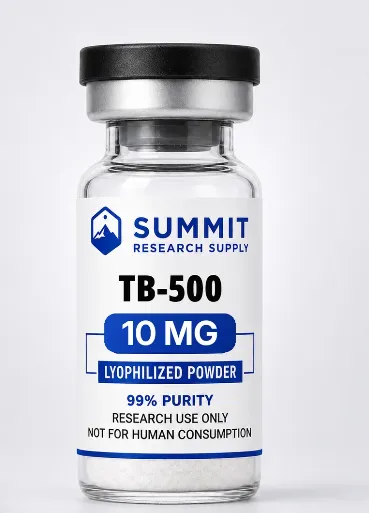

TB 500 is a research peptide commonly discussed in connection with thymosin beta 4 related research. Researchers have investigated thymosin beta 4 and related peptide biology in areas including cellular migration, angiogenesis, inflammation, and tissue response. However, TB 500 should not automatically be treated as equivalent to full length thymosin beta 4 because their molecular structures differ.
Summit Research Supply provides TB 500 research materials intended exclusively for controlled laboratory and scientific research. This guide explains the key considerations researchers should understand when evaluating TB 500, including product identity, analytical testing, documentation, and quality.
What Is TB 500?
TB 500 is a synthetic peptide associated with research into thymosin beta 4 related biological mechanisms. The FDA distinguishes TB 500 free base and TB 500 acetate from naturally occurring thymosin beta 4, which is a 43 amino acid peptide. This distinction is important when interpreting scientific literature and evaluating research materials.
Published research involving thymosin beta 4 has examined biological processes such as cell migration, angiogenesis, inflammation, and tissue repair. However, findings involving full length thymosin beta 4 should not automatically be considered evidence for every TB 500 formulation.
Researchers should therefore begin by confirming the exact identity and formulation of the material being evaluated.
TB 500 Research
TB 500 research can involve peptide characterization, molecular interactions, cellular processes, and related biological mechanisms. Experimental research provides an opportunity to investigate how specific peptide materials behave under controlled laboratory conditions.
Researchers should distinguish between laboratory findings and established clinical applications. Preclinical or experimental observations do not automatically establish effectiveness or safety in humans.
For this reason, TB 500 should be evaluated as a research material according to the objectives and methodology of the applicable laboratory protocol.
Why TB 500 Quality Matters?
Quality assessment is an important part of research material selection. Researchers should evaluate more than the product name or an advertised purity percentage.
Important considerations can include:
- Product identity
- Batch or lot number
- Reported purity
- Analytical testing
- Testing date
- Storage information
- Product labeling
- Supporting documentation
Clear documentation helps researchers determine what material was evaluated and maintain appropriate laboratory records.
Analytical Testing for TB 500
Analytical testing can provide useful information about a peptide research material. Depending on the testing requirements, researchers may encounter techniques such as high performance liquid chromatography and mass spectrometry.
HPLC can provide chromatographic information that supports purity assessment. Mass spectrometry can provide complementary information related to molecular mass and identity.
Researchers should review the actual analytical documentation associated with the relevant batch. Results from one batch should not automatically be assumed to represent another production batch.
TB 500 and COA Documentation
A Certificate of Analysis (COA) can provide batch specific information about a research material. Researchers evaluating TB 500 can review the product identity, batch number, testing date, reported purity, analytical methods, and available test results.
The batch number is particularly important because it connects the analytical documentation with a specific production lot. Researchers should confirm that the batch information on the COA corresponds with the material label and other product documentation.
A COA should be considered one component of a broader quality assessment rather than a standalone guarantee of research suitability.
TB 500 Product Information
Researchers interested in TB 500 can review the product information available from Summit Research Supply, including the stated specifications and research use details.
Researchers should review current product documentation before incorporating a research material into an experimental workflow. Product information, analytical documentation, storage requirements, and laboratory procedures should be considered together.
What to Consider When Buying TB 500?
Researchers searching for TB 500 for sale should focus on product transparency and documentation rather than availability alone.
Before selecting a research supplier, researchers can check whether information is provided regarding:
- Product identity and description
- Batch or lot information
- Analytical testing
- Reported purity
- COA availability
- Storage requirements
- Research use labeling
These details can support better material evaluation and laboratory record keeping.
Researchers should also distinguish between research quantities and human dosing. A product quantity is a specification for the supplied research material and should not be interpreted as a recommendation for human use.
Current Regulatory Considerations
Researchers should be aware that TB 500 is not an FDA approved therapeutic treatment. FDA materials have identified limited safety information concerning TB 500 free base and TB 500 acetate and have highlighted concerns requiring further evaluation.
This reinforces the importance of distinguishing scientific research from clinical use. Experimental research can contribute to understanding peptide biology, but it does not establish a compound as an approved medicine.
Why Choose Summit Research Supply?
Summit Research Supply provides research focused peptide materials and supporting product information for laboratory and scientific applications.
For researchers evaluating TB 500, clear product information can help with reviewing the material's stated characteristics and research use status. Researchers should independently assess whether the material meets the requirements of their particular experimental protocol.
Maintaining accurate records of product identity, batch information, analytical documentation, and storage conditions can also support laboratory traceability.
Frequently Asked Questions
What is TB 500?
TB 500 is a synthetic peptide commonly discussed in relation to thymosin beta 4 related research. It should be distinguished from full length thymosin beta 4 because the compounds have different molecular structures.
What is TB 500 research focused on?
Research related to thymosin beta 4 has investigated cellular migration, angiogenesis, inflammation, and tissue responses. Researchers should distinguish this literature from direct evidence concerning specific TB 500 formulations.
What should researchers check when buying TB 500?
Researchers should review product identity, batch information, analytical testing, purity data, COA documentation, storage requirements, and research use labeling.
Is TB 500 approved for human use?
TB 500 research materials should not be represented as FDA approved treatments or products for human consumption. They are intended for controlled laboratory and scientific research.
Conclusion
TB 500 is a research peptide associated with thymosin beta 4 related scientific investigation. Researchers evaluating this material should pay close attention to molecular identity, analytical testing, batch specific documentation, purity information, and storage requirements.
Summit Research Supply provides TB 500 research materials and product information intended exclusively for controlled laboratory and scientific research.
Research use only. Not intended for human consumption, self administration, or therapeutic use.


























Sign in to leave a comment.