
Terminal Tractor Market: Strategic Shifts and Commercial Opportunities Through 2032
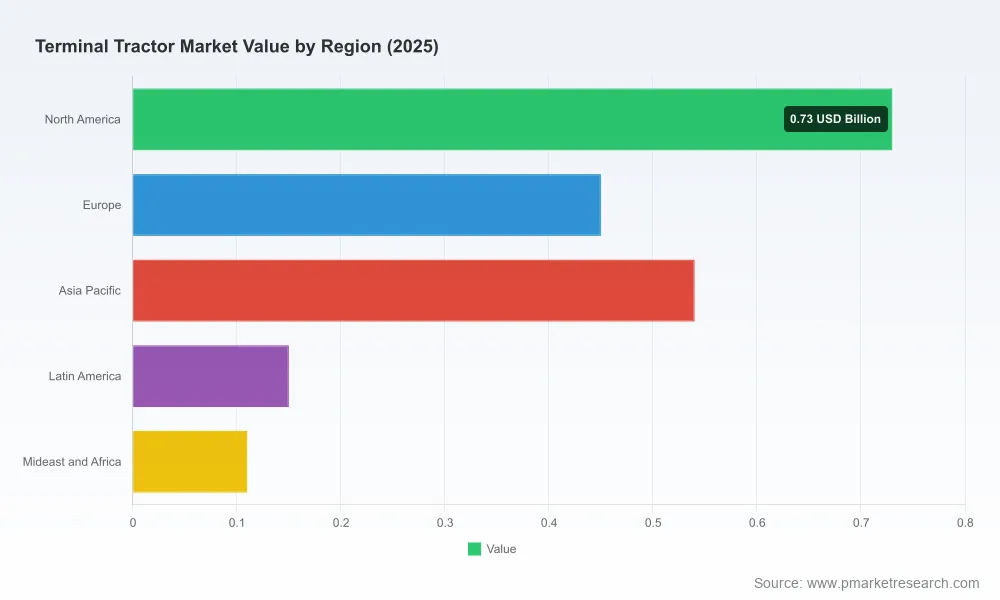
The terminal tractor market, a critical enabler of intermodal logistics, port operations, and yard mobility, has entered a phase of structural transformation. Rated at a five-year CAGR of 5.5 percent, the sector is expanding as global supply chains prioritize asset turnover, emissions compliance, and yard automation. The total market has grown from an estimated 1.55 billion USD in 2020 to approximately 1.98 billion USD in 2025, with forward projections reaching 2.91 billion USD by 2032. This trajectory reflects more than incremental growth; it signals a market being reshaped by electrification, operational redesign, and shifting procurement paradigms. For executives and investors operating in logistics, heavy equipment, or infrastructure-adjacent industries, understanding these dynamics is no longer optional. It is a prerequisite for capital allocation, product roadmapping, and competitive positioning.
Yet expansion does not guarantee smooth sailing. The sector is navigating a set of crosscurrents that will determine which players capture value and which are left managing legacy fleets or misaligned technology bets. The current environment is defined by rapid innovation, policy uncertainty, and a procurement landscape that increasingly ties equipment decisions to total cost of ownership rather than upfront acquisition cost. These themes converge in three areas that demand attention: the push toward electric powertrains, the reconfiguration of funding and incentive structures, and the growing expectation that yard equipment must integrate with broader automation and fleet-management ecosystems.
Market Overview: A Sector Transitioning from Functionality to Performance
The terminal tractor market has matured from a functionally focused niche into a performance-driven category where uptime, energy efficiency, and compatibility with terminal workflows are decisive. Growth over the past cycle has been broad-based, reflecting demand across multiple operating contexts and geographies. The expansion has been supported by rising cargo volumes, renewed investment in intermodal capacity, and the need to replace aging yard equipment with machines that meet modern operational and environmental expectations. By 2032, the market is projected to approach the 2.9 billion USD mark, underscoring a sustained demand environment rather than a temporary cyclical lift.
However, the headline numbers only tell part of the story. The market’s structure is evolving in ways that affect procurement timing, product architecture, and the competitive balance between established manufacturers and newer entrants. Buyers are no longer evaluating terminal tractors solely as isolated yard assets. They are weighing them as nodes within electrified operations, data-enabled maintenance programs, and integrated material-handling workflows. This mindset shift is changing the terms of competition: durability, energy storage performance, service network coverage, and compatibility with terminal operating systems now carry disproportionate weight.
That shift also exposes the sector’s vulnerabilities. Electrification introduces dependency on battery performance, charging infrastructure, and thermal management in demanding yard environments. Policy and funding mechanisms, where they exist, can be volatile and subject to administrative reinterpretation. And as manufacturers race to bring advanced powertrains to market, the operational burden of validation, service readiness, and parts availability becomes a differentiator rather than a background concern. In this context, the market’s growth story is real, but it is increasingly conditional on execution quality and alignment with how terminals actually operate.
PW Consulting
Core Challenges: Where Growth Meets Friction
The first major challenge is the tension between electrification ambition and operational reality. Electric terminal tractors are gaining visibility, but their adoption depends on more than vehicle capability. Battery endurance under high-cycle duty, charging turnaround time, and performance in extreme climates remain practical considerations that can affect fleet scheduling and utilization. Terminals that run continuous shift patterns or handle heavy, repetitive loads need equipment that can sustain throughput without creating new bottlenecks. This means the transition to electric yard equipment is not simply a product swap; it is an operational redesign that must account for energy management, maintenance staffing, and infrastructure planning.
A second challenge arises from the shifting landscape of incentives and procurement programs. In some markets, funding mechanisms have come under revision, altering the economics of equipment purchases for operators that previously relied on subsidized pathways. For example, terminal tractor equipment was removed from California’s CORE catalog after July 2025, a move that illustrates how quickly the availability of financial support can change the near-term purchasing calculus. Even when incentives are available, eligibility requirements and administrative timelines can complicate deployment plans. For fleets and operators, this creates uncertainty in budgeting and can shift emphasis toward conventional procurement strategies or toward total-cost-of-ownership models that do not depend on temporary subsidy structures.
The third challenge is the growing expectation of integration. Terminal tractors increasingly operate in environments where telematics, maintenance forecasting, and yard orchestration systems matter as much as raw towing and maneuvering capability. When equipment is expected to interface with broader logistics technology stacks, vendors must deliver not only durable hardware but also compatible digital services and dependable support. Manufacturers that cannot support this integrated expectation risk being excluded from operator consideration sets, even if their machines perform well in isolation. The practical outcome is a narrower competitive window for companies that treat electrification, digital enablement, and service quality as separate initiatives rather than as a unified value proposition.
Key Drivers Shaping the Market
Technology innovation is the most visible driver, especially the continued development of electric terminal tractors designed for demanding yard cycles. Recent activity highlights how quickly the product conversation is moving. In May 2026, Kalmar Ottawa launched a fully electric TT7 EV terminal tractor for European markets at the TOC Europe Conference in Hamburg, signaling a push to broaden electric offerings beyond pilot programs into commercial rollout. Around the same time, Terberg Special Vehicles showcased an enhanced YT203EV terminal tractor with a 310 kWh LFP battery system, also at TOC Europe, reinforcing the focus on energy storage capacity, durability, and repeatable performance in port and distribution-center settings. These launches, alongside Kalmar Ottawa’s participation at ACT EXPO, suggest an industry that is using major trade venues not just for visibility but to accelerate commercial validation of electric platforms.
Policy and regulatory pressure is another force shaping procurement and design. Emissions expectations, urban air-quality goals, and port decarbonization targets are encouraging operators to consider cleaner yard equipment, but the regulatory path is uneven across regions. In some jurisdictions, incentives are expanding; in others, program eligibility is being narrowed or restructured. This asymmetry means manufacturers and operators must plan for multiple policy scenarios rather than assume a single direction of travel. Equipment that can meet emissions expectations while maintaining operational resilience is better positioned to navigate changing rules, particularly where funding pathways can shift with little warning.
Demand-side behavior is also changing the market. Terminal and logistics operators are increasingly focused on total cost of ownership, uptime, and lifecycle predictability. The conversation is moving away from unit price alone toward questions about energy cost, maintenance intensity, residual value, and the ability to keep assets in service across high utilization cycles. At the same time, operators are responding to labor constraints and throughput pressure by seeking equipment that reduces vibration, noise, and physical strain in yard operations while preserving productivity. Electric terminal tractors, in particular, are being evaluated not just for environmental reasons but for operational characteristics such as torque delivery, quiet performance, and the potential to support more predictable maintenance schedules.
Supply chain and cost-structure dynamics complete the picture. Battery chemistry, component sourcing, transmission and drivetrain supply, and the cost of scaling electric platform production all influence product availability and pricing. Manufacturers that can stabilize supply, manage component integration, and build service capacity alongside vehicle production are better equipped to meet demand without sacrificing reliability. The same logic applies to remanufacturing, parts availability, and regional service coverage. As yard equipment becomes more technologically complex, the economics of the market increasingly depend on the ecosystem around the vehicle as much as on the vehicle itself.
Competitive Landscape: Differentiation in a Consolidating Market
The competitive environment is shaped by a mix of specialized terminal tractor manufacturers, integrated platform suppliers, and larger equipment groups expanding into electric yard machinery. The market remains concentrated, with a small group of leading players capturing a substantial share of activity. That concentration is not static, however. Companies are differentiating through product architecture, powertrain strategy, geographic focus, and the breadth of their support networks.
Kalmar Ottawa stands out for its focused manufacturing model and dual approach to powertrain options. Based in Ottawa, Kansas, the company designs, produces, and tests terminal tractors in-house, offering both diesel and third-generation electric models such as the T2 EV for ports, terminals, distribution centers, and intermodal applications. Its emphasis on in-house engineering and testing suggests a strategy centered on control over product development and the ability to tailor machines to specific yard conditions. The May 2026 launch of the TT7 EV for European markets and attendance at ACT EXPO reinforce a deliberate effort to extend electric reach while maintaining visibility in key commercial channels.
Terberg Special Vehicles has built its position around high-performance electric solutions for global terminal and industrial operations. Its electric lineup, including the YT201EV and enhanced YT203EV with 310 kWh LFP battery options, targets port terminals, distribution centers, and similar demanding environments. The focus on battery specification and electric-only specialization reflects differentiation through powertrain depth rather than breadth. This approach can be attractive to operators who want a concentrated electric offering with a clear performance narrative, especially when energy storage and repeated duty cycles are central concerns.
TICO Tractors combines manufacturing with operational experience in on/off-highway terminal tractors and shuttle trailers. Its Pro-Spotter and Pro-Shuttle portfolio, along with next-generation electric models developed with Volvo Penta integration, emphasizes real-world durability for ports, rail terminals, and distribution centers. By linking vehicle design with an operational perspective, TICO positions itself around practical endurance and integration with known drivetrain and component ecosystems. This can be a meaningful advantage in markets where buyers value proven component relationships and field-tested configurations.
Capacity Trucks operates in a different but complementary position, functioning as an OEM for terminal tractor platforms featuring ZF PowerLine transmissions. By supplying North American OEMs and terminal tractor manufacturers with components for heavy-duty yard operations, the company participates in the market through platform and component enablement rather than solely through finished-vehicle branding. This role matters because powertrain and transmission choices influence vehicle performance, serviceability, and differentiation across multiple manufacturers.
Aircraft Tractor Market
Autocar Trucks and SANY Group add further diversity to the competitive picture. Autocar’s ACTT electric terminal tractor is engineered for demanding yard operations from ports to warehouses, emphasizing power and quiet performance with no vibration. SANY Group produces electric terminal tractors for port machinery, with an emphasis on endurance and quality for material handling and logistics applications. Together, these players illustrate that competition is not only about who makes the most electric models, but about who can align product attributes with specific operational contexts, support networks, and regional demand patterns.
The broader trend in the landscape is one of strategic differentiation rather than undifferentiated expansion. Some manufacturers are concentrating on electric specialization, others on platform and component supply, and others on combining manufacturing with operational credibility. New entrants and expanding incumbents are likely to keep pressure on established players, especially as electrification becomes a standard expectation rather than a differentiator. At the same time, consolidation risks increase where service coverage, parts availability, and fleet support become decisive. In a market where uptime matters as much as hardware specs, companies that can deliver an integrated package across equipment, components, and service are best positioned to defend share and expand into adjacent segments.
Forward Outlook: Three Trends to Watch
The first major trend is the steady move toward electric terminal tractors as a default consideration rather than a niche option. As more commercial launches reach terminals and as operators gain confidence in battery performance, charging logistics, and lifecycle economics, electric platforms are likely to become a larger share of new equipment discussions. The opportunity here is not merely selling electric vehicles, but shaping the surrounding operating model: charging schedules, energy procurement, maintenance planning, and integration with yard workflow tools. Companies that can help operators manage the transition stand to capture value beyond the initial equipment sale.
The second trend is the increasing importance of integration and digital services. Terminal tractors are becoming part of broader yard ecosystems where telematics, maintenance forecasting, and operational visibility influence purchasing decisions. This creates opportunities for manufacturers and service providers to differentiate through data-enabled support, predictive maintenance, and compatibility with terminal operating systems. It also raises the bar for execution, because digital capability without dependable hardware or service coverage provides limited value in high-utilization environments.
The third trend is the growing sensitivity of the market to policy and funding variability. Where incentive programs change, procurement timing and equipment mix can shift quickly. This introduces both risk and opportunity. Operators that can model scenarios without depending on temporary funding are more resilient, while manufacturers that can adapt product offerings and support strategies to changing regional rules can maintain momentum across cycles. The practical implication is that flexibility, rather than rigid reliance on any single incentive pathway, will be a valuable capability for both buyers and sellers.
These trends do not come without uncertainty. Battery supply and cost dynamics, the pace of charging infrastructure deployment, and the durability of electric platforms under extreme yard conditions all remain variables that can affect adoption speed. Policy reversals or eligibility changes can alter near-term demand patterns, and uneven service capacity can slow deployment even when products are technically ready. The market is likely to reward participants that manage these uncertainties through disciplined product validation, robust service planning, and clear communication of total-cost economics.
Strategic Actions for Decision-Makers
For manufacturers, the priority is to treat electrification as a combined engineering, service, and ecosystem challenge. Product leadership now depends on battery endurance, thermal and operational reliability, parts availability, and the ability to support customers through deployment. Investing in validation under real yard conditions and building service coverage that matches the product footprint can create durable advantages. Companies should also consider how component partnerships, platform architecture, and digital support fit together, because customers increasingly evaluate these elements as a package rather than as separate purchases.
For investors, the opportunity lies in distinguishing between headline electrification momentum and commercially sustainable execution. Businesses with stable supply chains, repeatably validated electric platforms, and credible service networks are more likely to convert market growth into durable margin and share gains. Attention to regional policy exposure is equally important, since funding volatility can affect demand timing and equipment mix. Capital allocation should favor operators that can demonstrate total-cost advantages and the ability to support high-utilization fleets through the full asset lifecycle.
Telehandlers Market
For procurement leaders and terminal operators, the practical focus should be on scenario-based planning. Equipment decisions should account for energy management, charging logistics, maintenance staffing, and integration with yard operations rather than treating the purchase as an isolated transaction. Where incentive programs exist, they should be treated as potential upside rather than as the foundation of the business case. Evaluating vendors on uptime, service reach, component relationships, and compatibility with operational systems can reduce risk and improve long-term fleet performance.
The terminal tractor market is expanding, but the value within that expansion is increasingly concentrated in execution quality and strategic fit. Participants that align product capability with operational reality, manage policy variability, and support customers through integration challenges are best positioned to capture the next phase of growth. For decision-makers seeking a sharper view of segment-level dynamics, regional deployment patterns, and customized commercial scenarios, a more detailed research account can provide the granular data needed to support planning and investment decisions.
For detailed analysis of this topic, please visit the official page: Terminal Tractor Market
Lacy Lee
Senior Marketing Manager
[email protected]
PW Consulting: www.pmarketresearch.com

























Sign in to leave a comment.