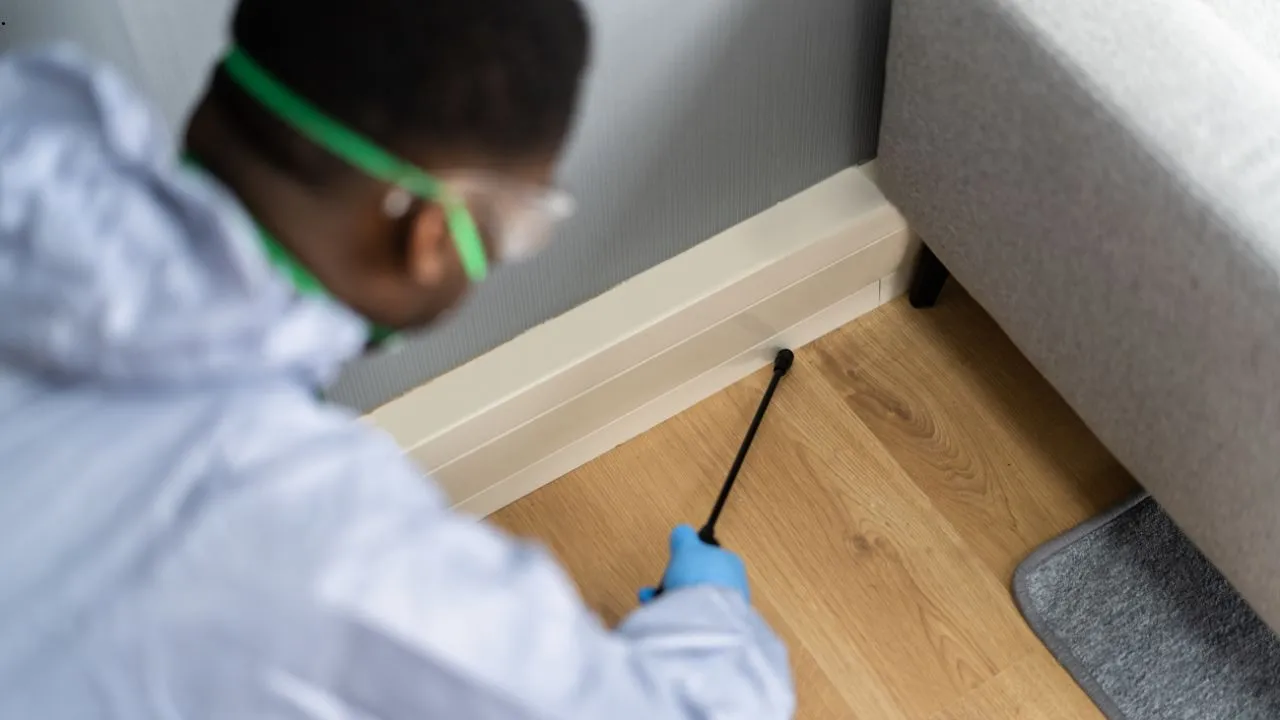

Homeowners comparing termite treatment quotes in Singapore often find two very different recommendations for the same visible problem — one company proposes soil treatment, another recommends a baiting programme. Both can be correct, because the right method depends less on what termites you have and more on your property's layout, soil access, and how far the infestation has already progressed.
Soil treatment creates a continuous chemical barrier in the ground around and beneath a structure's foundation, physically blocking the path subterranean termites use to travel from soil to timber. It has been a standard method for landed properties in Singapore for years because it works with the one behaviour subterranean termites can't avoid — direct soil contact to reach a food source. The catch is that the barrier only works while it stays intact; renovation work, new plumbing runs, or garden landscaping that disturbs treated soil can open a gap termites eventually find.
Baiting systems take a different approach entirely. Rather than blocking termites from reaching a structure, bait stations placed at intervals around a property use worker termites to carry a slow-acting agent back to the colony, gradually eliminating the reproductive termites that keep it growing. This tends to be the better option where soil access is limited — condos, HDB flats, or landed homes with extensive paving — and it doubles as an early-warning system for renewed activity even after other treatment has been completed.
For properties where damage has already occurred — weakened skirting, compromised door frames, sagging timber — a corrective approach is usually needed alongside whichever elimination method fits the site. This combines active treatment with repair work, and it's most commonly recommended when a colony has been active undetected for months, which happens often with subterranean termites since their feeding and tunnelling activity is largely hidden until visible damage forces the issue.
None of these methods should be chosen from a product name alone. A proper inspection — checking soil contact points, foundation walls, roof voids, and areas where timber meets masonry — determines which approach actually fits the extent and location of activity on a given property. Landed homes with intact, accessible soil perimeters are often good soil-treatment candidates; multi-storey homes or properties with prior renovation disturbance may be better served by baiting, corrective work, or a combination of the two.
Whichever method is recommended, the products and technicians involved need to be properly licensed under Singapore's vector-control regulations, since termiticides are controlled products applied around occupied structures. Homeowners comparing quotes should ask which method is being proposed and why, rather than accepting a generic "termite treatment" line without specifics on which of the three approaches is actually being used and how it matches the inspection findings.
Pestopia's technicians walk through all three treatment paths during an inspection instead of defaulting to a single method, since properties with both accessible soil and existing structural damage sometimes need a combined approach rather than one treatment type in isolation. More detail on how each option is assessed for subterranean termite treatment is available on Pestopia's website, alongside background on the broader termite treatment guide covering warning signs worth checking before booking an inspection. Readers wanting to know more about the company behind the service can also visit Pestopia's about page.
For anyone currently weighing quotes that recommend different treatment methods for what looks like the same problem, the right next step is usually a proper inspection rather than a decision based on price or method name alone — the inspection findings, not the marketing description, should determine which approach fits your property.

























Sign in to leave a comment.