

The painters are booked. The colour's chosen (after three arguments). Then someone asks, "Shouldn't you sort out termites first?" And now you're stuck. Short answer: yes, treat first, paint last. Here's why, and what really happens if you flip the order.
The Quick Answer
Treat first. Paint last. Almost always.
- Treatment can mark walls
- Paint hides warning signs
- Repairs need clean access
Think of it like waterproofing a terrace before laying tiles. You don't hide the problem under something pretty and hope. With termite treatment before painting, you get a clean look at what's going on, fix it, and then give the walls their glow-up. Do it the other way round and you might repaint twice. I've seen it happen. Nobody enjoys paying for the same wall two times.
Why Order Matters
It's not just tidiness. There are real, practical reasons.
| If You Paint First | If You Treat First |
| Drilling spoils fresh paint | Holes get patched, then painted |
| Hidden damage stays hidden | Problems get spotted early |
| Chemical stains may show | Stains covered by new paint |
| Repairs mean redoing walls | One clean, final finish |
Paint is basically a nice, thin coat that covers things. Including mud tubes, bubbling plaster and small cracks, all the early clues a technician wants to see. Cover them and you've made the inspection harder.
What Treatment Actually Involves
Most people picture a quick spray. It's usually more than that.
- Inspect walls, wood
- Drill small holes
- Inject, treat soil
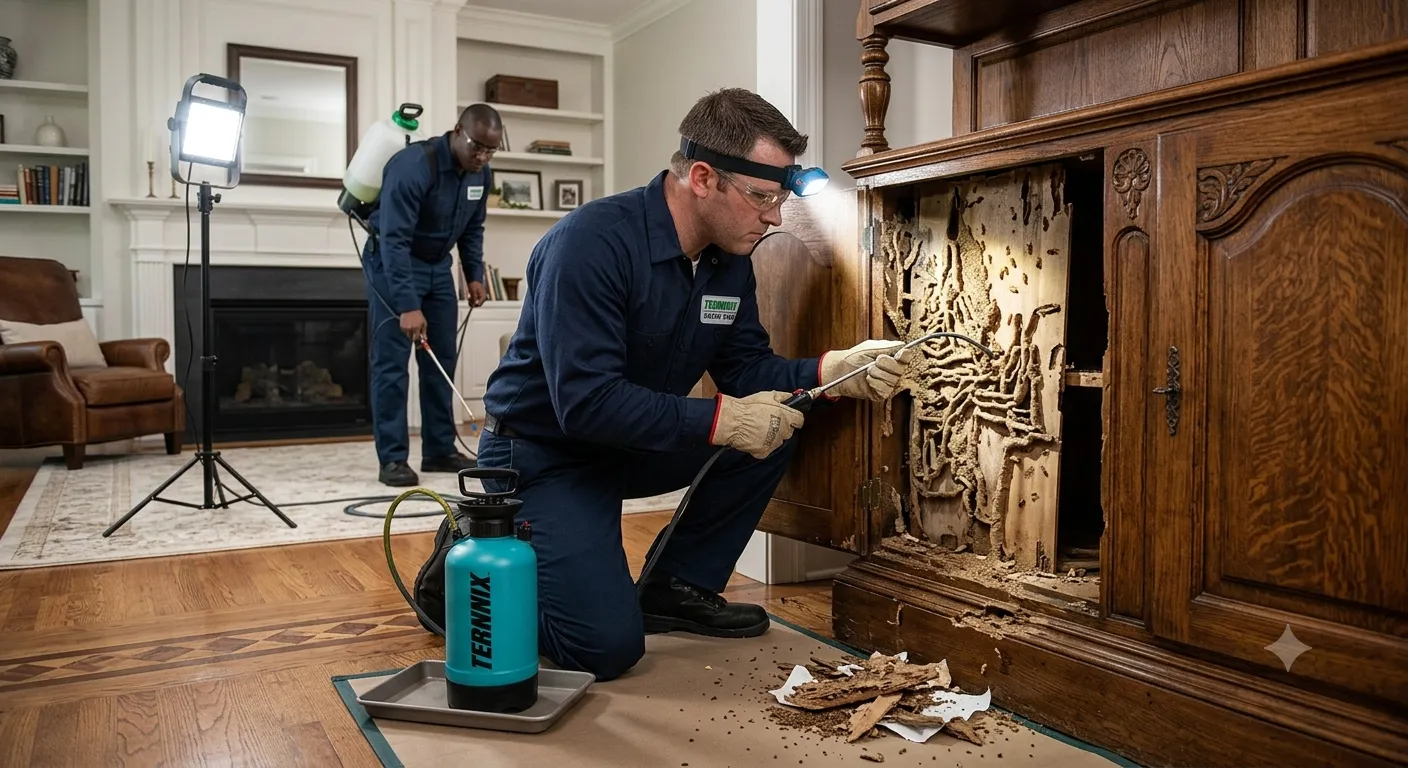
For post-construction work, technicians often drill small holes near floors and walls, then treat the soil underneath. Wood surfaces get their own treatment too. Those holes get sealed afterwards, but you can still see patches. That's exactly why you want painters coming after, not before.
What About New Homes?
Fresh builds aren't safe by default, sadly.
- Soil holds colonies
- Wood arrives early
- Gaps let them in
Termite in new construction is more common than people expect, because colonies live in the soil long before foundations go in. If you're building, ask about pre-construction soil treatment. Once the building is up, schedule a post-construction check before interiors and painting begin. Cheapest moment, easiest access, no furniture in the way.
Flats Are Different, Honestly
Living on the fourth floor doesn't make you immune. Termite in flats and apartments shows up all the time.
- Shared wall gaps
- Wooden cupboards
- Leaking pipe shafts
Termites travel through wall cavities, pipes and woodwork. So even if your flat is spotless, a neighbour's problem can wander over. It helps to tell your building association too, because treating one flat while others ignore it can limit results. Not always fun to bring up, I know. But it pays off.
The Smart Sequence
Here's a simple order that works for most homes.
| Step | What To Do | Why |
| 1 | Inspect the property | Know what you're facing |
| 2 | Treat soil and wood | Stop the colony |
| 3 | Repair damaged wood | Restore strength |
| 4 | Let treated areas settle | Follow technician's advice |
| 5 | Paint and polish | Final, lasting finish |
On step four, don't rush. Ask the technician how long to wait before painting, because it depends on the product and surface. Guessing here isn't worth it.
Where JCS Pest Control Fits
JCS Pest Control follows a visit-by-visit format that's easy to follow: inspect, treat, then return and check. No spray-and-run. You're told what was found, what was done, and what's next, which makes planning your painters so much simpler. When you know the dates, you can book the paint crew with confidence. It's also the sort of clarity people want from Chennai Pest Control, honestly.
Does Paint Stop Termites?
Short answer, no. Paint is not a termite barrier.
- Doesn't block tunnels
- Only seals surface
- Hides early damage
Some people hope a coat of anti-termite paint will do the job alone. It might add a bit of help on certain surfaces, but it isn't a replacement for proper treatment. Think of it as a bonus, not a bodyguard.
Quick Tips Before You Paint
Small habits, fewer headaches.
- Ask for inspection
- Check door frames
- Tap wooden panels
- Fix any leaks
- Ventilate after treatment
And keep kids and pets out of treated rooms until your technician says it's fine. Also, don't skip fixing leaks. Damp walls attract termites, and fresh paint won't help for long on wet plaster.
What's Trending Lately
More people are booking termite checks as part of their renovation planning, not as an afterthought. Low-odour, family-friendly treatments are in demand too. And search habits have changed. User intent content that answers "should I treat termites before painting?" tends to beat generic service pages, because people want a clear yes or no. That's why more clients are asking Termite Control Services In Chennai about sequencing, not just pricing.
Quick FAQs
Should I treat termites before painting?
Yes, treat first so paint isn't damaged or wasted.
Can I paint right after treatment?
Wait for your technician's go-ahead, since drying time varies.
Will drilling damage my walls?
Small holes get sealed, and painting afterwards hides the patches.
Do flats need treatment too?
Yes, termites travel through shared walls and pipes.
Is anti-termite paint enough?
No, it can't replace proper treatment.
Final Thoughts
So, first or last? Treat first, paint last, and save yourself the repaint. Get a proper inspection, repair what's damaged, and give treated surfaces time to settle. When you're comparing Termite Control Services In Chennai, choose the team that explains the sequence clearly. And a trustworthy Chennai Pest Control partner will always tell you the honest order of work, even if it means your painters wait a week.


















Sign in to leave a comment.