
An AI pilot can look impressive in a controlled demo. Real data, real teams, and real deadlines can expose gaps that the demo never showed. The gap between a successful experiment and a working business system is where many implementation problems appear
Why AI Readiness Deserves a Formal Check, Not a Gut Feeling
Most businesses assume they're "probably ready" for AI simply because leadership is enthusiastic and the budget exists. Readiness is more specific than that. It comes down to five concrete areas: usable data, a team equipped to adopt new tools, a clearly defined problem worth solving, genuine leadership backing, and a realistic sense of budget and timeline. A significant gap in any one of these areas can create problems before a project reaches full deployment.
The Five-Point Readiness Check Worth Running
Score each area honestly as Ready, Partially Ready, or Not Ready:
| Readiness Area | What "Ready" Looks Like |
| Data quality and access | Data lives in accessible systems, stays reasonably clean, and someone can confirm how current it is. |
| Team skills and buy-in | A few team members already experiment comfortably with AI tools. |
| A clearly defined use case | A specific process is named with clear people and a way to measure success. |
| Leadership commitment | A named owner actively reviews progress, not just an initial approval. |
| Budget and timeline realism | Includes data cleanup, training, and testing time, not just development cost |
If any ‘Not Ready’ score is worth investigating before development starts. Multiple gaps may signal a broader readiness problem.
Don't Forget Governance and Risk
Readiness also includes knowing how AI will be used safely. Businesses should define who can access AI systems, what data can be processed, where human review is required, and how outputs will be monitored. These controls become more important when AI handles customer data, sensitive documents, financial information, or decisions with meaningful business impact.
The Area Most Businesses Underestimate: Data
AI system performance is heavily influenced by the quality, relevance, and accessibility of the data behind it. Fragmented systems, inconsistent record-keeping, and unclear data ownership can create major obstacles when businesses prepare for AI.
- What readiness actually looks like: business data lives in accessible systems, stays reasonably clean, and at least one person on the team can confidently explain where it lives and how current it is.
- What a gap looks like: information scattered across disconnected spreadsheets, with multiple teams quietly keeping their own conflicting versions of the same records.
Inconsistent training or input data can reduce reliability, even when the underlying model is sophisticated.
Why Team Readiness Is Just as Important as the Technology
AI adoption is a change in how people work, not just a new tool being installed. That shift needs active participation, not passive tolerance.
- What readiness looks like: a handful of team members are already comfortable experimenting with AI tools, and leadership has clearly explained the reasoning behind the change.
- What a gap looks like: staff see AI as a threat to their role, with no dedicated time carved out to actually learn the new workflow before it goes live.
Even a technically sound AI system can struggle to deliver value if the people expected to use it do not adopt the new workflow.
Why a Vague Goal Is Riskier Than No Goal at All
"We should probably use AI somewhere" isn't a plan. It's a placeholder for one.
What readiness looks like: a specific process is named, the people currently involved in it are clearly identified, and there's a defined way to measure whether the new approach actually worked.
What a gap looks like: the stated goal is something abstract like "become more innovative," with no named process and no way to track whether anything actually improved.
Specific use cases are easier to scope, easier to explain to a technical partner, and easier to evaluate after the pilot stage.
Leadership and Budget: The Overlooked Half of Readiness
| Factor | Ready Signal | Gap Signal |
| Leadership commitment | A named business owner actively tracking progress | Treated purely as an IT initiative with no business owner involved |
| Budget realism | Accounts for data cleanup, training, and testing time | Assumes a working solution within weeks, on minimal investment |
Projects with overly short timelines can be under pressure before data, testing, training, and workflow changes are fully addressed. Without a clearly accountable owner, an AI project can lose priority when other business needs become urgent.
What Skipping This Step Usually Looks Like in Practice
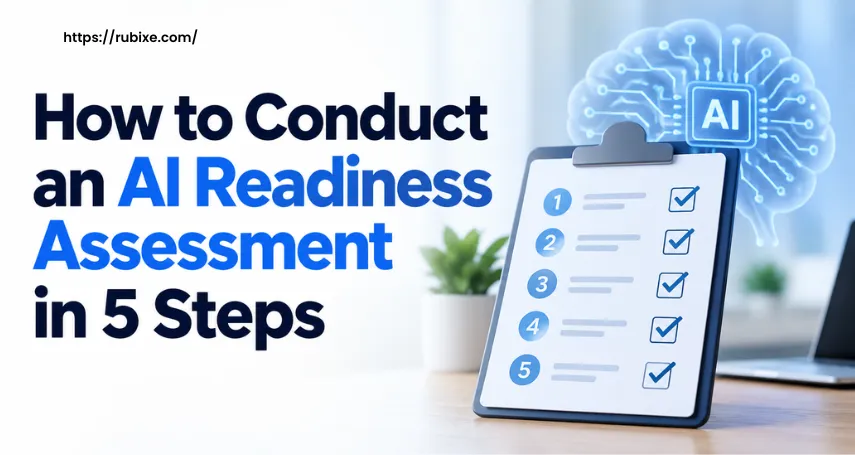
Problems may not appear immediately. Instead, a project launches smoothly and stalls a few months later, once data quality issues, skill gaps, or unclear ownership start slowing things down. By that point, budget and team time have already been spent, making the project harder to reset or redirect. For a practical scoring framework, read our guide to AI readiness assessments.
Key Takeaways
- AI readiness depends on data quality, team skills, a defined use case, leadership commitment, and budget realism together, not the technology itself.
- Many AI projects struggle when data, team readiness, use cases, or ownership are not addressed early.
- Multiple "Not Ready" scores can highlight gaps that deserve attention before development begins.
- Readiness isn't a one-time check. It's worth revisiting as data, teams, and priorities shift over time.
FAQs
What does AI readiness actually mean for a business?
It refers to a business's genuine ability to adopt AI successfully, based on data quality, team skills, a defined use case, leadership support, and realistic budgeting.
How can I tell if my business is actually ready for AI?
Score yourself honestly against the five core readiness areas. Multiple "Not Ready" results can indicate that a formal assessment is worth completing before development begins.
Does company size change how AI readiness is assessed?
Company size can affect the scale and complexity of an AI readiness assessment, but the core areas remain similar: data, people, use case, leadership, and budget.
How long does it typically take to become AI ready?
It depends on the size of the gaps, particularly around data quality and team skills. Some businesses close those gaps within weeks; others need a few months of preparation first.
Conclusion
AI readiness is not about chasing the newest tools. It starts with usable data, a capable team, a clear use case, accountable leadership, and a realistic budget. A short assessment before development can expose gaps early and give the project a clearer starting point.






















Sign in to leave a comment.