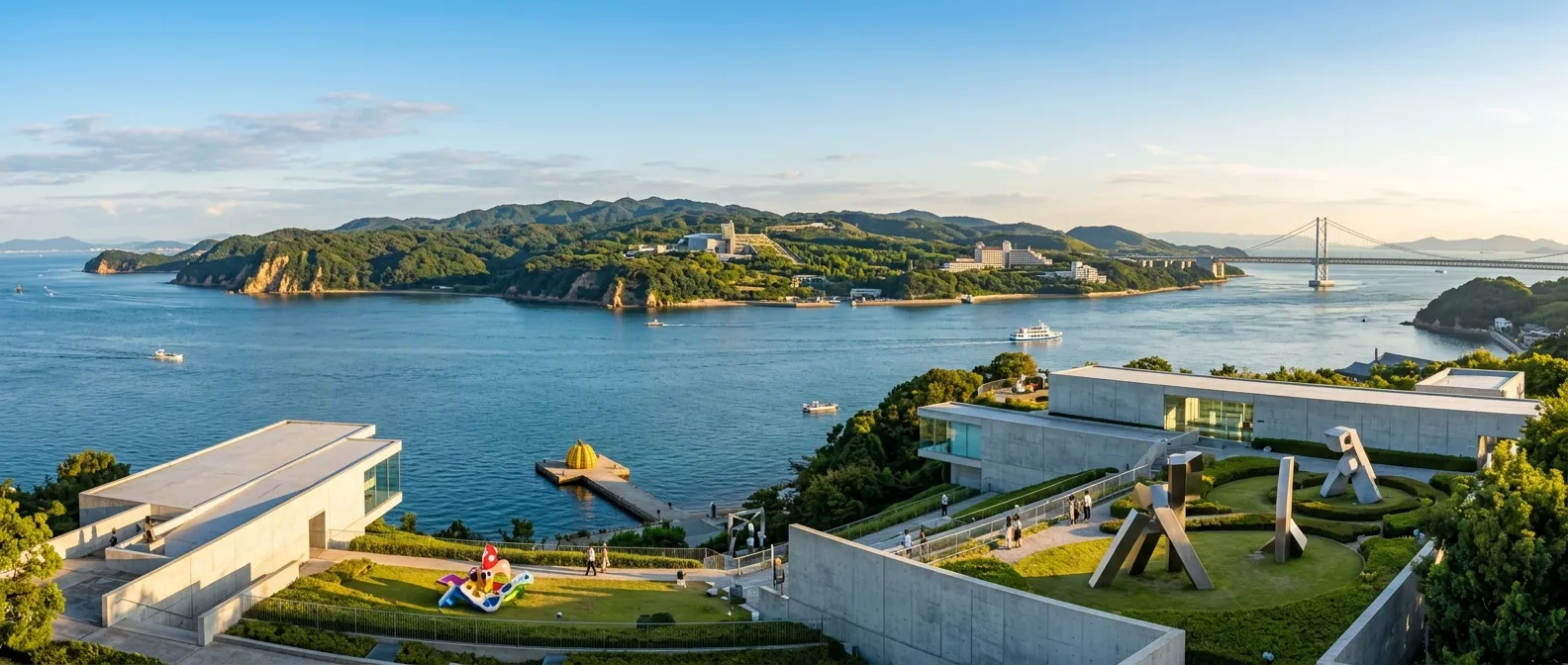

Japan is famous for its centuries-old temples, wooden shrines, and peaceful gardens, but it is also home to some of the world's most exciting examples of contemporary architecture. Among the country's most inspiring destinations are Naoshima and Awaji Island, two places where nature, design, and modern art exist in perfect harmony.
Whether you're an architect, a design enthusiast, or simply someone who enjoys beautiful places, these islands offer unforgettable experiences. This guide will help you plan an incredible art and architecture journey, compare Naoshima and Awaji, and discover why they are considered Japan's best art islands.
Why Naoshima and Awaji Belong on Every Design Lover's Bucket List
Although both islands celebrate architecture and creativity, they each offer a completely different atmosphere.
Naoshima has become internationally recognized as Japan's modern art paradise. The island combines world-class museums, outdoor sculptures, and minimalist architecture with quiet fishing villages and beautiful coastal scenery. Every building feels carefully designed to blend into the surrounding landscape.
Awaji Island, on the other hand, offers a wider mix of architecture, nature, gardens, luxury resorts, and cultural attractions. It showcases bold contemporary projects while maintaining a strong connection to traditional Japanese landscapes and local craftsmanship.
Visiting both destinations allows travelers to experience two unique interpretations of modern Japanese design.
Naoshima: Where Architecture Becomes Art
Naoshima is often the first destination people think of when discussing Japan's contemporary architecture. Despite its small size, the island is packed with remarkable buildings that attract visitors from around the globe.
The island's museums are designed not only to display art but also to become works of art themselves. Many structures are partially hidden within hillsides, allowing natural light, sea views, and surrounding forests to become part of the visitor experience.
One of Naoshima's defining characteristics is its simplicity. Concrete walls, clean geometric forms, and open spaces encourage visitors to slow down and appreciate every detail. Instead of overwhelming guests with decoration, the architecture creates peaceful environments that enhance the artworks inside.
Outdoor installations scattered along the coastline further blur the line between architecture, sculpture, and landscape, making every walk across the island feel like an open-air gallery.
For travelers seeking an unforgettable art and architecture journey, Naoshima represents one of the world's finest examples of architecture working in harmony with nature.
Awaji Island: A Celebration of Nature, Design, and Innovation
While Naoshima focuses heavily on contemporary art museums, Awaji Island offers a broader architectural experience.
Located just across the Akashi Strait from Kobe, Awaji is known for dramatic public spaces, botanical gardens, cultural centers, and luxury accommodations that showcase innovative Japanese design.
Visitors can explore spectacular waterfront developments, beautifully designed parks, hillside gardens, and modern cultural facilities surrounded by panoramic ocean views.
Many architectural projects emphasize sustainability and environmental harmony. Buildings frequently incorporate natural materials, open-air spaces, flowing water features, and lush greenery to create relaxing environments that reflect Japan's appreciation for nature.
Awaji is also becoming increasingly popular among travelers looking for peaceful alternatives to Japan's crowded tourist destinations. The island's slower pace allows visitors to fully appreciate each architectural landmark without rushing from one attraction to another.
Its combination of scenic landscapes and modern creativity makes it one of Japan's best art islands for travelers seeking inspiration beyond traditional sightseeing.
Compare Naoshima and Awaji: Which Island Is Right for You?
When travelers compare Naoshima and Awaji, the answer often depends on their interests.
Naoshima is ideal for visitors who want to immerse themselves in contemporary museums, iconic architectural masterpieces, and internationally acclaimed art installations. The island offers a focused cultural experience where nearly every attraction revolves around art and design.
Awaji Island provides much greater variety. Alongside impressive architecture, visitors can enjoy botanical gardens, wellness experiences, scenic coastal drives, local cuisine, luxury resorts, and outdoor recreation.
Transportation is another consideration. Naoshima requires ferry travel and careful planning because many museums operate on limited schedules.
Awaji Island is much easier to reach by road from Osaka, Kyoto, or Kobe, making it an excellent destination for day trips or weekend escapes.
If your goal is a concentrated architectural pilgrimage, Naoshima is unmatched. If you prefer combining architecture with gardens, landscapes, and leisure, Awaji may be the better choice.
Fortunately, many travelers choose to visit both islands during a longer journey through western Japan.
Suggested Itinerary for an Art and Architecture Journey
To experience the best of both islands, consider planning a five-day itinerary.
Begin with two days on Naoshima. Spend your first day visiting its major museums and outdoor sculpture installations before exploring the island's peaceful villages. On the second day, discover additional galleries, coastal walking paths, and hidden architectural gems.
Next, travel toward Awaji Island for another two days. Explore modern parks, waterfront attractions, contemporary cultural spaces, and beautifully designed gardens while enjoying fresh local seafood and scenic ocean views.
Use your final day to relax at one of Awaji's luxury resorts or enjoy a leisurely drive around the island's coastline before continuing your journey through Kansai.
This combination creates one of Japan's most rewarding cultural travel experiences by blending architecture, nature, contemporary art, and regional hospitality.
Final Thoughts
Japan offers countless architectural treasures, but few destinations combine creativity and natural beauty as successfully as Naoshima and Awaji Island.
Naoshima demonstrates how architecture can elevate contemporary art into an immersive experience, while Awaji reveals how thoughtful design can transform entire landscapes into peaceful destinations for exploration.
Rather than choosing one over the other, travelers who have the time should experience both. Together they create an unforgettable art and architecture journey filled with inspiring museums, innovative buildings, breathtaking scenery, and unique cultural experiences.
If you're looking to compare Naoshima and Awaji while discovering Japan's best art islands, these two extraordinary destinations deserve a place at the very top of your travel itinerary.
Keywords: art and architecture journey, Japan's best art islands, compare Naoshima and Awaji, Naoshima travel guide, Awaji Island architecture, contemporary architecture Japan, Japanese art islands, modern architecture in Japan, cultural travel Japan, architecture tourism Japan.

























Sign in to leave a comment.