


Search "perfume layering guide" and you'll get the same three tips over and over: spray the heavier scent first, look for shared notes, test before committing. None of that is wrong, it's just not much help until you actually know what's in the bottles you're trying to combine.
This guide takes a different starting point: three fragrances built to be layered from the start, not forced together after the fact. Enchantress, Reverie, and Witch's Mix from DE WOUD were composed around a single concept, two moons meeting to form a third. Once you see what's inside each bottle, the usual layering advice stops being a guess and turns into a repeatable formula.
What Perfume Layering Actually Means
Perfume layering means wearing two or more fragrances at once, on the same pulse points or different areas of skin, so they develop together into something that reads as one, more layered scent. It's not the same as blending two perfumes into a single bottle. Layering keeps each formula intact and lets your own skin chemistry and body heat do the mixing in real time, which is exactly why the same two fragrances can smell different from one person to the next.
The point isn't to wear more perfume. It's to arrive at a scent that didn't exist before, one where the opening belongs to one fragrance, the drydown to another, and the middle is where they genuinely meet.
Why the Usual Layering Rule Falls Apart
Look around and you'll find two contradictory versions of the "right" order: spray heavy first, light on top, or the opposite, light first, building to heavy. Both are describing the same phenomenon with half the picture, because neither one accounts for how long a fragrance was aged before it was ever bottled.
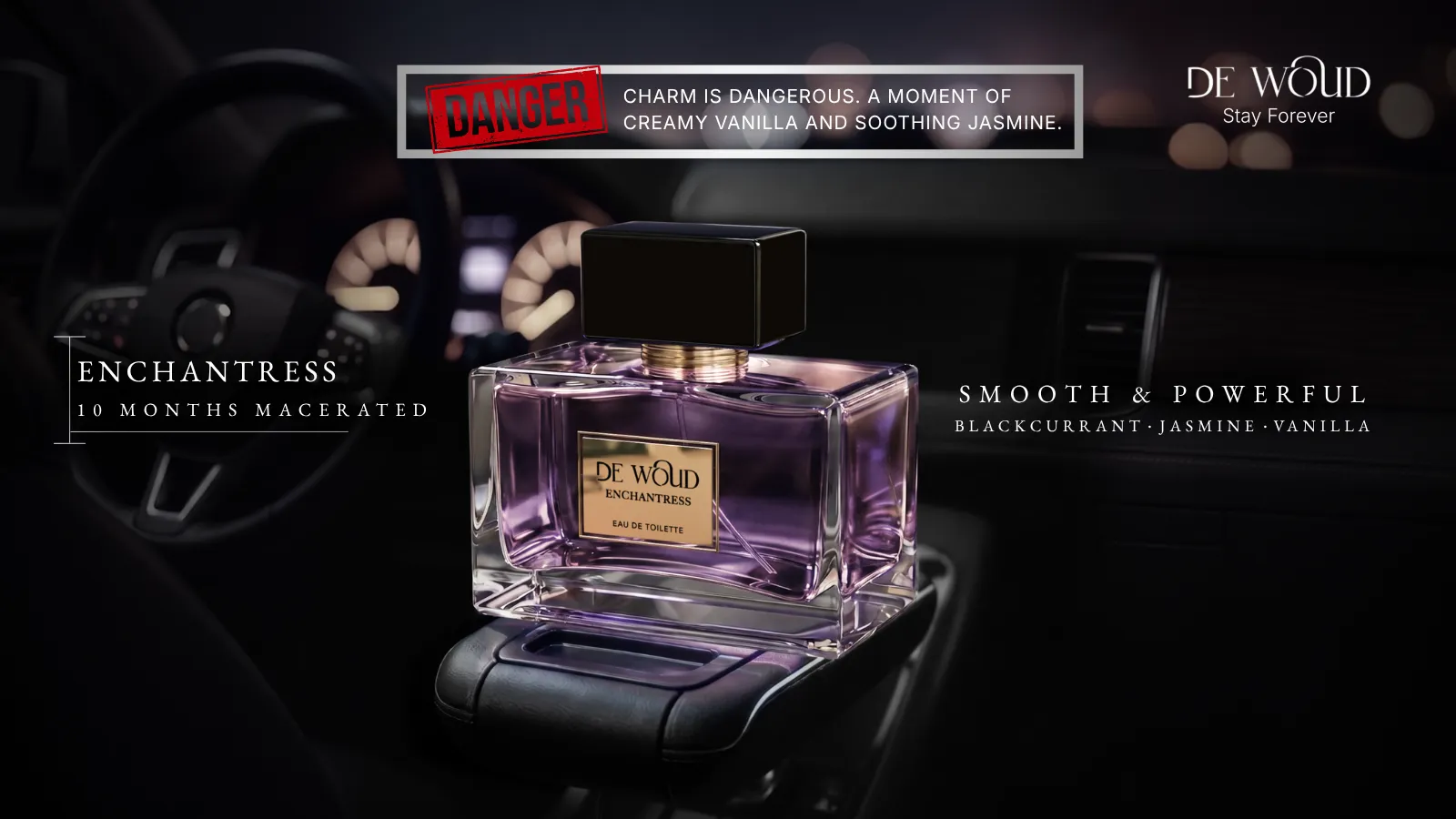
That's where maceration comes in, and it matters here for more than marketing. A fragrance rested for ten months has already completed the molecular bonding that a fresh, quickly blended perfume hasn't. That more settled structure releases more slowly and evenly on skin, which is a big part of why a properly aged EDT can outlast an EDP that only sat for two weeks. In a layering context, a slower, steadier base gives the second fragrance something solid to sit on top of, instead of two volatile compositions competing to evaporate first. For the longer explanation of how aging changes performance, see why maceration changes fragrance performance before building out your own layering routine.
Meet the Three Fragrances
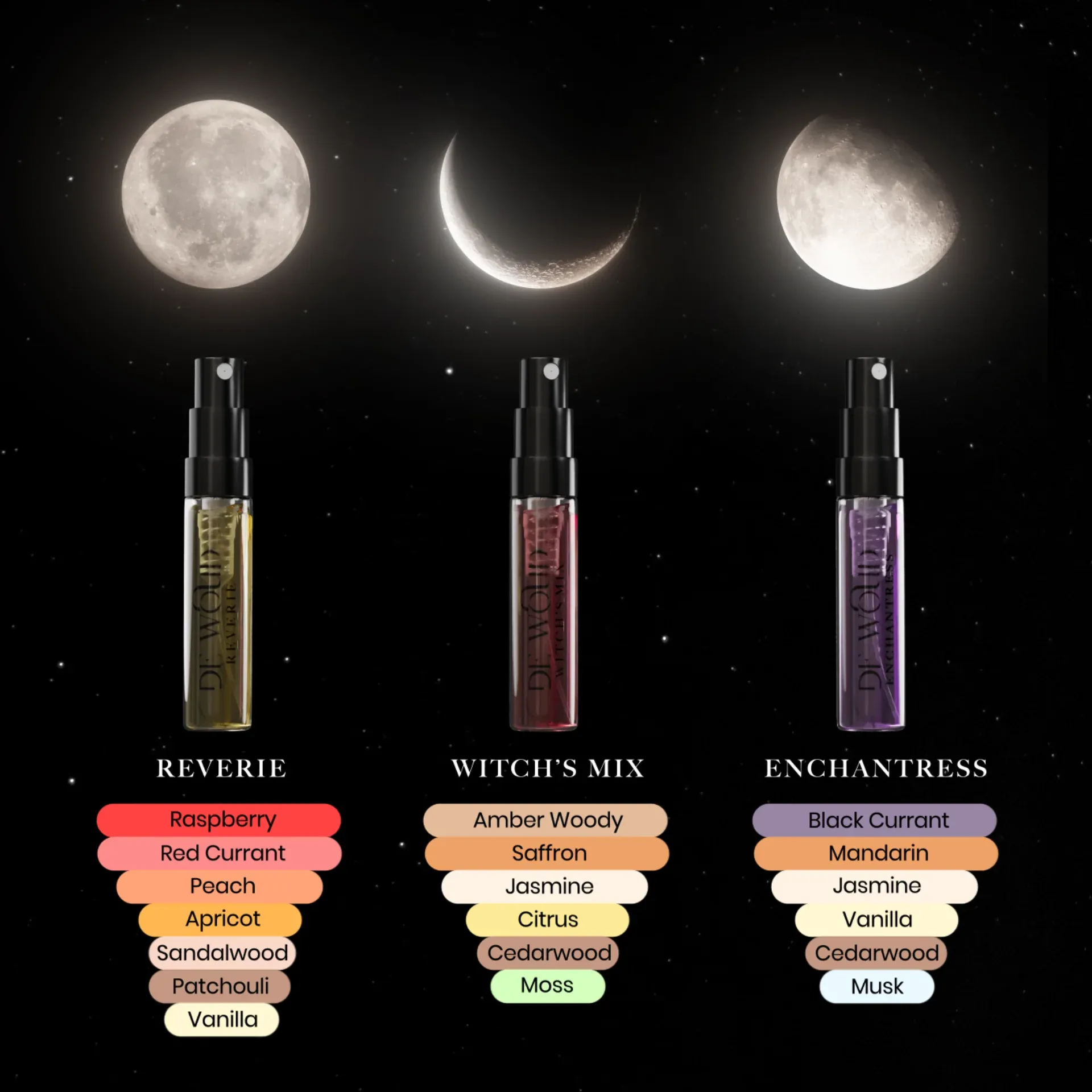
Before any pairing makes sense, it helps to know the actual composition of each scent. All three can be worn solo or combined, and each shares at least one note with the other two, which is the real reason they layer cleanly instead of by luck.
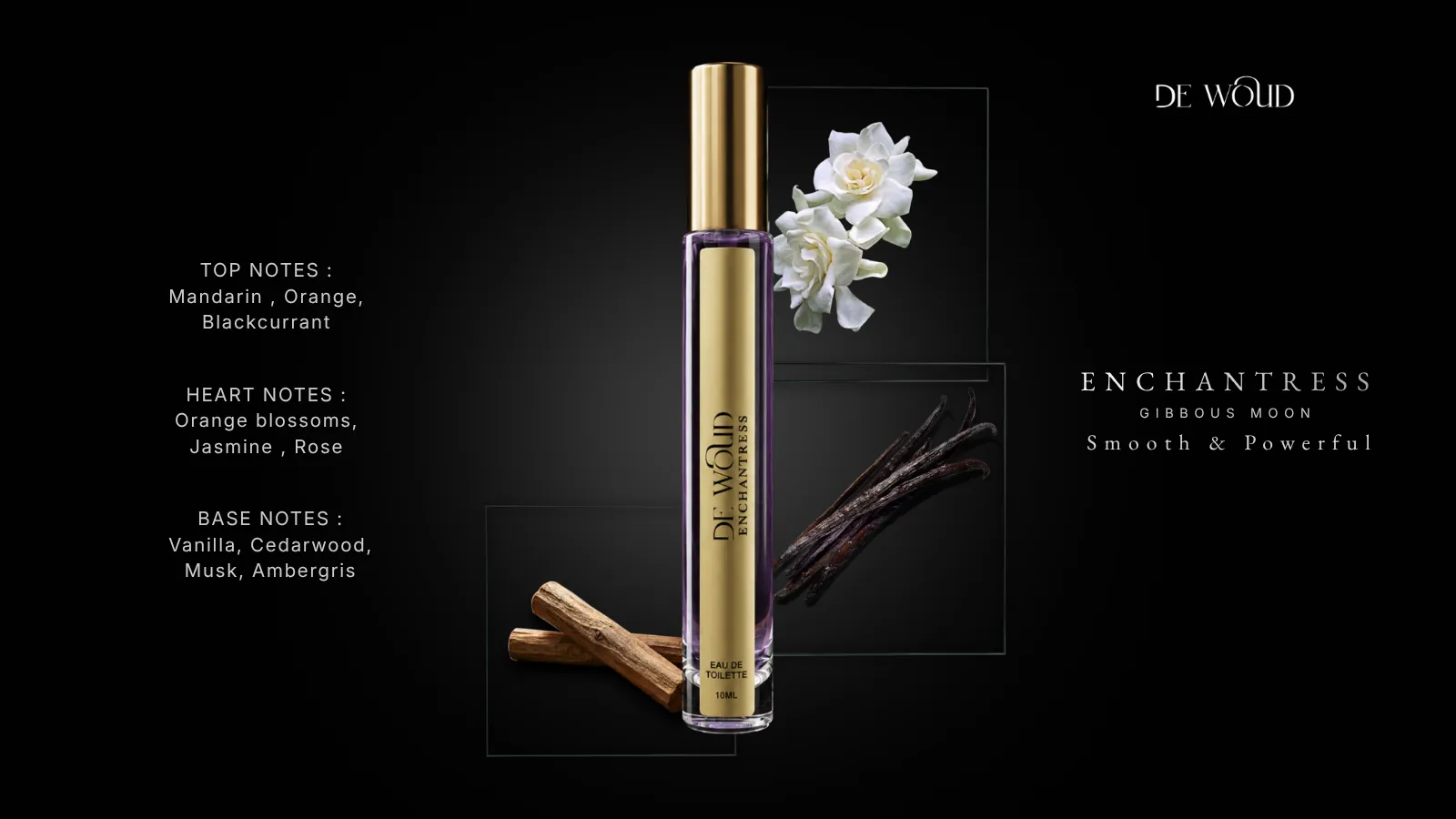
Enchantress — Waxing Gibbous, Floral Citrus
Opens on mandarin, moves into orange blossom and jasmine at the heart, and settles into vanilla, cedar, and musk at the base. It's the brightest of the three and the one people usually ask about first, which makes it a natural anchor for nearly any pairing.
Reverie — Full Moon, Floral Fruity
Leads with apricot, peach, and raspberry, softens into rose, freesia, and jasmine, and finishes on vanilla and sandalwood. Warmer and more intimate than Enchantress, closer to skin than to the room around you.
Witch's Mix — Crescent Moon, Amber Woody
Opens on citrus, jasmine, and sage, deepens into saffron and amber, and finishes on ambergris, fir resin, and cedar. The boldest and most projecting of the three, built to be noticed rather than blended into the background.
Jasmine runs through all three compositions, and cedar closes out both Enchantress and Witch's Mix. Those shared notes act as the bridge perfumers usually have to hunt for when layering unrelated bottles. Here, it's already built in.
How to Layer Perfume, Step by Step
- Start from a shared note. Rather than guessing, pick a pairing built around a note the two fragrances already have in common. With these three, jasmine is the thread.
- Test on skin, not paper. A blotter tells you whether two scents clash on contact. Only skin shows you how they develop together over hours.
- Apply the more structured fragrance first. Spray it on pulse points, wrists or neck, and let it settle for thirty to sixty seconds before adding anything else.
- Apply the second fragrance to a different zone. Wrists and collar, or skin and clothing, work better than layering both in the same spot, so neither composition smothers the other.
- Use fewer sprays than you would wearing either alone. Layering builds complexity, not volume. One or two sprays of each is typically plenty.
- Give it time before judging. The first ten minutes belong to the top notes. The real relationship between the two fragrances only emerges once those fade and the heart and base take over.
The Three DE WOUD Layering Pairings
Instead of leaving pairings to trial and error, the Layer collection is built around two tested combinations, sold together so you're not buying two full-size bottles just to find out if they work.
| Pairing | Character | How They Layer | Best Worn |
|---|---|---|---|
| Floral & Fruity Set (Enchantress + Reverie) | Soft, luminous, unisex | Enchantress's citrus lifts Reverie's peach and rose warmth | Daytime, mornings, bright occasions |
| Floral & Woody Set (Enchantress + Witch's Mix) | Bold, contrasting, unisex | Enchantress's citrus top notes soften Witch's Mix's saffron and cedar into something warmer | Office wear, evenings, cooler weather |
| Signature Trio (all three) | Full range, most combinations | Rotate or combine any two depending on the moment | Enchantress mornings, Reverie evenings, Witch's Mix nights |
Enchantress and Reverie: The Golden Hour Pairing
Wear Enchantress on the wrists, Reverie on the neck. The mandarin and jasmine in Enchantress lift the peach in Reverie into something lighter than either fragrance alone, a pairing that holds from morning through mid-afternoon without tipping into "too much" for daytime settings.
Enchantress and Witch's Mix: The Dusk Ritual Pairing
Wear Enchantress on the wrists, Witch's Mix on the collar. Enchantress's citrus opening takes the edge off Witch's Mix's saffron, turning what would be a heavy, room-filling scent on its own into something appropriate for the office and interesting enough to carry into the evening after.
Best Perfume Combinations by Occasion
Once the two core pairings make sense, matching them to the day mostly comes down to how much projection the moment calls for.
- Morning meetings or daytime errands: Enchantress and Reverie, one spray of each, on different pulse points. Bright enough to register, restrained enough to wear through a full morning.
- Office days: Enchantress and Witch's Mix, same ratio as above, present without becoming distracting in close quarters.
- Evenings and date nights: Lean the ratio toward Witch's Mix, applying some to clothing as well as skin, so the amber and resin carry further into the room as the night goes on.
- Travel days: Wear a single fragrance, lighter than usual. Shared spaces and long transit hours aren't the setting for a bold layered scent. A Home and Roam set is built for exactly this kind of split routine.
- Cold weather: Layering rewards cooler air, since heavier base notes evaporate more slowly. Witch's Mix paired with either Enchantress or Reverie holds noticeably longer in winter than in humid summer heat.
- Gifting: If you're buying for someone whose preference you don't know yet, a multi-fragrance set from the gifting collection removes the guesswork.
Creating Your Own Signature Scent With Unisex Fragrances
All three DE WOUD fragrances are formulated as unisex layering perfume, which changes the equation compared to lines split strictly into masculine or feminine bottles. There's no wrong pairing based on who's wearing it, only pairings suited to the occasion and to your own skin chemistry.
That's really what building a signature scent comes down to. Two people can buy the exact same Floral and Woody set and end up smelling noticeably different, because body heat, skin oil, and even diet subtly shift how each fragrance develops. Layering just gives you more variables to work with than any single bottle could, and because the underlying fragrances were macerated for ten months before reaching you, each layer holds its shape on skin for hours instead of fading within minutes of the next spray.
If you're not sure where your preference lands yet, that's what the Discovery Set is for, all three fragrances, in a size generous enough to actually test combinations on your own skin over several days, rather than guessing from a single spritz at a counter.
Common Perfume Layering Mistakes to Avoid
- Over-applying each fragrance. Layering is about complexity, not concentration. Two full-strength applications of two different perfumes usually compete rather than combine.
- Spraying both on the same spot. Give each its own zone, a different pulse point, or skin versus clothing, so both have room to develop.
- Judging too early. Top notes fade fast. Wait at least an hour before deciding whether a pairing works.
- Ignoring the season. A combination that feels perfect in cool weather can turn heavy and overwhelming in summer humidity, and vice versa.
- Buying full-size bottles before testing. This is exactly why layering sets exist in smaller formats. Confirm the pairing works on your skin before committing to full size.
Frequently Asked Questions
What is perfume layering? Wearing two or more fragrances at once, on skin or clothing, so they develop together into a scent different from either worn alone.
What order should I apply layered perfumes in? Apply the more structured, longer-lasting fragrance first and let it settle for thirty to sixty seconds before adding the second. With this trio, Enchantress typically goes on first in both core pairings, since its citrus opening is designed to soften whatever follows.
Can I layer perfumes from different brands? Yes, though results are less predictable without shared notes to rely on. Fragrances from the same line, built around a common note, are far more forgiving to combine.
Does layering make perfume last longer? It can, especially when at least one fragrance has gone through a longer maceration process. A well-bonded base gives the second scent something stable to build on, rather than two unstable compositions fading at different rates.
How many perfumes can you layer at once? Two is the practical ceiling for most people. Beyond that, notes start competing rather than combining, and it gets hard to tell which fragrance is contributing what.
Is layering the same as mixing perfumes in one bottle? No. Layering applies each fragrance separately so both develop independently and blend through skin chemistry and air. Mixing perfumes directly in a bottle combines the raw liquids and can produce unstable results.
Which DE WOUD fragrances layer best together? Enchantress and Reverie for a softer daytime pairing, Enchantress and Witch's Mix for a bolder combination suited to evenings and office wear. Both share jasmine as a connecting note, which is why they feel intentional rather than accidental.
How do I find my own signature scent through layering? Start with a Discovery Set or a Layering Set rather than full-size bottles, test each pairing on your own skin over a full day, and notice which ratio and application zones you keep coming back to. Your signature scent is the one you stop thinking about adjusting.
Where to Start
If you already know which pairing appeals to you, the Layer collection has both sets ready in a size built for exactly this kind of experimentation. If you'd rather test all three fragrances before deciding how to combine them, the Discovery Set is the lowest-commitment way in. And if you want the full story behind why these fragrances hold their shape on skin long enough to layer well in the first place, DE WOUD's story explains the decision to wait ten months before any of it reaches a shelf.
Visit DE WOUD to explore the full range, or head straight to the Layer collection to start building a scent that belongs only to you.























Sign in to leave a comment.