
Selling products online no longer means you need to start with a large website, a big advertising budget, or a team of experts. If you already use social media, you have a place where people can discover your products, learn about your brand, and decide whether they want to buy. Platforms like Instagram and TikTok give creators and small businesses a direct way to reach potential customers. The challenge is turning that attention into actual sales.
That is where social selling comes in. With the right approach, you can use your social presence to show what you sell and give interested customers a simple way to shop.
Start With the Right Product
Before thinking about platforms or tools, get clear about what you are selling.
Start with a small selection instead of trying to promote everything at once. Choose products that are easy to explain and that match the interests of your audience. For example, a fitness creator might sell workout plans, clothing, or fitness accessories. A beauty creator could offer skincare products, tutorials, or digital guides.
When your products match your content, selling feels more natural. Your social posts can introduce the product instead of feeling like a constant advertisement.
Choose the Social Platforms Your Customers Use
You do not need to be everywhere.
Focus on the platforms where your target customers already spend their time. Instagram can work well for visual products, while TikTok can help creators introduce products through short videos and demonstrations. Think about how your audience discovers products. Do they watch videos, follow creators, read posts, or ask questions through messages?
Understanding this can help you decide where to focus your time and how to present your products.
Turn Your Profile Into a Place to Shop
Getting people to your social profile is only the first step. You also need to give them somewhere useful to go.
A link in bio store can bring your products and important business links together in one place. Instead of asking customers to search for your products, you can give them one simple link from your profile.
Your page should make it easy to understand what you sell. Use clear product names, good images, short descriptions, and simple calls to action.
The goal is not to fill the page with information. The goal is to help visitors find what they want quickly.
Make Buying Easy
Imagine someone sees your product in a video and wants to buy it.
They click your profile, tap your link, and then have to visit several different websites before they can find the product and complete the purchase. That experience can quickly become frustrating.
Try to reduce unnecessary steps.
A simple shopping journey can look like this:
Social post → Bio link → Product → Checkout
The fewer obstacles between discovery and purchase, the easier it is for interested customers to take action.
Use Your Content to Support Your Products
Selling through social media does not mean every post needs to say, "Buy this."
Your content should first give people a reason to follow you.
Share useful information, answer common questions, show how your products work, share customer experiences, and give people a look behind the scenes.
Then connect relevant products to that content.
For example, if you create a video showing how to style a particular product, you can direct interested viewers to the product through your bio. This makes the selling process feel connected to the content they are already enjoying.
Make Your Store Mobile Friendly
People are likely to discover your products while using their phones. That makes mobile experience an important part of social selling.
Your product page should load quickly and be easy to read on a small screen. Buttons should be simple to tap, images should display properly, and customers should not have to zoom in or search around to understand what you offer.
Before sharing your store link, open it on your own phone and go through the buying process yourself. This can help you spot confusing steps that customers might experience.
Keep Track of What Works
You do not have to guess which products or posts are working.
Pay attention to the content that gets the most attention and the products that receive the most clicks or sales. Over time, these patterns can show you what your audience actually wants.
If one product gets strong interest, create more content around it. If a page receives many visits but very few purchases, look at the product information, price, checkout experience, or call to action.
Small improvements can make a difference over time.
Build Relationships With Your Customers
A sale should not always be the end of the relationship.
Stay connected with customers after they purchase. Answer their questions, provide useful updates, and make it easy for them to contact you when they need help.
Happy customers can also become repeat buyers or recommend your products to others.
Social selling works best when it combines selling with genuine customer interaction. People are more likely to buy when they understand the product and feel comfortable with the business behind it.
Choose Tools That Fit Your Business
As your business grows, managing products, orders, links, and customer communication across different tools can become difficult.
This is why it is worth choosing a social selling platform that fits the way you already work. Look at the features you actually need instead of choosing a platform simply because it has the longest feature list.
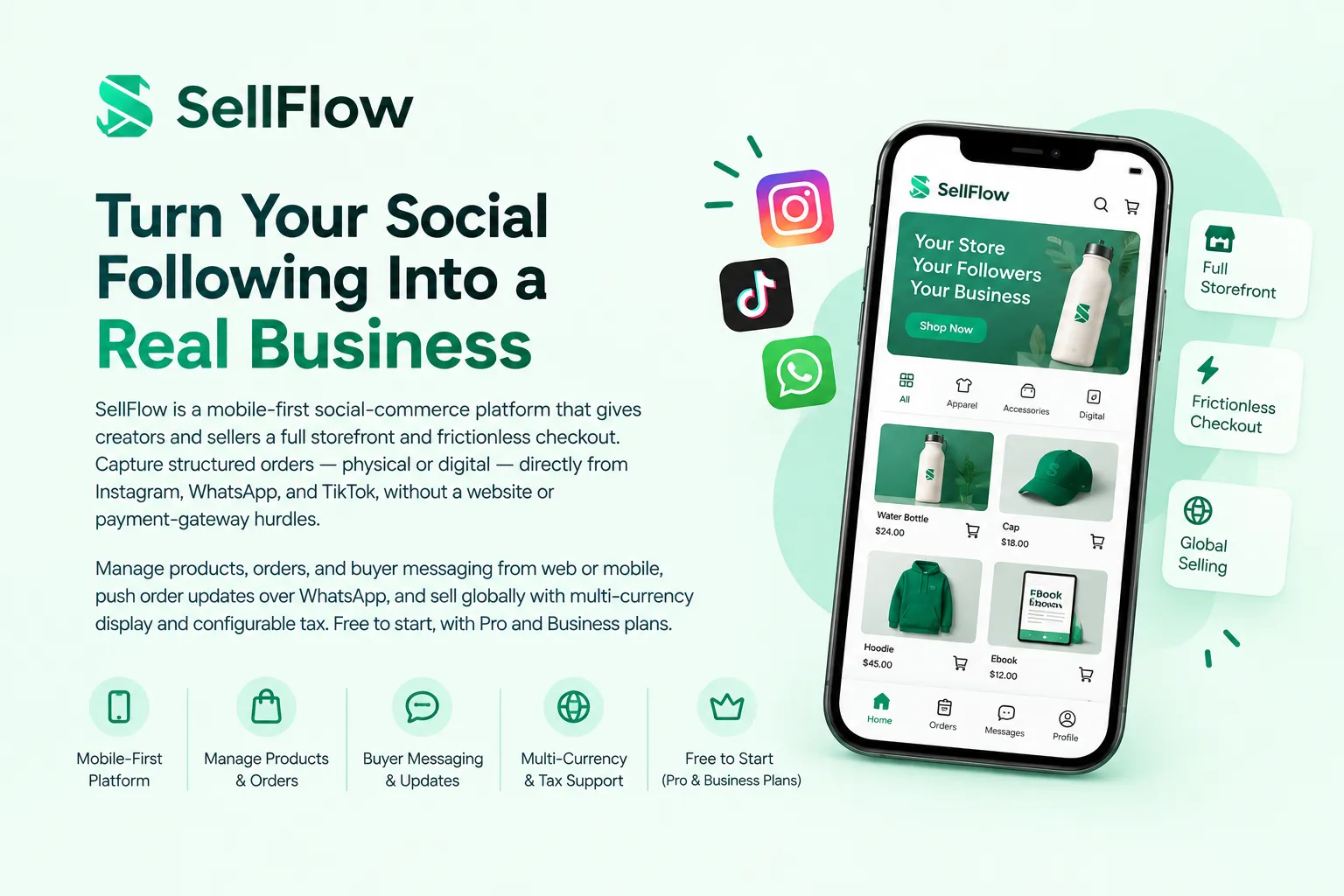
SellFlow helps creators and sellers bring their products, storefront, orders, and customer interactions into a simple selling experience that can be shared through social media.
Start Small and Improve as You Go
You do not need a perfect social selling strategy from day one.
Start with a few products, one or two social platforms, and a simple way for customers to shop. Learn what your audience responds to, then improve your approach based on what you see. Social media gives small businesses and creators a direct connection with potential customers. When you combine useful content with a simple shopping experience, your social presence can become more than a place to collect followers. It can become a practical way to build and grow your business.
Frequently Asked Questions
1. Can beginners sell products through social media?
Yes. Beginners can start by choosing a few products, creating useful social content, and giving followers an easy way to shop. You do not need a large audience or complicated setup to begin testing social selling.
2. Which social media platform is best for selling products?
There is no single platform that works for every business. Choose based on where your target customers spend time and how they discover products. Focus on the platform that matches your audience, content style, and products.
3. Do I need a website to sell through social media?
Not always. A link in bio store or social commerce platform can give customers a simple place to view products and shop. This can be useful for creators and small businesses that want to start without building a full website.
4. How can I get more people to notice my products?
Create content that is useful, interesting, or entertaining for your audience. Show your products naturally through tutorials, demonstrations, reviews, and examples. Consistent content can help more people discover your products and understand their value.
5. How do I know if my social selling strategy is working?
Look at useful signals such as product clicks, engagement, inquiries, and completed sales. Compare these results over time to understand which content and products attract the most interest and where customers may be dropping out.
























Sign in to leave a comment.