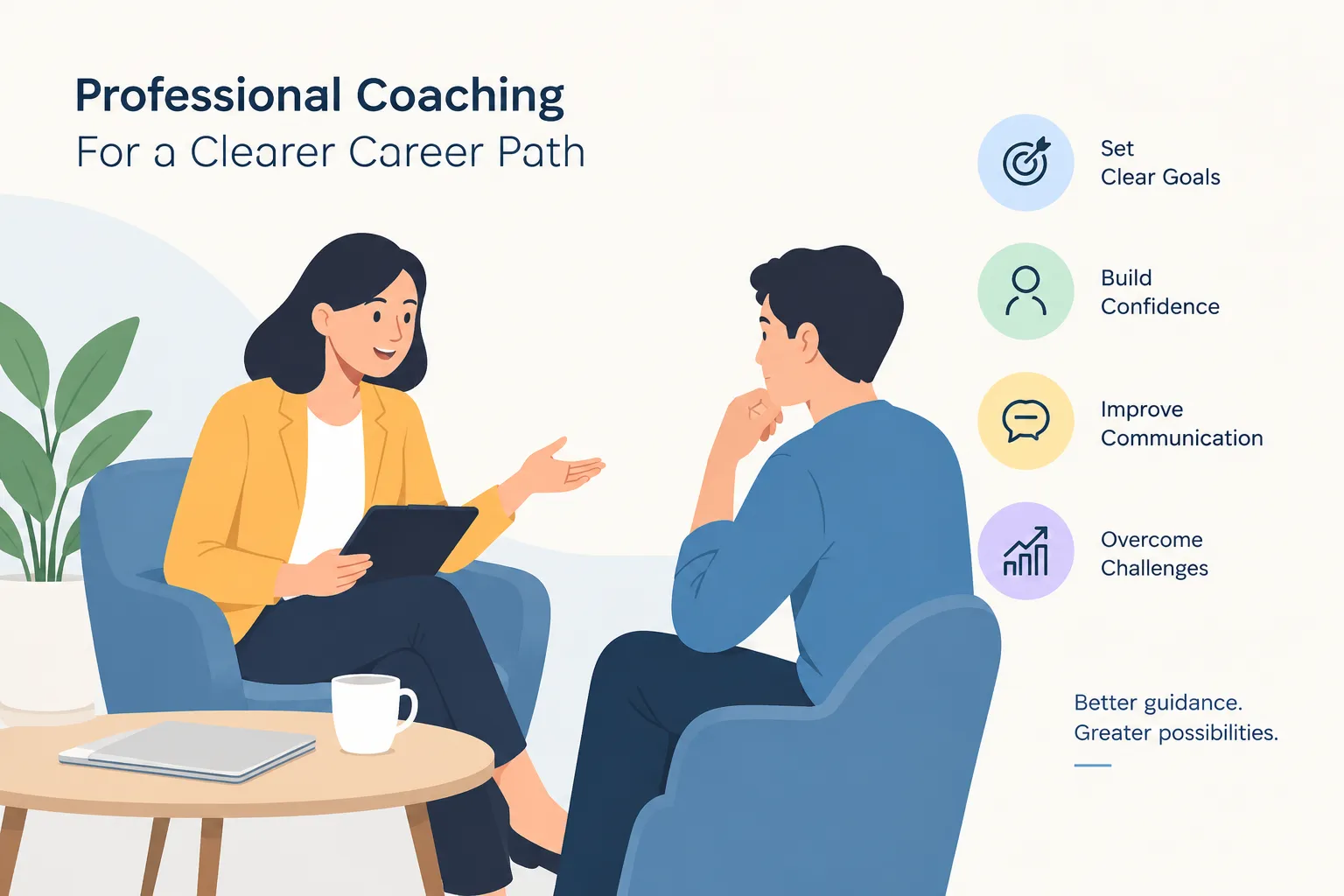

A successful career is rarely built through qualifications and hard work alone. At different stages, professionals must make decisions about new responsibilities, leadership opportunities, workplace relationships, and long-term ambitions. These decisions can shape not only career progression but also professional confidence and satisfaction.
Yet knowing what to do next is not always straightforward. A talented employee may be uncertain about moving into management. An experienced manager may want to become a more influential leader but struggle to identify which skills need improvement. Someone preparing for a senior position may understand the technical demands of the role while feeling less confident about strategic decisions or managing people.
Executive coaching offers a structured way to work through these challenges. It encourages professionals to examine their current situation, recognize their strengths, address development gaps, and take purposeful steps toward their goals. Rather than promising instant success, the process focuses on developing the capabilities and judgment needed to navigate a changing professional environment.
Why Career Growth Requires More Than Technical Expertise
Technical expertise can help people establish themselves in a profession, but career responsibilities often become more complex over time. As professionals advance, success increasingly depends on their ability to communicate clearly, manage competing priorities, influence others, and make decisions when the right answer is not immediately obvious.
Consider a software specialist who becomes a team manager. The skills that made this person successful as an individual contributor may not automatically translate into effective people management. The new role could require delegation, conflict resolution, performance conversations, and the ability to help colleagues develop their own capabilities.
A similar transition happens when managers move into executive positions. They must often think beyond immediate team objectives and consider broader organizational priorities, stakeholder expectations, and long-term consequences.
These transitions reveal an important career lesson: professional growth requires continuous adjustment. People need to identify which capabilities helped them reach their current position and which additional skills will help them succeed in their next role.
Executive coaching can support this process by helping individuals examine expectations, understand development needs, and create a realistic plan for improvement.
1. Gain Clarity About What Professional Success Means
Career ambitions are often shaped by external expectations. Promotions, salary increases, prestigious job titles, and professional recognition can all appear to be obvious measures of success. Although these goals may be important, they do not necessarily reflect what every individual wants from a career.
Some professionals want to lead larger teams. Others prefer becoming highly skilled specialists, managing complex projects, or achieving greater independence in their work. Without understanding these preferences, people may pursue opportunities that look impressive but do not align with their strengths or priorities.
Executive coaching creates an opportunity to examine these questions more carefully.
Professionals can begin by considering three areas:
- Personal priorities: What matters most in the next stage of a career?
- Professional strengths: Which abilities create the greatest value?
- Future direction: What kind of responsibilities would provide meaningful challenge and development?
Reflecting on these areas helps turn a vague desire for advancement into a clearer professional direction.
For example, someone who enjoys solving complex problems but dislikes managing large teams might pursue a senior specialist role rather than assuming that management is the only path to progress.
Clearer career goals make it easier to evaluate opportunities, choose relevant learning experiences, and avoid spending time on development activities that do not support long-term ambitions.
2. Identify the Skills That Will Open New Opportunities
Once a professional has identified a desired direction, the next step is to understand what that direction requires.
A person preparing for leadership responsibilities may need to strengthen communication, delegation, strategic thinking, or conflict management. Someone pursuing a client-facing role might benefit from developing negotiation skills, presentation abilities, and greater confidence in difficult conversations.
Executive coaching can help individuals compare their current capabilities with the expectations of their desired role.
A practical approach is to create a development gap analysis. List the important skills required for the next position, assess current confidence and experience in each area, and identify the two or three capabilities that deserve the most attention.
The goal is not to improve everything at once. Focusing on a small number of high-impact skills makes progress more manageable and easier to evaluate.
Suppose a department manager wants to become a senior leader. Instead of simply reading about leadership, the manager might volunteer to lead a cross-functional initiative, present a strategic recommendation, or take responsibility for mentoring another employee.
These experiences provide opportunities to apply new skills in real situations. They can also reveal additional areas for improvement that might not become apparent through theory alone.
3. Develop Better Judgment in Difficult Situations
As professional responsibility increases, decisions often become less straightforward. Leaders may need to balance short-term performance with long-term goals, respond to incomplete information, or choose between competing priorities.
In such situations, experience matters, but so does the ability to examine assumptions and consider consequences.
Executive coaching can encourage a more deliberate decision-making process. Instead of reacting immediately, professionals can learn to clarify the problem, distinguish facts from assumptions, identify available options, and consider how different choices might affect people and objectives.
For example, a manager facing repeated missed deadlines might initially consider introducing stricter monitoring. A closer examination could reveal that responsibilities are unclear, workloads are uneven, or approval processes are creating unnecessary delays.
Addressing the underlying cause is often more useful than responding only to the visible symptom.
A simple decision framework includes four questions:
- What problem needs to be solved?
- What information is available, and what remains uncertain?
- Which options are realistic, and what are their likely consequences?
- How will the outcome be reviewed after a decision is made?
This approach does not eliminate uncertainty. Instead, it helps professionals make more considered choices and learn from the results.
4. Build Influence Through Communication and Trust
Professional influence is not limited to people who hold senior titles. Employees at every level can influence outcomes by explaining ideas clearly, listening to different perspectives, and building reliable working relationships.
However, influence can become more important as responsibilities expand. Senior professionals often need cooperation from colleagues who have different priorities, expertise, or reporting relationships. Simply giving instructions may not be enough to gain support.
Effective communication starts with understanding the audience. A team member may need detailed instructions, while a senior stakeholder may prefer a concise explanation of risks, benefits, and recommended actions.
Listening also plays an important role. Professionals who ask thoughtful questions and acknowledge concerns are better positioned to understand objections and identify workable solutions.
Executive coaching can help individuals recognize how their communication style affects others and experiment with more effective approaches.
Practical habits include preparing the main message before meetings, asking questions before making assumptions, explaining the reasoning behind important decisions, and following through on commitments.
Trust develops through consistency. When people communicate honestly, accept responsibility for mistakes, and treat colleagues respectfully, they create stronger foundations for collaboration and professional credibility.
5. Turn Feedback Into a Practical Development Plan
Feedback can reveal gaps between how professionals perceive their performance and how others experience their behavior. However, feedback becomes useful only when it leads to reflection and action.
A comment such as "communication needs improvement" may feel frustrating because it does not identify what should change. More specific feedback, such as explaining recommendations more clearly or listening without interrupting, provides a more practical starting point.
Executive coaching can help professionals examine feedback without automatically becoming defensive or accepting every comment without question. The aim is to identify patterns, consider the context, and determine which changes are likely to produce meaningful improvement.
One effective method is to choose a single behavior to practice over a defined period.
For example, a professional who wants to become a stronger presenter might structure every presentation around one central recommendation, supporting evidence, and a clear next step. After several presentations, feedback from colleagues can help determine whether the approach has improved clarity.
This creates a continuous improvement cycle: receive feedback, choose an action, practice the behavior, review the results, and refine the approach.
Small experiments make professional development more concrete than simply deciding to become a better leader.
6. Manage Career Transitions With Greater Confidence
Career transitions can create uncertainty even for experienced professionals. Moving into management, taking responsibility for a larger team, changing industries, or returning to work after a break may involve unfamiliar expectations.
During these periods, people can feel pressure to demonstrate immediate competence. That pressure may discourage them from asking questions or acknowledging areas where they need support.
A more effective approach is to recognize that transitions involve learning. Confidence does not require knowing everything in advance; it can come from having a clear process for learning, seeking guidance, and responding to challenges.
Executive coaching can help professionals identify the demands of a new role, determine which relationships need attention, and establish priorities for the first several weeks or months.
A transition plan might include meeting key stakeholders, clarifying expectations with a manager, identifying early priorities, and scheduling regular reviews of progress.
It can also include identifying trusted colleagues or mentors who can provide organizational knowledge and practical feedback.
By breaking a large transition into smaller actions, professionals can reduce unnecessary uncertainty and focus on the work that matters most.
7. Make Professional Growth a Consistent Habit
Career development is often postponed when workloads become demanding. Training, reflection, networking, and skill-building can seem less urgent than immediate deadlines.
However, neglecting development for long periods may leave professionals less prepared when new opportunities arise.
The solution is to make learning a manageable part of normal working life rather than treating it as a separate project that requires large amounts of free time.
A weekly development review can help. During this review, professionals can consider what went well, which situation proved challenging, what feedback was received, and which skill deserves attention in the coming week.
They can also record achievements and lessons learned. This record makes it easier to recognize progress, prepare for performance conversations, and identify patterns that influence professional effectiveness.
Resources focused on leadership development and professional growth can complement this process by encouraging individuals to explore ways to strengthen their leadership abilities, improve communication, and approach development with greater intention.
The important principle is consistency. Regular practice and reflection can help turn useful insights into habits that support long-term career development.
8. Measure Progress Beyond Promotions and Job Titles
Promotions and salary increases are visible career milestones, but they are not the only indicators of professional progress. Some valuable improvements appear in everyday work long before a formal opportunity arrives.
A manager may become more effective at resolving disagreements. A specialist may communicate complex information with greater clarity. A team leader may learn to delegate responsibilities more successfully and create opportunities for colleagues to develop.
These changes can improve professional effectiveness and prepare individuals for future responsibilities, even when external circumstances delay advancement.
Professionals can track progress by identifying observable indicators related to their goals. These might include the quality of stakeholder feedback, successful completion of a challenging project, improved delegation, or greater confidence when presenting recommendations.
Regularly reviewing these indicators helps distinguish genuine improvement from the feeling of simply staying busy.
It is also important to remain realistic. Career outcomes depend on organizational needs, available opportunities, market conditions, and other factors outside an individual's control. Personal development cannot guarantee a promotion, but it can help professionals become better prepared to pursue appropriate opportunities.
Conclusion: Take Control of the Next Stage of Your Career
Building a rewarding career requires more than waiting for recognition or hoping that hard work will eventually produce advancement. It involves understanding personal priorities, developing relevant capabilities, strengthening professional relationships, and making thoughtful decisions about future opportunities.
Executive coaching can provide a structured environment for examining these areas and turning broad ambitions into practical development goals. Its value lies in helping professionals think more clearly, recognize patterns, and apply new approaches to real workplace challenges.
The process does not need to begin with a major career change. One meaningful step might be asking for specific feedback, volunteering for a challenging project, improving a communication habit, or setting aside time to review professional goals.
Over time, these actions can build the skills and judgment needed for greater responsibility. A successful next career move begins with understanding where improvement is possible and taking consistent action to make it happen.
Frequently Asked Questions
What is executive coaching and how can it help my career?
Executive coaching is a structured process that helps professionals identify their strengths, recognize development gaps, and set actionable goals for career advancement. It provides support in navigating complex workplace challenges, improving decision-making, and enhancing leadership abilities to foster professional growth.
How do I know if I need executive coaching?
If you're feeling uncertain about your career direction, struggling with leadership responsibilities, or seeking to improve specific skills, executive coaching could be beneficial. It can also help if you want to enhance your communication abilities or manage transitions more effectively in your professional life.
What skills can I develop through executive coaching?
Executive coaching can help you develop a variety of skills, including communication, delegation, strategic thinking, and conflict management. By identifying your career goals, you can focus on improving the specific capabilities that will help you succeed in your desired role.
How does executive coaching differ from traditional career counseling?
While traditional career counseling often focuses on job search strategies and resume building, executive coaching is more about personal development and enhancing leadership skills. It involves a personalized approach, helping individuals reflect on their experiences, set goals, and create actionable plans for professional growth.
Can executive coaching help me manage career transitions?
Yes, executive coaching is particularly effective during career transitions, as it provides guidance in understanding new role expectations, building relationships, and establishing early priorities. It can help you navigate changes with greater confidence and reduce uncertainty by breaking down the transition process into manageable steps.
What should I expect during an executive coaching session?
During an executive coaching session, you can expect a collaborative environment where you discuss your career goals, challenges, and feedback. The coach will guide you through reflective exercises, help you clarify priorities, and support you in creating actionable plans to address your development needs.
Is executive coaching worth the investment?
Investing in executive coaching can yield significant returns by accelerating your professional growth and enhancing your effectiveness in the workplace. It equips you with the tools, insights, and strategies to navigate complex situations and achieve your career aspirations more effectively.
























Sign in to leave a comment.