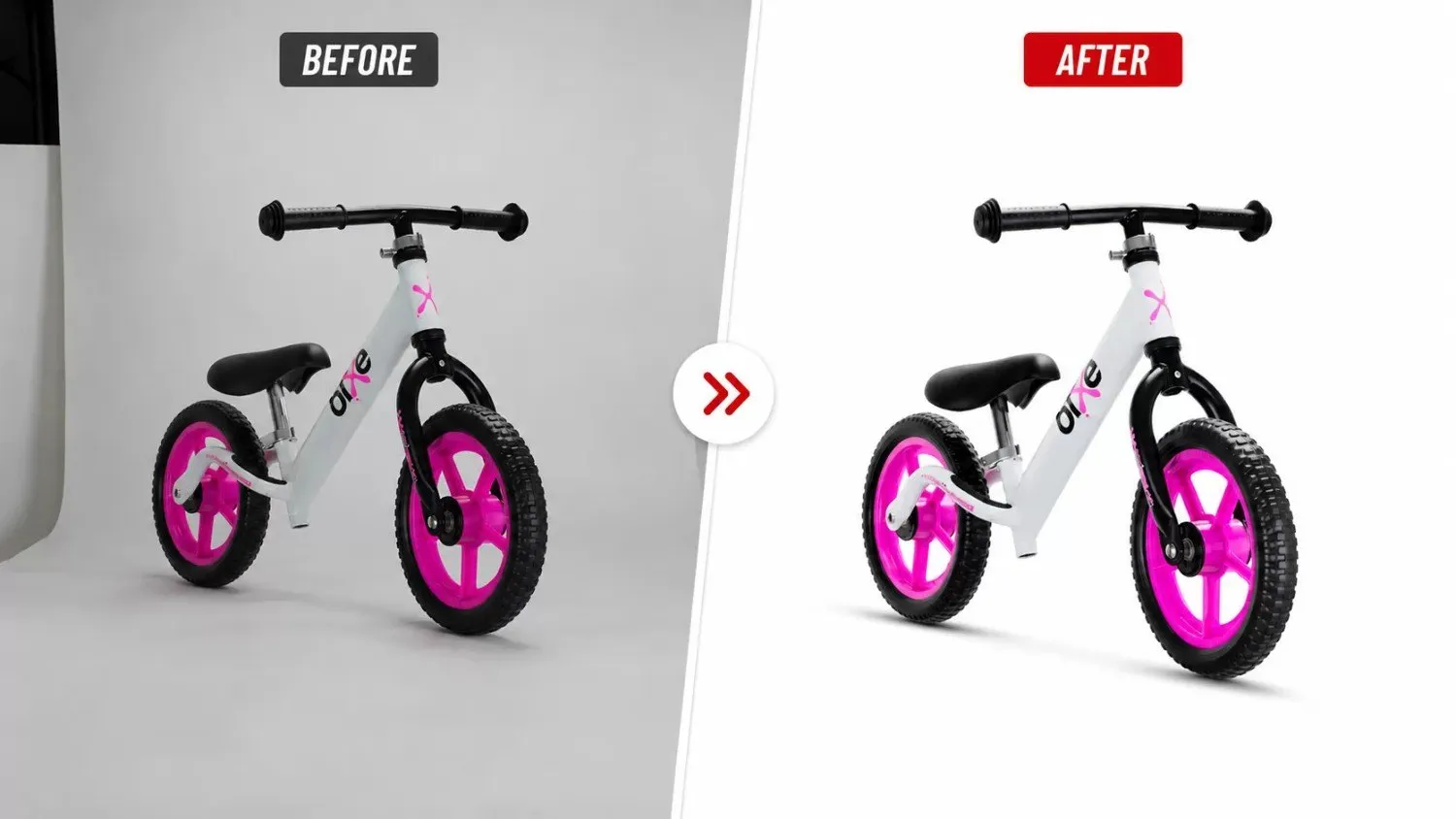

High-quality product images can influence how quickly shoppers understand a product, trust a seller, and decide whether to buy. For e-commerce brands, choosing a Product Photo Editing Company is not simply about making pictures attractive. It is about creating consistent, accurate, platform-ready visuals that support the customer journey.
Why Product Image Quality Matters for Conversions
Online shoppers cannot physically inspect an item before purchasing. Product photography must communicate shape, texture, color, scale, and condition clearly. Poor lighting, distracting backgrounds, uneven cropping, or inaccurate colors can create hesitation and increase the possibility of returns.
Professional editing can improve visual consistency across an entire catalog. Product Background Removal can isolate an item from a busy setting, while Product Image Background Removal can prepare clean white or transparent backgrounds for marketplaces. Product Color Correction helps maintain realistic tones, which is particularly important for fashion, cosmetics, furniture, and accessories.
The goal is not to make every image look artificially perfect. It is to remove distractions while preserving the product's real appearance.
How to Edit Product Photos for Higher Conversions
An effective workflow starts with the intended sales channel. Amazon Product Photo Editing may require different image dimensions, background standards, and composition choices than Shopify Product Image Editing. Before editing begins, determine where the image will appear, what the platform requires, and what customers need to see.
Next, create a consistent visual standard. Product Image Masking and Product Clipping Path techniques can separate complex objects from backgrounds with precision. This is useful for products with curves, transparent areas, intricate edges, or multiple components.
After isolation, editors can use Product Shadow Creation to give products realistic depth. A controlled shadow prevents an item from appearing as if it is floating. Product Reflection Removal can also eliminate unwanted reflections from glass, metal, polished surfaces, and packaging.
Image dimensions should then be standardized. Product Image Resizing helps maintain consistent proportions and suitable resolution across listings. Product Image Enhancement can improve clarity and tonal balance without changing important product characteristics. Product Background Editing can further align images with a brand's visual standards.
What to Look for in an Editing Partner
Experience should be evaluated by looking beyond a portfolio of attractive images. Ask whether the provider has experience with your product category, sales channels, file formats, and expected turnaround times.
A strong partner should have a documented quality-control process. This may include checking edges, color consistency, shadows, dimensions, naming conventions, and final file formats before delivery.
It is also useful to ask how revisions are handled. Clear revision policies reduce delays when an image needs a different crop, background, shadow, or color treatment.
Consider Scalability and Turnaround
Turnaround time should be evaluated alongside accuracy. Ask about standard turnaround, urgent orders, communication channels, and batch-processing capabilities.
A professional workflow should remain consistent when the volume of images increases. This matters during seasonal launches, new product releases, promotional campaigns, or expansion into additional marketplaces.
Consistency Across E-commerce Channels
A professional visual system should work across websites, marketplaces, catalogs, advertising campaigns, and social media. E-commerce Image Editing can help maintain a consistent presentation when products are published across multiple channels.
E-commerce Product Image Editing should also consider the context of each platform. Online Store Photo Editing may prioritize brand style, while Marketplace Product Photo Editing may require strict technical specifications.
For businesses with large inventories, Product Listing Image Editing and Product Catalog Image Editing can create a repeatable standard. Online Product Image Retouching can then help maintain consistent finishing across product categories.
Review Quality, Communication, and Security
Before selecting a provider, request sample work using products similar to yours. Compare edge quality, natural shadows, color accuracy, image sharpness, and consistency between before-and-after files.
Communication is equally important. Know who handles instructions, how feedback is recorded, and how corrections are managed. If original product images contain commercially sensitive information, ask about file handling, access controls, retention policies, and secure delivery.
A trustworthy workflow should make it easy to explain requirements before production begins. Clear instructions, reference images, naming conventions, and sample outputs can reduce revisions.
How to Measure Whether Editing Supports Sales
Editing quality should ultimately be connected to business outcomes. Track metrics such as product-page engagement, add-to-cart rate, conversion rate, return reasons, and image-related customer questions. These measurements can reveal whether clearer visuals are helping customers make decisions.
Do not judge an editing service only by visual attractiveness. A dramatic edit may look impressive but misrepresent a product. Accurate color, realistic texture, clear details, and consistent presentation are more useful for long-term customer trust.
Final Checklist Before You Choose a Product Photo Editing Company
Before signing an agreement, check the provider's experience, sample quality, turnaround time, revision process, pricing structure, technical capabilities, and security practices. Confirm that the team can follow platform-specific requirements and maintain consistency across large batches.
For brands selling through several channels, ask whether the workflow can support Amazon, Shopify, websites, catalogs, and other marketplaces without creating separate visual standards for every project. Also confirm how files are named, delivered, reviewed, and archived.
The right editing workflow should make product images easier to understand, not simply more decorative. When technical accuracy, realistic retouching, consistent presentation, and efficient production work together, images can support a smoother shopping experience and stronger product communication. Businesses that need dependable, scalable image preparation can evaluate a Product Photo Editing Company by requesting relevant samples, defining measurable quality standards, and starting with a controlled test batch. For professional guidance and production support, Global Photo Edit can help businesses establish a consistent image-editing workflow designed around their products and sales channels.























Sign in to leave a comment.