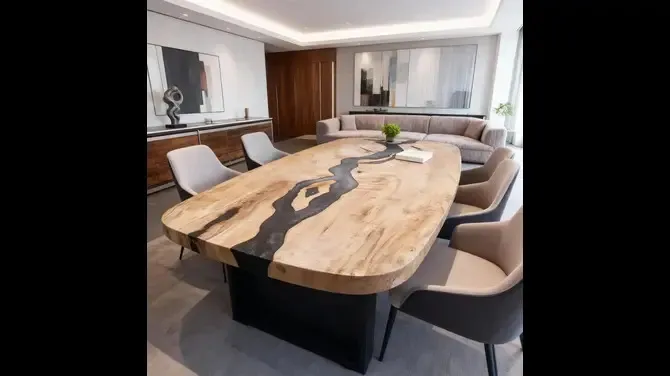

The center table is the smallest of the big decisions in a living room. It sits between the sofa and the television, holds tea cups and remote controls, and gathers everything from newspapers to festival sweets. Yet it also shapes the whole look of the room. A well-chosen table ties the seating together, adds warmth and gives guests something to admire.
This guide explains how to choose the right center table for your home, from wood types and shapes to sizes, styles, epoxy resin designs, care and how to work with a maker or supplier.
What Does a Center Table Do?
A center table, often called a coffee table, has several jobs.
- Function. It holds drinks, snacks, books, remote controls and decor.
- Anchoring. It defines the seating area and pulls sofas and chairs into one group.
- Style. It adds material, texture and colour to the room.
- Storage. Some designs include shelves, drawers or lift-up tops.
- Conversation. It gives guests a shared point of focus.
Because it sits at the centre of the room, it is seen from every angle, so quality and finish matter.
Sizing Your Center Table
Getting the size wrong is the most common mistake. A table that is too big blocks movement, and one that is too small looks lost.
General rules
- Length: about two-thirds the length of your sofa
- Height: roughly 40 to 45 cm, ideally level with or slightly lower than the sofa seat
- Distance from the sofa: about 35 to 45 cm, close enough to reach and far enough to walk
- Walkways: leave at least 60 to 75 cm around the table where people move
Typical sizes
| Room | Table size |
|---|---|
| Small living room | 80 to 100 cm long |
| Medium living room | 100 to 120 cm long |
| Large living room | 120 to 150 cm long |
Measure your space, and mark the table's footprint on the floor with masking tape before you decide.
Choosing the Shape
Rectangular
The most common shape. It suits long sofas and rectangular rooms, and offers the most surface area.
Round
A Round Wooden Coffee Table softens a room full of straight lines, and it has no sharp corners, which is helpful with children or in tight spaces. Round tables also work well in the middle of a seating circle. Sizes typically range from 70 to 100 cm in diameter. A pedestal base gives extra legroom and a clean look.
Square
Good for balanced seating arrangements and smaller rooms. Choose a size that leaves room to walk around it.
Oval
Combines the seating flexibility of a round table with the length of a rectangle. It suits narrow living rooms.
Nested and multi-table sets
Two or three tables in graduated sizes give flexibility. You can push them together or scatter them around the room.
Free-form and live-edge
Natural, irregular outlines suit rustic and contemporary rooms, and make the table a piece of sculpture in its own right.
The Best Woods for Center Tables
The timber decides the look, weight and durability of the table.
Sheesham
A Sheesham Wood Coffee Table is a popular choice in Indian homes. Sheesham, also known as Indian rosewood, is dense, strong and full of character, with warm reddish-brown tones and a pronounced grain. It handles daily use well and takes a polished finish beautifully.
- Strengths: hard-wearing, attractive grain, good value for a dense hardwood
- Consider: colour varies from board to board, and it can darken over time
- Best for: traditional and contemporary living rooms that want warmth
Mango wood
A Mango Wood Coffee Table is an appealing, sustainable option, since mango timber comes from trees that have finished producing fruit. It ranges from cream to brown, often with attractive streaks, and takes stains and finishes nicely.
- Strengths: eco-friendly, lighter in weight, versatile look
- Consider: softer than sheesham or teak, so it can dent under heavy use
- Best for: casual family rooms and lighter-use tables
Other popular timbers
- Teak: golden brown, very durable and moisture-resistant
- Acacia: lively colour variation with good hardness at a fair price
- Walnut: deep, elegant and premium
- Oak: strong, with a classic grain
- Cedar: warm, aromatic and lighter in weight
Whichever wood you choose, make sure the table is solid timber, not a thin veneer over a composite core, and that the wood has been properly seasoned.
River Tables: Wood Meets Colour
A River Wooden Coffee Table is made from two live-edge slabs separated by a flowing channel, usually filled with resin. The result looks like a stream running through the timber. It is the most popular way to give a small table a large presence.
River colour options
- Clear or smoky: lets the grain shine, and suits almost any interior
- Blue and turquoise: dramatic, water-like and modern
- Green: natural and calming
- Black: graphic and bold
- Amber: warm and cosy
For a coffee table, keep the river proportionate. A channel that is too wide leaves little timber and little usable surface, while a gentle, narrow river feels balanced.
Epoxy Resin Center Tables
An Epoxy resin center table combines wood with cured epoxy resin. The resin can fill gaps, cracks and channels, or form entire sections of the top. Once cured, it becomes a hard, glossy, durable surface.
Why people choose them
- A striking focal point. Resin adds colour, depth and light play.
- Strength. Resin fills natural cracks and adds hardness to the top.
- Uniqueness. Each table has its own grain, knots and resin flow.
- Design freedom. Colours, shapes and effects can be customised.
Fully cured resin with a quality finish suits daily use. The main cautions are heat and sharp objects, so use coasters and trivets, and keep the table out of long periods of harsh direct sun.
3D Epoxy Resin Designs
A 3D Epoxy Resin Coffee Table takes the resin idea further. Instead of a flat top with a river, the resin is layered or poured to create depth, waves, swirls or the illusion of moving water. Light passes through and reflects within the layers, so the design seems to change as you move around it.
Popular 3D effects
- Ocean waves in blue, turquoise and white
- Marbled swirls in mixed colours
- Galaxy or cosmic looks with dark tones and metallic flecks
- Forest or river scenes in greens and browns
- Glowing or translucent effects that respond to lighting
These tables are conversation pieces. They work best when the rest of the room stays simple, since the table already carries plenty of visual interest. Ask the maker how the layers are poured and sealed, and request photographs in natural light, because colour and depth can look different on a screen.
Matching the Table to Your Style
Modern and minimalist. Clean lines, slim legs and clear or smoky resin. A simple round or rectangular shape in pale wood.
Traditional and classic. Rich sheesham or teak, turned or carved legs and a polished finish.
Rustic and natural. Live-edge slabs, thick tops and warm, earthy resin tones.
Coastal. Light wood with blue or turquoise resin, or a 3D wave design.
Industrial. Solid wood with black metal frames and dark resin.
Eclectic. A bold resin colour or 3D design against simple furnishings.
Colour and Coordination
Before you pick a table, look at the room.
- Sofa colour. A neutral sofa lets a bold table stand out. A colourful sofa calls for calmer wood and clear resin.
- Floor. Dark floors need a table that contrasts, and pale floors pair well with mid or dark tones.
- Rug. A patterned rug works best with a plain table, and vice versa.
- Existing wood. Keep wood tones within the same family, or make contrasts clearly deliberate.
- Lighting. Natural light shows off resin, and warm evening light gives wood a glow.
When in doubt, choose clear or lightly tinted resin. It is flexible and will not clash if you redecorate.
Practical Features to Consider
- Storage. Lower shelves, drawers or lift-up tops keep clutter out of sight.
- Height flexibility. Some tables adjust for use as a work surface.
- Edge shape. Rounded edges are safer for homes with small children.
- Stability. A solid base prevents wobbling.
- Finish. A hard, scratch-resistant topcoat makes daily use easier.
- Weight. Solid timber and resin are heavy, so check whether you need to move the table often.
Styling Your Center Table
A styled table looks intentional and stays useful.
- Use a tray to group remotes, coasters and small items.
- Add height with variety. A stack of books, a small plant and a decorative bowl create layers.
- Odd numbers work best. Three or five objects look more natural than two or four.
- Leave space. Keep at least half the surface clear for cups and snacks.
- Let resin show. With a river or 3D design, avoid covering the best part of the table.
- Change with the seasons. Fresh flowers, festival decor or seasonal fruits keep the table looking fresh.
Choosing a Maker or Supplier
Where you buy matters as much as what you buy.
A Center Table Manufacturer makes tables directly, so you can usually choose the wood, size, resin colour and finish, and get clear answers about construction. This is the best route for custom or unusual pieces.
A Center Table Supplier generally offers a broader range of ready-made designs and often delivers faster. This suits buyers who find a standard size and style they like.
Ask any seller:
- Which wood species is used, and is the table solid throughout?
- How was the timber seasoned?
- What resin and finish are used?
- What are the exact dimensions and weight?
- How long will delivery take, and how is the table packed?
- What warranty and aftercare are offered?
- Can I see photographs of the actual table?
Buying in Delhi
If you live in or near the capital, a Center Table Manufacturer in delhi offers useful advantages:
- Easier communication. You can discuss the design, see samples and check progress.
- Simpler delivery. Shorter distances reduce the risk of damage, and delivery to apartments can be planned around lifts and building rules.
- Climate awareness. Delhi's hot summers, dry spells and monsoon humidity all affect timber and resin, and local makers prepare for them.
- After-sales convenience. Touch-ups, polishing and repairs are easier when the workshop is close by.
Customisation
Standard sizes do not suit every room. A maker can usually adjust:
- Length, width and height to fit your sofa and space
- Wood species and slab selection
- Resin colour, river width and 3D effect
- Shape, whether round, oval, rectangular or free-form
- Base style, such as wood, steel or pedestal
- Finish, from matte to glossy
Share your room measurements, sofa dimensions, photos and budget, and ask for a written specification. Handcrafted tables need time for seasoning, pouring, curing and finishing, so plan several weeks and avoid rushing.
Understanding Quality
A well-made center table shows its quality in the details.
- Solid timber, with the species clearly named
- Tight joints and a stable, level base
- A smooth, even finish with no rough patches
- Clear, bubble-free resin and a clean boundary between wood and resin
- Sealed, sanded edges, especially on live-edge designs
- Adequate thickness so the top does not flex
- Honest documentation covering materials, finish and care
Caring for Your Center Table
- Wipe spills promptly and dry the surface.
- Use coasters under cups and glasses.
- Use trivets under hot mugs and dishes.
- Clean with a soft cloth and mild soap, avoiding abrasive pads and strong solvents.
- Keep it out of long, direct sunlight and away from heaters.
- Lift rather than drag heavy objects across the surface.
- Maintain steady humidity, since wood moves slightly with the seasons.
- Follow the maker's advice on re-oiling or polishing.
Small scratches on wood can often be sanded and re-oiled, and fine resin scratches may polish out. For deeper damage, contact the maker.
Common Mistakes to Avoid
- Choosing a table that is too large or too small for the sofa and room
- Ignoring height, so the table is awkward to reach from the sofa
- Forgetting walkways and blocking movement
- Buying by photo alone without checking materials
- Choosing a bold resin colour without considering the rest of the room
- Skipping the finish discussion
- Choosing the lowest price without checking wood quality and construction
Frequently Asked Questions
What is the ideal height for a center table?
About 40 to 45 cm, level with or slightly lower than your sofa seat.
How big should it be?
Roughly two-thirds the length of your sofa, with about 35 to 45 cm between the table and the sofa.
Which wood is best for a coffee table?
Sheesham, teak, acacia, oak and walnut are all durable. Mango wood suits lighter use and offers a sustainable look.
Are epoxy resin tables durable?
Yes, when properly made and cured. Use coasters and trivets, and avoid dragging sharp or heavy objects.
Will the resin turn yellow?
Some resins can yellow slowly with heavy UV exposure. UV-stable resin and sensible placement reduce this risk.
Is a round table better than a rectangular one?
Round tables suit smaller rooms and homes with children, while rectangles offer more surface area for long sofas.
Can I order a custom size?
Many makers offer custom dimensions, wood types and resin colours. Ask early.
Conclusion
A center table quietly does a great deal of work: it holds everything you need, brings the seating together and sets the tone for the room. Measure your space, choose a shape and height that suit your sofa, pick durable, well-seasoned timber and decide whether you want the calm warmth of wood or the drama of a river or 3D resin design. Ask detailed questions, request real photographs and choose a maker who is open about materials and finishing.
To see the range of styles, sizes and colours available, browse this collection of Center Table Manufacturer designs and pick the one that suits your living room.





















Sign in to leave a comment.