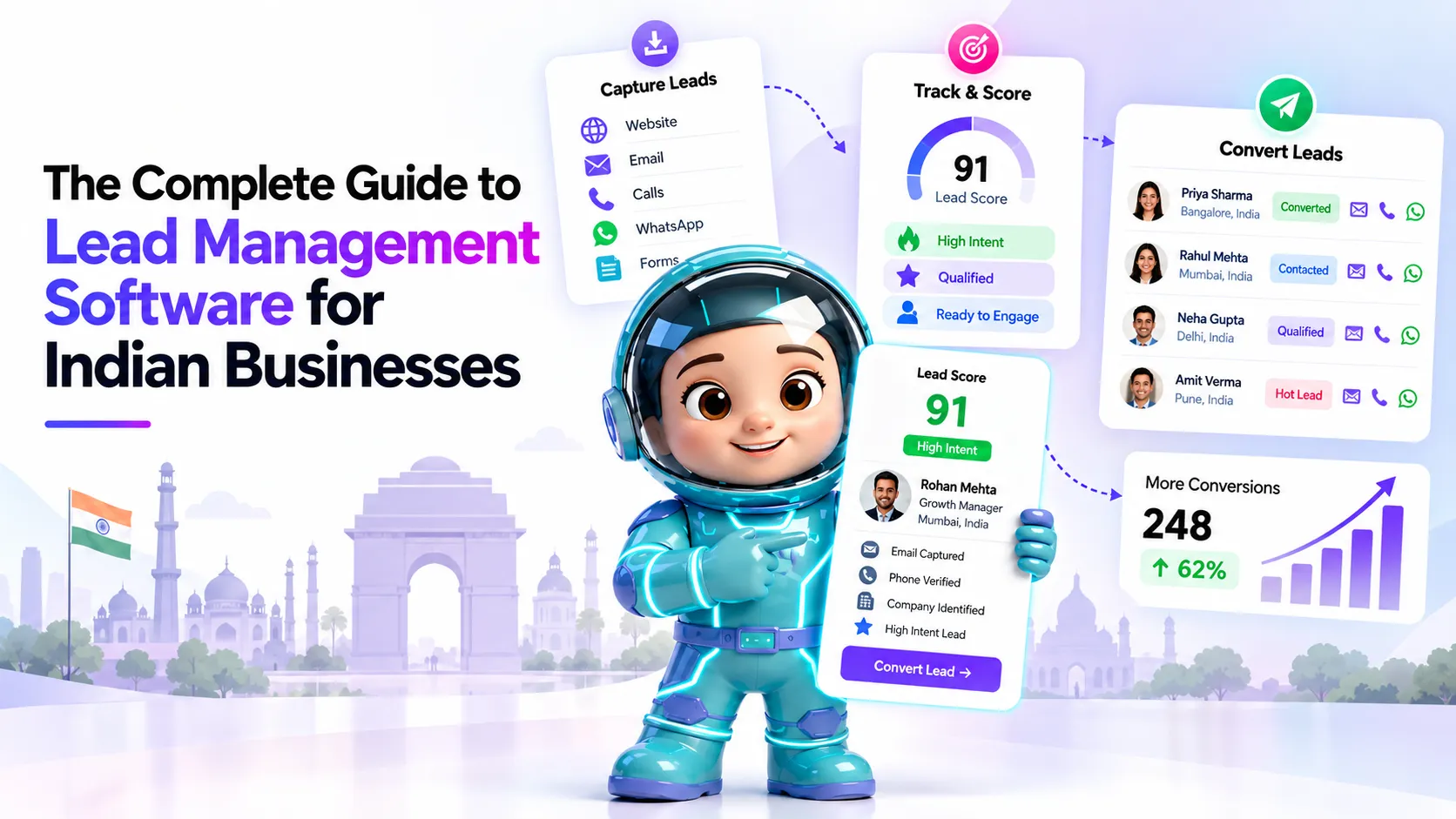

Every Indian business that sells to other people has a lead problem hiding in plain sight. Enquiries arrive from IndiaMART, JustDial, Instagram ads, website forms, phone calls, and WhatsApp. They land in different places, get handled by different people, and get followed up on at different speeds.
Some of those leads become customers. Many quietly disappear, and nobody can say exactly how many.
Lead management software exists to close that gap. This guide explains what it is, which features matter, which type of tool suits your business, what to watch for in India specifically, and how to choose one without overpaying.
What is lead management software?
Lead management software is a system that captures leads from every channel, scores them by likelihood to buy, assigns each one to an owner, automates follow-up, and tracks the lead until it converts or drops out.
It answers three questions at any moment. Who owns this lead? When did we last contact them? What happens next?
If your team cannot answer those questions in ten seconds, you need a system.
Why Indian businesses need it more than most
Lead handling in India has quirks that global playbooks ignore.
Leads come from many marketplaces. IndiaMART, JustDial, and Meta lead ads each send leads in different formats, often to different phones. Without a central system, leads scatter across personal devices.
Buyers expect a fast, personal reply. Enquiries often come with an expectation of a call or WhatsApp message the same day. Speed matters. In a Harvard Business Review study of 1.25 million leads, firms that contacted a lead within an hour were nearly seven times as likely to qualify it as firms that waited one more hour, and more than 60 times as likely as firms that waited 24 hours or longer. That study covered US companies and dates from 2011, so read the multiples as a pattern, not a promise. The pattern still holds in every sales team I have seen.
Teams are lean. A small Indian business often has two or three people doing sales alongside everything else. Nobody has spare time to chase every lead by hand.
Staff turnover is real. When a rep leaves, their leads often leave with them, buried in a personal phone or spreadsheet. A shared system keeps the pipeline with the company.
The features that matter
Vendors advertise dozens of features. These ten decide whether the software helps.
1. Multi-source capture. The tool should pull leads from your website, ad platforms, and marketplaces automatically, without manual copying.
2. Deduplication. One person often enquires through two channels. One record per person prevents double calls and keeps reports accurate.
3. Enrichment. Extra context, such as company, role, and city, lets a rep open the first conversation with something useful to say.
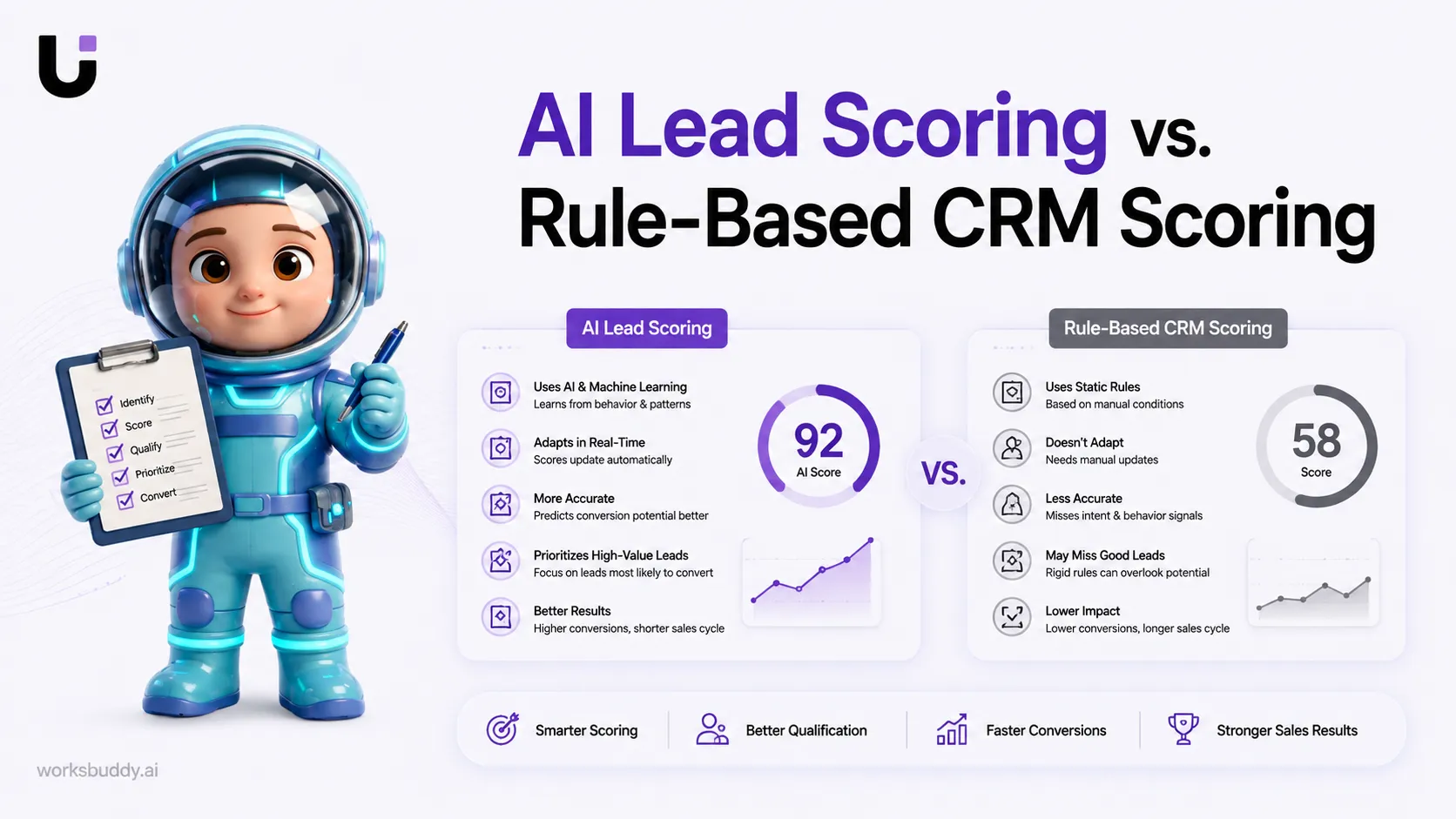
4. Lead scoring. The system ranks leads so reps call the most promising ones first.
5. Routing and assignment. Rules send each lead to the right person by territory, language, deal size, or product.
6. Automated follow-up. The software sends scheduled messages and creates tasks so follow-up never depends on memory.
7. Pipeline view. A clear stage-by-stage board shows where every lead stands.
8. Reporting. You need response time, conversion by source, and stalled leads at a glance.
9. Integrations. The tool should connect to the calling, email, messaging, and accounting tools you already use.
10. Mobile access. Most Indian sales work happens on a phone. If the mobile experience is weak, adoption will be too.
A useful test: if a tool nails five through eight but fails at one and two, you will still lose leads before they reach the pipeline.
Types of lead management software
Not every tool with "lead" in the description does the same job. Four types dominate the market.
CRM platforms with lead modules. Full customer relationship systems that include lead tracking as one part. They offer depth and customization, but setup takes time and cost climbs with each seat and tier. Good for teams that want one system for the whole customer lifecycle.
Dedicated lead management tools. Built around the lead lifecycle specifically, often with stronger capture, routing, and speed-to-lead features. Good for high-volume teams that live in the top of the funnel.
Marketing automation platforms. Strong at nurturing leads with email and content, but usually lighter on sales-side workflow. Good for teams where marketing owns most of the funnel.
AI agents for lead handling. A newer category where software does the work, not just records it. It scores, follows up, and books meetings automatically. Good for small teams that want follow-up handled without adding headcount.
Spreadsheets. Still the most common tool of all. They work for the first few dozen leads a month. Beyond that, missed follow-ups and duplicate entries cost more than software would.
Most teams pick the type first and the vendor second. If you skip that step, you compare tools that solve different problems.
Who needs what: a quick guide by business type
Real estate and property. High enquiry volume, long sales cycles, and heavy site-visit scheduling. Prioritize fast response, routing by location, and strong follow-up over months.
Education and coaching. Waves of enquiries around admission seasons. Prioritize bulk capture, quick calling workflows, and clear stage tracking through counseling and enrollment.
Financial services and insurance. Regulated conversations and repeat follow-ups. Prioritize call logging, consent records, and clean audit trails.
B2B services and SaaS. Fewer but higher-value leads. Prioritize scoring, meeting booking, and long-cycle nurture.
Healthcare clinics and diagnostics. Appointment-driven leads that go cold quickly. Prioritize reminders, scheduling, and multi-channel messaging.
Local service businesses and D2C. Fast decisions and price-sensitive buyers. Prioritize response speed, simple pipelines, and low per-user cost.
India-specific considerations
These points decide whether a tool works in practice.
Local integrations. Confirm the tool connects to the marketplaces and ad platforms you actually use. A generic connector list means little if IndiaMART or JustDial is not on it.
WhatsApp and calling. Many Indian buyers respond faster on WhatsApp or a phone call than by email. Check whether the tool supports both natively or only through a paid add-on.
Rupee pricing and GST. Some vendors bill in USD and others list rupee prices before 18% GST. Ask for a written quote in INR with tax included.
Regional languages. If your buyers write in Hindi, Hinglish, Tamil, or other languages, check how the tool handles multilingual messages and notes.
Data protection under the DPDP Act. This one is easy to miss and increasingly hard to ignore. India notified the Digital Personal Data Protection Rules on 13 November 2025, and most core obligations, including notice and consent, take effect after an 18-month phase-in that ends around 13 May 2027. The Rules require clear, standalone consent notices that explain the specific purpose for which you collect personal data. Penalties can reach ₹250 crore.
Every lead you store is personal data. That means your lead management software should record where a lead came from, what they consented to, and when, and it should let you delete or correct a record on request. Ask each vendor how they handle consent records and data deletion. Speak to a lawyer about your specific obligations, since the exact requirements depend on your business.
What AI actually does in lead management
Every vendor now claims AI. Four capabilities are worth understanding.
Scoring. AI weighs many signals to rank leads. It works best after you have some closed deals for it to learn from.
Automated follow-up. The system drafts and sends messages on schedule. This usually saves the most time.
Routing. AI assigns each lead to the best rep based on rules and past results.
Prediction. The system estimates which deals will close, so managers can focus on the ones that need help.
Be wary of vague claims. Ask the vendor what the AI does on your plan, with a real example, since many AI features sit in higher pricing tiers.
Understanding pricing and total cost
Pricing in this category follows three models.
Per-user pricing charges each seat monthly. It is easy to compare but climbs quickly as your team grows.
Tiered pricing locks features like automation and AI scoring behind higher plans. The entry price often does not include what you actually need.
Flat or usage-based pricing charges by account or activity rather than seat count. It suits small teams that plan to grow.
Plans range from free to a few thousand rupees per user per month, depending on tier. Look past the sticker price. Total cost includes:
- GST on top of the listed price
- One-time onboarding or implementation fees
- Add-ons for AI, calling, or messaging
- Time your team spends setting up and learning the tool
For a side-by-side look at current prices, see our comparison of the [best lead management software in India](LINK TO COMPARISON POST).
How to choose: the questions to ask
Before you buy, run every vendor through these eight questions.
- Which of my lead sources connect natively, and which need workarounds?
- Does the plan I am buying include automated follow-up and scoring?
- What is the total first-year cost in INR, including GST and onboarding?
- How does the tool record consent and handle deletion requests?
- Can my reps use it comfortably on a phone?
- How long does setup take, and who does it?
- What happens to my data if I leave?
- Can I run a trial with real leads?
That last question matters most. A demo dataset teaches you nothing about how your team will behave. Run a two-week trial with live leads before you commit.
Rolling it out
A good rollout takes about a month.
Week 1: List every lead source and define what counts as a qualified lead.
Week 2: Connect sources, set routing rules, and build a simple first score.
Week 3: Turn on automated follow-up for the first few messages.
Week 4: Review response time, contact rate, and stalled leads, then adjust.
For a full stage-by-stage walkthrough, read our guide on [how to capture, score, and convert more leads](LINK TO HOW-TO POST).
Where Lio fits
Full disclosure: Worksbuddy builds Lio, so weigh this section accordingly.
Lio is an AI agent for lead handling, not a traditional CRM. It captures and enriches leads, scores them on arrival, predicts how likely each deal is to close, and assigns, briefs, and books qualified leads for your reps. It builds one deduplicated pipeline, so nobody works the same prospect twice. It starts with a free plan and uses flat pricing with no per-seat charges.
It also sits inside the Worksbuddy suite. Evox handles email follow-up, Taro creates tasks, and Ciao answers inbound calls as a voice agent.
Lio fits best for small teams that want follow-up handled automatically. If you need a heavily customized CRM for a large sales organization, a traditional platform may fit better.
Conclusion
Lead management software does one job: it makes sure a good lead never disappears because nobody followed up. For Indian businesses, that job comes with local wrinkles, from IndiaMART and WhatsApp to GST invoices and the DPDP Act.
Start with your real bottleneck. If leads scatter across tools, fix capture. If reps call in the wrong order, fix scoring. If follow-up depends on memory, automate it. Then pick the type of tool that solves that problem, ask the eight questions above, and test with real leads before you commit.
The best lead management software India offers is the one your team uses every day. If follow-up is where you lose the most, try Lio on the free plan and run it against your next batch of leads.
Frequently asked questions
What is the difference between a CRM and lead management software?
A CRM manages the whole customer relationship, including existing customers. Lead management software focuses on the stage before the sale: capturing, scoring, assigning, and following up on prospects. Many CRMs include lead management as one feature.
How much does lead management software cost in India?
Prices run from free tiers to a few thousand rupees per user per month. Automation and AI features often sit in higher tiers, and GST plus onboarding can add meaningfully to the first-year cost.
Can a small business use it?
Yes. Free plans and flat-priced tools exist specifically for teams of two to five people. The break-even point usually arrives when you can no longer track every lead in your head.
Does it work with WhatsApp?
It depends on the tool. Some connect natively, some through paid add-ons, and some not at all. Confirm this before you buy, since WhatsApp is a primary channel for many Indian buyers.
Do I need to worry about the DPDP Act?
If you store personal data about people in India, which every lead list does, yes. Choose a tool that records consent and supports deletion, and get legal advice on your specific obligations.






















Sign in to leave a comment.