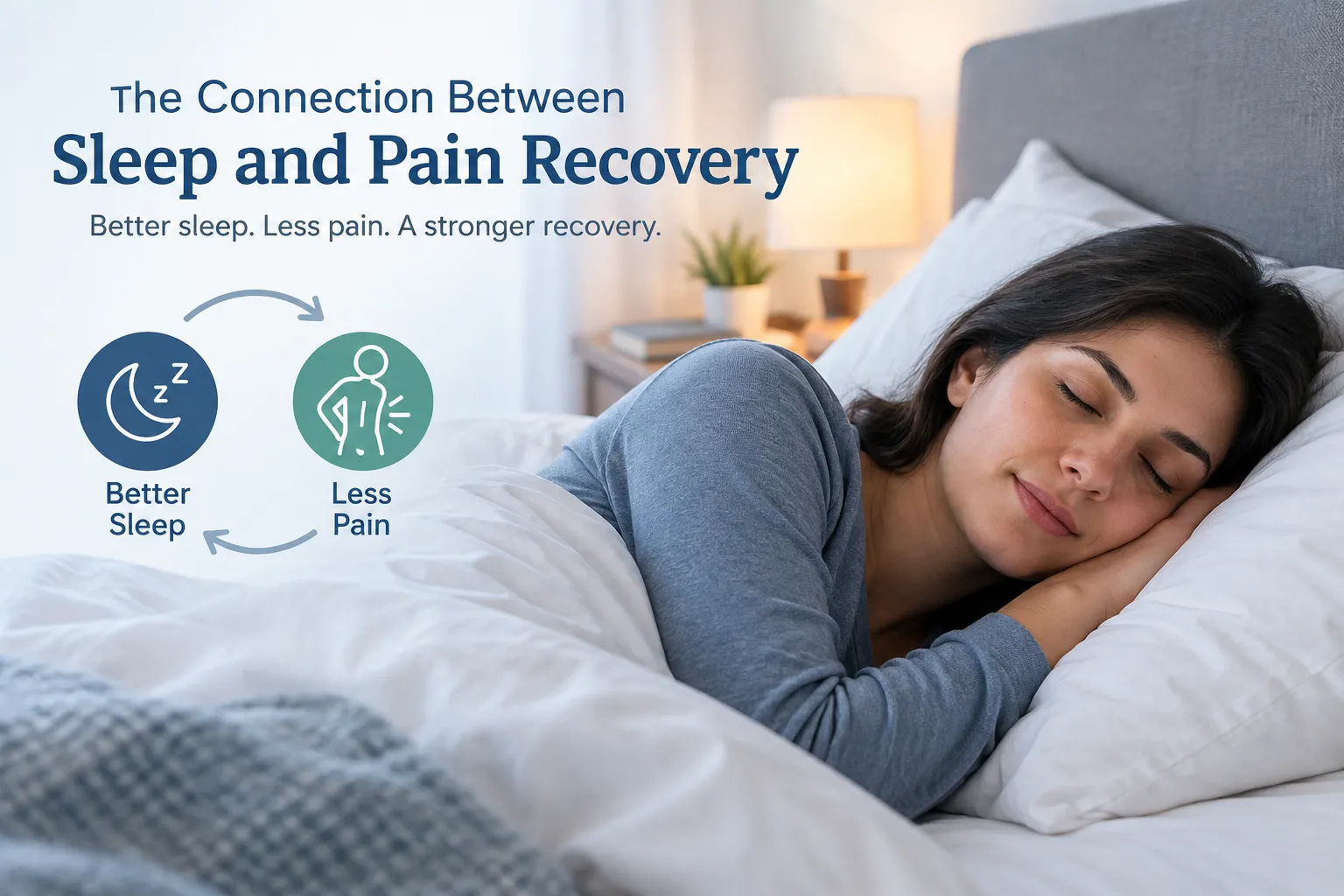

When you're dealing with pain, getting a good night's sleep can feel almost impossible. You may struggle to find a comfortable position, wake up because of discomfort, or spend the night worrying about how you'll feel the next morning. Unfortunately, poor sleep and pain can sometimes reinforce each other: pain can make it harder to sleep, while inadequate sleep may make pain feel more difficult to manage.
Understanding this connection can help you make sleep part of your overall recovery routine.
Why Sleep Matters When You're Recovering From Pain
Sleep is more than just a time to rest. While you sleep, your body carries out important processes involved in physical recovery, including tissue repair and regulation of the immune and nervous systems.
When you're recovering from an injury, illness, or procedure, consistently getting enough quality sleep gives your body time to carry out these normal restorative processes.
Sleep also affects how the nervous system processes pain. When you're sleep-deprived, you may find that discomfort feels more noticeable or harder to tolerate. You may also feel more tired, irritable, or less motivated to stay active, which can make recovery feel even more challenging.
How Pain and Poor Sleep Can Create a Cycle
Pain and sleep problems can sometimes become a frustrating cycle.
For example, knee or back pain may make it difficult to fall asleep. After a restless night, you may wake up feeling exhausted and more sensitive to discomfort. That discomfort can then make it harder to sleep the following night.
This doesn't mean that poor sleep is the cause of your pain. Rather, sleep quality and pain perception can influence each other, making both problems feel more difficult to manage.
Ways to Make Sleeping With Pain Easier
A few practical changes may make nighttime more comfortable:
Find a supportive sleeping position
Experiment with positions that reduce pressure on the painful area. Depending on the type of pain, pillows can sometimes provide additional support. For example, a pillow between the knees may feel more comfortable for some people who experience back or hip discomfort.
Keep a consistent sleep schedule
Try going to bed and waking up around the same time each day. A consistent schedule can help establish a more predictable sleep routine.
Create a comfortable sleep environment
Keep your bedroom quiet, dark, and comfortably cool. A supportive mattress and pillow can also make a difference, particularly if pain is affected by your sleeping position.
Avoid stimulating activities before bed
Give yourself some time to wind down before sleeping. Reducing screen use, heavy meals, caffeine, and intense activity close to bedtime may help some people sleep more comfortably.
Follow your healthcare professional's advice
If you're recovering from an injury, surgery, or medical condition, follow the activity, medication, and recovery instructions provided by your healthcare professional. Don't change prescribed medication simply to improve your sleep without discussing it with them.
When Sleep Problems Shouldn't Be Ignored
Occasional poor sleep is common, especially when you're experiencing discomfort. But persistent sleep problems deserve attention.
Consider speaking with a healthcare professional if pain regularly prevents you from sleeping, your symptoms are getting worse, or you're experiencing new symptoms that concern you. Persistent pain can have many possible causes, and identifying the underlying issue is often an important part of deciding what kind of care may be appropriate.
Make Sleep Part of Your Recovery Routine
Good sleep won't necessarily make pain disappear overnight, but it can be an important part of taking care of your body while you recover. Along with appropriate medical care, physical activity when recommended, nutrition, and other healthy habits, improving your sleep routine may help you feel better equipped to manage the recovery process.
Most importantly, don't feel that you simply have to “push through” persistent pain or repeated sleepless nights. If discomfort continues to interfere with everyday life or sleep, getting the right medical guidance can help you understand what may be causing it and what treatment options are available.























Sign in to leave a comment.