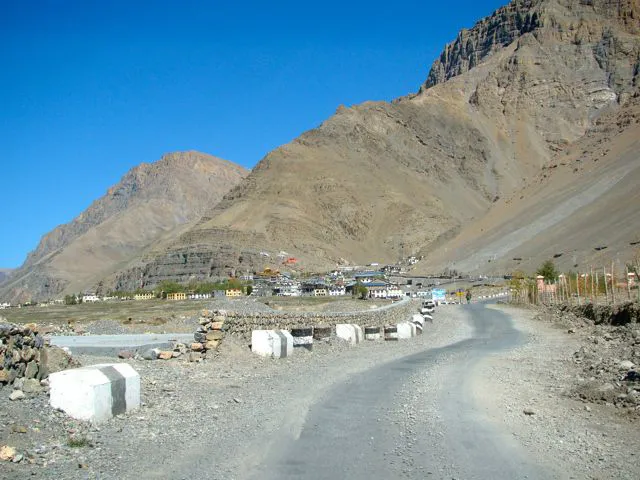

Life in Spiti Valley has developed around its landscape, climate, faith, and close-knit communities. The region may appear rugged at first glance, but its villages hold a rich cultural character that has been carried through generations. From religious practices and seasonal celebrations to food, homes, and community relationships, many aspects of everyday life remain closely connected with long-established customs.
For visitors, understanding these traditions can add another layer to a journey. The mountains may draw you towards Spiti, but its people and way of life often provide the deeper connection.
Buddhism and Everyday Life
Buddhism has a strong presence throughout Spiti, influencing both religious practices and daily routines. Monasteries are important spiritual and cultural centres, while prayer flags, mani stones, prayer wheels, and chortens can be seen across many settlements.
Monastic spaces are treated with considerable respect. Visitors may encounter monks engaged in prayers, study, or other daily activities. When entering such places, travellers should maintain a quiet manner, dress appropriately, and follow local instructions regarding photography and movement.
For residents, these customs are not simply ceremonial traditions reserved for special occasions. They remain part of community life and continue to influence how people interact with their surroundings.
Monasteries as Centres of Heritage
Spiti's monasteries preserve much more than religious practices. Their murals, manuscripts, sculptures, architecture, and oral traditions provide valuable links to the region's past.
Monasteries such as Tabo, Key, and Dhankar are among the better-known examples, but smaller religious institutions also contribute to the cultural fabric of individual villages. Each has its own history and atmosphere.
Travellers can gain more from these places by taking time to observe rather than simply photographing the buildings. Learning about their role within the community can make a visit considerably more meaningful.
Festivals Bring Communities Together
Seasonal celebrations are an important part of social life across Himalayan communities. Festivals can involve prayers, traditional performances, colourful clothing, music, food, and gatherings involving families from nearby settlements.
Such occasions offer an opportunity for younger generations to remain connected with customs passed down by elders. They also create a strong sense of community, particularly in remote areas where neighbouring villages may have close social ties.
Visitors who happen to encounter a local celebration should remember that it is a community occasion rather than a staged attraction. Observing respectfully and asking before taking photographs is always appropriate.
Food Reflects Mountain Living
Traditional food is closely linked with the climate and resources available in the region. Meals tend to be practical, warming, and suited to cold conditions. Local ingredients and preparation methods have developed around what can be grown, stored, or obtained within the valley.
Eating a home-cooked meal can offer a simple introduction to regional culture. Recipes passed through families often carry memories and habits that cannot be found in a standard restaurant menu.
Travellers can support local households by choosing family-run eateries and homestays when possible. It is also worth being open to unfamiliar flavours instead of relying entirely on food commonly found in cities.
Traditional Homes and Local Craftsmanship
Spitian houses reflect generations of adaptation to a demanding environment. Their compact designs, thick walls, and locally suitable construction methods help provide protection from cold conditions.
Inside these homes, everyday objects, textiles, storage methods, and decorative details can also reveal aspects of local craftsmanship. Some communities continue to practise traditional skills involving weaving, wool, wood, or other materials.
These practices are more than decorative arts. They form part of the knowledge that has helped families manage life in a remote mountain environment.
Community Life Remains Important
In smaller settlements, cooperation has traditionally played an important role. Neighbours may come together for agricultural activities, celebrations, household needs, or community responsibilities.
This sense of mutual support is particularly valuable in places where harsh weather and geographical isolation can make everyday tasks challenging. Visitors may notice that social connections remain an important part of village life.
For travellers, the best way to appreciate this culture is through respectful interaction. A friendly conversation, shared meal, or invitation to learn about a local custom can provide insight that no itinerary can offer.
Preserving Traditions for the Future
Modern tourism, technology, and changing lifestyles are gradually influencing life in Spiti. Younger residents may study or work outside their home villages before returning, while new businesses and travel opportunities continue to develop.
At the same time, many families remain committed to maintaining their cultural identity. Responsible tourism can support this effort when visitors respect local customs, purchase regional products, choose community-based services, and avoid treating traditions as entertainment.
For travellers hoping to experience this cultural richness while enjoying a comfortable base, selecting the best resort in spiti valley can provide a welcoming place to relax between excursions. A thoughtful stay, combined with respectful exploration, allows visitors to appreciate not only the striking Himalayan scenery but also the traditions that continue to give Spiti its distinctive character.
























Sign in to leave a comment.