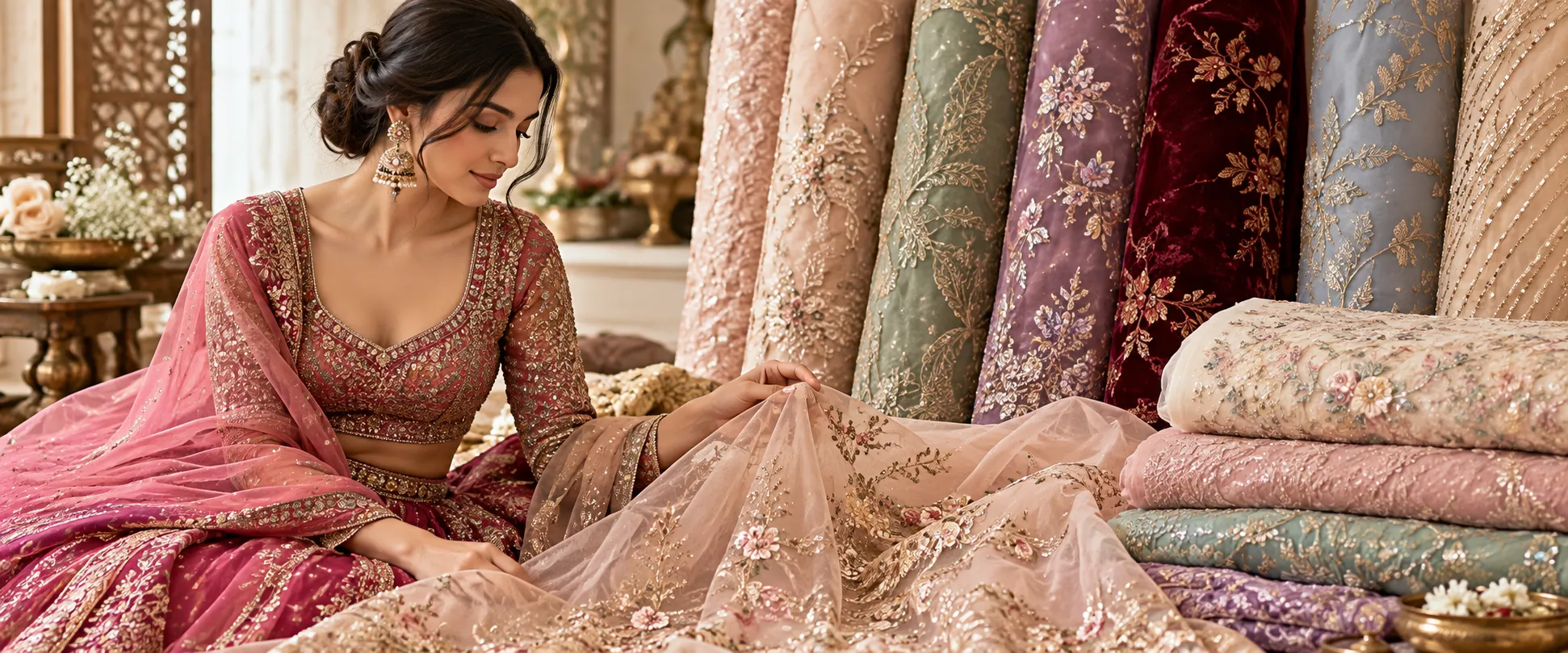

Introduction: Fashion Begins With Fabric
Have you ever wondered why two outfits with almost identical designs can look completely different when worn? The secret often lies in the fabric.
From the graceful flow of georgette to the luxurious richness of velvet, fabrics influence how an outfit looks, feels, and moves. They determine the silhouette, comfort, texture, and overall appeal of a garment.
Whether you're putting together a wedding outfit, choosing an elegant festive suit, or designing a contemporary ethnic ensemble, understanding fabrics can transform the way you approach fashion.
Let's explore how the right textile can elevate your wardrobe and help you make smarter fashion choices.
1. Understanding the Personality of Different Fabrics
Every fabric has its own personality. Some create dramatic silhouettes, while others offer a soft, understated elegance.
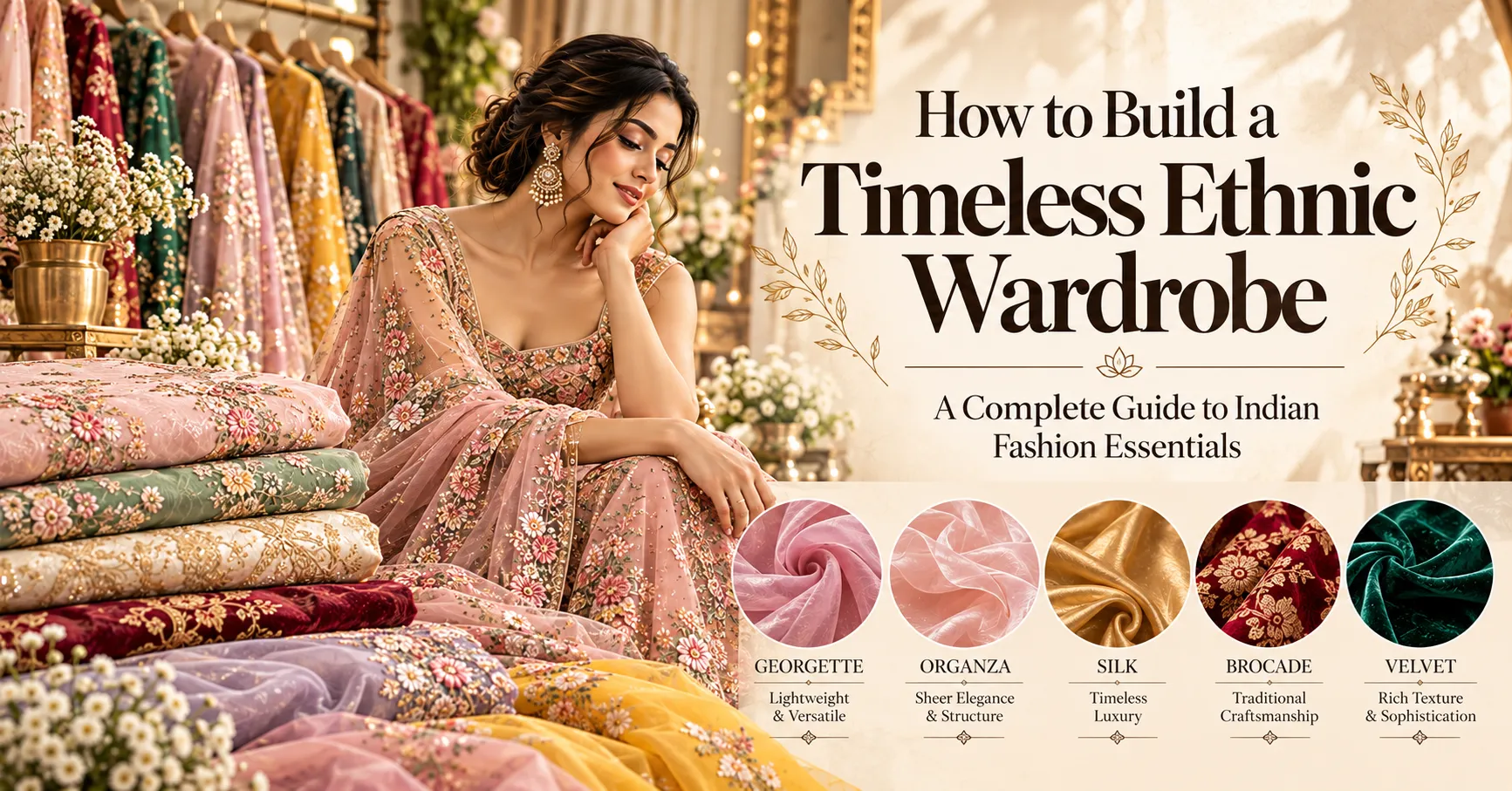
Here are a few popular fabrics and what makes them special:
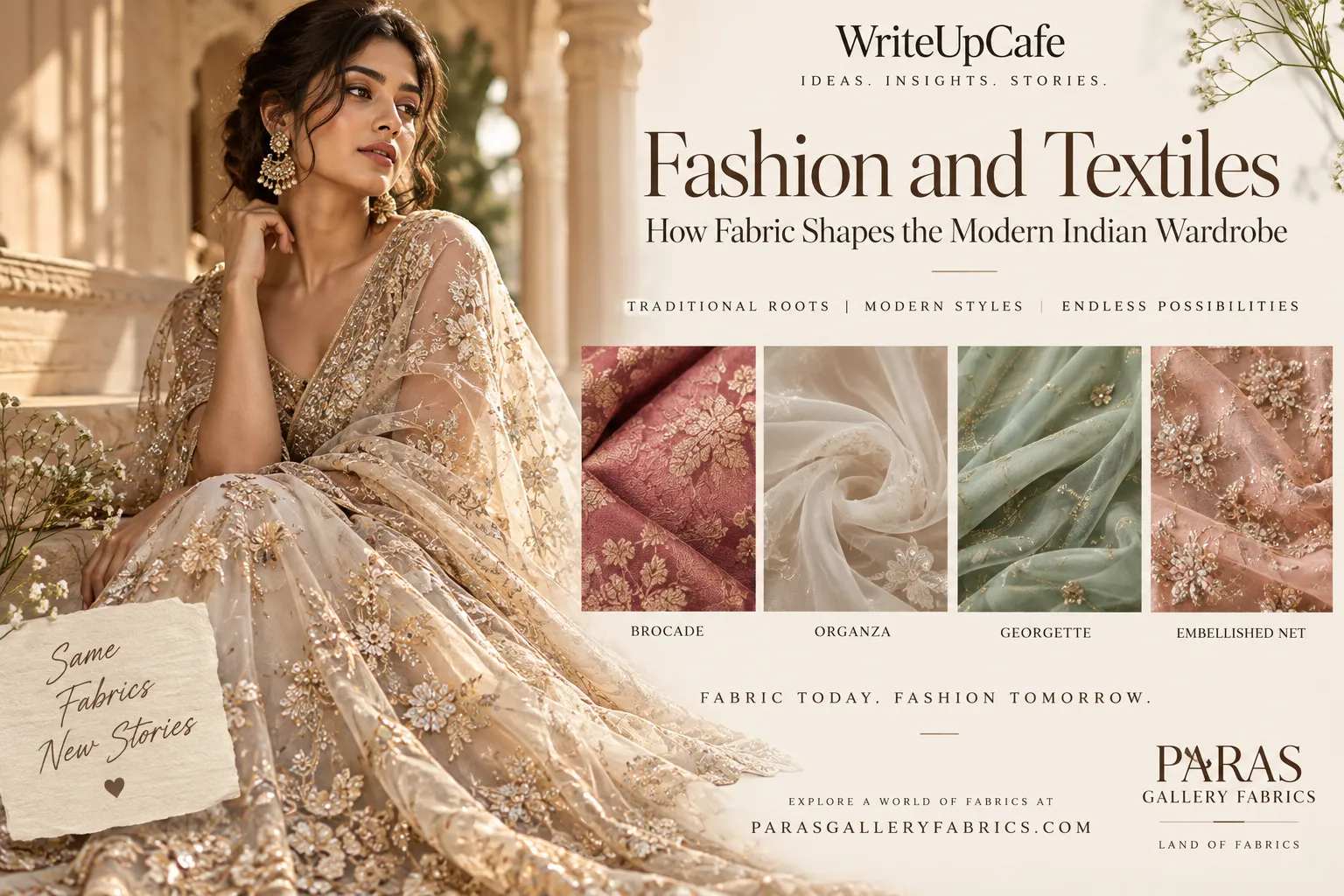
Organza: The Art of Elegant Volume


6
Organza is known for its lightweight, sheer texture and structured appearance. It adds volume without making an outfit look overly heavy.
Best suited for: Statement dupattas, layered lehengas, festive suits, and contemporary occasion wear.
Georgette: Movement Meets Grace


7
Georgette is loved for its fluid drape and lightweight feel. It follows the body's movement, making it a popular choice for outfits that need a graceful, flowing silhouette.
Best suited for: Sarees, anarkalis, flowing dresses, and lightweight dupattas.
Velvet: A Touch of Luxury


Velvet brings depth, richness, and a plush texture to fashion. Its distinctive surface gives garments a luxurious appearance, particularly in deeper shades.
Best suited for: Wedding blouses, winter occasion wear, evening outfits, and statement jackets.
Chanderi: Traditional Elegance With a Modern Feel


Chanderi is admired for its lightweight feel, delicate sheen, and traditional appeal. It works beautifully for outfits that balance heritage craftsmanship with understated elegance.
Best suited for: Festive suits, traditional dupattas, elegant kurtas, and daytime celebrations.
2. How Fabric Changes the Entire Silhouette
The same outfit design can create dramatically different results depending on the textile used.
Imagine a flared lehenga made in three different fabrics:
- Organza: Creates a voluminous, structured silhouette.
- Georgette: Produces a softer, flowing shape.
- Velvet: Adds visual richness and a more substantial appearance.
This is why fabric selection should happen alongside outfit design rather than as an afterthought.
If you want a garment that holds its shape, consider structured textiles. If you prefer fluid movement, lightweight, drapable fabrics may be more suitable.
3. Choosing Fabrics for Different Occasions
The occasion, weather, and duration of wear all influence which fabric will work best.
| Occasion | Fabric options | Why they work |
|---|---|---|
| Wedding reception | Velvet, satin, embroidered georgette | Rich appearance and elegant drape |
| Mehendi | Cotton, Chanderi, lightweight georgette | Comfortable and festive |
| Sangeet | Georgette, lightweight net, sequined fabrics | Movement and statement appeal |
| Festive celebrations | Organza, silk blends, Chanderi | Traditional elegance with texture |
| Daytime functions | Cotton, Chanderi, lightweight silk | Breathability and a refined look |
The best choice depends on the garment's construction, lining, embellishments, and how comfortable you want to feel throughout the event.
4. Why Fabric Texture Matters More Than You Think
Texture is one of the most overlooked aspects of fashion.
A smooth satin surface reflects light differently from a matte cotton weave. Embroidered net creates dimension through its open structure, while brocade adds richness through woven patterns.
Texture influences:
- How a garment photographs under different lighting.
- Whether embroidery stands out or blends into the base fabric.
- How luxurious or minimal an outfit appears.
- How the fabric feels against the skin.
When selecting a fabric, look beyond its color. Examine its surface, weight, transparency, and how it behaves when draped.
5. How to Choose the Right Fabric Online
Shopping for fabric online can feel challenging when you cannot physically touch the material. However, a few practical checks can help you make a more informed choice.
Check these five things before placing an order:
- Fabric composition: Understand whether the material is silk, cotton, polyester, or a blend.
- Drape and structure: Look for images or videos showing how the fabric falls and moves.
- Transparency: Check whether the material requires lining.
- Embroidery and finish: Examine close-up photographs to understand the density and placement of embellishments.
- Quantity and measurements: Confirm the fabric width and the number of meters required for your garment.
For a variety of ethnic and occasion-wear textiles, explore Paras Gallery Fabrics , where you can browse fabrics for your next outfit or creative project.
6. The Future of Fashion Is About Making Better Fabric Choices
Fashion is increasingly about personal expression, versatility, and thoughtful design.
Instead of choosing an outfit only because it is trending, consider how the fabric complements your style, the occasion, and the garment you want to create.
A well-chosen textile can make a simple design look sophisticated, give a traditional outfit a contemporary feel, and help you create garments that reflect your personality.
Conclusion: Let the Fabric Tell the Story
Fashion is not just about silhouettes, colors, or embellishments. It is also about the textile that brings every design to life.
From the delicate elegance of organza to the fluid beauty of georgette and the richness of velvet, every fabric offers a different creative possibility.
The next time you plan an outfit, start with the fabric. Understand its texture, movement, and character, and let those qualities guide your design.
Because sometimes, the difference between an ordinary outfit and an unforgettable one begins with a single piece of fabric.























Sign in to leave a comment.