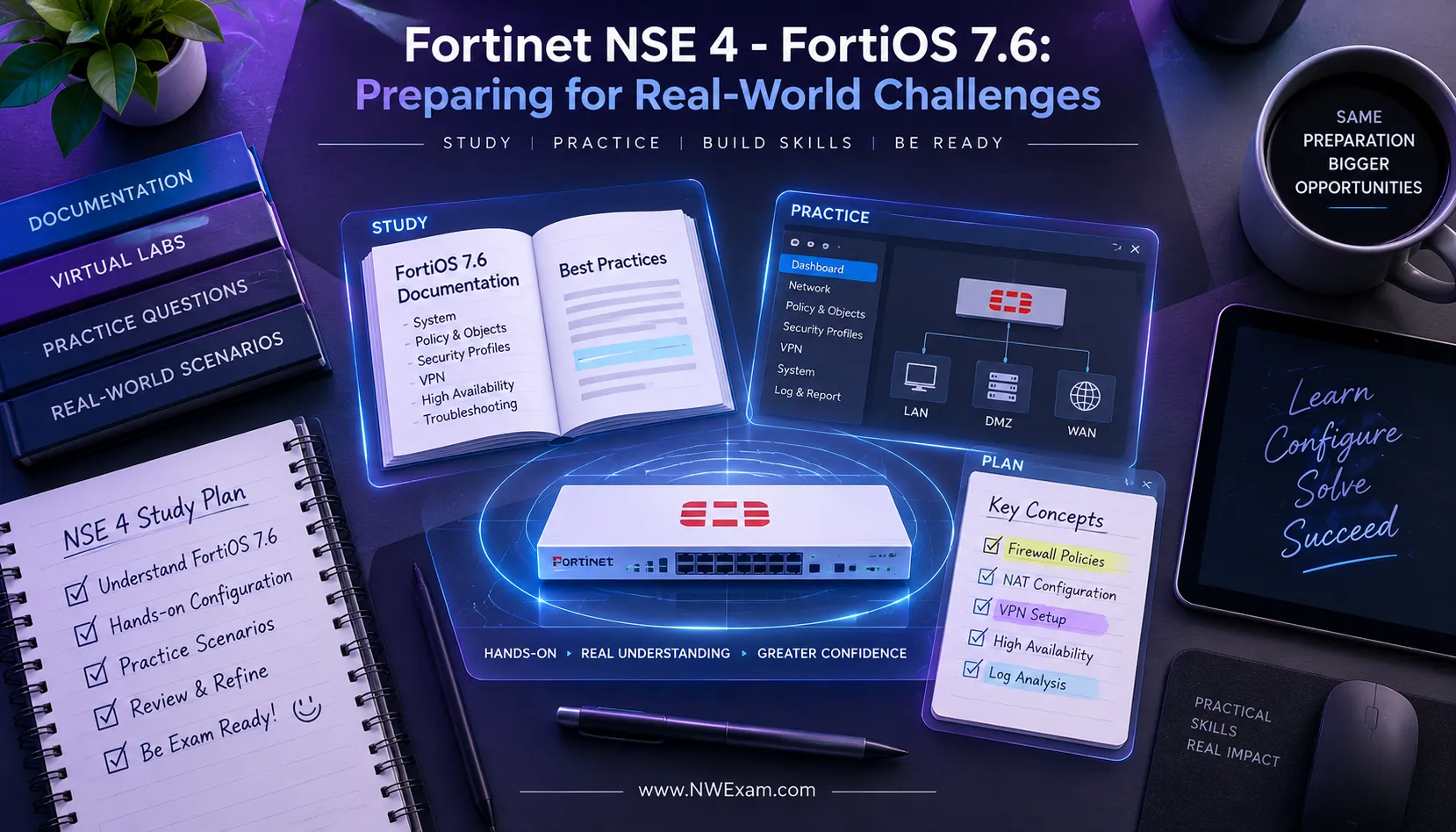

The Fortinet NSE 4 - FortiOS 7.6 Administrator certification validates a candidate's ability to configure, install, and monitor a FortiGate device running FortiOS 7.6 in a small to medium-sized business network. This crucial credential, identified by the exam code NSE4_FGT_AD-7.6, signifies a professional's expertise in core network security functionalities, including firewall policies, VPNs, routing, and content inspection. Designed for networking and security professionals, this article provides a detailed examination of the exam's structure, syllabus, effective preparation strategies, and an often-overlooked secret to maximize your chances of success, ensuring you're fully equipped to ace the Fortinet NSE 4 - FortiOS 7.6 Administrator exam. We will cover everything from understanding the exam's objectives to optimizing your study methods, offering practical insights to build your confidence and readiness.

Deciphering the Fortinet NSE 4 - FortiOS 7.6 Administrator Exam Blueprint
Embarking on any certification journey requires a clear understanding of the target. The Fortinet NSE 4 - FortiOS 7.6 Administrator exam is designed to rigorously test your practical skills and theoretical knowledge in managing FortiGate devices. Familiarity with the exam's fundamental characteristics forms the bedrock of an effective preparation strategy. This section outlines the essential details that every aspiring Fortinet NSE 4 certified professional must internalize. For comprehensive information and program updates, candidates should regularly consult the official Fortinet program page.
The NSE4_FGT_AD-7.6 FortiOS Administrator exam presents the following structure:
- Exam Name: Fortinet NSE 4 - FortiOS 7.6 Administrator
- Exam Code: NSE4_FGT_AD-7.6 FortiOS Administrator
- Exam Price: $200 USD
- Duration: 80-90 minutes
- Number of Questions: 50-55
- Passing Score: Pass / Fail
These parameters highlight the fast-paced and comprehensive nature of the exam. With approximately 1.5 to 2 minutes per question, efficient time management and a solid grasp of each topic are non-negotiable for success.
Core Domain Coverage for Fortinet NSE4_FGT_AD-7.6 Success
A thorough understanding of the Fortinet NSE 4 - FortiOS 7.6 Administrator syllabus is paramount for focused preparation. Each domain carries a specific weight, indicating the depth of knowledge required in that area. Prioritizing your study efforts based on these percentages can significantly enhance your chances of passing the NSE4_FGT_AD-7.6 exam. Fortinet provides Fortinet's comprehensive training resources which are invaluable for diving deep into these topics.
The examination covers the following key areas:
- Deployment and system configuration (20–25%): This domain focuses on the initial setup, licensing, operational modes, and basic administration of FortiGate devices. It also delves into interfaces, zones, and virtual domains.
- Firewall policies and authentication (20–25%): Candidates are tested on their ability to create, manage, and optimize firewall policies, including NAT configurations. Understanding different authentication methods and their implementation is also critical here.
- Content inspection (25–30%): This is the most heavily weighted section, requiring expertise in various security profiles such as antivirus, web filtering, DNS filtering, application control, and intrusion prevention systems (IPS). Knowledge of flow-based versus proxy-based inspection is essential.
- Routing (10–15%): Covers static routing, policy-based routing, and dynamic routing protocols like OSPF, ensuring network traffic is directed efficiently and securely.
- VPNs (10–15%): Examines the configuration and troubleshooting of secure virtual private networks, specifically focusing on IPSec VPNs for site-to-site connectivity and SSL VPNs for remote access.
Strategically allocating your study time based on these percentages will ensure you dedicate sufficient effort to high-impact areas, particularly content inspection, while maintaining a foundational understanding across all domains.
Implementing FortiGate Deployment and System Essentials
The deployment and system configuration aspects form the initial interaction with any FortiGate device, setting the stage for all subsequent security operations. This domain requires proficiency in getting a FortiGate appliance or virtual machine up and running, ensuring it is correctly integrated into the network infrastructure. Mastery here means understanding the initial boot process, configuring administrative access, and managing system resources effectively.

Key focus areas include:
- Device Operation: Initial setup wizard, FortiGuard registration, system dashboard overview.
- Network Interfaces: Configuring physical and virtual interfaces, creating zones, and understanding interface roles (WAN, LAN, DMZ).
- System Administration: Managing administrators, defining administrative profiles, configuring logging, and backing up configurations.
- High Availability (HA): Basic understanding of HA modes for redundancy, ensuring continuous network security.
Candidates must practice these fundamental tasks to gain practical experience, as real-world scenarios often form the basis of exam questions. For those managing more complex Fortinet environments, exploring a roadmap to FortiManager Administrator success can provide valuable insights into scalable management.
Crafting Secure Policies and User Authentication on FortiOS 7.6
At the heart of any FortiGate's function are its firewall policies, which dictate how traffic flows through the device and what security profiles are applied. This section of the Fortinet NSE 4 - FortiOS 7.6 Administrator exam evaluates your ability to design and implement these policies to meet specific security requirements, alongside managing user access. FortiGate security policies in FortiOS 7.6 leverage enhanced features to provide granular control and robust threat prevention.
Effective policy management involves:
- Policy Creation: Defining source and destination interfaces, addresses, users, services, and actions (accept, deny, inspect).
- Network Address Translation (NAT): Configuring source NAT (SNAT) for outgoing traffic and destination NAT (DNAT) for incoming traffic, crucial for external access to internal services.
- Policy Order and Optimization: Understanding how policy order impacts traffic flow and implementing techniques for efficient policy management.
- User Authentication: Integrating local user databases, LDAP, RADIUS, and SAML for user verification, along with implementing two-factor authentication for enhanced security.
Scenario-based questions in the exam will likely test your understanding of how different policy settings and authentication methods interact to secure network resources while maintaining accessibility for authorized users.
Enhancing Network Defenses with FortiGate Content Inspection
The content inspection domain is the most heavily weighted section of the Fortinet NSE 4 - FortiOS 7.6 Administrator exam, underscoring its importance in modern cybersecurity. FortiOS 7.6 brings significant advancements in threat detection and prevention, making a deep understanding of these features essential. This involves configuring and applying various security profiles that scrutinize the actual content of network traffic, going beyond mere packet filtering to identify and mitigate sophisticated threats.
Candidates must be proficient in:
- Antivirus and Anti-Malware: Deploying real-time scanning and signature-based detection to stop known threats.
- Web Filtering: Controlling access to malicious or inappropriate websites based on categories, URLs, and proxies.
- DNS Filtering: Preventing access to domains associated with malware, botnets, and phishing.
- Application Control: Identifying and managing specific applications regardless of port or protocol, enhancing network visibility and control.
• Intrusion Prevention Systems (IPS): Implementing signature-based and anomaly-based detection to protect against various attack techniques.
- SSL/SSH Inspection: Understanding the capabilities and implications of decrypting and inspecting encrypted traffic for hidden threats.
Mastering these Fortinet FortiOS 7.6 features and benefits empowers administrators to build multi-layered defenses that protect against a wide array of cyber threats. Practical labs focusing on different inspection modes and profile configurations are highly recommended.
Managing Network Routing and FortiGate VPN Connectivity
Efficient and secure communication across different networks and between remote users and the corporate network is fundamental. The routing and VPN sections of the NSE4_FGT_AD-7.6 exam assess your capability to ensure seamless data flow and establish encrypted tunnels, critical components of any robust network security architecture. These domains are intertwined, as proper routing often precedes the establishment of secure VPNs.
Optimizing Network Traffic Flow
Routing determines the paths data packets take to reach their destinations. For the Fortinet NSE 4 - FortiOS 7.6 Administrator exam, a solid grasp of various routing mechanisms within a FortiGate environment is essential.
- Static Routing: Manually defining paths for specific networks, ideal for smaller or less dynamic environments.
- Policy-Based Routing (PBR): Directing traffic based on specific criteria (source, destination, service) rather than solely on destination IP, allowing for granular traffic management and optimization.
- Dynamic Routing (OSPF): Implementing Open Shortest Path First (OSPF) to automatically discover and select the best routes in more complex and dynamic network topologies.
Understanding the FortiGate's routing table, route precedence, and how to troubleshoot routing issues are vital skills.
Establishing Secure VPN Connections
Virtual Private Networks (VPNs) provide a secure means of communication over unsecured networks, encrypting data and authenticating users or devices. FortiGate VPN configuration in FortiOS 7.6 includes both site-to-site and remote access solutions.
- IPSec VPN: Configuring site-to-site VPNs for secure communication between two FortiGate devices or between a FortiGate and a third-party VPN gateway. This involves understanding phases 1 and 2, proposals, and authentication methods.
- SSL VPN: Setting up remote access VPNs to allow individual users to securely connect to the corporate network from any location. This includes configuring portals, user groups, and client settings.
Proficiency in both types of VPNs is crucial, as the exam will test your ability to deploy and troubleshoot them effectively in various operational contexts.
Strategic Preparation for the Fortinet NSE 4 - FortiOS 7.6 Administrator Exam
Success in the Fortinet NSE 4 - FortiOS 7.6 Administrator exam is not merely about accumulating knowledge; it's about strategic preparation that builds confidence and sharpens practical skills. A well-structured approach is crucial for mastering the extensive topics covered in the NSE4_FGT_AD-7.6 syllabus. This strategy combines official resources, hands-on experience, and effective study habits to ensure comprehensive readiness.

Leveraging Official Resources and Training
Fortinet provides a wealth of official documentation, including the FortiGate FortiOS 7.6 administration guide and NSE 4 - FortiOS 7.6 Administrator training course materials. These resources are indispensable:
- Official Documentation: Dive deep into the FortiGate documentation. It covers every feature and configuration detail, often providing the most accurate and up-to-date information.
- Fortinet Training Courses: Enroll in official Fortinet training specific to the NSE 4 level and FortiOS 7.6. These courses are designed to align directly with exam objectives and provide structured learning paths.
- Study Guides: Utilize the official Fortinet NSE 4 - FortiOS 7.6 Administrator study guide if available, as it outlines key topics and learning objectives.
Hands-on experience with FortiGate devices or virtual labs is non-negotiable. Theory alone is insufficient; practical application solidifies understanding and prepares you for scenario-based questions.
Effective Practice and Avoiding Pitfalls
Beyond structured learning, consistent practice is vital. Engaging with diverse question types reinforces learning and identifies knowledge gaps.
- Practice Questions: Utilize practice questions and mock exams to test your understanding. Platforms like Fortinet NSE 4 practice questions can provide valuable exposure to exam-style questions.
- Scenario-Based Learning: Focus on understanding the "why" behind configurations. Many exam questions are scenario-based, requiring critical thinking and problem-solving skills rather than rote memorization.
- Ethical Preparation: While searching for a Fortinet NSE 4 - FortiOS 7.6 Administrator practice test is beneficial, always steer clear of "exam dumps." These resources often contain outdated or incorrect information and promote unethical study practices, ultimately harming your long-term skill development and professional integrity. The best way to prepare for Fortinet NSE 4 - FortiOS 7.6 Administrator is through legitimate study and hands-on application.
This combined approach ensures you are not only knowledgeable but also adept at applying your skills under exam conditions.
Beyond Certification: Fortinet NSE 4 Career Progression
Achieving the Fortinet NSE 4 certification extends far beyond simply passing an exam; it's a strategic move for professional development in network security. This credential significantly enhances your career trajectory, opening doors to more advanced roles and responsibilities within the industry. It serves as a benchmark for employers, signaling a proven capability in managing and maintaining Fortinet security solutions.
The Fortinet NSE 4 certification requirements typically include passing the NSE4_FGT_AD-7.6 exam, and it serves as a foundational step within the broader Fortinet Network Security Expert program.
Benefits of holding this certification include:
- Enhanced Employability: Demonstrates a verified skill set in a highly demanded field, making you a more attractive candidate for network security administrator, analyst, or engineer roles.
- Career Advancement: Provides a solid foundation for progressing to higher-level Fortinet certifications (NSE 5, NSE 6, NSE 7) and more specialized or leadership positions.
- Increased Earning Potential: Certified professionals often command higher salaries due to their specialized knowledge and validated skills.
- Industry Recognition: The Fortinet network security administrator certification is globally recognized, showcasing your commitment to staying current with leading cybersecurity technologies.
- Validation of Expertise: Confirms your ability to implement and manage FortiGate devices effectively, crucial for maintaining robust network security.
This certification is an investment in your future, providing a tangible measure of your expertise and a pathway to sustained professional growth in the dynamic field of cybersecurity.
Avoiding the Overlooked: Fortinet NSE 4 FortiOS 7.6 Exam Nuances
Many candidates focus intensely on the syllabus topics but miss a critical "secret" that can differentiate a pass from a fail: understanding the subtle nuances of FortiOS 7.6 and how exam questions are framed. It's not just about knowing the features, but understanding their specific application, limitations, and interdependencies within a real-world FortiGate environment. The Fortinet NSE 4 - FortiOS 7.6 Administrator exam objectives often test these deeper insights.
Here's what 99% of candidates might overlook:
- FortiOS 7.6 Specifics: Pay close attention to features and changes *introduced or significantly altered* in FortiOS 7.6. The exam will heavily lean on these version-specific details. Don't just study generic FortiGate administration; focus on the "new" and "improved."
- Scenario-Based Problem Solving: Expect complex scenarios. The "secret" is not just identifying the correct command or policy, but understanding *why* it's the most appropriate solution given specific network conditions, user requirements, or security threats. Think like a troubleshooter, not just a configurator.
- Inter-Module Dependencies: Recognize how different components interact. For example, how firewall policies impact content inspection, or how routing influences VPN tunnels. A change in one area often has ramifications elsewhere.
- Default Behaviors and Edge Cases: Understand default FortiGate behaviors and common edge cases. The exam often probes these subtle areas where administrators might make assumptions.
- Performance and Optimization: While not a primary configuration focus, having a basic understanding of how configurations impact performance can be implied in some questions, especially related to inspection modes or policy optimization.
By consciously seeking out these specific version details, practicing complex scenario analysis, and grasping the interconnectedness of FortiGate features, candidates can gain a significant advantage in the Fortinet NSE 4 - FortiOS 7.6 Administrator exam.
Optimizing Study Methods for NSE4_FGT_AD-7.6 Readiness
Beyond simply knowing the material, the way you study profoundly impacts your readiness for the NSE4_FGT_AD-7.6 exam. Implementing optimized study methods can significantly improve information retention, recall speed, and overall confidence. This approach focuses on active learning and regular assessment to ensure you're not just passively consuming information but truly internalizing it.
Consider these strategies to refine your preparation:
- Active Recall: Instead of re-reading notes, actively test yourself. Flashcards, self-quizzing, and trying to explain concepts without notes are highly effective. For example, explain "how to configure an IPSec VPN" from scratch.
- Spaced Repetition: Review topics at increasing intervals. This technique, often supported by apps or manual scheduling, leverages the psychology of memory to move information from short-term to long-term memory.
- Lab Simulations: The importance of hands-on experience cannot be overstated. Utilize virtual labs or a FortiGate VM to configure, troubleshoot, and experiment with all syllabus topics. This builds muscle memory and a deeper understanding of FortiGate functionality.
- Focus on Weaknesses: After practice tests, identify areas where you consistently struggle. Dedicate extra study time to these specific topics, breaking them down into smaller, manageable chunks.
- Study Groups: Collaborating with peers can provide different perspectives, clarify doubts, and even discover new study techniques. Explaining concepts to others is a powerful way to solidify your own understanding.
- Breaks and Wellness: Integrate regular breaks into your study schedule. Adequate rest, nutrition, and exercise are crucial for maintaining focus, preventing burnout, and improving cognitive function during intense study periods.
By integrating these optimized study methods, you will not only prepare effectively for the Fortinet NSE 4 - FortiOS 7.6 Administrator exam but also build a robust foundation of knowledge and practical skills that will serve you well in your cybersecurity career.
The Fortinet NSE 4 - FortiOS 7.6 Administrator certification is a testament to your capability in managing vital network security infrastructures. It's a challenging yet highly rewarding journey that validates your expertise in FortiGate administration. By embracing a strategic approach to preparation, thoroughly understanding the exam's nuances, and committing to ethical, hands-on learning, you can confidently navigate the NSE4_FGT_AD-7.6 exam.
Your path to becoming a certified Fortinet NSE 4 Administrator for FortiOS 7.6 is within reach. Start your preparation with clarity, dedication, and the right resources. Remember, the key to success lies not just in studying hard, but in studying smart and focusing on practical application. Begin building your expertise today and unlock new opportunities in the dynamic field of cybersecurity. For more insightful articles and valuable career advice from our expert author, explore additional content to enhance your professional journey insights from our expert author.
Frequently Asked Questions
1. What skills are validated by the Fortinet NSE 4 - FortiOS 7.6 Administrator certification?
The Fortinet NSE 4 - FortiOS 7.6 Administrator certification validates a professional's ability to install, configure, and manage FortiGate devices in a network environment running FortiOS 7.6. Key skills include implementing firewall policies, configuring routing, deploying VPNs, and managing content inspection features.
2. How long is the Fortinet NSE 4 - FortiOS 7.6 Administrator certification valid?
Fortinet NSE certifications typically remain valid for two years from the date of certification. To maintain active certification status, candidates usually need to pass a current version of the same exam or a higher-level Fortinet NSE exam before their current certification expires.
3. What kind of experience is recommended before attempting the NSE4_FGT_AD-7.6 exam?
It is generally recommended that candidates have practical experience working with FortiGate devices in a real-world or lab environment, preferably with FortiOS 7.6. Familiarity with network security concepts, TCP/IP, and firewall operations is also highly beneficial.
4. Are there any prerequisites for taking the Fortinet NSE 4 - FortiOS 7.6 Administrator exam?
While there are no strict prerequisites in terms of other certifications for the NSE 4 exam, Fortinet recommends completing the official FortiGate Security and FortiGate Infrastructure courses or having equivalent work experience with FortiGate devices. A strong understanding of the exam topics is essential.
5. What is the best way to prepare for the Fortinet NSE 4 - FortiOS 7.6 Administrator exam?
The best preparation involves a combination of official Fortinet training courses, extensive hands-on experience with FortiGate (ideally in a lab setting with FortiOS 7.6), thorough review of official documentation, and practicing with quality sample questions. Avoid unauthorized exam dumps to ensure genuine skill development.

















Sign in to leave a comment.