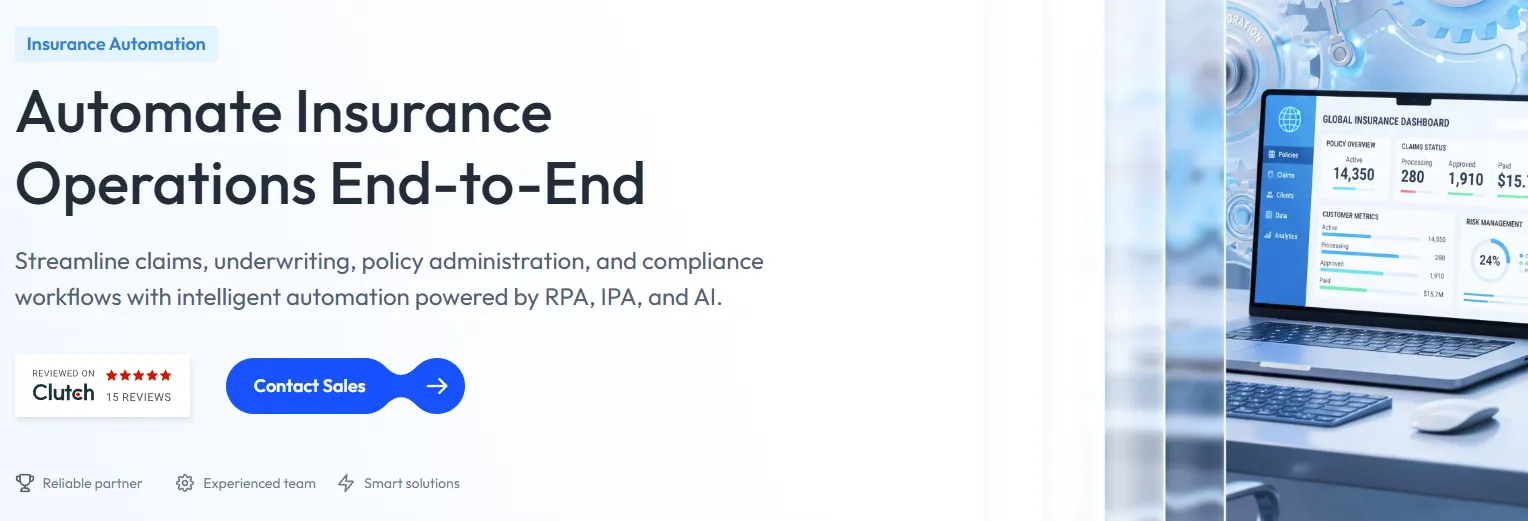

The insurance industry is experiencing one of the most significant transformations in its history. For decades, insurers relied on manual processes, paper-based workflows, and legacy systems that often slowed operations and limited customer satisfaction. However, changing customer expectations, growing competition, and rapid technological advancements are pushing insurance companies toward modernization.
Today, insurers are expected to provide seamless digital experiences, faster claims processing, personalized services, and greater transparency. At the same time, they must remain compliant with complex regulations while maintaining profitability and operational efficiency. To meet these challenges, organizations are investing heavily in innovative technologies such as artificial intelligence (AI), machine learning (ML), cloud computing, advanced analytics, and insurance automation.
Digital transformation is no longer a competitive advantage—it has become a business necessity. Companies that embrace modernization are better positioned to improve customer experiences, streamline operations, reduce costs, and respond quickly to market changes. Those that delay digital initiatives risk falling behind more agile competitors.
This article explores the key drivers of digital transformation in the insurance sector, the technologies reshaping the industry, the benefits of automation, and the role of technology partners in helping insurers navigate this evolving landscape.
Why Digital Transformation Matters in Insurance
Insurance companies operate in a highly competitive and heavily regulated environment. Customers now expect the same level of convenience from insurers that they receive from digital-first businesses in retail, banking, and e-commerce.
Traditional insurance processes often involve multiple manual steps, extensive documentation, and lengthy approval cycles. These inefficiencies can lead to delays, higher operational costs, and customer frustration.
Digital transformation addresses these issues by enabling insurers to:
- Improve customer engagement and satisfaction
- Accelerate policy issuance and claims processing
- Reduce administrative costs
- Enhance data accuracy
- Strengthen risk assessment capabilities
- Increase operational efficiency
- Support regulatory compliance
- Create personalized customer experiences
Modern insurance organizations recognize that technology is not simply a support function—it is a strategic driver of growth and innovation.
The Evolution of Customer Expectations
Customer expectations have changed dramatically over the past decade. Consumers increasingly prefer digital interactions and expect immediate access to information and services.
Modern policyholders want:
- Online policy management
- Mobile applications
- Instant quotes
- Real-time claim updates
- Personalized recommendations
- Fast customer support
- Self-service capabilities
Insurers that fail to provide these experiences may struggle to retain customers in an increasingly digital marketplace.
Digital transformation enables companies to create customer-centric ecosystems that simplify interactions throughout the policy lifecycle. From purchasing coverage to filing claims, digital tools can significantly improve the customer journey.
The Role of Data in Modern Insurance
Data has become one of the most valuable assets in the insurance industry. Every interaction, transaction, and claim generates information that can be analyzed to improve business outcomes.
Modern insurers use data to:
- Assess risks more accurately
- Detect fraud
- Personalize offerings
- Improve underwriting decisions
- Predict customer behavior
- Optimize pricing strategies
Advanced analytics platforms can process massive volumes of structured and unstructured data in real time. This allows insurers to identify trends, uncover opportunities, and make informed decisions faster than ever before.
The ability to leverage data effectively is becoming a critical differentiator in the insurance market.
Artificial Intelligence and Machine Learning
Artificial intelligence and machine learning are transforming nearly every aspect of insurance operations.
AI-powered solutions can automate repetitive tasks, analyze large datasets, and generate insights that would be difficult for humans to identify manually. Machine learning models continuously improve their performance by learning from historical data.
Common applications include:
Claims Processing
AI can review claims, validate information, identify inconsistencies, and accelerate approvals. This reduces processing times and improves customer satisfaction.
Fraud Detection
Insurance fraud remains a major challenge for the industry. Machine learning algorithms can identify suspicious patterns and flag potentially fraudulent claims for further investigation.
Underwriting
AI-driven underwriting systems can evaluate risk factors more efficiently and accurately, helping insurers make better decisions while reducing manual workloads.
Customer Support
Chatbots and virtual assistants provide immediate support, answer customer questions, and assist with routine requests around the clock.
As AI technologies continue to mature, their impact on insurance operations is expected to grow significantly.
The Growing Importance of Insurance Automation
One of the most impactful developments in the industry is the adoption of insurance automation. By automating routine processes, insurers can reduce human error, improve efficiency, and free employees to focus on higher-value activities.
Automation can be applied across multiple areas, including:
- Policy administration
- Claims management
- Customer onboarding
- Document processing
- Regulatory reporting
- Billing and payments
- Underwriting workflows
Automated systems can process information faster and more consistently than manual methods. This results in improved accuracy, reduced operational costs, and better customer experiences.
For example, automated claims processing can significantly shorten settlement times, helping insurers meet customer expectations while reducing administrative burdens.
As competition increases, insurance automation is becoming a fundamental component of digital transformation strategies.
Cloud Computing and Scalability
Cloud technology has emerged as a cornerstone of modern insurance infrastructure.
Traditional on-premises systems often require significant investments in hardware, maintenance, and upgrades. Cloud platforms offer a more flexible and scalable alternative.
Benefits of cloud adoption include:
- Reduced infrastructure costs
- Enhanced scalability
- Improved security capabilities
- Faster deployment of new services
- Greater business agility
- Simplified disaster recovery
Cloud-based environments also enable insurers to integrate emerging technologies more easily, accelerating innovation across the organization.
Additionally, cloud solutions support remote work environments and facilitate collaboration across distributed teams.
Enhancing Risk Management
Risk assessment is at the core of every insurance business. Digital technologies provide insurers with new tools to improve risk management and underwriting accuracy.
Advanced analytics, AI, and connected devices allow companies to collect and analyze data from a wide range of sources.
Examples include:
- Telematics in auto insurance
- Wearable devices in health insurance
- Smart home sensors in property insurance
- IoT-enabled industrial monitoring
These technologies provide real-time insights into customer behavior and risk exposure.
As a result, insurers can develop more accurate pricing models, reduce losses, and create customized policies that reflect individual risk profiles.
Improving Claims Management
Claims processing is often considered the most critical moment in the customer relationship.
A slow or complicated claims experience can negatively impact customer trust and retention. Digital transformation enables insurers to modernize claims workflows and deliver faster resolutions.
Innovations in claims management include:
- Mobile claim submissions
- Automated damage assessments
- AI-driven claim verification
- Digital document processing
- Real-time status updates
By streamlining claims operations, insurers can improve efficiency while providing a more transparent and satisfying customer experience.
Cybersecurity Challenges and Opportunities
As insurers become increasingly digital, cybersecurity becomes more important than ever.
Insurance companies manage vast amounts of sensitive customer data, making them attractive targets for cybercriminals.
A comprehensive cybersecurity strategy should include:
- Data encryption
- Identity and access management
- Continuous monitoring
- Threat detection systems
- Employee training
- Incident response planning
Modern security solutions powered by AI can identify threats in real time and respond quickly to potential breaches.
Organizations that prioritize cybersecurity not only protect their operations but also strengthen customer trust.
Personalization Through Technology
Personalization is becoming a key differentiator in the insurance market.
Customers increasingly expect products and services tailored to their unique needs. Advanced analytics and AI enable insurers to deliver more relevant experiences.
Personalization can include:
- Customized policy recommendations
- Dynamic pricing models
- Individualized communication
- Predictive customer support
- Targeted marketing campaigns
These capabilities help insurers improve customer engagement while increasing retention and cross-selling opportunities.
Regulatory Compliance in the Digital Era
Insurance companies must comply with a complex network of regulations that vary across jurisdictions.
Manual compliance processes can be time-consuming and prone to errors. Digital solutions help organizations manage compliance requirements more effectively.
Benefits include:
- Automated reporting
- Real-time monitoring
- Improved audit readiness
- Enhanced data governance
- Reduced compliance risks
Technology-driven compliance frameworks enable insurers to adapt more quickly to changing regulatory requirements while maintaining operational efficiency.
The Role of Technology Partners
Successful digital transformation often requires specialized expertise and technology capabilities.
Many insurers partner with technology companies to accelerate modernization initiatives and implement innovative solutions.
Organizations such as Zoolatech help businesses develop scalable digital products, modernize legacy systems, and leverage emerging technologies to improve operational performance. By combining engineering expertise with industry knowledge, technology partners can support insurers throughout their digital transformation journey.
Strategic partnerships allow insurance companies to reduce implementation risks, shorten development timelines, and focus on delivering value to customers.
Future Trends Shaping the Insurance Industry
Several emerging trends are expected to shape the future of insurance:
Hyperautomation
The combination of AI, robotic process automation, and analytics will enable insurers to automate increasingly complex processes.
Predictive Analytics
Advanced predictive models will help insurers anticipate customer needs, detect risks earlier, and improve decision-making.
Embedded Insurance
Insurance products will become more integrated into digital ecosystems, allowing customers to purchase coverage seamlessly during other transactions.
Blockchain Technology
Blockchain may improve transparency, security, and efficiency in policy administration and claims processing.
Generative AI
Generative AI solutions have the potential to enhance customer interactions, automate content generation, and support employee productivity.
These innovations will continue to reshape how insurers operate and compete.
Conclusion
The insurance industry is undergoing a profound transformation driven by changing customer expectations, technological innovation, and increasing competitive pressures. Digital transformation enables insurers to streamline operations, improve customer experiences, enhance risk management, and unlock new growth opportunities.
Technologies such as artificial intelligence, machine learning, cloud computing, advanced analytics, and insurance automation are becoming essential components of modern insurance strategies. Organizations that embrace these capabilities can achieve greater efficiency, agility, and resilience in a rapidly evolving market.
At the same time, successful transformation requires more than technology alone. It demands a clear vision, strong leadership, a customer-centric mindset, and collaboration with experienced technology partners. Companies like Zoolatech play an important role in helping insurers modernize their systems and accelerate innovation.
As digital technologies continue to advance, insurers that invest in modernization today will be better prepared to meet the challenges and opportunities of tomorrow. The future of insurance belongs to organizations that can combine technological excellence with exceptional customer experiences, creating a more efficient, intelligent, and responsive industry for all stakeholders.


























Sign in to leave a comment.