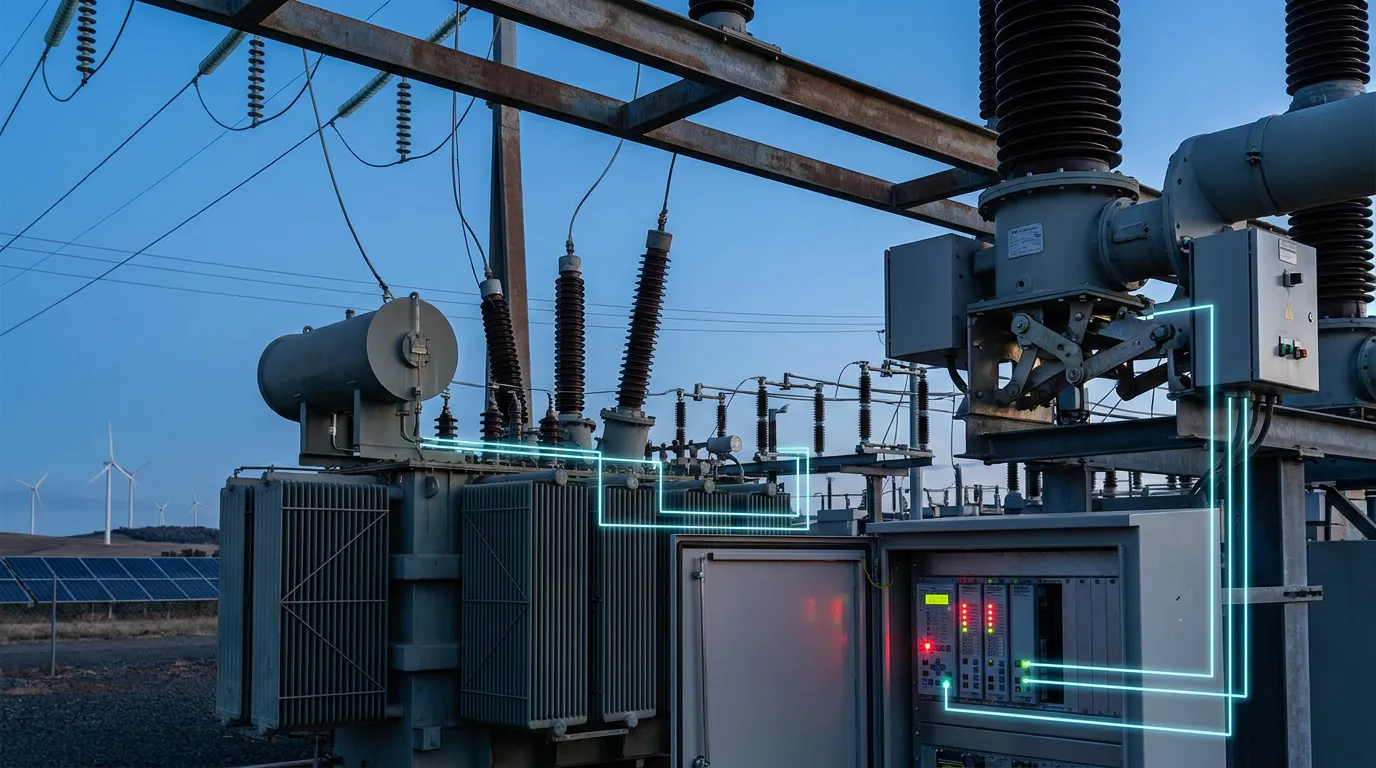

The electric power grid is becoming more connected, dynamic, and data-driven. Renewable generation, battery storage, electric vehicles, distributed energy resources, and changing electricity demand are creating new operational challenges for utilities and energy companies. At the same time, digital technologies are giving engineers and grid operators better ways to observe, analyse, control, and optimise the network.
Modern grid technology is no longer limited to smart meters or automated substations. It now includes advanced sensors, real-time analytics, artificial intelligence, digital twins, intelligent protection systems, cloud platforms, and sophisticated control technologies. Together, these tools are helping create more responsive and resilient power systems. The U.S. Department of Energy describes grid modernisation as an effort to improve reliability, resilience, security, flexibility, affordability, and sustainability.
For engineering organisations working across renewable energy and power systems, understanding this digital transformation is increasingly important.
1. Real-Time Monitoring Is Changing Grid Visibility
Traditional power systems relied heavily on periodic measurements and operator experience. Modern networks can collect information continuously through sensors, intelligent electronic devices (IEDs), phasor measurement units (PMUs), smart meters, and digital substations.
These technologies provide operators with detailed information about voltage, current, frequency, power flows, equipment condition, and disturbances. Instead of waiting for a problem to become obvious, operators can identify unusual conditions much earlier.
Wide-area measurement technologies are particularly valuable because they provide visibility across geographically distributed parts of the network. According to the U.S. Department of Energy, improved measurement and situational-awareness tools are an important part of strengthening transmission reliability and grid control.
For renewable-heavy networks, this visibility becomes even more valuable because generation from wind and solar can change according to weather conditions. Better real-time information allows operators and engineers to respond more effectively to those variations.
2. AI and Advanced Analytics Support Smarter Decisions
Modern grids generate enormous quantities of operational data. Collecting data is useful, but its real value comes from turning that information into actionable insight.
Advanced analytics and artificial intelligence can help identify patterns, detect abnormal behaviour, forecast demand, estimate renewable generation, and support operational decision-making. Research into generative AI for power-grid operations has explored applications including forecasting, state estimation, decision support, and renewable-energy integration.
Predictive analytics can also contribute to condition-based maintenance. Instead of relying solely on fixed maintenance schedules, engineers can use equipment data to identify signs of deterioration and investigate potential failures earlier.
This does not mean that human engineers become unnecessary. Quite the opposite: digital tools are most useful when they provide engineers and operators with better information while keeping appropriate engineering controls, validation, and operational procedures in place.
3. Digital Substations and Intelligent Protection Improve Response
Substations are another major area of digital transformation. Conventional equipment is increasingly being complemented or replaced by intelligent devices capable of communicating information and participating in automated control schemes.
Digital protection relays can monitor electrical conditions, detect faults, and initiate appropriate protection actions extremely quickly. Intelligent electronic devices can also exchange information with supervisory control and data acquisition (SCADA) systems and other automation platforms.
When properly engineered and tested, these capabilities can improve fault detection, operational visibility, and restoration processes. The Department of Energy identifies automated relays, feeder switches, advanced sensors, and two-way communications among the technologies supporting smarter grid operations.
For engineering teams, however, digitalisation also increases the importance of protection coordination, communications architecture, configuration management, testing, and cybersecurity. A sophisticated digital system still needs sound electrical engineering behind it.
4. Digital Twins and Simulation Improve Planning
One of the most useful developments in digital grid engineering is the growing use of digital models that represent physical power-system assets and their behaviour.
A digital twin can combine engineering models, operational information, equipment data, and simulation capabilities to help teams understand how a system may behave under different conditions. Engineers can investigate scenarios without experimenting directly on an energised network.
Simulation is particularly valuable for renewable energy projects, where engineers may need to examine changing generation profiles, grid faults, voltage behaviour, frequency response, protection performance, and interactions between multiple assets.
Digital modelling can therefore support decisions throughout the project lifecycle—from planning and design through commissioning and operational improvement.
5. Digital Grid Solutions Enable Greater Renewable Integration
The growth of distributed energy resources is changing the traditional structure of electricity networks. Solar PV, wind generation, batteries, electric vehicles, and other distributed resources can introduce two-way power flows and more variable operating conditions.
Modern grid technology can help manage this complexity through advanced distribution management systems, automated controls, forecasting platforms, energy-management systems, and improved network measurement.
Grid-enhancing technologies provide another example. Dynamic line rating can use real-time weather and operating information to determine transmission capacity rather than relying exclusively on conservative static assumptions. DOE research has demonstrated that such approaches can increase the usable capacity of existing transmission infrastructure in appropriate circumstances.
These technologies can be especially relevant as electricity demand grows and renewable projects compete for available network capacity. Digital solutions can help engineers and operators make better use of existing infrastructure while longer-term network upgrades are developed.
6. Cybersecurity and Integration Are Now Engineering Priorities
Greater connectivity brings significant benefits, but it also creates additional risks. A modern digital grid depends on communication networks, software, control systems, intelligent devices, and data exchanges. Protecting these systems is therefore an essential part of modern power engineering.
Cybersecurity should be considered from the beginning of a project rather than added after the system has been designed. Access control, network segmentation, secure communications, system monitoring, configuration management, software updates, and incident-response procedures can all contribute to a stronger security posture.
Integration is equally important. A utility may have SCADA, energy management, distribution management, asset-management, protection, forecasting, and renewable-control systems operating together. Poor integration can create data inconsistencies and operational complexity.
Successful digital grid projects therefore require more than installing new technology. They require coordinated electrical engineering, controls, communications, software, testing, commissioning, and operational planning.
Building the Digital Grid of the Future
The transformation of power-grid operations is ultimately about making electricity networks more observable, adaptable, and intelligent. Sensors provide visibility. Analytics convert data into insight. Automation enables faster responses. Digital models improve planning. Intelligent controls help integrate increasingly diverse energy resources.
The strongest digital grid solutions are not technology for technology's sake. They are designed around specific engineering and operational objectives—improving reliability, managing renewable generation, increasing asset utilisation, supporting faster fault response, or providing better information for critical decisions.
As power systems continue evolving, digital engineering will become increasingly connected with protection, SCADA, commissioning, grid modelling, and renewable-energy integration. Organisations that combine these disciplines can help asset owners move from simply operating a grid to operating a smarter, more responsive, data-driven power system.
For renewable energy developers, utilities, EPC contractors, and asset owners, the message is straightforward: the future grid will depend not only on new physical infrastructure, but also on the digital intelligence that allows that infrastructure to work effectively.





















Sign in to leave a comment.