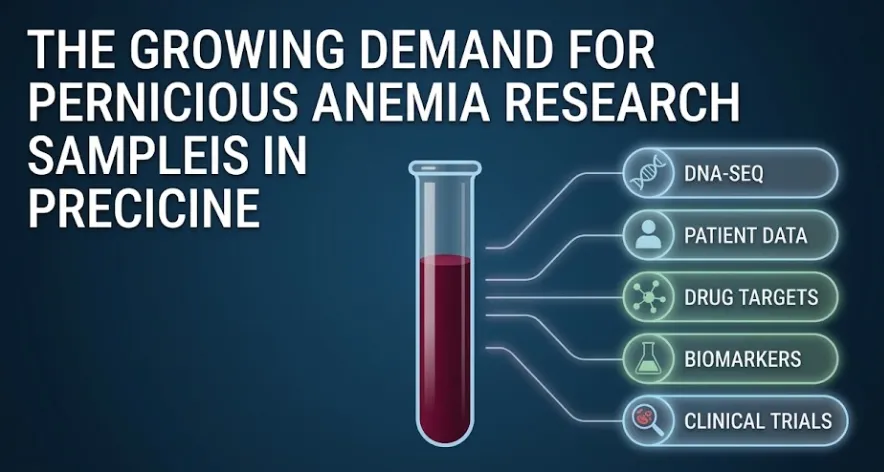

Precision medicine is reshaping how researchers approach diagnosis, treatment, and long-term management of chronic and autoimmune conditions. At the center of this shift lies one critical resource: high-quality biological samples. Among the most sought-after specimens today are Pernicious Anemia Research Samples, which are helping scientists unlock a deeper understanding of B12 deficiency, autoimmune dysfunction, and personalized treatment pathways.
As precision medicine moves away from generalized treatment protocols and toward individualized care, the need for well-characterized, clinically annotated samples has never been greater. This growing demand is transforming how biobanks, hospitals, and research organizations collect, store, and distribute anemia-related biospecimens.
Why Precision Medicine Needs Pernicious Anemia Research Samples
Pernicious anemia is an autoimmune condition in which the body fails to absorb vitamin B12 due to a lack of intrinsic factor, often caused by autoimmune destruction of gastric parietal cells. Because the disease sits at the intersection of hematology, immunology, and gastroenterology, researchers rely heavily on diverse sample types to study it from multiple angles.
This is where Vitamin B12 Deficiency Samples become indispensable. These specimens allow scientists to examine metabolic markers, methylmalonic acid levels, and homocysteine concentrations, all of which help differentiate pernicious anemia from other causes of B12 deficiency. Precision medicine initiatives depend on this level of granularity to design targeted diagnostic panels and personalized supplementation strategies.

The Role of Autoimmune and Gastric Samples
Because pernicious anemia is fundamentally an autoimmune disorder, Autoimmune Disease Samples play a foundational role in ongoing research. Studying autoantibodies, particularly those targeting intrinsic factor and gastric parietal cells, gives researchers insight into disease mechanisms that extend beyond anemia itself, often overlapping with other autoimmune conditions such as thyroid disease and type 1 diabetes.
Closely related to this are Autoimmune Gastritis Samples, which are essential for understanding the gastric mucosal changes that precede or accompany pernicious anemia. Since autoimmune gastritis is considered a precursor condition, researchers use these samples to study early biomarkers that could eventually enable earlier diagnosis, long before clinical symptoms of anemia appear.
Blood-Based Specimens Driving Biomarker Discovery
No area of anemia research is more heavily reliant on biospecimens than biomarker discovery, and this is where Human Blood Samples, Human Serum Samples, and Human Plasma Samples come into play.
- Human Blood Samples provide a complete picture of cellular composition, allowing researchers to assess red blood cell morphology, complete blood counts, and other hematological indicators unique to pernicious anemia.
- Human Serum Samples are particularly valuable for antibody testing, vitamin B12 assays, and intrinsic factor antibody detection, making them a cornerstone of diagnostic biomarker research.
- Human Plasma Samples support metabolomic and proteomic studies, helping researchers identify novel protein biomarkers associated with disease progression and treatment response.
Together, these specimen types allow research teams to build a multidimensional understanding of the disease, which is essential for developing precision diagnostics and individualized treatment protocols.
Broader Applications in Anemia Research
While pernicious anemia is a specific condition, it doesn't exist in isolation from the broader field of hematology. Anemia Research Samples more generally are in high demand as scientists work to differentiate between various anemia subtypes, including iron-deficiency anemia, hemolytic anemia, and megaloblastic anemia.
This broader context matters because precision medicine thrives on comparative research. By studying pernicious anemia samples alongside other anemia research samples, scientists can identify what makes B12-deficiency-related anemia biologically distinct, ultimately refining diagnostic criteria and treatment algorithms.
For a deeper look into how these specimens are directly contributing to diagnostic and therapeutic innovation, our earlier piece on The Role of Pernicious Anemia Samples for Research in Biomarker Discovery explores the specific biomarkers being studied and how sample quality directly impacts research outcomes.
Challenges Fueling the Demand
The increasing reliance on high-quality biospecimens has also exposed challenges in sourcing, particularly for rare or well-annotated samples. Pernicious anemia, while not exceedingly rare, requires samples with detailed clinical history, including B12 levels, antibody status, and treatment history, to be genuinely useful for precision medicine research. This has pushed biobanks and research suppliers to improve collection standards, ethical sourcing practices, and sample traceability.
Additionally, as precision medicine research expands globally, cross-population sample availability has become a priority. Researchers increasingly seek diverse cohorts to ensure that biomarker findings are applicable across different genetic and demographic backgrounds, further increasing demand for well-documented pernicious anemia research samples.
Looking Ahead
As precision medicine continues to mature, the demand for specialized biospecimens like pernicious anemia research samples will only intensify. From vitamin B12 deficiency samples to autoimmune gastritis samples, and from human blood samples to human serum and plasma samples, each specimen type contributes a unique piece to the larger diagnostic puzzle.
For researchers, biobanks, and biotech companies alike, investing in reliable, well-characterized sample sourcing isn't just a logistical necessity, it's a foundational step toward more accurate diagnostics, earlier interventions, and truly personalized treatment strategies for patients living with pernicious anemia.
























Sign in to leave a comment.