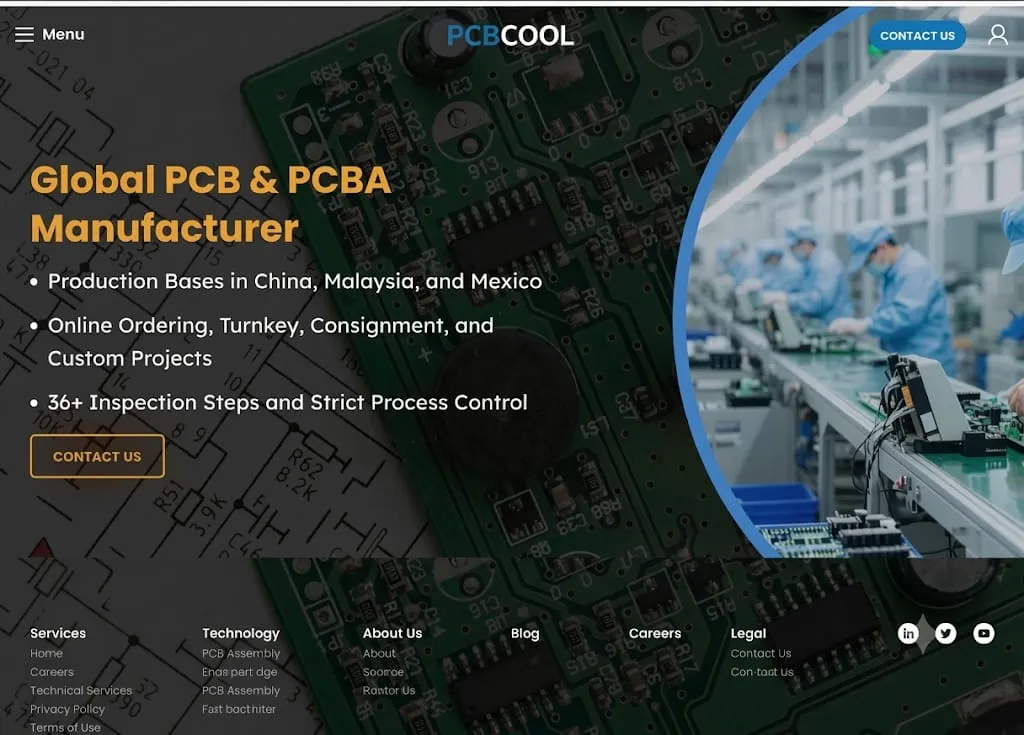

Modern electronics depend on printed circuit boards to connect components, control electrical signals, and support reliable device performance. As products become smaller, faster, and more sophisticated, manufacturers need PCB solutions that can meet demanding technical requirements while maintaining consistency. In this changing environment, PCBCool PCB technology represents a practical approach to supporting different electronics applications, from prototypes and development projects to larger-scale production.
Understanding the Role of PCB Manufacturing
A printed circuit board is much more than a physical platform for electronic components. Its design determines how electrical signals travel, how components interact, and how efficiently a finished product can operate. Factors such as material selection, layer structure, copper thickness, trace width, via design, and thermal performance can all influence the final result.
Professional PCB manufacturing therefore requires careful coordination between engineering requirements and production capabilities. A well-planned manufacturing process can reduce avoidable defects, improve consistency, and make it easier for electronic products to move from development into production.
Supporting Different Electronic Applications
PCB requirements vary significantly between industries. Consumer electronics may prioritise compact dimensions and efficient production, while industrial equipment can require stronger materials and greater durability. Medical, telecommunications, automotive, lighting, and control systems may have their own requirements for signal integrity, reliability, thermal management, or mechanical stability.
A flexible manufacturing approach allows PCB solutions to be adapted according to the needs of each application. This can include conventional rigid boards, multilayer designs, flexible circuits, high-density configurations, and specialised boards designed for challenging operating conditions.
Why Quality Matters in PCB Production
Quality control is one of the most important elements of successful PCB manufacturing. A small manufacturing issue can affect assembly, electrical performance, product reliability, and production schedules. For this reason, professional manufacturers use inspection and testing processes throughout production rather than relying only on final inspection.
Automated optical inspection, electrical testing, impedance checks, solder inspection, and other verification methods can help identify potential problems before boards reach later production stages. Consistent process control also supports better repeatability when the same PCB design is manufactured in larger quantities.
From Prototype to Production
One of the biggest challenges for electronics developers is moving a product from an initial prototype into reliable mass production. A board that works during early testing may require additional optimisation before it can be manufactured efficiently at scale.
Manufacturing experience can help identify opportunities to improve component placement, simplify production steps, optimise panel utilisation, and reduce unnecessary manufacturing complexity. Early communication between designers and manufacturers can also prevent issues that might otherwise appear later in the production cycle.
The Value of Integrated PCB Services
Modern electronics projects often involve more than PCB fabrication alone. Component sourcing, printed circuit board assembly, inspection, testing, and final integration may all be required before a product is ready.
Integrated services can simplify this process by reducing the number of separate suppliers involved in production. When fabrication and assembly are coordinated effectively, engineering teams can benefit from smoother communication, better production visibility, and more consistent quality across different stages.
Improving Efficiency Through Better Design
Good PCB manufacturing begins with good design decisions. Designers should consider manufacturability from the earliest stages of development rather than treating production as a separate concern. Trace spacing, component availability, thermal requirements, hole sizes, board dimensions, and assembly processes can all influence manufacturing efficiency.
Design optimisation can also help control production costs. Avoiding unnecessary layers, selecting suitable materials, improving panel utilisation, and reducing complicated manufacturing requirements can make a board more economical without compromising essential performance.
Meeting the Demands of Advanced Electronics
The electronics industry continues to move toward smaller components, higher processing speeds, increased functionality, and more compact product designs. These trends create greater demands on PCB manufacturing technology.
High-density interconnects, fine-pitch components, multilayer structures, controlled impedance, flexible materials, and advanced thermal solutions are increasingly important in modern electronics. Manufacturers must therefore combine equipment, engineering knowledge, inspection capabilities, and production experience to meet these requirements consistently.
Building Reliable Long-Term Production
For businesses developing electronic products, choosing a dependable PCB manufacturing partner can influence the entire product lifecycle. Reliability is important not only during prototype development but also when production volumes increase and delivery schedules become more demanding.
A strong manufacturing process should provide consistency across different production runs while allowing manufacturers to respond to changes in design, volume, or technical requirements. This flexibility becomes especially valuable for businesses that expect their products to evolve over time.
Looking Ahead
As electronics continue to become more connected, compact, and technically advanced, the importance of dependable PCB manufacturing will only increase. Manufacturers that combine engineering support, quality control, efficient production, and flexible capabilities can help businesses bring electronic products to market with greater confidence.
For companies seeking a practical manufacturing partner, PCBCool PCB solutions can fit naturally into projects that require dependable board production, assembly support, and scalable manufacturing. With careful planning and strong production practices, PCB technology can provide the foundation needed for reliable electronics across a wide range of modern applications.






















Sign in to leave a comment.