The Growth of Podcasting in the Middle East: Trends for 2026

Earbuds are everywhere, from commuters on Sheikh Zayed Road to cafés in Riyadh, and local audio is no longer an afterthought. The growth of podcasting in the Middle East has moved the region from consuming shows made elsewhere to producing its own. This article explains what is driving that shift, which cities are leading it, and what creators should do to stand out as the market matures.
Why the Region Is Primed for Audio
Start with the audience. The Middle East has one of the youngest populations in the world and a strong appetite for digital content. The UAE, Saudi Arabia, and Egypt also have very high smartphone penetration, which makes this a mobile-first region. Podcasts suit that habit, since you can listen while driving, working out, or commuting without sitting at a computer. Because so much listening happens on the move, keep episodes tight and put your main point in the first few minutes.
Content is the second driver. For years, listeners adapted Western advice to local contexts, while wanting shows that reflected their own culture, challenges and humour. Local creators are now filling that gap. Arabic is the fastest-growing language segment, and English stays strong in business hubs such as Dubai and for expat-focused shows.
For creators, the takeaway is to choose a niche where local context is your advantage. A show on entrepreneurship, storytelling, or self-improvement that speaks directly to regional listeners competes differently from one that copies an international format. Decide early whether the show runs in Arabic, English, or both, because that choice shapes your guests, your audience, and your sponsors.
Dubai and Riyadh: The Hubs Leading the Way
The growth of podcasting in the Middle East is regional, but a few cities act as engines. Dubai leads, helped by established media free zones, a government pushing a digital economy and world-class infrastructure. Demand for high-quality production is rising with it, which is why a professional podcast studio such as Gulf Podcast Studios in Business Bay has found a ready audience. Creators here no longer record in bedrooms; many treat their shows as media businesses. The studio opens from 10 am to 10 pm Monday to Friday, with weekend sessions on request, which suits guests who work office hours.
Riyadh is the other big story. Saudi Arabia is going through a cultural and digital renaissance, and investment in entertainment and media under Vision 2030 has given its podcast scene energy. Shows about entrepreneurship, culture and social change are multiplying. Saudi Arabia and the UAE are currently the largest markets for podcast consumption, followed by Egypt, whose large population gives it scale.
If your audience spans several markets, plan for it. Choose guests and topics that travel across borders, and publish on the major platforms: Spotify, Apple Podcasts and YouTube.
From Amateur to Professional: What Listeners Now Expect
Early on, a show could get away with poor audio. That window has closed. Listeners now compare local shows with international chart-toppers, and crackling sound or grainy video sends them elsewhere. Production value also signals credibility to sponsors, which makes quality a business decision as well as a creative one.
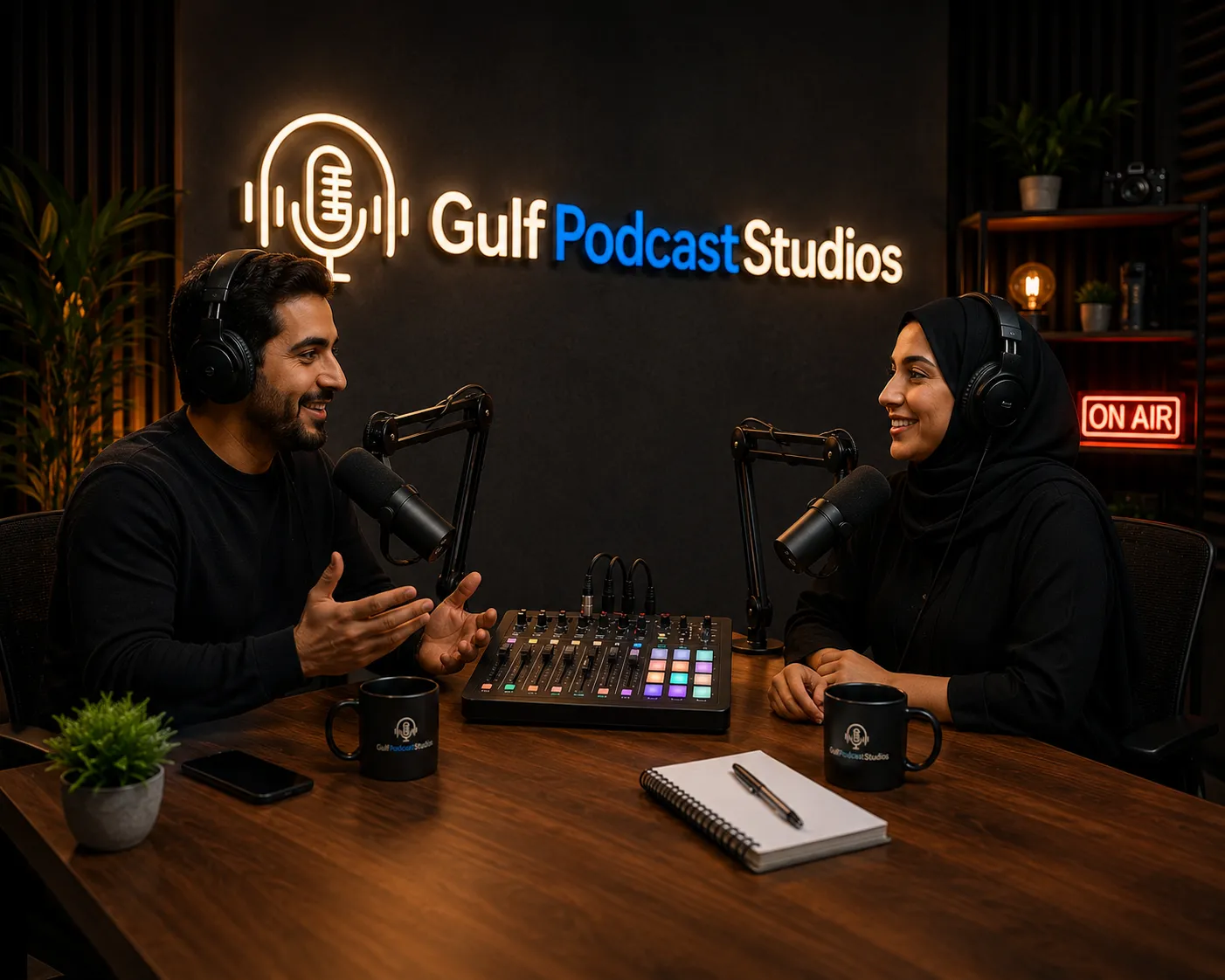
What does professional mean in practice? At Gulf Podcast Studios, a session includes a sound-treated room, broadcast-grade microphones and a mixer, three 4K cameras, professional lighting, and an operator who runs the technical side. Recording starts at AED 450 an hour, and a 10-hour recording package costs AED 2,995, with hours usable across six months.
Quality also supports better planning. Record two or three episodes in one session, cut short vertical clips for Reels and Shorts, and release against a calendar. Clips matter in a region where discoverability is still a challenge, because a 30-second moment can introduce new listeners to the full episode. Any serious podcast studio Dubai creators hire will also deliver files formatted for Spotify, Apple Podcasts and YouTube, so your time goes into content rather than exporting.
Monetisation, Challenges and Positioning Your Show
Monetisation used to be a struggle because brands did not understand the medium. That has changed. Regional brands now value a loyal, engaged audience, and podcasts offer niche targeting that radio cannot: a fintech company can sponsor an investing show in Dubai and reach exactly the right listeners. Beyond brand partnerships, the creator economy is maturing, with podcasters launching courses, merchandise and events and building communities rather than only audiences. When you approach a sponsor, bring evidence: your monthly numbers, a clear description of your niche audience and one short clip that shows how the show looks and sounds.
Some hurdles remain:
- Discoverability: finding good local shows is still harder than a Google search
- Measurement: varied platforms make it difficult to see unified analytics
- Infrastructure: outside major hubs such as Dubai, professional recording spaces can be hard to find, though this is improving
Each one suggests a response. Build a simple monthly sheet that combines downloads and views from every platform. Use clips and consistent branding to help people find you. And if you are based outside a major hub, a podcast studio Dubai creators already use can serve as your recording base for key episodes.
Conclusion
The growth of podcasting in the Middle East rests on a young, mobile-first audience, a hunger for local voices, and brands now willing to invest. As the market matures, quality becomes the main way to stand out. Choose a clear niche, decide your language, and produce every episode to a professional standard. If you want to see what that looks like in practice, a visit to a podcast studio Dubai creators trust is a sensible first step, and Gulf Podcast Studios is glad to talk through your plans.
FAQs
1. Is the podcast market in the Middle East saturated?
No. Growth is rapid, but many niches remain untapped compared with Western markets, so there is room for new, high-quality shows.
2. Which countries listen to podcasts the most?
Saudi Arabia and the UAE are currently the largest markets for podcast consumption, followed closely by Egypt because of its large population.
3. Which languages are most popular for podcasts in the region?
Arabic is the fastest-growing segment, while English remains strong in business hubs like Dubai and for expat-focused content.
4. Do I need a professional studio to start?
You can start at home, but competition is high. A professional studio helps you meet the quality listeners now expect, which can help your show grow faster.






Sign in to leave a comment.