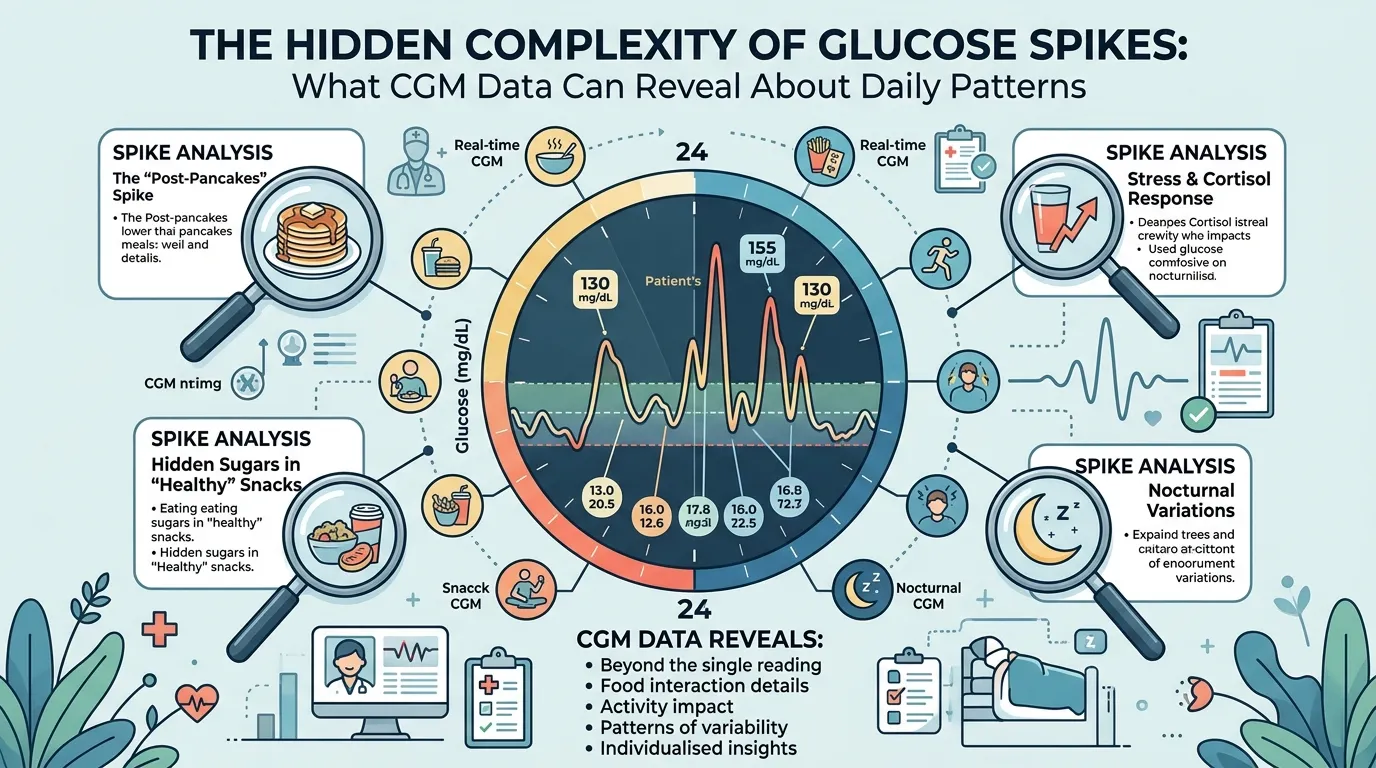

A sudden rise in glucose can look alarming on a graph, but the number alone rarely tells the whole story. The same glucose spike can have different explanations depending on when it occurs, how quickly glucose rises, how long levels remain elevated, and what was happening beforehand. A meal, physical activity, stress, sleep patterns, medication, and normal biological changes can all influence glucose behavior.
This is why understanding glucose spikes requires more than looking at individual readings. Modern CGM monitors track glucose patterns throughout the day and night, making it easier to observe changes that occasional measurements might miss. When interpreted carefully, these patterns can provide useful context for understanding everyday glucose fluctuations.
A Glucose Spike Is a Pattern, Not Just a Number
Glucose levels naturally change throughout the day. After eating, carbohydrates are digested and converted into glucose, which enters the bloodstream. The size and timing of the resulting rise depend on several factors, including the meal, digestion, physical activity, and the body's ability to regulate glucose.
A sharp rise does not automatically mean something is wrong, just as a modest rise does not guarantee that glucose management is optimal.
The broader pattern matters. Consider three questions when reviewing a spike:
- How high did glucose rise? The peak provides one piece of information, but it should be considered alongside the person's target range and clinical circumstances.
- How quickly did it change? A rapid increase may tell a different story from a gradual rise.
- How long did it remain elevated? The duration can be just as relevant as the peak itself.
Looking at these details together offers a more useful interpretation than reacting to a single reading.
Beyond Meals: What Can Trigger Unexpected Glucose Rises?
Food is an obvious influence on glucose, but it is not the only one. A glucose rise that seems unrelated to eating may reflect several overlapping factors.
Meal composition and timing
Carbohydrate-containing foods often cause glucose to rise, but the response varies between meals and individuals. Portion size, food composition, and the presence of protein, fat, and fiber can influence the timing and shape of the glucose response.
A mixed meal may produce a more gradual rise or a delayed increase compared with a meal containing rapidly absorbed carbohydrates. This is one reason two meals with similar carbohydrate amounts may produce different CGM traces.
Stress and illness
Physical illness and psychological stress can affect hormones involved in glucose regulation. For some people, these changes may contribute to higher readings even when their usual eating routine has not changed.
Repeated patterns during stressful periods or illness may be worth discussing with a healthcare professional, particularly when glucose levels remain outside personal targets.
Sleep and daily routines
Sleep duration, sleep quality, and changes in daily schedules may influence glucose regulation. Some people notice recurring differences between their overnight readings and their morning levels.
However, a morning rise or overnight pattern does not establish a specific cause on its own. Repeated observations and clinical context are needed before drawing conclusions.
Physical activity and medication
Exercise can affect glucose differently depending on its intensity, duration, timing, and the individual's treatment. Some activities lower glucose, while intense exercise may temporarily increase it.
Medication timing and effectiveness can also influence glucose patterns. Anyone experiencing repeated highs or lows should review these observations with their healthcare professional rather than adjusting medication independently.
What the Shape of a CGM Curve Can Tell You
One of the useful features of continuous monitoring is the ability to observe how glucose changes over time. The curve provides context that a single measurement cannot offer.
A rapid rise followed by a gradual decline may occur after a meal. The timing and duration can help explain how that particular glucose response unfolded.
A prolonged elevation may indicate that glucose remained above the selected target for an extended period. Recurring episodes may warrant review of meal patterns, medications, or other contributing factors.
A rise followed by a sharp drop deserves attention when it coincides with low-glucose symptoms or readings below the individual's target range. The causes can vary, so the pattern should be interpreted in context.
Repeated rises at similar times may suggest a relationship with a recurring activity, meal, medication schedule, or daily routine. A repeated association is a useful starting point for investigation, not proof of causation.
It is also important to remember that CGM sensors measure glucose in interstitial fluid rather than directly in blood. Readings can lag behind blood glucose changes, particularly when levels are changing rapidly.
How to Review Glucose Spikes Without Overreacting
Constantly checking every peak can make CGM data feel overwhelming. A more structured approach helps separate meaningful trends from normal variation.
- Look for repetition: A pattern observed across several comparable days may be more informative than one isolated spike.
- Record the surrounding context: Note meal timing, physical activity, sleep, stress, illness, and relevant medication information.
- Review the full curve: Examine the starting level, peak, duration, and subsequent direction rather than focusing only on the highest number.
- Consider the wider report: Time in Range, Time Above Range, Time Below Range, and glucose variability can provide complementary information.
- Discuss persistent patterns: A qualified healthcare professional can help determine whether a recurring trend requires further assessment.
Avoid making major dietary or medication changes based on a single graph. The most useful interpretation combines sensor data with symptoms, personal targets, medical history, and professional guidance.
Turning CGM Data Into Better Questions
The purpose of reviewing glucose spikes is not to eliminate every rise. Glucose naturally fluctuates, and the meaning of a particular change depends on the individual and the circumstances.
Instead, CGM data can help people ask more specific questions. Do similar meals repeatedly produce comparable patterns? Are unexpected rises more common after poor sleep? Do certain activities coincide with later drops? Are elevated readings brief or prolonged?
These questions can make conversations with healthcare professionals more focused and practical.
For people using CGM monitors, reviewing patterns over time may also provide a clearer understanding of how daily routines and glucose readings relate to one another. The data is most useful when it supports informed decisions rather than unnecessary anxiety about every fluctuation.
Conclusion
Glucose spikes are more complex than isolated peaks on a graph. Their timing, size, duration, and surrounding circumstances all contribute to understanding what a particular pattern might mean. Meals, sleep, stress, illness, physical activity, and medication can interact in ways that make individual readings difficult to interpret alone.
By examining recurring trends instead of reacting to every change, CGM users can gain a more balanced understanding of their glucose data. CGM monitors provide valuable information about daily glucose patterns, but they do not identify the cause of every spike or replace professional medical advice. Used thoughtfully, they can help turn continuous readings into meaningful questions and support more informed, individualized diabetes management.
















Sign in to leave a comment.