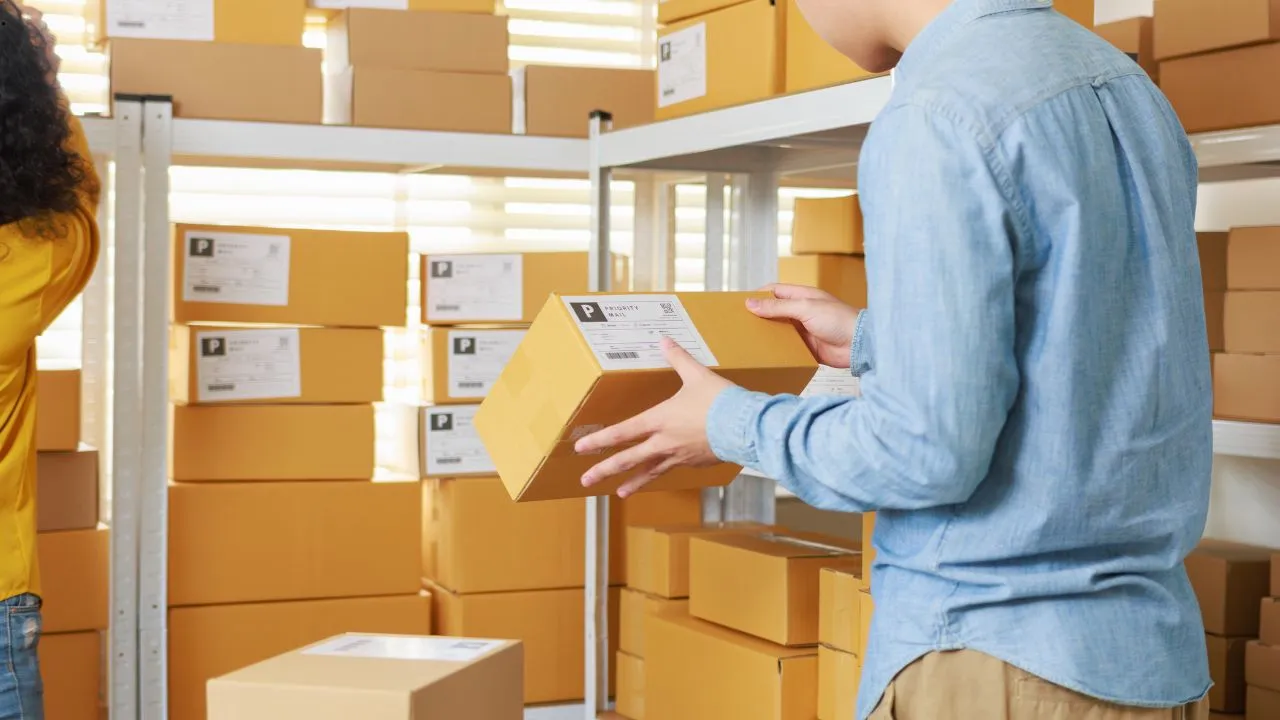

Ask three packaging suppliers to quote the same corrugated box and you might get three different prices.
One supplier comes back at $1.18 per box.
Another quotes $1.11.
The third says $1.27.
Easy decision, right?
Buy the $1.11 box.
Maybe.
Packaging purchasing gets interesting when businesses stop looking at what packaging costs to buy and start looking at what it costs to actually use.
A box has to be ordered, delivered, stored, assembled, packed, sealed and shipped. It needs to protect whatever is inside. If the package is too large, freight can increase. If it's poorly designed, employees may spend extra time packing it. If it fails, product damage can become far more expensive than the box ever was.
That $1.11 carton can turn into a surprisingly expensive piece of cardboard.
This is why manufacturers and distributors are starting to look beyond simple unit pricing when comparing packaging suppliers.
Start With the Obvious Cost: Materials
Material cost still matters.
Nobody should pretend otherwise.
A manufacturer purchasing 500 boxes per year probably isn't going to transform its finances by negotiating five cents off each carton.
A company purchasing 2 million boxes?
Five cents suddenly represents $100,000.
Large packaging users should absolutely negotiate.
Well-known packaging suppliers such as Uline, Veritiv, Grainger and other national distributors make comparison shopping relatively easy for many standard products. Businesses can evaluate different boxes, tapes, stretch films, cushioning products and shipping materials.
But the invoice price is only the beginning of the calculation.
Freight Can Quietly Change Everything
Packaging materials have an unusual characteristic.
Many of them are bulky.
A pallet of corrugated boxes contains quite a bit of air. Foam can be even worse from a transportation perspective because lightweight material can consume enormous amounts of trailer space.
This means the location of a packaging supplier can matter.
A supplier offering an attractive product price may not actually be cheaper once freight is included.
Regional packaging suppliers can sometimes have an advantage here, especially for high-volume or bulky products.
Shipping several pallets 20 miles is very different from shipping those same pallets 1,500 miles.
Of course, freight pricing varies considerably, but buyers should at least include it in their comparison.
The delivered price matters more than the advertised price.
Warehouse Space Isn't Free Either
Here's a cost that's easy to ignore because nobody sends an invoice specifically labeled "boxes sitting in the corner."
Warehouse space.
Corrugated packaging can consume a lot of it.
Suppose purchasing gets a great price by ordering six months of boxes at once.
The company saves 8% on the material.
Sounds good.
But now those cardboard boxes occupy 20 pallet positions for half the year.
What else could have gone there?
- Finished products?
- Raw materials?
- Revenue-producing inventory?
Warehouse space has value, especially in expensive industrial markets such as Southern California.
This is one reason some businesses are moving toward more frequent packaging deliveries and supplier-managed inventory programs.
Saving money on a box doesn't necessarily help if you have to store a mountain of them.
Packaging for Industry and the Local Supplier Model
Packaging for Industry is a California-based packaging supplier serving manufacturers and businesses throughout Southern California.
Its product offering includes corrugated boxes, protective foam, tapes, stretch film, pallets, crates and other industrial packaging materials.
Packaging for Industry also works with businesses on custom packaging and inventory management programs.
That second part can be just as important as the products.
A manufacturer might use 15 different packaging items every month. Instead of filling its own warehouse with months of inventory, the company can potentially coordinate replenishment around actual consumption.
The concept is fairly simple.
Keep enough material available to prevent shortages without storing more than the operation realistically needs.
It sounds obvious, yet inventory tends to grow quietly over time.
One extra pallet becomes three.
Three becomes eight.
Eventually somebody asks why an entire section of the warehouse is full of boxes.
Labor Might Be the Biggest Overlooked Packaging Cost
Take a walk through a shipping department and watch employees package products.
How many steps are involved?
An employee might assemble the carton, tape the bottom, wrap the product, cut foam, add cushioning, place everything inside, add more cushioning, close the box and tape the top.
Maybe it takes seven minutes.
Nobody questions it because that's how the product has always been packed.
Now imagine a packaging supplier redesigns the package.
The new carton has a custom insert.
The employee assembles the box, drops in the insert, places the product inside and seals it.
Four minutes.
Three minutes saved.
That doesn't sound dramatic.
At 100 shipments, it's not.
At 100,000 shipments, you just removed 5,000 hours of packaging labor.
Suddenly the design of the box matters a lot more than whether it costs an extra twelve cents.
Damage Has an Even Bigger Price Tag
Poor packaging can get really expensive when products start coming back.
Let's say a company ships a $750 product.
Two percent arrive damaged.
If the business ships 10,000 units, that's 200 damaged products.
Even if only half need complete replacement, the costs can become significant.
Then add return shipping.
Replacement shipping.
Customer service time.
Inspection.
Repackaging.
Administrative work.
And possibly a very annoyed customer.
A packaging supplier that reduces damage from 2% to 0.5% could create substantial savings even if the new packaging costs more.
This is why custom protective packaging makes sense for certain products.
You're not necessarily trying to create the cheapest package.
You're trying to create the lowest-cost successful shipment.
Those are different things.
Oversized Boxes Can Cost Money Several Times
Oversized packaging creates a strange chain reaction.
First, the company buys more corrugated material than necessary.
Then employees add more cushioning because the product doesn't fill the carton.
The package takes up additional warehouse space.
It occupies more space on a pallet.
Then the business pays to transport the extra volume.
One oversized box isn't a crisis.
Thousands of them can become a real expense.
This is why right-sizing continues to receive attention across the packaging industry.
A smaller package may reduce material use while improving transportation efficiency at the same time.
That's one of those rare situations where cost reduction and sustainability can actually get along.
Packaging Suppliers Can See Things Buyers Miss
Purchasing departments usually have plenty to do.
Packaging is one category among many.
A packaging supplier spends every day looking at boxes, foam, film, tape, pallets and packing processes.
That difference in perspective can be valuable.
A supplier might notice that a company is using an unnecessarily heavy corrugated grade.
Or that two similar cartons could be consolidated into one size.
Maybe employees are manually wrapping pallets when a different stretch film or wrapping method could reduce consumption.
Maybe a custom foam design could replace several loose pieces of cushioning.
Individually, these changes can look minor.
Packaging savings often come from a collection of small improvements rather than one enormous breakthrough.
The Cheapest Supplier Can Still Be the Right Supplier
None of this means businesses should automatically choose the most expensive packaging supplier.
Sometimes the cheapest quote really is the best quote.
If two suppliers provide the exact same product, service, quality and delivery performance, why pay more?
The point is to make sure you're actually comparing the same thing.
A seven-cent savings means less if one supplier requires twice the inventory.
A lower box price isn't particularly helpful if damage increases.
And an inexpensive custom package isn't a bargain if lead times regularly delay production.
Packaging buyers need to evaluate the entire relationship.
Well-Known Packaging Suppliers Compete in Different Ways
Large national packaging suppliers compete through scale, selection, distribution and convenient purchasing.
Regional suppliers can compete through flexibility, local inventory, custom packaging and closer customer relationships.
Specialized packaging companies compete through technical expertise.
There isn't one model that works for everyone.
A small online retailer may simply need inexpensive stock boxes and fast delivery.
An aerospace manufacturer might care far more about custom foam, moisture protection and packaging specifications.
A high-volume manufacturer could care primarily about inventory programs and cost-per-shipment optimization.
That's why choosing a packaging supplier should begin with understanding the operation rather than immediately asking for a price list.
Start Measuring Packaging Differently
Businesses that want to understand their true packaging costs should look beyond purchasing data.
Measure packaging labor.
Track product damage.
Look at freight.
Review warehouse space.
Examine material consumption.
Pay attention to emergency orders.
Ask employees which packages are difficult to assemble.
And occasionally question things that have been done the same way for years.
Well-known national suppliers provide businesses with enormous product selections and purchasing convenience. Regional California packaging suppliers such as Packaging for Industry can offer another approach based around custom solutions, inventory programs and local support.
Both can provide value.
The bigger lesson is that the price printed on a packaging quote doesn't tell you what the package actually costs your company.
Sometimes paying less really does save money.
Sometimes paying a little more saves considerably more somewhere else.
You just have to know where to look.

























Sign in to leave a comment.