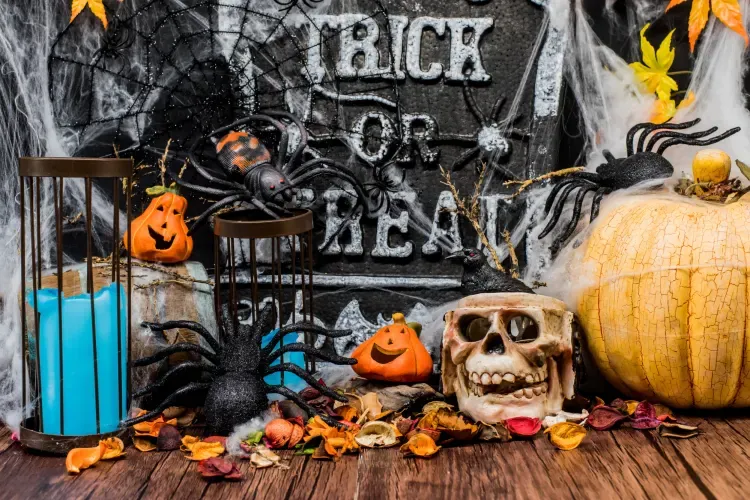

The origin of Halloween is a story that stretches back more than 2,000 years, long before pumpkins glowed on American porches or children filled candy bags. Its roots are connected to Samhain, an ancient Celtic seasonal festival, but Halloween did not emerge from one tradition alone. Christian observances, medieval customs, European folklore, immigration, and American popular culture all helped shape the holiday. From bonfires and spirits to costumes, jack-o’-lanterns, and trick-or-treating, each familiar tradition carries a piece of a much older story.

Where Did Halloween Really Begin?
Imagine an autumn evening centuries ago. The harvest is ending, daylight is fading earlier, and winter is approaching. For communities living close to the rhythms of agriculture, this transition was not simply another date on the calendar. It represented a turning point between seasons, between abundance and scarcity, and, in traditional beliefs, between the living world and the supernatural.
This atmosphere lies at the heart of the origin of Halloween. The holiday is strongly associated with Samhain, a Gaelic festival marking the end of the harvest season and the beginning of winter. Historical sources connect Samhain with supernatural beliefs, gatherings, bonfires, and disguises. However, modern Halloween should not be described as nothing more than Samhain with a new name. The holiday developed through centuries of cultural exchange and religious change. The Library of Congress describes Halloween as the result of pre-Christian and Christian beliefs and customs becoming intertwined.
Samhain Marked a Powerful Seasonal Transition
Samhain was traditionally associated with the transition into the darker half of the year. According to historical accounts, supernatural beings were believed to be especially active around this time, creating an atmosphere in which people might use fire, disguises, offerings, or other customs to protect themselves or interact with the unseen world.
This helps explain why Halloween still feels connected to darkness, ghosts, transformation, and mystery today. The emotional foundation was already there: autumn was ending, winter was coming, and the boundary between familiar and unknown seemed unusually thin.
Halloween Was Not Simply “Samhain Rebranded”
One of the most common explanations online is that Halloween is simply the ancient Celtic festival of Samhain renamed by the Christian Church. The real history is more complicated.
As Christianity spread through Celtic regions, Christian feast days honoring saints and the dead became associated with November 1 and November 2. Older seasonal customs did not necessarily disappear. Instead, different traditions interacted, changed meaning, and survived in new forms. That gradual blending is crucial to understanding the true origin of Halloween.
How Christian Traditions Shaped Halloween
The next major chapter in Halloween history begins with the Christian calendar. November 1 became associated with All Saints’ Day, also known as All Hallows’ Day, while November 2 became All Souls’ Day, a day connected with remembrance of the dead. The evening before All Saints’ Day became known as All Hallows’ Eve, eventually shortened to Halloween.
This did not erase older Celtic beliefs overnight. Instead, the calendar became a meeting point for different customs. Medieval communities continued developing traditions involving the dead, food, prayers, disguises, and seasonal celebrations. Over generations, these practices became increasingly difficult to separate into neat categories of “pagan” and “Christian.” Halloween is therefore best understood as a cultural evolution rather than the invention of a single institution.
From All Hallows’ Eve to Halloween
The name itself provides a small clue to the holiday's religious history. “Hallow” means a holy person or saint, and “All Hallows’ Eve” literally referred to the evening before All Hallows’ Day.
Over time, pronunciation and everyday language shortened the expression into “Hallowe’en” and eventually “Halloween.” Historic newspapers preserved forms such as “All Hallow Eve” and “Hallowe’en,” demonstrating how the terminology appeared in American culture long before the modern spelling became dominant.
All Souls’ Day Added Another Connection to the Dead
The placement of All Souls’ Day on November 2 strengthened the connection between this period of the calendar and remembrance of deceased people.
That connection matters because Halloween’s fascination with ghosts and spirits did not develop solely from modern horror culture. The holiday inherited centuries of stories and customs surrounding death, remembrance, the supernatural, and the relationship between the living and the dead.
The result was a holiday that could be religious, folkloric, communal, playful, or frightening depending on the time and place.
How Medieval Customs Created Familiar Halloween Traditions
If the ancient origin of Halloween supplied the atmosphere, medieval Europe helped develop some of the behaviors that eventually became recognizable Halloween customs. People did not celebrate Halloween by buying bags of individually wrapped candy or ordering elaborate costumes online. Instead, communities developed traditions involving food, prayers, disguises, performances, and visits from door to door.
These practices are particularly fascinating because they reveal how ordinary human needs—food, entertainment, community, remembrance, and even curiosity about the future—became woven into Halloween. Medieval traditions also show why modern Halloween cannot be traced to one single ritual. Different regions developed different practices, and many evolved independently before later becoming connected under the Halloween umbrella.
“Souling” Connected Food With Remembrance
One medieval tradition associated with Halloween’s development was “souling.” In parts of England, people would go from house to house asking for food, including soul cakes, in exchange for prayers for deceased relatives.
The practice is often discussed as one historical influence on later trick-or-treating. However, historians generally avoid claiming that it was the single direct origin of modern trick-or-treating. Halloween customs developed through several overlapping traditions across different countries and periods.
Guising Introduced Costumes and Performances
In Scotland and Ireland, “guising” involved people disguising themselves and visiting homes, sometimes performing songs, poems, jokes, or other forms of entertainment in exchange for treats.
This tradition feels surprisingly familiar. Today, children put on costumes and walk from house to house asking for candy. The costumes are different, the streets look different, and the rewards have changed, but the basic idea of dressing up, visiting neighbors, performing or asking, and receiving something in return has a remarkably long history.

How Halloween Traveled to America
Halloween's transformation into the holiday millions recognize today accelerated after the tradition crossed the Atlantic. Irish and Scottish immigrants brought Halloween customs to the United States, particularly during the 19th century. In America, those traditions encountered new foods, new communities, new forms of entertainment, and eventually an expanding consumer culture.
The American version of Halloween did not simply preserve European customs. It reinvented them. Pumpkins replaced many traditional root vegetables as the preferred carving material. Parties became popular. Costumes became increasingly elaborate. Mischief became part of the holiday's reputation, while communities gradually developed more organized celebrations for children.
Why Pumpkins Replaced Turnips
The classic jack-o’-lantern has older European relatives. In Ireland and Scotland, people carved turnips and other vegetables into lanterns. Pumpkins became particularly practical in the United States because they were larger, plentiful, and easier to carve.
This is a perfect example of how Halloween changed when it entered American culture. The symbolism of the glowing carved lantern survived, but the object itself changed. Today, the pumpkin is so closely associated with Halloween that it is easy to forget it was not the original material used in many European traditions.
Halloween Was Once Famous for Mischief
Modern Halloween is often associated with candy, but American Halloween once had a much more troublesome reputation.
In the 19th and early 20th centuries, pranks, vandalism, and mischief could become major parts of Halloween night. As communities became concerned about destructive behavior, organized parties and supervised activities offered a safer alternative.
This transformation eventually helped shift Halloween toward the child-friendly celebration familiar today. In other words, the “trick” in trick-or-treating has a surprisingly important place in the holiday’s American history.
How Halloween Became the Celebration We Know Today
By the 20th century, Halloween was becoming increasingly Americanized. What began as a complex mixture of seasonal, religious, folkloric, and community traditions was gradually transformed into a major cultural event. Costumes, decorations, parties, candy, neighborhood gatherings, and eventually movies and television gave Halloween a new identity.
Trick-or-treating became especially important after World War II. The phrase “trick or treat” began appearing in the United States during the 20th century, while postwar suburban communities and the growing availability of individually wrapped candy helped establish the custom on a national scale.
From Supernatural Ritual to Pop Culture
Perhaps the most remarkable part of Halloween's evolution is how easily it absorbs new influences. Witches and ghosts from folklore exist alongside vampires, zombies, superheroes, movie characters, and internet trends.
The holiday is no longer limited to one cultural or religious meaning. For some people, it is about family traditions. For others, it is about horror, creativity, nostalgia, parties, costumes, or simply eating too much candy.
That flexibility may be the secret behind Halloween's longevity.
Why Halloween Still Feels Ancient
Walk through an American neighborhood on October 31 and the scene looks modern: carved pumpkins, porch decorations, candy bowls, children in costumes, and glowing lights.
Yet beneath that modern surface are layers of history. The seasonal transition recalls ancient agricultural traditions. The fascination with the dead echoes medieval religious observances and older supernatural beliefs. Door-to-door customs have European precedents. Jack-o’-lanterns evolved from Old World lantern traditions. Even Halloween’s love of mischief has historical roots.
The origin of Halloween is therefore not one moment in time. It is a long story of cultural adaptation.
Today, Halloween continues to evolve, but its emotional appeal remains surprisingly consistent. It gives people permission to step outside ordinary life for one night—to become someone else, tell spooky stories, laugh at frightening things, decorate the darkness, and reconnect with traditions passed down through generations.
That is what makes Halloween history so compelling. The holiday survived not because it stayed unchanged, but because every generation found a new way to make it its own.
Bring that history into your own seasonal style with classic Halloween graphic apparel, spooky folklore-inspired shirts, retro jack-o’-lantern designs, and other Halloween-themed clothing. Whether your favorite part of the holiday is its ancient Celtic roots, eerie legends, nostalgic imagery, or modern pop culture, a distinctive Halloween tee can turn those traditions into something personal—and wearable.
Follow us for more updates:




























Sign in to leave a comment.