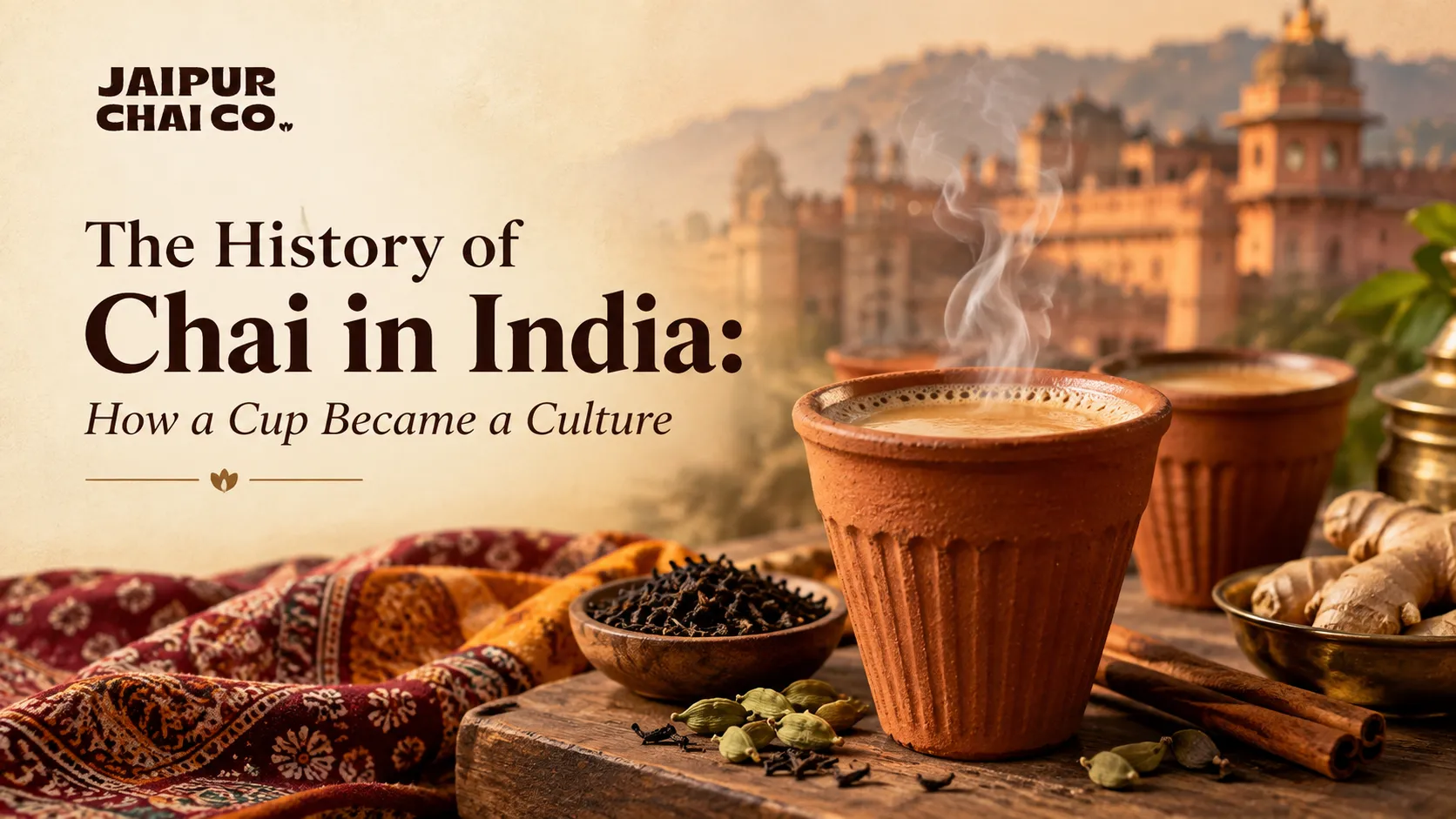

Walk into any Indian home, office, or railway platform, and within minutes someone will offer you chai. It's poured into small glass tumblers between meetings, simmered before wedding negotiations even start, and handed to guests before anyone asks why they've come. Ask most people how old this habit is, and you'll get the same answer: forever. It's just always been this way.
It hasn't, though. The masala chai in your cup today is the result of a two-hundred-year chain of coincidence, colonial trade politics, an aggressive marketing campaign, and one quiet act of rebellion by roadside vendors who refused to brew tea the "correct" way. Here's how it actually came together.
Long Before "Chai" Meant Tea
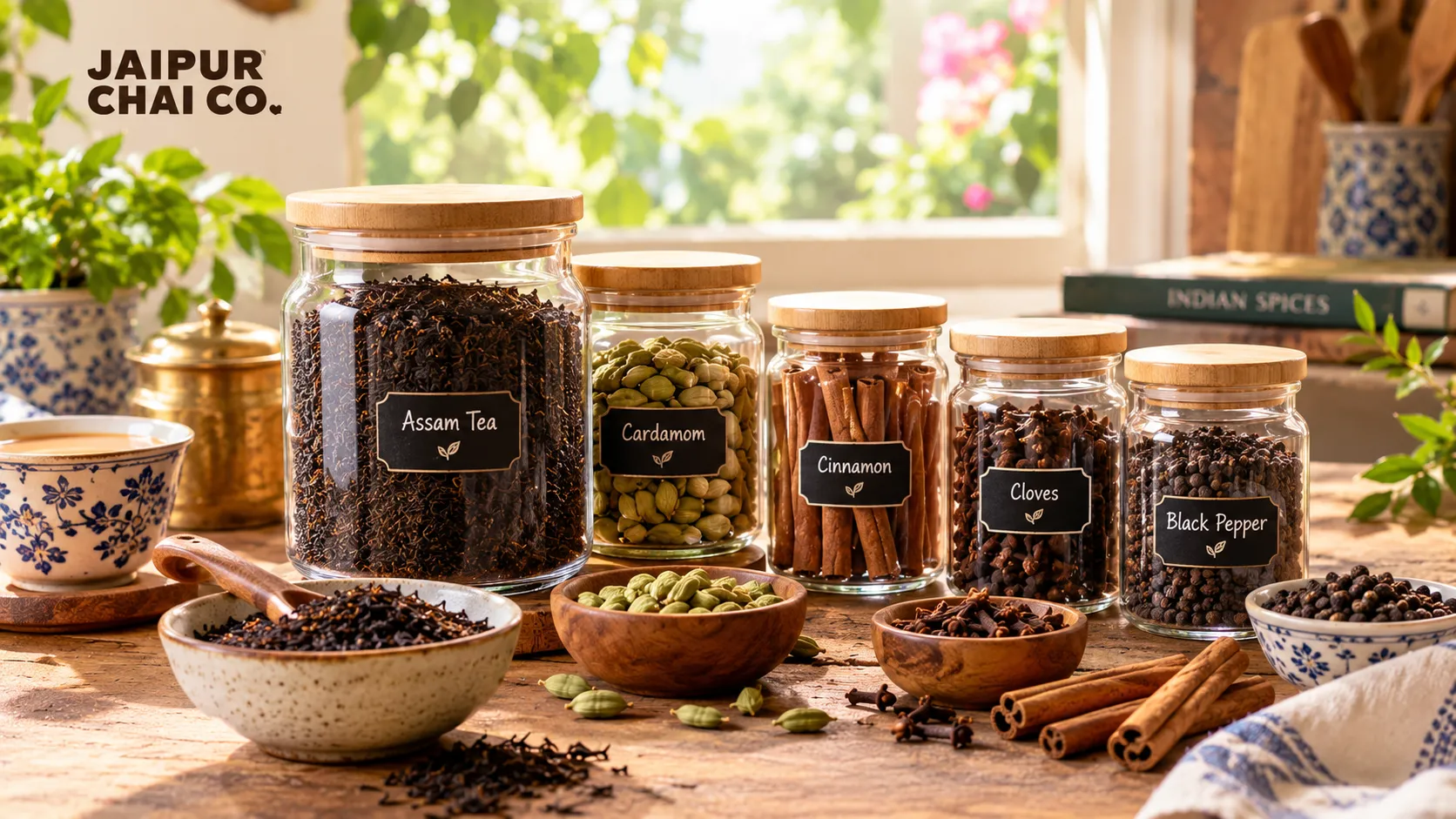
Centuries before a tea leaf ever reached most Indian kitchens, the word "chai" already meant something. In Ayurvedic tradition, warm decoctions of ginger, cardamom, cinnamon, black pepper, and cloves — often simmered in milk — were used as tonics, not treats: something to settle digestion, fight off a cold, or keep the mind sharp, depending on which telling you hear.
None of that early "chai" contained a single leaf of Camellia sinensis, the actual tea plant. It's a detail worth sitting with, because it means tea wasn't introducing India to a new drink when it eventually arrived. It was joining one that already existed.
How the British Stumbled Onto India's Wild Tea
Tea wasn't unknown in India before the British showed up — it just wasn't being exported anywhere. In Assam, local Singhpo communities had been harvesting and brewing wild tea plants as a tonic long before anyone in London had heard the word.
In 1823, Major Robert Bruce, a Scottish officer with the East India Company, learned about these plants from Singhpo leaders, who showed him tea growing wild across the region. Bruce died before he could act on the discovery, but the timing mattered. The Company was in an increasingly tense trade standoff with China — its only source of tea at the time — and wanted a supply it actually controlled. Bruce's brother, Charles, eventually turned that discovery into a working plantation, and by the 1830s the Company was clearing jungle along the Brahmaputra valley to plant Assam's first commercial tea gardens.
Within a few decades, Assam tea was shipping to London by the boatload. Here's the detail that tends to get lost: almost none of it was grown for Indians. The people clearing the land and picking the leaves were producing breakfast for someone else's table.
From Factory Tea Breaks to Railway Platforms
For most of the 1800s, tea sat oddly outside Indian daily life — grown here, consumed somewhere else. That changed in the early 1900s, when the Indian Tea Association ran a determined push to build a market at home. Free tea stalls went up outside mills and factories, employers were encouraged to give workers a "tea break," and the fast-growing railway network became the perfect place to put the habit in front of millions of daily commuters.
The Association's official brewing instructions were thoroughly British: strong tea, a little milk, no spice. Street vendors had other ideas.
Tea leaf was expensive, so chai wallahs stretched a small amount of it with extra milk, sugar, and whatever whole spices were already in the kitchen — usually some combination of:
- Fresh ginger
- Green cardamom
- Cinnamon
- Cloves
- Black pepper
It was a practical fix that happened to draw straight from that older Ayurvedic habit of warm, spiced brews. The Tea Association wasn't thrilled about vendors going off-script, but it didn't matter. By the time industrial processing made tea genuinely affordable in the mid-1900s, this "incorrect" version had already won. Masala chai went from workaround to national institution in about two generations.
A Tradition That Keeps Reinventing Itself
Chai never really settled into one final form. Every region added its own accent — Kashmir's salted, rose-pink kahwa, Gujarat's noticeably sweeter cup, the strong milky Irani chai of Hyderabad's old cafés, Assam's own unsweetened "Ronga Saah" red tea. What stayed constant everywhere was the underlying idea: decent tea leaf, real spices, and someone who actually cared how it was brewed.
That same idea is behind the current interest in organic chai and whole-ingredient blends. Most of it isn't a new trend so much as people quietly circling back to how chai wallahs always made it, before flavour sachets and instant premixes took over. It's the instinct behind brands like Jaipur Chai Co., built around single-estate Premium Assam Tea, whole spices instead of extracts, and small batches hand-blended in Jaipur rather than mass-produced. Their OG Masala Chai sticks close to the original roadside formula — cardamom, ginger, cinnamon, pepper, clove, and fennel over a bold Assam base — while their Rose Cardamom Chai shows the same two-hundred-year-old tradition still finding new shapes.
The Cup Keeps Its History
From a Singhpo tonic to a Scottish officer's discovery, from British tea breaks to a roadside act of rebellion, chai's story is really India's habit of taking something borrowed and making it unmistakably its own. Worth remembering next time the kettle's on.
If you'd rather taste that history than just read about it, you can shop Premium Assam Tea and Masala Chai online at Jaipur Chai Co. — same idea the chai wallahs had, same Assam tea, minus the guesswork.




























Sign in to leave a comment.