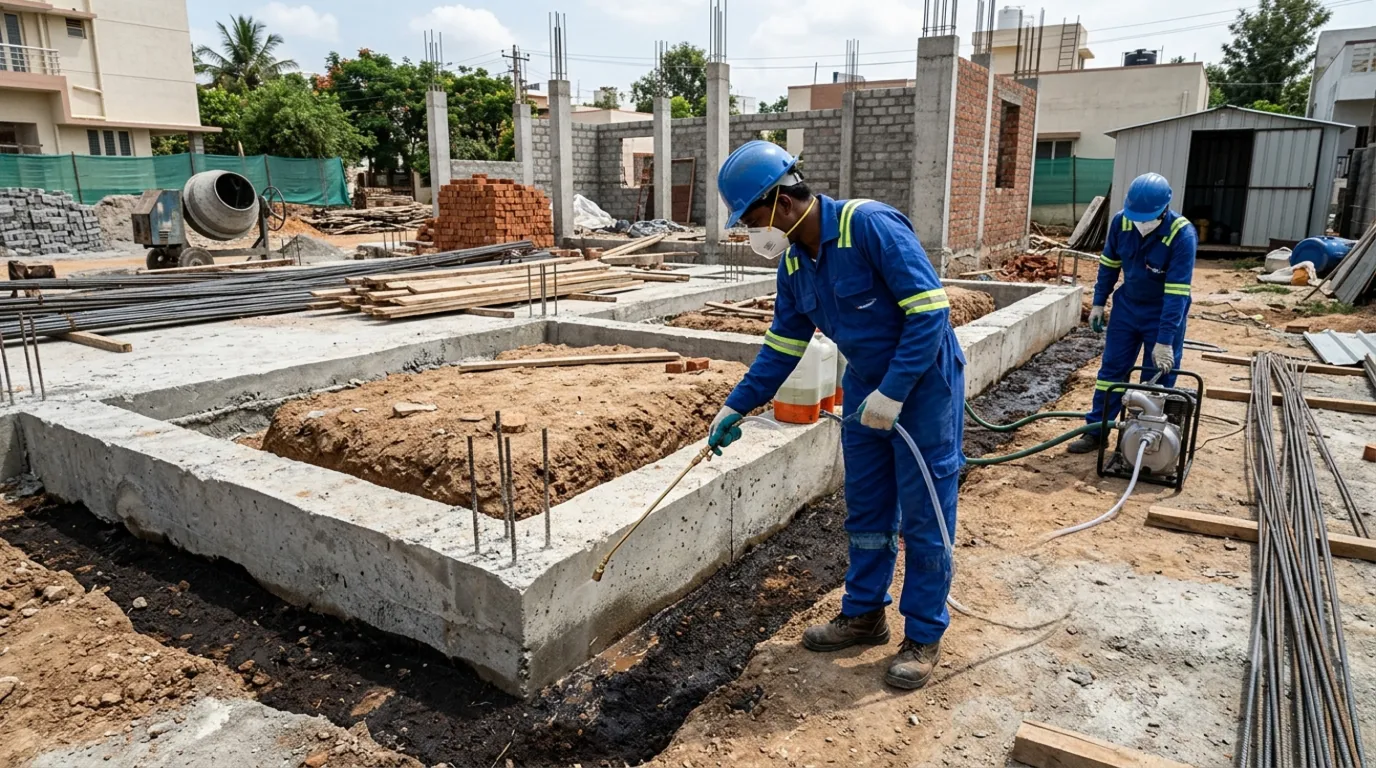

Termites can cause serious structural damage to buildings if they are not controlled at an early stage. For this reason, protecting a property before construction is completed can be an important part of long-term building maintenance. Pre construction termite treatment is a preventive pest control method designed to reduce the risk of termite infestation before a new building becomes occupied.
Unlike treatments performed after termites have already entered a property, pre-construction termite control focuses on creating a protective barrier around vulnerable areas of a building. This approach can help homeowners, builders, and property developers protect their investment and reduce the possibility of costly termite-related repairs in the future.
What Is Pre Construction Termite Treatment?
Pre construction termite treatment is a preventive process carried out during different stages of building construction. The treatment generally focuses on areas such as the soil, foundation, flooring, walls, and other points where termites may potentially enter a structure.
Termites commonly live in soil and can enter buildings through very small gaps and concealed pathways. Once inside, they may attack wooden materials, furniture, flooring, doors, and other cellulose-based components. Treating relevant areas during construction can help establish a protective zone between the building and termite colonies in the surrounding soil.
The exact treatment procedure can vary depending on the construction design, soil conditions, building materials, and local requirements.
Why Is Termite Prevention Important During Construction?
Once construction is complete, accessing certain areas of a building becomes difficult. Foundations, flooring, wall cavities, and other concealed spaces may no longer be easily accessible for treatment.
This is one of the main reasons termite prevention during construction can be beneficial. Applying appropriate preventive measures while construction is underway allows pest control professionals to reach areas that could otherwise be difficult to treat later.
A properly planned termite management system may help:
- Reduce the risk of termite entry
- Protect structural and wooden components
- Minimize the need for extensive termite treatments later
- Support long-term property maintenance
- Protect the investment made in a new building
Preventive treatment does not mean a property can never experience termites. Instead, it is a proactive measure designed to make the building less vulnerable to termite infestation.
Key Areas Covered in Pre-Construction Termite Control
A comprehensive pre-construction anti-termite treatment may involve several stages depending on the property and construction process.
1. Soil Treatment
Soil around and beneath a building can provide termites with a pathway toward the structure. Treatment of suitable soil areas can help create a chemical barrier between the soil and the building.
2. Foundation Protection
Foundations are another important area because they connect the building with the ground. Treating appropriate foundation zones can help reduce potential termite entry points.
3. Plinth and Floor Areas
The area beneath floors can sometimes provide concealed access for termites. Preventive treatment during construction can help protect these vulnerable sections before flooring is installed.
4. Construction Joints and Entry Points
Small gaps, joints, cracks, and service openings can potentially become pathways for termites. Identifying and treating relevant locations as part of an overall termite management plan can improve the building's protection.
Benefits of Termite Treatment Before Construction Is Completed
One of the biggest advantages of termite control for new buildings is that prevention begins before an infestation becomes a problem.
Long-Term Protection
Early termite management can provide a protective foundation for the property's ongoing pest control strategy. Regular inspections can then be used to monitor the building over time.
Protects the Property Investment
Constructing a home or commercial property requires a significant financial investment. Termite damage can affect wooden structures, flooring, furniture, and other materials. Preventive measures can help reduce the risk of expensive damage.
Access to Difficult Areas
During construction, areas that will eventually be covered by flooring, walls, or other materials are accessible. This makes it easier for professionals to address potential termite entry routes.
Reduces Future Treatment Challenges
Treating termites after a building is completed may require access to finished surfaces or concealed areas. Planning termite prevention during construction can help address certain vulnerabilities earlier.
Pre Construction vs. Post Construction Termite Treatment
There is an important difference between preventive and corrective termite control.
Pre-construction treatment is performed before or during the construction process to reduce the likelihood of termite entry. It is primarily preventive.
Post-construction termite treatment, on the other hand, is generally carried out when a completed building requires protection or when signs of termite activity have already been identified.
Both approaches can play a role in termite management. However, incorporating preventive measures into the construction stage can make it easier to address areas that may become inaccessible after completion.
Choosing the Right Termite Treatment Approach
Every building is different, so the appropriate treatment method should be determined after considering factors such as construction type, soil conditions, building design, and potential termite entry points.
It is also important to work with trained pest control professionals who understand how termite barriers should be applied and maintained. The products and application methods should be selected and used according to applicable regulations and manufacturer instructions.
The Hunters provides professional pest management solutions designed to help property owners address termite risks with a preventive approach. For new construction projects, discussing termite protection during the planning stage can help ensure that vulnerable areas are considered before the building is completed.
Why Early Planning Matters
Waiting until termites become visible can make termite management more complicated. Termites often remain hidden for long periods, meaning significant damage can occur before an infestation becomes obvious.
Including termite protection in new construction planning allows builders and property owners to consider potential risks from the beginning. Along with professional treatment, regular inspections, moisture management, proper drainage, and attention to cracks or structural gaps can contribute to an effective long-term termite prevention strategy.
Final Thoughts
A new building represents a major investment, and protecting it from termites should be considered before construction is finished. Pre construction termite treatment provides a proactive way to address potential termite entry routes and protect vulnerable parts of a property.
From soil and foundation treatment to floor and structural protection, early termite management can form an important part of a property's overall pest prevention plan. By working with experienced professionals such as The Hunters and combining preventive treatment with regular inspections, homeowners and builders can take practical steps toward maintaining a healthier, better-protected property for years to come.























Sign in to leave a comment.