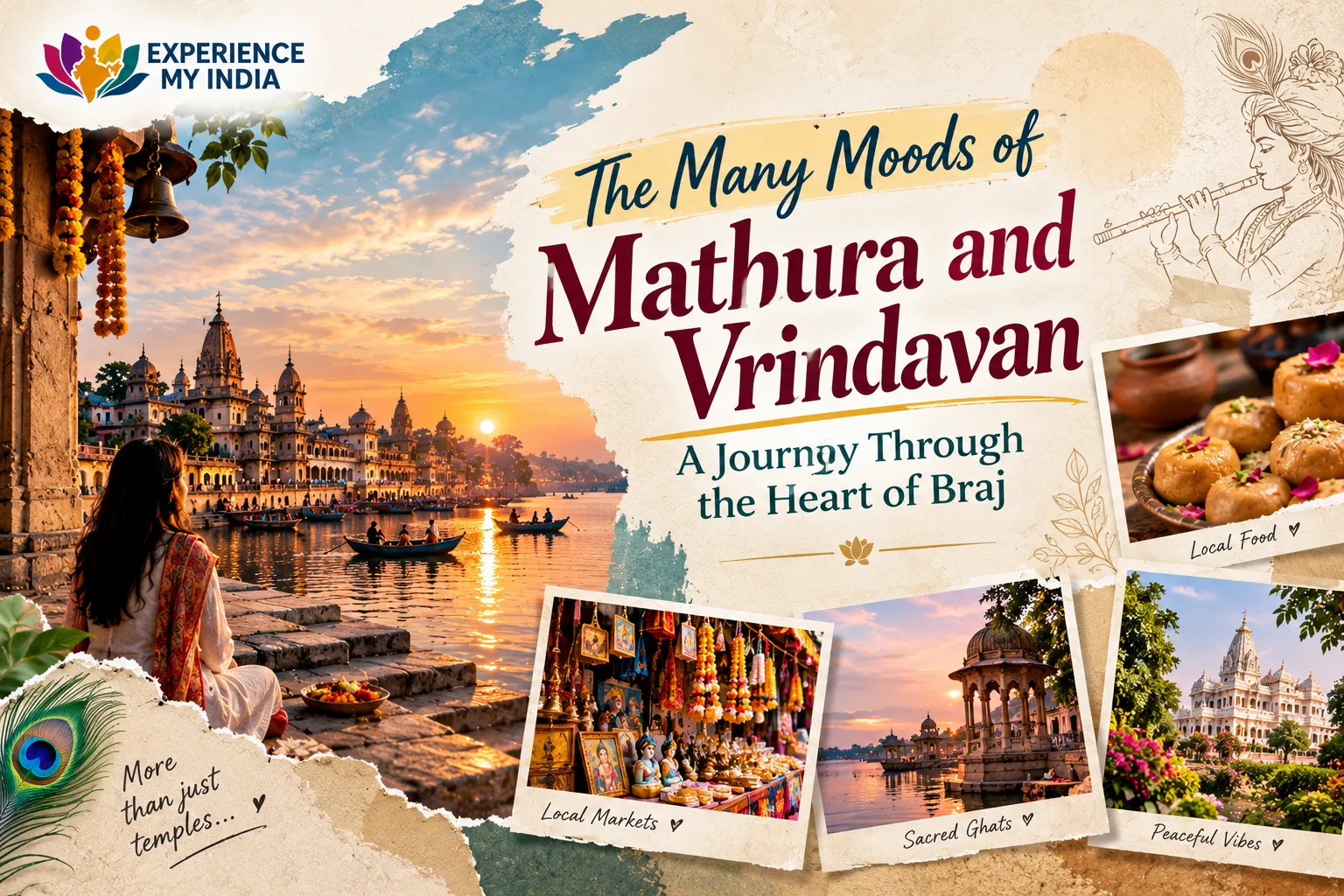

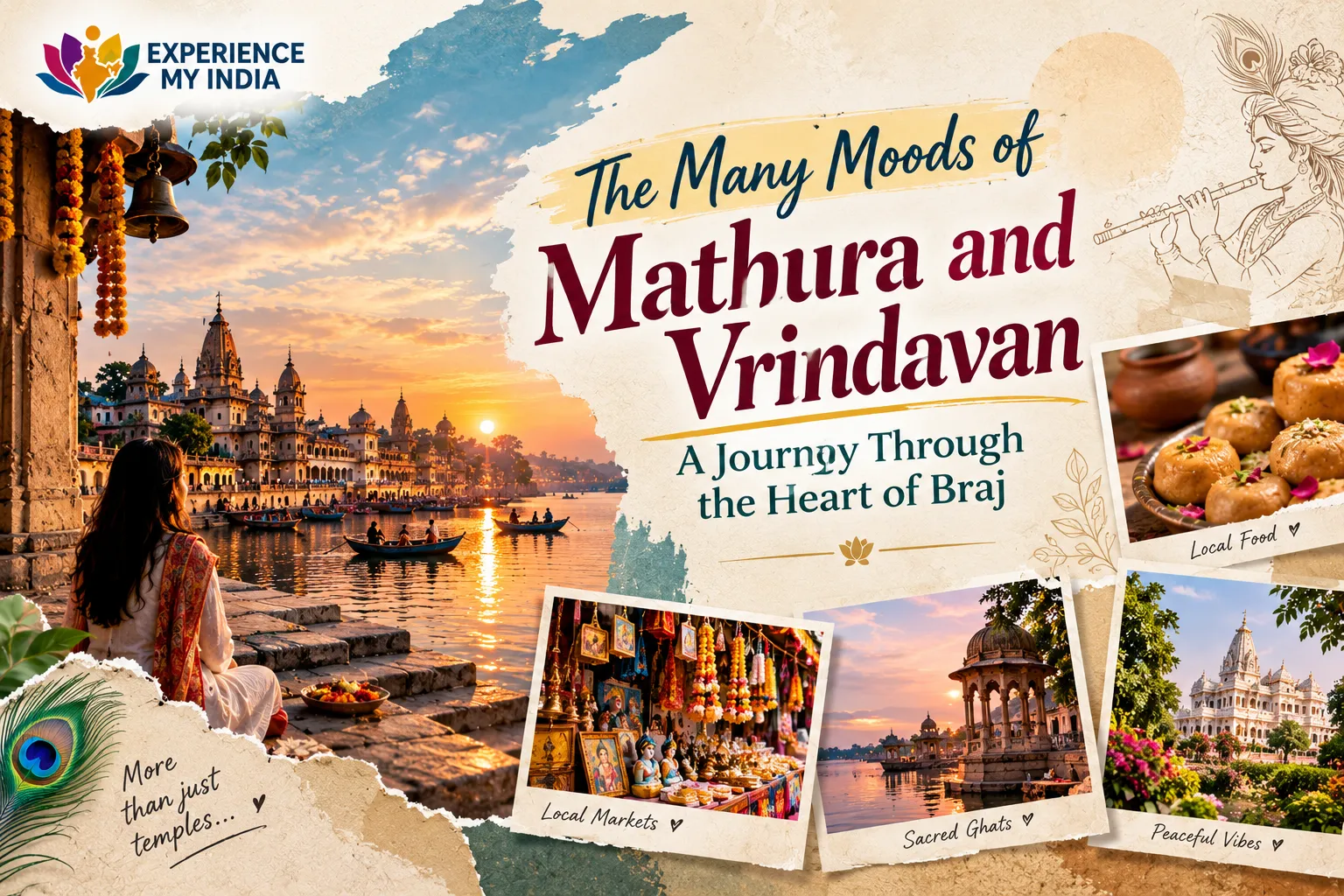
There are places that you visit for their monuments, and then there are places that you experience through their atmosphere. Mathura and Vrindavan belong to the second kind. Their character is not limited to a particular temple, street, or attraction. It can be found in the sound of bells in the morning, the rhythm of devotional songs, colorful shops, flower sellers preparing garlands, the movement of people through narrow lanes, and the peaceful moments beside the Yamuna.
For anyone planning a Mathura Vrindavan tour, looking at the destination only as a list of sightseeing places can leave out much of what makes Braj special. The region is better understood slowly, through its traditions, stories, people, surroundings, and everyday experiences.
Begin With the Story of Braj
Before exploring Mathura and Vrindavan, it helps to understand the idea of Braj.
Braj is a culturally important region associated with the traditions and stories of Lord Krishna and Radha. Mathura, Vrindavan, Gokul, Govardhan, Barsana, Nandgaon, and several surrounding places are connected through this larger cultural landscape.
This connection is one reason the region feels different from a conventional tourist destination. Many locations have significance beyond their physical appearance. A small street, a hill, a pond, or an old settlement may carry a story that has been passed from one generation to another.
Understanding this background can make sightseeing more meaningful because visitors begin to see the region as a connected cultural landscape rather than a collection of separate attractions.
Notice the Changing Rhythm of the Streets
One of the most interesting things about Mathura and Vrindavan is how their atmosphere changes throughout the day.
Early mornings can feel relatively quiet. Shops gradually open, flower sellers prepare their offerings, and visitors begin moving towards different parts of the towns.
As the day progresses, the streets become more active. Markets fill with shoppers, vehicles move through the roads, and visitors travel between different places.
By evening, the atmosphere changes again. People gather around religious sites and riverfront areas, lights begin appearing across the streets, and devotional music becomes part of the surroundings.
Instead of trying to cover as many attractions as possible, travelers can observe these different phases of the day. It offers a more authentic understanding of local life.
Look Beyond the Famous Landmarks
Popular attractions naturally deserve a place in an itinerary, but some of the most interesting discoveries can happen between them.
The traditional lanes of Vrindavan contain small shrines, old buildings, flower shops, local food stalls, bookstores, and stores selling religious artwork. Mathura's older areas similarly reveal layers of history through their streets and architecture.
These places may not always appear as major stops on a typical itinerary, but they help explain how the towns have evolved.
Travelers should, however, remain respectful when walking through residential areas. These are living neighborhoods rather than open-air tourist attractions.
Discover the Language of Flowers
Flowers are an important visual part of the Braj experience.
In the markets and near religious places, visitors can see garlands being prepared and flowers being arranged for different purposes. The bright colors and fragrances add a distinctive character to the streets.
For photographers and travelers interested in everyday culture, watching this simple activity can be an interesting experience. It also shows how traditional practices remain connected with ordinary commercial life.
Rather than simply purchasing a souvenir, visitors can take a moment to understand what they are seeing and why flowers have such an important role in local traditions.
Follow the Sound Instead of the Map
One unusual way to explore Mathura and Vrindavan is to pay attention to sound.
Instead of constantly checking a map, notice the bells, bhajans, temple music, conversations in local markets, and sounds coming from small shops and streets.
Music has long been an important part of Braj's devotional traditions. Different forms of singing and storytelling are used to express stories and emotions associated with Krishna and Radha.
For visitors, these sounds create a sense of place that photographs cannot completely capture.
This is also why an unhurried visit can sometimes be more memorable than a tightly packed itinerary.
Take Time for the Yamuna
The Yamuna is not simply another geographical feature of Mathura and Vrindavan. It has an important place in the cultural and religious identity of Braj.
A visit to the riverfront provides an opportunity to slow down after spending time in busy streets.
Rather than treating the ghats as a quick sightseeing stop, travelers can observe the surroundings, architecture, boats, rituals, and changing light during different parts of the day.
The evening atmosphere can be particularly distinctive, with people gathering around the ghats and the river reflecting the lights nearby.
Explore the Braj Food Trail
A journey through Mathura and Vrindavan can also be understood through food.
Mathura's peda is perhaps the most recognizable local specialty, but the region's food experience extends beyond one sweet. Traditional vegetarian snacks, milk-based preparations, seasonal foods, and simple local meals can all be part of the experience.
One interesting approach is to create a small food trail rather than searching only for elaborate restaurants.
Try a traditional sweet shop in Mathura, explore a local snack stall, and have a simple vegetarian meal in Vrindavan. This gives travelers an opportunity to experience the everyday food culture of the region.
Visitors should always consider hygiene, food freshness, and their individual dietary requirements.
Travel Beyond the Two Main Towns
The identity of Braj becomes clearer when travelers move beyond Mathura and Vrindavan.
Gokul, Govardhan, Barsana, and Nandgaon each contribute another part of the region's cultural landscape.
Gokul is connected with stories of Krishna's childhood. Govardhan is associated with Govardhan Hill and the traditions surrounding it. Barsana is closely connected with Radha, while Nandgaon has its own place in the stories of Krishna's early life.
Instead of treating these destinations as optional add-ons, travelers can see them as different chapters of the same Braj story.
A longer Mathura Vrindavan tour package can therefore include some of these places, depending on the available time and travel preferences.
Choose Time Over Quantity
Modern travel often focuses on how many places can be covered in one day. Mathura and Vrindavan work better with a slightly different approach.
Visiting ten locations quickly may not provide the same experience as spending extra time in three or four places.
A relaxed schedule allows visitors to wait for an evening ritual, explore a market, enjoy a local meal, or simply sit near the river.
This is particularly useful for families and older travelers, who may prefer fewer destinations with comfortable travel between them.
When comparing Mathura Vrindavan tour packages, therefore, travelers can look at the pace of the itinerary rather than only counting the number of places included.
Make Room for Unplanned Moments
Not every memorable travel experience can be scheduled.
A local music performance, an interesting conversation with a shopkeeper, a colorful market, an unexpected festival preparation, or a peaceful moment in an old street may become one of the highlights of the trip.
Leaving some space in the itinerary makes these moments possible.
This does not mean traveling without preparation. Important temple timings, transportation, accommodation, weather, and festival dates should still be checked in advance. The idea is simply to avoid filling every hour.
When a Tour Can Make Things Easier
For first-time visitors, navigating two busy towns and their surrounding areas can take considerable planning.
Organized Mathura Vrindavan tours can make transportation and sightseeing easier, particularly when the itinerary includes several locations outside the main towns.
Travelers should compare what each arrangement actually provides. Pickup and drop-off, vehicle type, sightseeing, accommodation, meals, guide assistance, and additional destinations may vary.
For people who prefer independence, creating a personal itinerary is also possible. The important thing is to match the schedule with the purpose of the trip.
The Real Experience of Braj
Mathura and Vrindavan are often introduced through their famous religious landmarks, but their character extends much further.
It exists in the old lanes, the changing sounds of the streets, the colors of the markets, the fragrance of flowers, traditional food, riverside evenings, local stories, and the connections between the towns and villages of Braj.
A meaningful Mathura Vrindavan tour does not have to be about seeing everything. It can be about noticing more.
When travelers slow down and look beyond the obvious attractions, Mathura and Vrindavan begin to reveal themselves as living cultural landscapes rather than simply destinations on a travel itinerary.
For those planning their first visit, choosing a suitable Mathura Vrindavan tour package can provide the basic structure needed for transportation and sightseeing, while leaving enough time to experience the less predictable and more personal side of the journey.
That balance—between planned exploration and unhurried discovery—is what can make a journey through Braj feel genuinely different.























Sign in to leave a comment.