
What Is the MDR1 Gene Mutation?
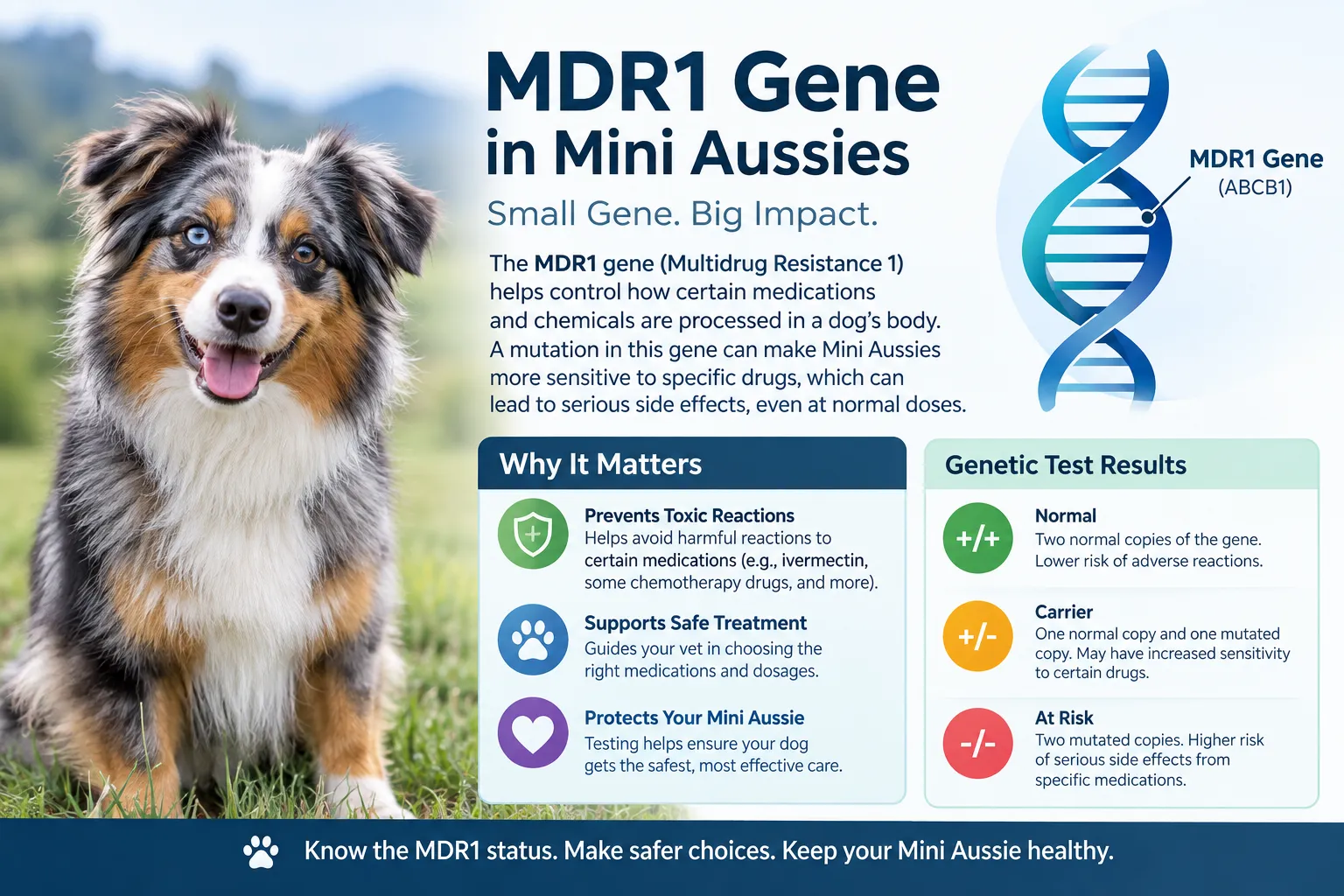
The MDR1 gene in Mini Aussies is responsible for producing P-glycoprotein, a protein that acts as a pump at the blood-brain barrier, keeping certain drugs and toxins out of the brain. In dogs with a mutated copy of this gene, that pump doesn't function properly. The result is a blood-brain barrier that lets potentially dangerous drug levels build up in the brain, even at doses that are perfectly safe for dogs without the mutation.
Mini Australian Shepherds, along with other herding breeds like Collies, Border Collies, and Standard Australian Shepherds, carry this mutation at unusually high rates. Estimates suggest that roughly half of all Mini Aussies carry at least one copy of the mutated gene, making MDR1 sensitivity one of the most common and most overlooked health risks in the breed.
Why MDR1 Matters So Much for Mini Aussie Owners
Unlike many genetic conditions that cause visible symptoms early in life, MDR1 sensitivity is invisible until a dog is exposed to a triggering drug. A dog can appear completely healthy for years and then have a severe, sometimes fatal, reaction to a routine medication, a flea and tick product, or a pre-surgical sedative. Because the mutation is so common in this breed and the consequences of an adverse reaction can be fatal, veterinary organizations and breed clubs consider MDR1 testing a non-negotiable part of responsible Mini Aussie ownership.
Normal, Carrier, or Affected: Understanding Genotypes
MDR1 testing results fall into three categories:
- Normal (N/N): The dog carries two normal copies of the gene and has no increased drug sensitivity.
- Carrier (N/Mutant): The dog carries one normal and one mutated copy. These dogs have moderate sensitivity and require caution with certain drugs, though reactions are typically less severe than in affected dogs.
- Affected (Mutant/Mutant): The dog carries two mutated copies and is at the highest risk for severe or fatal drug reactions, even at standard doses.
Only a DNA test can determine which category a dog falls into. Physical appearance, coat color, and behavior give no indication of MDR1 status.
Symptoms of an MDR1 Drug Reaction
When an MDR1-affected or carrier dog is exposed to a triggering medication, symptoms can appear within hours and may include:
- Lethargy or sedation that seems disproportionate to the dose given
- Vomiting and loss of coordination
- Tremors or seizures
- Excessive drooling
- Disorientation or blindness
- Slowed heart rate and breathing
- Coma in severe cases
Any of these symptoms following a new medication, a flea/tick treatment, or a veterinary procedure should be treated as an emergency, and the vet should be informed immediately that MDR1 status is unknown or positive.
Medications and Products That Pose a Risk
Several commonly used drugs and parasite treatments are known to cause serious reactions in MDR1-positive dogs, including high-dose ivermectin (found in some heartworm and deworming products), loperamide (Imodium), certain chemotherapy agents such as vincristine and doxorubicin, and select sedatives and antibiotics used during veterinary procedures. Risk levels vary by drug and by whether a dog is a carrier or fully affected, which is why sharing DNA test results with every vet, groomer, and emergency clinic that treats the dog is essential rather than optional.
How to Test Your Mini Aussie for MDR1
Testing is simple, affordable, and only needs to be done once in a dog's lifetime. A cheek swab sample is collected at home or at the vet's office and sent to a testing lab such as Washington State University's Veterinary Clinical Pharmacology Laboratory, Embark, or Paw Print Genetics. Results typically arrive within a few weeks and cost approximately $70. Breeders should test breeding stock before pairing dogs, and new owners should test puppies as early as possible, ideally before their first major medication or surgical procedure.
What to Do After Getting Results
Once you know your dog's MDR1 status, the most important step is documentation and communication. Keep a copy of the test results with your dog's medical records, and provide them to every veterinarian, emergency clinic, and groomer who administers medication or sedation. For carrier and affected dogs, ask your vet to confirm that any prescribed medication, flea/tick preventative, or anesthesia protocol is MDR1-safe before it's administered, rather than assuming standard dosing applies.
Frequently Asked Questions
How common is the MDR1 mutation in Mini Australian Shepherds?
Approximately 50% of Mini Aussies carry at least one copy of the MDR1 mutation, making it one of the most prevalent genetic risks in the breed.
Can an MDR1-affected dog live a normal life?
Yes. With a known diagnosis and careful medication management, MDR1-affected dogs live completely normal lives. The risk comes specifically from unmonitored drug exposure, not from the mutation itself.
Is MDR1 testing required by breeders?
It isn't legally required, but it's considered a hallmark of responsible breeding. Reputable breeders test breeding pairs and can provide documentation on request.
Does MDR1 status affect a dog's temperament or lifespan?
No. The mutation only affects how the body processes certain drugs. It has no bearing on personality, intelligence, or general life expectancy when managed properly.
Want me to put this into a file (Word doc, or an HTML/Markdown page) for you to publish or share?

























Sign in to leave a comment.