The New Indian Festive Wardrobe: Why Fabric Matters More Than Ever in 2026

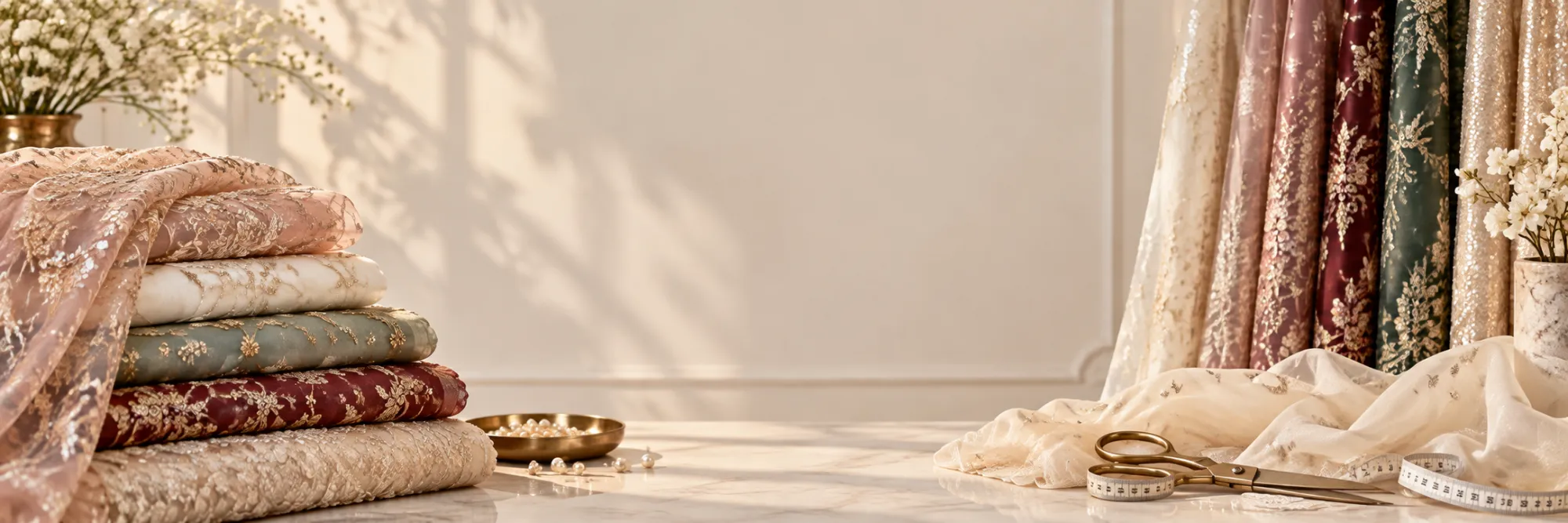

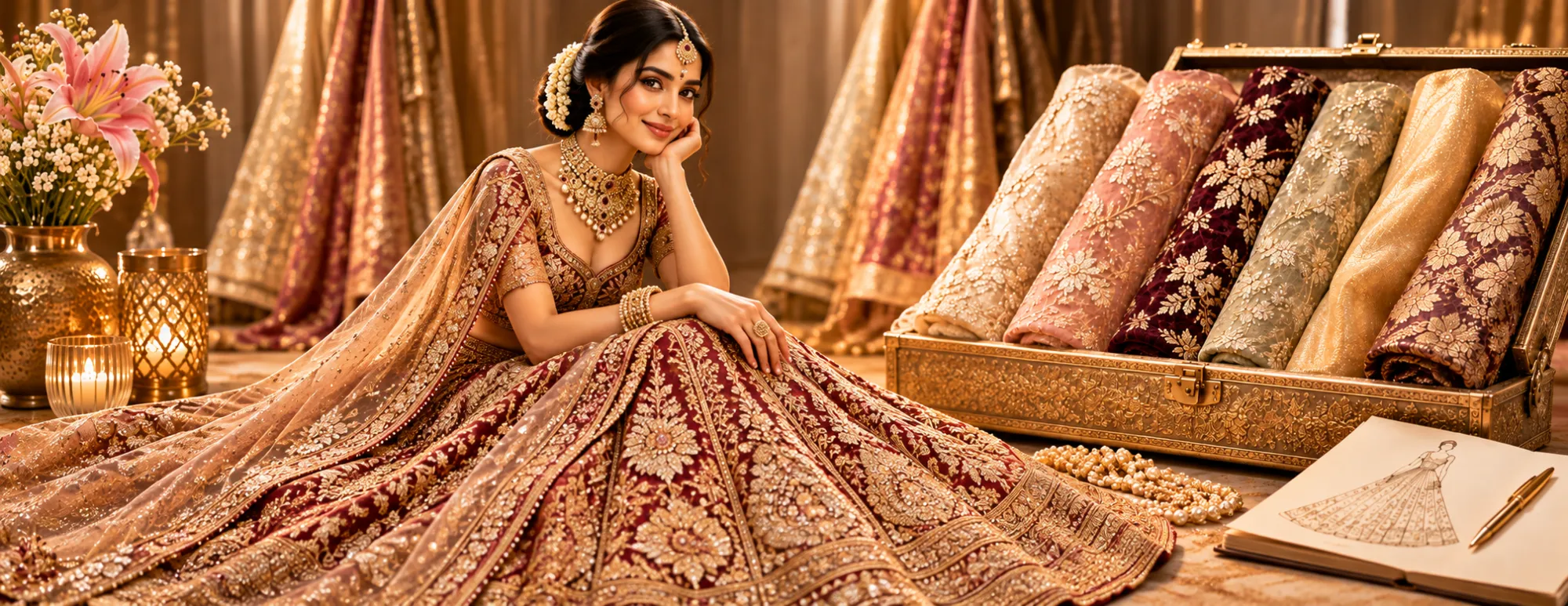
From lighter lehengas to rewearable sarees, Indian festive fashion is becoming more practical without losing its traditional charm.
There was a time when choosing an outfit for an Indian wedding meant one thing: the heavier the embroidery, the better.
But walk into a fabric market today, and the conversations are changing.
A bride wants a lehenga she can dance in. A working woman wants a Diwali outfit that looks festive but doesn't feel uncomfortable after three hours. A boutique owner wants fabrics that photograph beautifully without becoming too expensive for customers.
These are the everyday decisions shaping Indian fashion in 2026.
And behind almost every good outfit is something we don't discuss enough: the fabric itself.
1. Heavy Looks, Lighter Feel: The New Festive Balance
Indian weddings are still full of colour, embroidery, and beautiful traditional clothing. But more shoppers are looking for outfits that balance appearance with comfort.
Think about a wedding guest attending a three-day celebration.
For Mehendi, she might prefer a lightweight georgette sharara. For Sangeet, a flowing skirt with subtle sequins. For the wedding, perhaps a rich Banarasi saree that can be worn again.
The interesting part? None of these outfits needs to be uncomfortable to look luxurious.
Fabrics like organza, georgette, tissue, and silk blends offer different ways to create festive looks without depending entirely on heavy embellishments.
The secret is knowing how each fabric behaves when stitched.
2. Why Organza, Tissue and Georgette Deserve Different Places in Your Wardrobe
Three fabrics can look equally beautiful on a shop counter but behave completely differently once worn.
Organza: For structure and volume
Organza works beautifully for puff sleeves, statement dupattas, and lehengas that need a little shape.
It creates volume without requiring many heavy layers. However, some varieties can feel stiff against the skin, so lining and finishing matter.
Tissue: For a festive glow
Tissue fabrics are popular for their luminous surface and traditional appeal.
A tissue saree can look elegant with a simple blouse and minimal jewellery. However, some varieties crease easily, so it's worth testing the fabric before purchasing.
Georgette: For movement and comfort
Georgette is a useful choice when movement matters.
It works well for sarees, Anarkalis, shararas, and flowing dresses. Its softer drape can make it more comfortable for long celebrations.
If you're exploring these materials for an upcoming occasion, browsing a designer fabric collection can help you compare textures, embroidery styles, and colours before finalising a design.
3. The Rise of Outfits You Can Wear Again
One of the most useful changes in festive shopping is the growing interest in rewearable clothing.
Instead of buying an expensive outfit for a single function, shoppers can think about how individual pieces might work in different combinations.
For example:
- A Banarasi blouse can be paired with a plain saree.
- An embroidered dupatta can transform a simple kurta set.
- A silk lehenga skirt can be worn with a modern crop top.
- A festive jacket can be styled with trousers for a dinner party.
This approach is also useful for boutique owners.
Customers may be more willing to invest in a beautiful fabric when they can imagine wearing the finished garment in several ways.
The goal isn't to make traditional clothing less festive. It's to make it more useful.
4. What the Wedding Season Teaches Us About Fabric Quality
October marks the beginning of an important period for festive and wedding shopping in many parts of India.
But selecting fabric based only on colour or embroidery can lead to disappointment later.
Imagine choosing a heavily embroidered net fabric for a lehenga.
It looks beautiful when displayed flat. After stitching, however, the outfit may feel heavier than expected, or the embroidery may rub against the skin.
A few simple checks can prevent this.
The daylight test: Take the fabric near natural light and examine its actual colour and transparency.
The movement test: Lift one corner and gently move it to understand how the fabric falls.
The reverse-side test: Turn embroidered fabric over and check for loose threads, knots, and rough finishing.
The crease test: Gently squeeze a small section and see how easily it recovers.
These checks are especially helpful when sourcing from a busy textile market.
For buyers visiting Delhi, exploring a fabric shop in Lajpat Nagar can be an opportunity to examine materials in person rather than relying entirely on edited product photographs.
5. Traditional Indian Textiles Still Have a Place in Modern Fashion
India's textile heritage offers far more than a few familiar wedding fabrics.
Banarasi brocade, Chanderi, Katan silk, cotton, and handwoven textiles each bring something different to clothing.
What's interesting is how these materials can be adapted for contemporary wardrobes.
A Chanderi kurta with straight trousers feels elegant for a family gathering.
A Banarasi brocade blouse with a plain skirt creates a modern festive combination.
A silk dupatta can become the statement piece of an otherwise simple outfit.
Traditional fabric doesn't always need a traditional silhouette.
The most exciting designs often come from understanding the material first and then deciding how to use it.
6. A Small Fabric-Buying Checklist for 2026
Before spending money on an expensive festive outfit, ask these six questions:
- Will the fabric feel comfortable for the duration of the event?
- Does it need a separate lining?
- Will the embroidery affect the way it drapes?
- Can the outfit be altered or restyled later?
- Is the fabric suitable for the season and venue?
- Have I calculated the total cost, including lining, stitching, and finishing?
These questions are equally useful for fashion students, independent designers, boutique owners, and everyday shoppers.
For those comparing bridal, festive, and everyday textile options, Paras Gallery Fabrics offers a starting point for exploring different materials and understanding what might suit a particular outfit.
7. The Future of Indian Fashion Starts With Better Choices
Fashion trends will keep changing.
One season may favour pastel sarees. Another may bring deeper jewel tones, metallic fabrics, or dramatic silhouettes.
But a beautiful outfit doesn't depend only on what is trending.
It depends on how the fabric feels, how it moves, how well it is stitched, and whether the person wearing it feels comfortable.
As India's festive and wedding wardrobes continue to evolve, one idea remains timeless:
Choose the fabric for the life you will live in it, not just the photograph you will take in it.
That is what makes a garment worth keeping.
An independent educational look at Indian fabrics, festive dressing, and smarter textile shopping for 2026.






Sign in to leave a comment.