

Finding a Trusted Partner for Orthodontic Instruments in the US and Europe
Every orthodontic practice relies on precision. The quality of your orthodontic pliers determines the success of every wire bend, every ligature placement, and every appliance adjustment. Healthcare professionals across the United States and Europe understand that these specialized tools are the workhorses of their practice. They trust orthodontic pliers that deliver consistent performance and superior control. At MedKraft Orthodontics, we have spent decades manufacturing these essential instruments. Our experience shows that clinicians need tools designed for the unique demands of modern orthodontic care.
What Are Orthodontic Pliers?
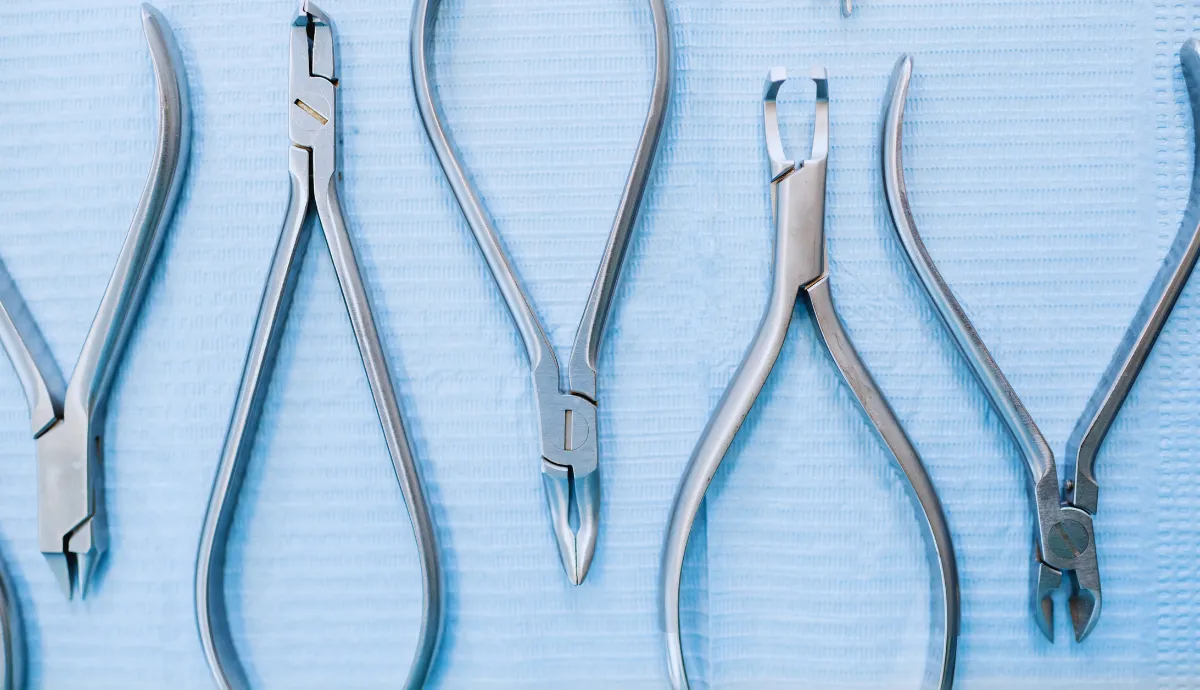
Orthodontic pliers are specialized hand-held instruments used to hold, bend, cut, and manipulate orthodontic wires and appliances . They are crafted from high-quality stainless steel to ensure durability, resistance to corrosion, and easy sterilization . These versatile tools feature safely rounded tips to protect the patient during intraoral procedures . Premium orthodontic pliers are precisely crafted for exact use and comply with ISO, FDA, and CE standards .
Why Quality Orthodontic Pliers Matter
Quality instruments directly affect treatment outcomes. Poor pliers can damage wires, slip during procedures, or cause patient discomfort. Premium orthodontic pliers offer precise control, comfortable ergonomics, and long-lasting durability . They maintain their precision through countless sterilization cycles. They reduce hand fatigue during lengthy procedures. They provide the tactile feedback clinicians need for delicate adjustments. Quality pliers are fully autoclavable and reusable, saving practice costs over time .
Common Types of Orthodontic Pliers
Different procedures require different pliers. Understanding each type helps you choose the right tool for every task.
Bending Pliers
Bending orthodontic pliers are used for precise bending and contouring of archwires . They help achieve desired tooth movement and fit wires accurately into bracket slots. The Bird-Beak plier features a round, cone-shaped beak for working wires up to 0.76 mm in diameter . The Tweed plier has concave beaks with parallel serrations to hold wire at a 90-degree angle while forming loops . These instruments are essential for creating custom wire configurations .
Cutting Pliers
Cutting pliers are designed to cut through wires, ligature ties, or excess material from appliances . Ligature cutters feature fine ends for cutting small stainless steel or elastic ligatures. Distal end cutters safely cut archwire ends inside the mouth. Heavy wire cutters handle thicker, more rigid wires. Premium cutting pliers feature tungsten carbide inserts for extended blade life .
Weingart Pliers
Named after Dr. John Weingart, these versatile pliers are commonly used for bending and forming archwires . They manipulate loops and bends in rectangular wires . Weingart pliers are a staple in most orthodontic practices. They offer precision control for a wide range of wire adjustments.
Howe Pliers
Howe pliers come in straight and curved variations . Straight Howe pliers have slender, long tips for anterior procedures. Curved Howe pliers feature tips angled at 40 degrees for better access to posterior and lingual areas . These utility pliers are used for holding archwires and seating bands .
Mathieu Pliers
Mathieu pliers have short, serrated beaks for grasping ligature wire . A three-step locking mechanism makes them highly efficient . The locking allows quick opening and closing during procedures. These are essential for ligature placement and elastic band positioning.
Band Seating and Removing Pliers
Band seating pliers feature serrated tips that grip brackets to assist in placing bands . Band removing pliers have specialized tips and occlusal pads for safe band removal . Some models feature slim, tapered designs for better accessibility and patient comfort . Replacement pads are available for these instruments.
Nance Loop Forming Pliers
Nance loop forming pliers adjust preshaped arches for fixed appliances . Their four-step beaks are ideal for bending rectangular and round wires. All working edges are beveled to avoid wire damage. These instruments can bend wires up to 0.7 mm .
Adams Pliers
Adams pliers are common in dental education and practice . They feature two rectangular, smooth, blunt beaks with a short distance between hinge and tips. The textured inner surfaces provide a secure grip without wire slippage . These are used for fabrication of Adams clasps and adjustment of facebows and headgears.
Key Features of Premium Orthodontic Pliers
Quality orthodontic pliers share several important characteristics.
High-Quality Materials
Premium pliers are made from high-grade stainless steel . German austenitic standard stainless steel offers superior durability and corrosion resistance . Some models feature tungsten carbide inserts for extended cutting life . The handles have an ergonomic shape for comfortable working .
Precision Craftsmanship
Each step of manufacture undergoes strict quality control . The result is exceptionally precise geometry of plier tips, durable blades, and perfectly coordinated joints . Premium pliers have excellent balance that users can feel in their daily work . The difference in materials and precision is noticeable quickly, especially in regularly used instruments .
Sterilization Compatibility
Quality orthodontic pliers are fully autoclavable and reusable . They withstand daily sterilization requirements . Premium instruments maintain their dimensional precision and durability even with repeated sterilization . This ensures compliance with infection control standards.
What Healthcare Professionals Say
"The precision of my orthodontic pliers makes every adjustment smoother. I trust tools that perform consistently and safely." - Dr. Michael R., Orthodontist, New York
"Quality pliers are essential in my practice. The ergonomic design reduces hand fatigue during long procedures." - Dr. Sarah K., Orthodontist, London
Finding a Trusted Supplier in the US and Europe
Healthcare professionals in the United States and Europe demand quality. Premium manufacturers use high-quality stainless steel and offer ergonomic designs . They comply with ISO, FDA, and CE standards . Leading manufacturers offer product guarantees and stand behind their instruments . When choosing a supplier, consider product quality, shipping reliability, and customer support. Building a relationship with a trusted supplier ensures consistent quality and streamlined procurement.
Order Now on Our Website
Ready to upgrade your orthodontic instruments? Our comprehensive range of premium orthodontic pliers is designed for superior performance. We serve healthcare professionals across the United States and Europe. Every instrument reflects our commitment to precision and quality. Experience the difference that quality orthodontic pliers make in your practice. Order now on our website for prompt delivery throughout the United States and Europe.
Frequently Asked Questions
What are orthodontic pliers used for?
Orthodontic pliers are used to hold, adjust, bend, and cut orthodontic archwires and appliances . They also remove and replace auxiliary attachments such as coil springs and elastics . Different types perform specific tasks like wire bending, cutting, ligature placement, and band seating.
What are the most common types of orthodontic pliers?
Common types include bending pliers, cutting pliers, Weingart pliers, Howe pliers, Mathieu pliers, band seating pliers, band removing pliers, Adams pliers, and Nance loop forming pliers . Each type serves specific clinical functions .
What is the difference between Weingart and Howe pliers?
Weingart pliers are versatile instruments commonly used for bending and forming archwires and manipulating loops in rectangular wires . Howe pliers are utility pliers with straight or curved tips used for holding archwires and seating bands . Both are essential but serve slightly different functions.
Are orthodontic pliers sterilizable?
Yes, quality orthodontic pliers are made from high-quality stainless steel and are fully autoclavable and reusable . They withstand repeated sterilization cycles without losing precision or durability.
What materials are orthodontic pliers made from?
Premium orthodontic pliers are made from high-quality stainless steel, often German austenitic standard stainless steel . Some models feature tungsten carbide inserts for extended cutting life . This ensures durability, corrosion resistance, and easy sterilization.























Sign in to leave a comment.