

When people talk about tribal government operations, procurement is rarely the first topic that comes to mind.
Leadership discussions usually focus on economic development, healthcare, education, public safety, infrastructure, housing, and community programs. Procurement sits somewhere behind the scenes, quietly supporting all of them.
But consider what happens when purchasing does not work efficiently.
A school cannot get the technology it needs on time. A public safety department waits for critical equipment. A fleet vehicle replacement gets delayed. A department spends weeks preparing a solicitation for products another department has already purchased before.
None of these problems may look like procurement problems at first.
They are.
For tribal organizations, purchasing decisions can influence how quickly departments operate, how effectively budgets are used, how much administrative time employees spend on paperwork, and how easily procurement teams can demonstrate compliance.
That makes procurement more than a purchasing function. It is an operational strategy.
The Hidden Impact of Everyday Purchasing
A procurement department may spend its days dealing with seemingly ordinary purchases: vehicles, office supplies, technology, classroom furniture, maintenance products, safety equipment, medical supplies, and countless other items.
The individual purchases may seem small in isolation.
The cumulative impact is not.
Imagine a tribal organization where five departments independently purchase similar products from different vendors. Each department may have its own ordering process, supplier relationships, approval workflow, and purchasing records.
Now multiply that across hundreds of purchases throughout the year.
The organization is effectively managing multiple procurement systems at once.
This can create unnecessary administrative work and make it harder to understand where money is being spent.
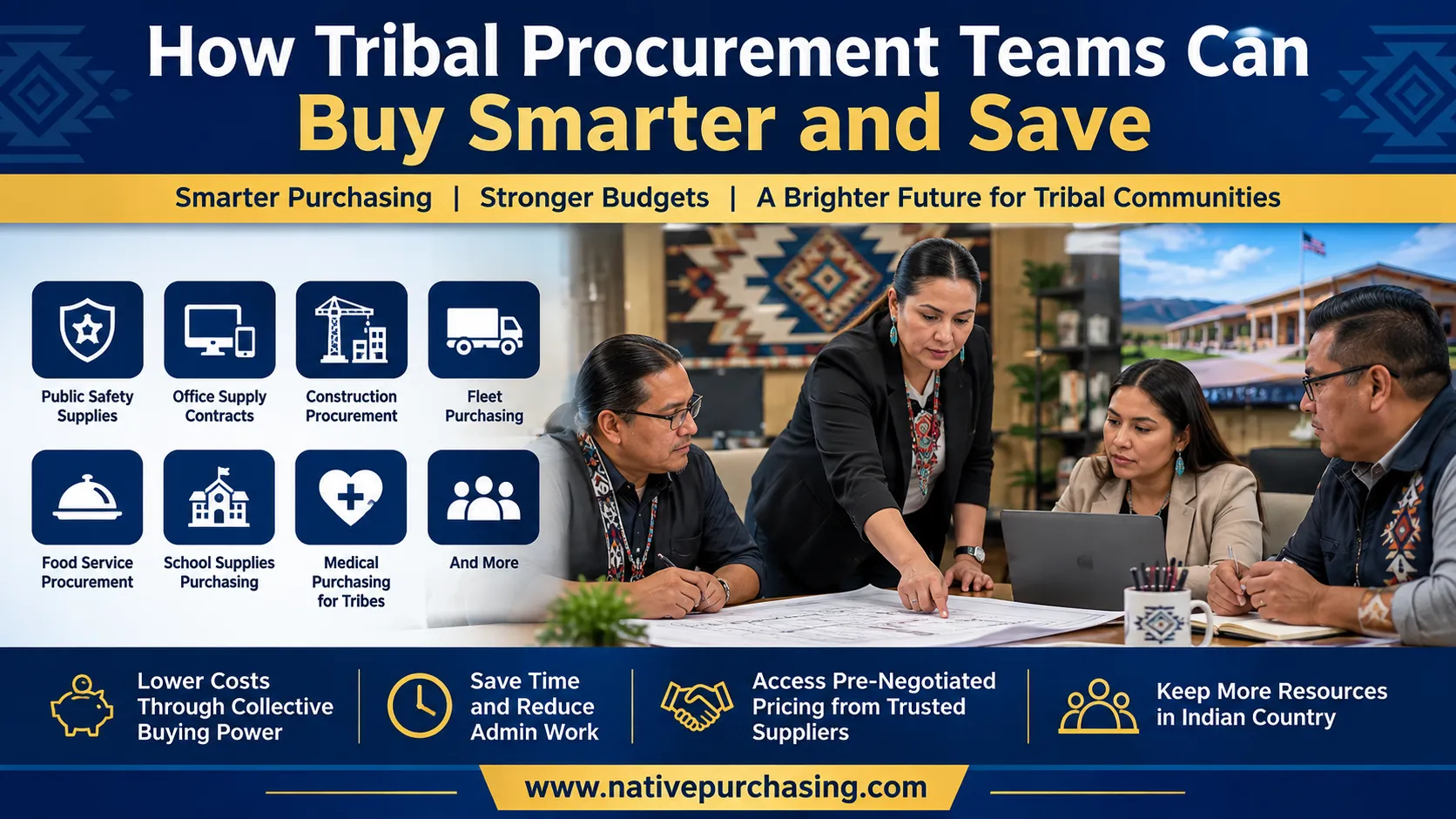
Cooperative purchasing offers another approach. Instead of every department starting from zero, organizations can use established purchasing contracts and supplier relationships to simplify recurring procurement. Native Purchasing Group, for example, provides cooperative purchasing solutions across categories including fleet, public safety, education, healthcare, technology, construction, food, and office supplies.
The objective is not simply to buy something at a lower price.
It is to make the purchasing process itself more efficient.
Procurement Is Connected to Service Delivery
One of the easiest mistakes in procurement is to measure success only by the purchase price.
A department may save $500 on a purchase and still experience a much larger operational cost if the purchasing process takes months, creates unnecessary administrative work, or delays a critical program.
Think about a tribal school preparing for a new academic year.
The purchasing team may need classroom supplies, furniture, computers, networking equipment, administrative supplies, and other resources. Delays in any of these areas can create problems for educators and students.
Modern tribal education procurement therefore involves much more than ordering classroom supplies. It can include technology, furniture, operational products, administrative resources, and multi-location purchasing.
That is why procurement should be viewed as part of operational planning.
The question is not simply:
“How much did we pay?”
It is also:
“How much time did it take?”
“How much staff effort was required?”
“Did the purchase arrive when the program needed it?”
“Was the purchasing process properly documented?”
“Could we have used an existing contract instead?”
Those questions reveal the real cost of procurement.
The Fleet Example: The Vehicle Is Only the Beginning
Fleet purchasing provides an excellent example of why procurement decisions have consequences beyond the original purchase.
Buying a vehicle is rarely the only expense associated with operating a fleet.
There are replacement parts, tires, maintenance equipment, shop tools, fuel management, safety equipment, tracking technology, service facilities, and eventually another vehicle replacement cycle.
A procurement strategy that considers only the initial vehicle purchase misses much of the lifecycle.
For tribal governments, fleet operations can support public works, utilities, transportation programs, emergency response, administrative functions, and community services. That makes reliable transportation an operational requirement rather than simply an asset-management issue.
A more coordinated approach can help organizations plan vehicle acquisition, maintenance purchasing, supplier relationships, and replacement cycles together.
This is where tribal fleet purchasing solutions can become part of a broader procurement strategy rather than being treated as a standalone purchasing activity.
Public Safety Leaves Even Less Room for Procurement Delays
Public safety provides another example where procurement efficiency can have operational consequences.
Police departments, emergency response teams, fire services, and other public safety programs depend on equipment being available when it is needed.
That can include emergency response supplies, PPE, communication technology, medical response equipment, traffic safety products, vehicles, facility resources, and other operational equipment.
A lengthy purchasing process does not automatically mean a department is being more responsible with taxpayer or program dollars.
There is a difference between careful procurement and unnecessarily slow procurement.
Good procurement creates a documented, transparent process while allowing departments to obtain what they need within a reasonable timeframe.
Cooperative purchasing can help by providing access to established supplier contracts rather than requiring procurement staff to recreate the entire sourcing process for every recurring purchase.
The Question Every Procurement Team Should Ask
Before starting another solicitation, procurement teams should ask one simple question:
“Has someone already done this work?”
That question can save a surprising amount of time.
If an organization needs a commonly purchased product or service, there may already be a cooperative contract that meets its requirements.
That does not mean every purchase should automatically move through a cooperative contract. Unique services, highly specialized projects, or purchases requiring specific local expertise may still require a separate procurement process.
But recurring purchases deserve a different conversation.
If the same type of purchase happens repeatedly, rebuilding the sourcing process from scratch each time may not be the most efficient use of procurement resources.
This is one reason pre-negotiated contracts can reduce the hidden costs of doing your own bids.
The real cost of a bid is not limited to the vendor's final price.
It can include staff hours, solicitation preparation, vendor communication, evaluation, approvals, documentation, contract administration, and the time departments spend waiting for the process to finish.
Compliance Should Be Built Into the Process
Efficiency cannot come at the expense of compliance.
For tribal organizations using federal funds or operating under specific procurement requirements, documentation matters.
A procurement file should tell a clear story.
What was being purchased?
What policy or authority governed the purchase?
What market research was performed?
Which vendors were considered?
How were responses evaluated?
Why was the final vendor selected?
For purchases involving Buy Indian preference, the documentation becomes especially important.
A procurement team may have made a reasonable effort to identify Indian-owned businesses, but if that effort is not documented, an outside reviewer may not be able to see what happened.
A strong procurement file therefore does more than contain a purchase order and invoice. It provides evidence of the decision-making process.
For a practical framework, tribal procurement teams can review this Buy Indian Preference audit documentation checklist, which covers market research, vendor evaluation, written determinations, ownership documentation, and organizing the procurement file.
The broader lesson is simple:
Do the compliance work once, document it clearly, and make the documentation easy to retrieve.
Procurement Teams Should Think in Systems, Not Transactions
Another common challenge is treating every purchase as an isolated event.
A better approach is to look for patterns.
For example:
A tribal school buys technology.
The public safety department buys radios and communication equipment.
The fleet department purchases vehicles and maintenance supplies.
The health department purchases medical products.
The administration purchases office equipment.
Individually, these appear unrelated.
From a procurement perspective, they are connected by the same fundamental questions:
- Who is supplying the products?
- What purchasing agreements are available?
- Are departments receiving consistent pricing?
- How much staff time is required?
- Are purchases being documented consistently?
- Can existing contracts be used?
- Are departments duplicating work?
- Is purchasing aligned with tribal policies?
Once procurement teams begin looking across departments, opportunities for consolidation become easier to identify.
That does not necessarily mean every department should buy from the same vendor.
It means the organization should have a deliberate reason for how purchasing decisions are made.
The Bigger Opportunity Is Staff Capacity
One of the most overlooked benefits of procurement efficiency is what happens to the time that is saved.
Procurement professionals are not just paperwork processors.
They can help departments forecast demand, negotiate strategically, analyze spending, monitor contracts, improve supplier performance, strengthen compliance, and identify opportunities for savings.
But those activities require time.
If procurement staff spend most of their week recreating solicitations for routine purchases, they have less time available for strategic work.
That is where cooperative purchasing can change the role of procurement.
Instead of asking:
“How quickly can we complete this bid?”
The team can start asking:
“How can we improve purchasing across the organization?”
That is a much more valuable question.
A Better Procurement Strategy Does Not Have to Be Complicated
Improving tribal procurement does not necessarily require replacing an organization's entire purchasing system.
Start with the purchases that happen repeatedly.
Look at the categories that consume the most staff time.
Identify purchases where multiple departments are buying similar products independently.
Review how often procurement teams are repeating the same market research.
Look for categories where cooperative contracts could simplify the process.
Then evaluate whether those contracts fit the organization's procurement policies and specific purchasing requirements.
The goal is not to eliminate procurement.
It is to eliminate unnecessary repetition.
For tribal organizations interested in education purchasing specifically, tribal education procurement solutions can support classroom supplies, educational technology, furniture, administrative products, facilities, and other recurring needs.
For public safety departments, procurement planning can encompass emergency response supplies, communication systems, fleet resources, safety equipment, and operational products.
For fleet departments, the same principle applies across vehicles, maintenance products, fuel management, safety equipment, and transportation resources.
The Future of Tribal Procurement Is More Strategic
The strongest procurement organizations are not necessarily the ones processing the most purchase orders.
They are the ones helping leadership answer better questions.
Where are we spending?
Why are we spending it?
Are we getting consistent value?
How much administrative time does each purchasing method require?
Are we documenting decisions properly?
Which purchases should be competitively solicited independently?
Which purchases could be handled through an existing cooperative contract?
And perhaps most importantly:
What could our procurement team accomplish if routine purchasing took less time?
Those questions move procurement from an administrative function into a strategic one.
For tribal organizations, that shift can have a meaningful impact because purchasing supports nearly every part of the organization, from education and healthcare to public safety, transportation, infrastructure, and daily administration.
Native Purchasing Group was created around this idea: tribal organizations can use collective purchasing power and cooperative contracts to simplify procurement across multiple categories. Its membership model provides tribal organizations access to its purchasing network and contract resources.
Organizations interested in exploring whether cooperative purchasing fits their procurement strategy can learn more about becoming a Native Purchasing Group member.
The most important procurement decision may not be which vendor wins the next bid.
It may be deciding which purchasing processes are worth repeating at all.
When tribal organizations begin looking at procurement through that lens, purchasing becomes more than a back-office function.
It becomes a tool for protecting staff time, strengthening operational planning, supporting compliance, and making every purchasing dollar work harder.
Frequently Asked Questions
What is the importance of procurement in tribal government operations?
Procurement plays a crucial role in tribal government operations as it influences the efficiency of various departments and their ability to deliver essential services. Effective procurement helps ensure that departments receive the necessary resources on time, ultimately supporting areas like education, public safety, and infrastructure.
How can cooperative purchasing benefit tribal organizations?
Cooperative purchasing allows tribal organizations to leverage established contracts and supplier relationships, streamlining the procurement process. This approach reduces administrative burdens, minimizes duplicate purchases, and can lead to better pricing and efficiency across multiple departments.
What should procurement teams consider when evaluating purchases?
Procurement teams should assess not just the purchase price but also factors like the time taken for procurement, administrative effort involved, and whether existing contracts could be utilized. This holistic view helps identify hidden costs and enhances operational efficiency.
Why is compliance documentation important in procurement?
Compliance documentation is essential for maintaining transparency and accountability, especially when using federal funds or adhering to specific procurement regulations. A well-documented procurement file provides a clear narrative of the purchasing process and supports compliance with policies like Buy Indian preference.
How can tribal organizations improve their procurement strategy?
Improving procurement strategy involves identifying frequently purchased items, reducing redundant processes, and considering cooperative contracts for recurring purchases. Organizations should focus on streamlining operations rather than overhauling their entire procurement system.
What is the connection between procurement and service delivery?
Procurement directly impacts service delivery by ensuring that departments have the resources they need when they need them. Delays or inefficiencies in procurement can hinder operations, leading to broader consequences for public services and community support.
How can tribal procurement teams shift their focus from transactions to strategic planning?
Tribal procurement teams can shift their focus by analyzing purchasing patterns across departments and asking strategic questions about spending and efficiency. This shift allows them to identify opportunities for consolidation and more effective procurement processes.






















Sign in to leave a comment.