

For most of the last decade, the accommodation story in regional coastal towns has been about short-term rental platforms. Airbnb reshaped how visitors booked, redistributed housing stock into the tourism economy, and pushed traditional hospitality into a defensive position. That story is now shifting, and the direction of the shift is worth watching.
Data from regional NSW accommodation providers over the past two years shows a measurable move back toward serviced accommodation: boutique hotels, small hotel groups, and hands-on hosted properties. Travellers who spent most of the last decade defaulting to whole-property rentals are choosing serviced options at rates that hospitality analysts didn't expect. Understanding what's driving that shift matters for anyone in the accommodation market, and for travellers making their next booking.

What's Actually Happening
The story isn't that short-term rentals are dying. They aren't. They still hold significant market share, particularly in longer stays, family bookings, and group travel where the space and self-catering matter. The story is that the two-to-three-night couple booking, which was the sweet spot short-term rentals owned for years, is quietly moving back to serviced accommodation.
Several factors are converging. Cleaning fees on short-term rentals have crept upward and now often add twenty to forty percent to short-stay totals. Minimum-night rules on holiday weekends push guests into stays they didn't want. The variability between listings has grown, and travellers have been burned enough times that the appeal of "it's cheaper than a hotel" no longer offsets the risk of getting a bad one.
At the same time, the serviced accommodation market has quietly improved. Small hotel groups and boutique operators have invested in the room product, the service model, and the digital booking experience. A boutique room booked direct in 2026 is a different product than the equivalent in 2018.
The Fee Problem
Cleaning fees are the single most-cited reason travellers give for moving away from short-term rentals on short stays. A $180 cleaning fee spread across two nights adds $90 to each night's cost. On a $250 nightly rate, that's a thirty-six percent markup that doesn't appear until checkout.
Serviced accommodation doesn't have this problem. The rate you see is the rate you pay, minus taxes, and the servicing is built into the operation rather than charged as a line item.
For holiday apartments in Kiama and similar markets across coastal NSW, this shows up clearly in the booking data. Guests looking for a Friday-to-Sunday stay increasingly reject the total cost of a full-property rental in favour of a hotel suite at a similar all-in price with daily servicing included.
The Trust Deficit
Short-term rentals were sold on trust: verified reviews, consistent standards, and the platform's guarantee if something went wrong. That trust has eroded. The reviews are less reliable than they were. Standards vary wildly from listing to listing. The guarantees exist on paper but rarely deliver in practice when a stay goes sideways.
Serviced accommodation, particularly at the boutique end, restores a version of trust that the platforms have lost. The property is run by a specific operator whose reputation is on the line, guests can call and speak to someone before booking, and if something isn't right during the stay it gets fixed rather than routed through a support ticket.
For travellers making a booking they'll only take once or twice a year, that trust layer is worth paying for.
The Room Product Has Caught Up
For years, one honest advantage of the short-term rental market was that it offered better rooms than most mid-tier hotels. Full apartments, better bathrooms, actual living spaces. Traditional hotels lagged behind because their product was built for business travellers.
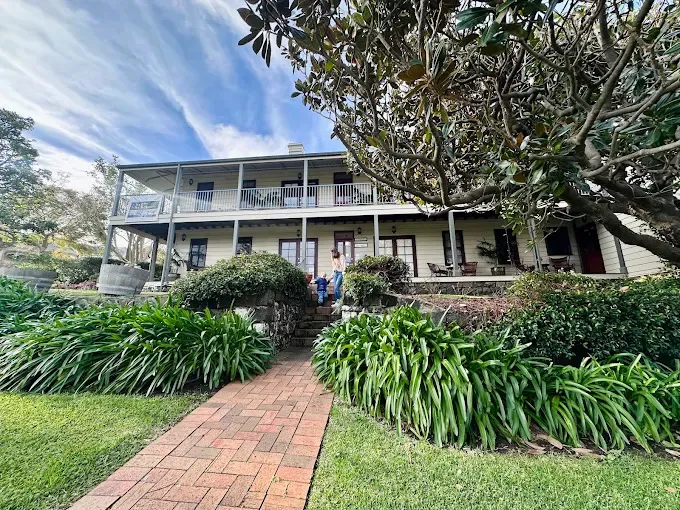
That gap has closed at the boutique end. Modern boutique properties are built for the leisure traveller specifically. The premium suites in Kiama that boutique operators offer now include separated living zones, proper baths, kitchenettes suitable for light self-catering, and design details that reflect the destination rather than a corporate template. The gap between a good short-term rental and a well-designed boutique suite is now much smaller than it was five years ago, and the serviced side comes with hospitality attached.
The Segment Where Short-Term Rentals Still Win
None of this means short-term rentals have lost their market. They still dominate in three segments.
Longer stays past four nights, where the cleaning fee amortises properly and the self-catering starts to matter.
Family and group bookings where multiple bedrooms and shared living space are the point.
Location-specific stays where a particular house, view, or setting is the reason for the trip.
These segments haven't moved and probably won't. The change is happening in the couple's-short-break segment, which is a large enough slice of coastal tourism that the shift is showing up in the overall numbers.
What This Means for Travellers
For anyone booking a two or three-night coastal weekend, the calculation has changed. The reflexive move to a short-term rental listing is no longer the obvious default. Compare the total cost, factor in the servicing, and check the real trade-offs. In many cases the serviced option now wins on price as well as experience.
For coastal towns like Kiama, the shift is producing a healthier accommodation mix. Small-scale boutique operators are viable again. Short-term rentals are settling into the segment where they genuinely serve travellers well. The visitor gets more real options rather than a market skewed heavily in one direction.
The pendulum swung. It's swinging back. That's usually a sign the market is finding a better balance than the one it had a few years ago.
Frequently Asked Questions
Are short-term rentals still worth booking?
For longer stays, family trips, and group bookings, yes. For couples on a two or three-night short break, serviced accommodation now often wins on total cost and experience.
Why do cleaning fees on short-term rentals seem to keep rising?
Platform commission structures, insurance costs, and rising cleaning labour rates have all pushed fees up. Hosts also use fees to increase revenue without raising the headline nightly rate that appears in search results.
What's the difference between a boutique hotel and a serviced apartment?
A boutique hotel has hotel-style service (daily servicing, front desk, on-site team), typically smaller room count, and a strong design identity. A serviced apartment has apartment-style facilities (kitchen, laundry) with some hotel-style services layered on top.
Do boutique hotels usually charge extra fees?
Fewer than short-term rentals. The nightly rate typically includes servicing, though some properties charge for parking, early check-in, or breakfast as optional add-ons.
Is direct booking better than using a booking site?
For boutique properties, usually yes. Rates are often the same or lower, cancellation policies are more flexible, and small extras are easier to arrange when dealing with the operator directly.
What's the best all-in price to compare when choosing between options?
The total cost including cleaning fees, service fees, taxes, and any resort fees. Comparing nightly rates alone consistently understates the true cost of short-term rentals on short stays.
Is this trend showing up outside coastal NSW?
Yes. Similar patterns are being reported across regional Victoria, coastal Queensland, and inland wine and food destinations. The shift appears to be structural rather than region-specific.






















Sign in to leave a comment.