

The price of ready-made exchange software is only one line in a cryptocurrency exchange budget. A usable business also requires deployment, security review, wallet operations, market liquidity, support, compliance work, and ongoing maintenance. Ignoring these expenses can turn an attractive starting quote into an unrealistic launch plan.
Anyone comparing Binance clone script development options should begin by separating the software purchase from the cost of operating the exchange.
Understand what the quoted price covers
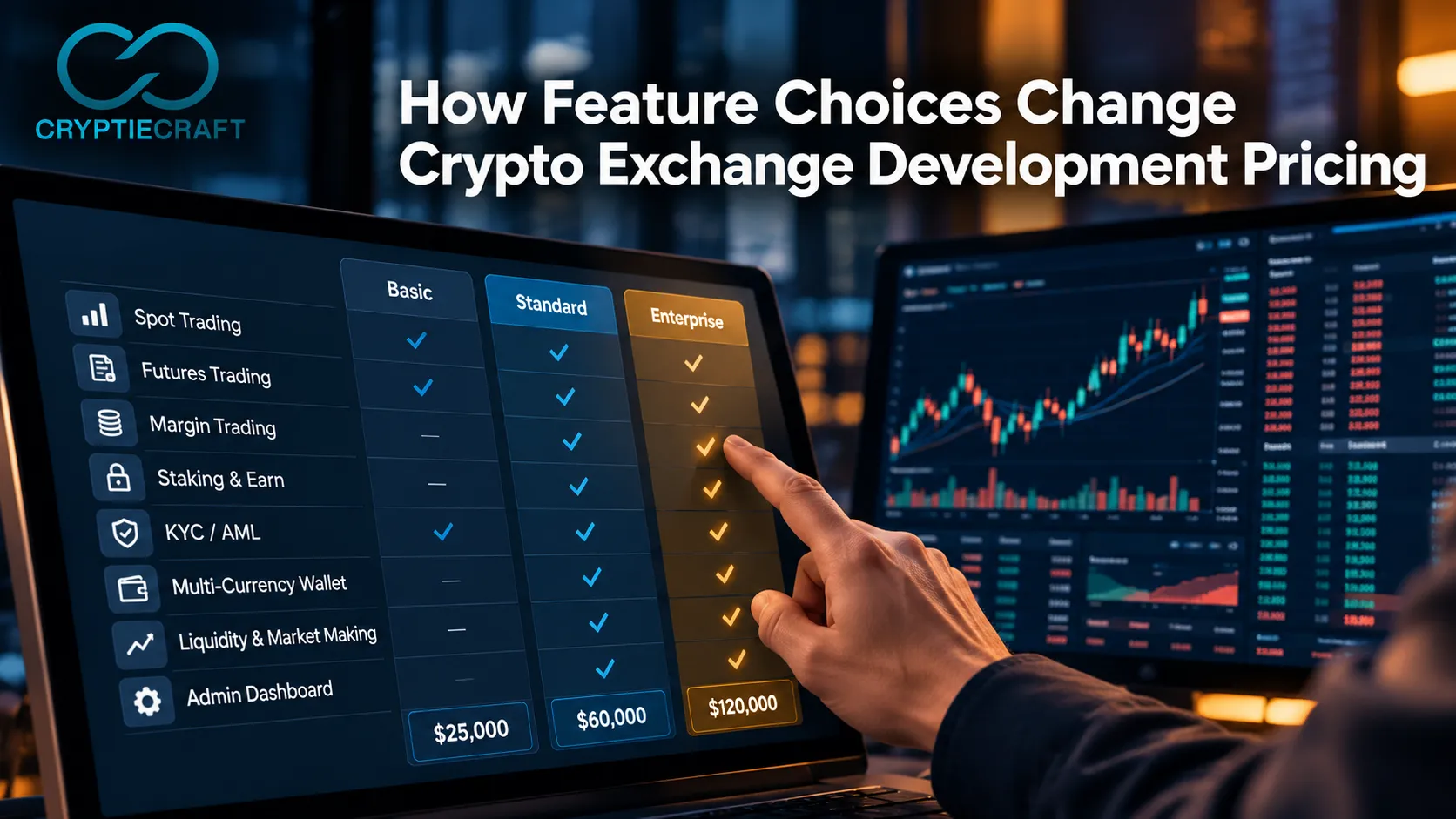
A base package might include a web trading interface, matching engine, wallet module, standard security features, and an admin dashboard. It may not include every integration or modification the buyer expects.
Before accepting a quotation, document supported trading types, networks, deployment environments, source-code rights, mobile apps, language options, and support terms. Ask which items are included, which require configuration, and which are billed as custom work.
Cryptiecraft publishes a starting price of $5,000 for its Binance clone script, but the final implementation cost depends on scope. That figure should be treated as a vendor-specific starting point, not an estimate for every complete exchange launch.
Budget for third-party services
Trading platforms may need market-data connections, liquidity relationships, identity verification, transaction monitoring, messaging, cloud infrastructure, and fiat payment services. Providers can charge setup fees, subscriptions, transaction fees, or usage-based costs.
Some services require commercial approval or contractual onboarding. Their availability can depend on geography, trading products, and the business's compliance status. A planned feature is not necessarily ready for use merely because an API integration is technically possible.
For a Binance exchange script, a detailed cost review should map each requested feature to its software component, outside provider, operating owner, and recurring expense.
Include security and operational spending
Security testing, logging, monitoring, recovery exercises, key management, and incident response all create cost. These tasks are not optional finishing touches when the platform handles customer assets.
Customer support needs staffing and procedures for missing deposits, withdrawal delays, account recovery, and trade disputes. Finance teams need reconciliations. Technical teams need patch management and observability. Legal and compliance advice may also be required before particular services can be offered.
Plan a phased release
A smaller spot exchange with a defined group of assets can be easier to test and support than a launch that includes futures, P2P, staking, and copy trading at once. Additional modules should be justified by expected customer demand and the ability to operate them responsibly.
Compare quotes using the same requirements checklist. Otherwise, a lower proposal may simply exclude work another provider includes.
Ask who owns the work after delivery
The budget should specify whether the buyer receives source code, deployment instructions, tests, design assets, and rights to modify the application. Confirm the period and scope of bug-fix support, the process for requesting enhancements, and any fees for future upgrades. Third-party code and data services may carry separate license obligations. These details affect hiring, vendor changes, and long-term maintenance. A platform that can be inspected and operated by the customer's own technical team offers a different risk profile from one that remains entirely dependent on a single supplier.
Measure investment beyond the launch date
The first release is only the beginning. Listing new assets, improving liquidity, fixing defects, maintaining mobile compatibility, and responding to changing compliance needs all require continuing resources.
A sensible budget combines one-time implementation costs, recurring vendor charges, internal operating expenses, and contingency reserves. The cheapest codebase may not offer the lowest long-term cost if routine changes require extensive rework. Clear scope, ownership, and support agreements are more useful than a launch price viewed in isolation.
















Sign in to leave a comment.