

Imagine running a small business where customer messages keep piling up, sales forecasts are often wrong, and staff spend hours on routine tasks. You know your team can do better, but hiring more people is not always possible. You need practical ways to save time and make better decisions. This is where AI Products can help. From answering customer questions to spotting patterns in sales data, artificial intelligence offers useful ways to solve everyday business problems. The right tools can reduce manual work, improve service, and help teams focus on important tasks. The key is choosing technology that fits your goals, budget, and daily operations.
Why Are AI Products Becoming Essential for Modern Businesses?
Businesses are adopting artificial intelligence to handle repetitive tasks, study large datasets, and improve daily decisions. These tools help teams work faster while leaving important judgments to people.
Artificial intelligence products include chatbots, forecasting software, data analysis platforms, and intelligent automation tools. They use machine learning and language processing to complete specific tasks. For example, a retailer can predict stock needs, while a support team can answer common customer questions automatically.
The growing interest in AI-powered solutions comes from their ability to address practical business challenges. Companies can start with one task and expand when the results meet their expectations.
How Are Smarter AI Tools Changing Everyday Business Operations?
AI tools are changing business operations by reducing manual work, organising information, and helping teams respond to customers more quickly.
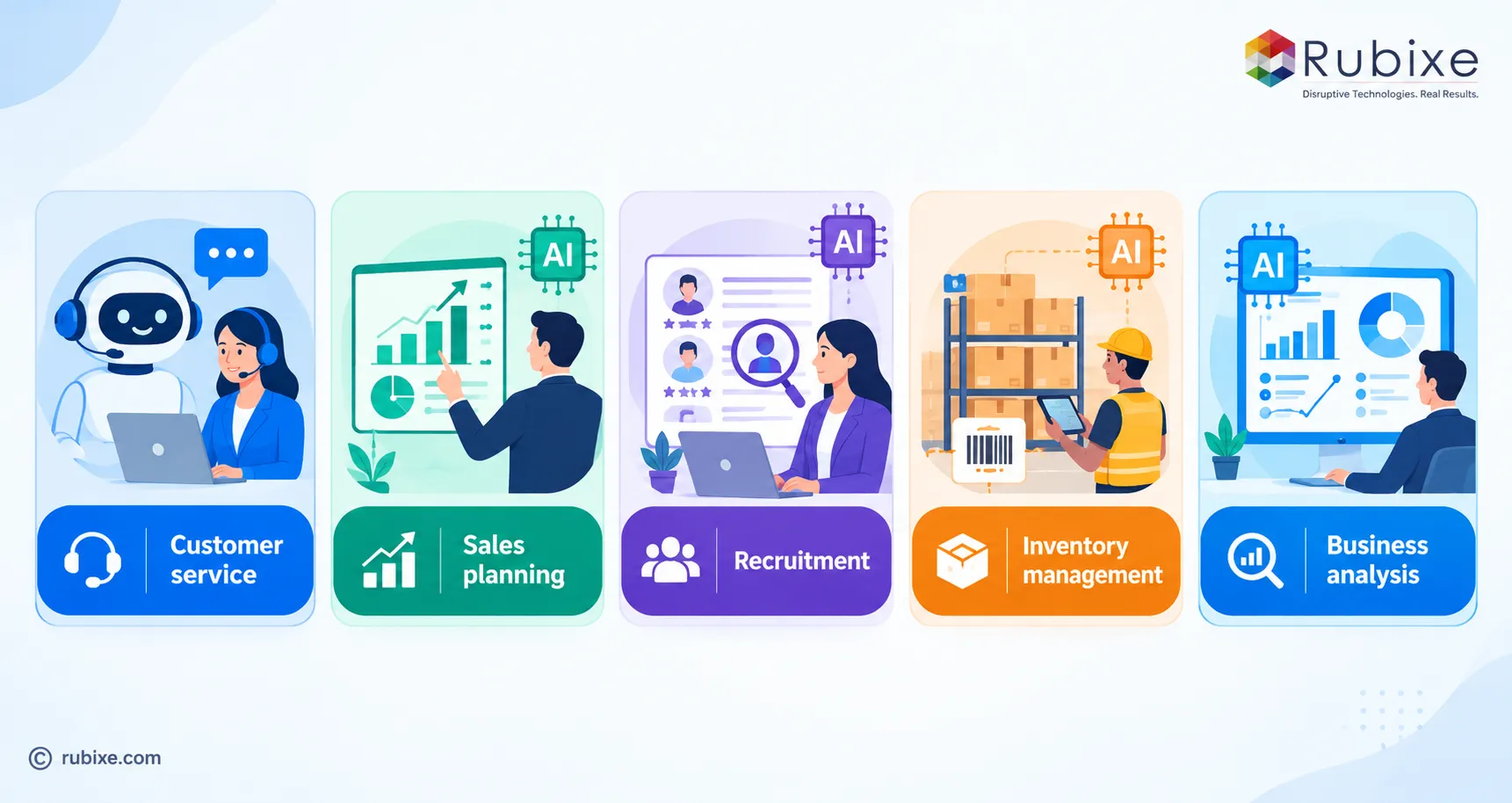
Common examples include:
- Customer service: AI chatbots answer routine questions and direct complex requests to staff.
- Sales planning: Machine learning applications analyse past sales and estimate future demand.
- Recruitment: AI hiring software helps organise applications and identify relevant candidate skills.
- Inventory management: Predictive tools help businesses plan stock levels and reduce waste.
- Business analysis: AI-based software identifies patterns that may support better decisions.
These applications show how intelligent software can support different teams. The results depend on data quality, system accuracy, and how well each tool fits existing workflows.
Which AI Solutions Deliver the Most Value to Businesses?
The most valuable AI solutions address a clear business need and produce measurable results. Companies should focus on useful outcomes rather than the number of tools they adopt.
For small businesses, customer support automation or sales analysis may be a practical starting point. Larger companies may need AI software for enterprises that connects data across departments.
Before selecting a tool, businesses should compare its cost, features, security, and compatibility with existing systems. They should also track results such as time saved, fewer errors, customer satisfaction, and operating costs.
What Does Industry Research Reveal About AI's Business Potential?
A 2023 report by McKinsey Global Institute estimated that generative AI could add $2.6 trillion to $4.4 trillion in annual economic value across 63 use cases. This estimate highlights the potential impact of AI across customer operations, marketing, sales, software development, and research. The figure represents potential economic value, not guaranteed savings for individual businesses.
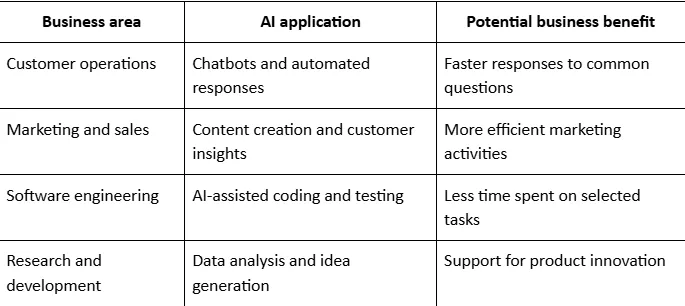
This research shows why businesses are exploring AI-powered solutions. Actual results depend on the use case, implementation costs, data quality, and how well each tool fits the company's needs.
The best AI products for businesses are those that support specific goals and offer value over time. A short trial can help teams understand whether a tool suits their daily needs.
How Are Different Industries Putting AI to Work?
Businesses across industries use AI technology solutions to improve services, manage operations, and make informed decisions.
- AI in Chatbots: Answers common customer questions and helps support teams respond faster.
- AI for Hiring: Helps recruitment teams sort applications and identify suitable candidates.
- AI in Manufacturing: Supports quality checks, equipment monitoring, and production planning.
- AI in Retail: Helps retailers forecast demand, study buying patterns, and manage inventory.
These applications show that AI can serve many business functions. The right choice depends on industry needs, available data, and the challenges a company wants to address.
What Makes an AI Product Worth Investing In?
A worthwhile AI product solves a real problem, fits the company budget, and delivers results that teams can measure.
Businesses should review several factors before making a decision:
- Accuracy: Does the tool provide reliable results?
- Security: Does it protect customer and company information?
- Integration: Can it work with current business software?
- Usability: Can employees learn to use it without difficulty?
- Scalability: Can it support future business needs?
These checks help companies compare AI solutions for companies without relying on marketing claims alone. Human review is still necessary when decisions affect customers, employees, or sensitive information.
How Can Businesses Turn AI Technology into Real Results?
Businesses can gain more value from AI by starting small, testing performance, and improving the system based on real feedback.
AI product development usually begins with a clear problem. Teams then prepare suitable data, select a technical approach, test the software, and review its performance. A pilot project can reveal problems before a company expands the solution.
For example, a business may first automate common customer questions. Once the system performs reliably, the team can consider adding more features.
Rubixe, an innovative AI solution provider, offers AI-focused services for businesses exploring practical technology applications. The Rubixe blog provides further reading on artificial intelligence and business technology.
What Should Businesses Know Before Adopting AI Products?
Businesses should check data quality, privacy, accuracy, and employee readiness before introducing AI tools. These steps help reduce risks and set realistic expectations.
Poor data can lead to incorrect results, while weak security practices can expose sensitive information. Employees should understand the system's limits and know when to verify its output.
Companies should set clear rules for data access and keep human oversight for important decisions. Regular reviews can help identify errors and show whether the tool continues to meet business needs.
Frequenly Asked Questions:
Which AI Products Are Useful for Small Businesses?
Small businesses can start with chatbots, writing assistants, appointment scheduling tools, and sales analysis software. The right option depends on their budget and daily workload.
Can AI Products Help Businesses Reduce Operating Costs?
Yes. AI tools can reduce repetitive work and help teams use time more effectively. Actual savings depend on setup costs, accuracy, and how the software is used.
How Do Businesses Choose the Right AI Tools?
Businesses should compare features, pricing, security, ease of use, and compatibility with current systems. A trial can help confirm whether the tool meets their needs.
Can AI Tools Work Without Advanced Technical Knowledge?
Yes. Many AI tools have simple interfaces and ready-made features. Custom solutions may require developers or AI specialists for data preparation and system integration.
Businesses do not need to adopt every new technology to stay competitive. They need tools that solve real problems and support their goals. AI Products can help companies improve daily operations, understand customer needs, and make better use of their resources. By choosing carefully and measuring results, businesses can build a practical path towards smarter, more efficient work.























Sign in to leave a comment.