

Australian manufacturing is evolving as businesses increasingly look for fabrication methods that offer precision, flexibility, and greater freedom in design. Modern projects are no longer limited to straightforward shapes or standardised components. Engineers, architects, manufacturers, and fabricators are working with increasingly detailed designs that require accurate profiles and reliable production outcomes. This growing demand for customised components has created greater interest in Waterjet Cutting, a technology capable of producing intricate shapes across a wide range of materials while offering an alternative to conventional thermal cutting techniques.
The Growing Demand for Custom Fabrication
Custom fabrication has become an important part of many modern manufacturing environments because standard components do not always satisfy specialised project requirements. Businesses may need one-off components, replacement parts, prototypes, decorative profiles, machinery elements, or custom structural pieces created to specific dimensions. Instead of modifying an existing product to suit a project, manufacturers can produce a component around the actual requirements of the application.
This shift has increased the importance of fabrication equipment that can accommodate complex designs without making the manufacturing process unnecessarily complicated. Waterjet Cutting provides a flexible approach because cutting paths can be generated from digital designs, allowing detailed profiles, openings, curves, and unusual shapes to be produced with controlled precision. This makes the technology relevant to both small customised jobs and larger fabrication requirements.
How Waterjet Technology Works
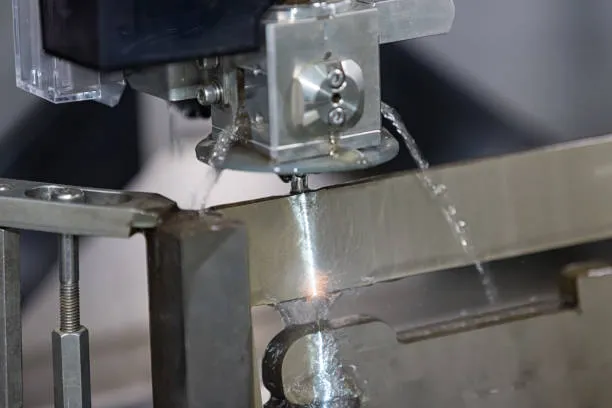
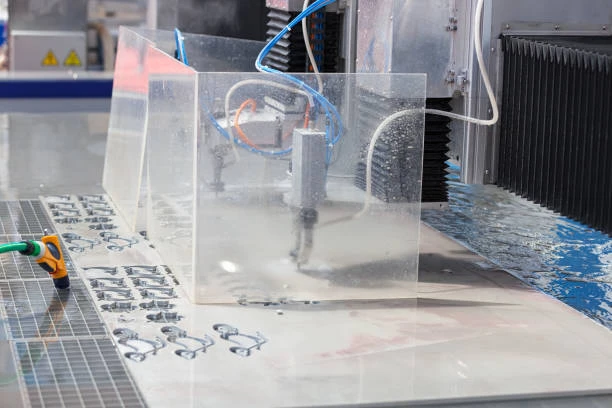
The basic principle behind waterjet cutting is remarkably direct. A highly pressurised stream of water is forced through a small nozzle to create a concentrated cutting jet. For harder materials, an abrasive medium can be introduced into the stream to increase its cutting capability. The resulting jet can progressively cut through suitable materials along a programmed path.
One of the defining characteristics of Waterjet Cutting is that it is primarily a cold-cutting process. Unlike methods that depend on intense heat to melt or separate material, waterjet technology uses mechanical force to perform the cut. This can be particularly useful in applications where manufacturers want to minimise heat-related effects on the material and maintain the intended characteristics of the component.
Greater Freedom for Designers and Engineers
The availability of advanced digital design tools has changed the relationship between design and manufacturing. Computer-aided design allows professionals to create extremely detailed component profiles before fabrication begins. These designs can then be translated into machine instructions, creating a connection between the digital model and the physical component.
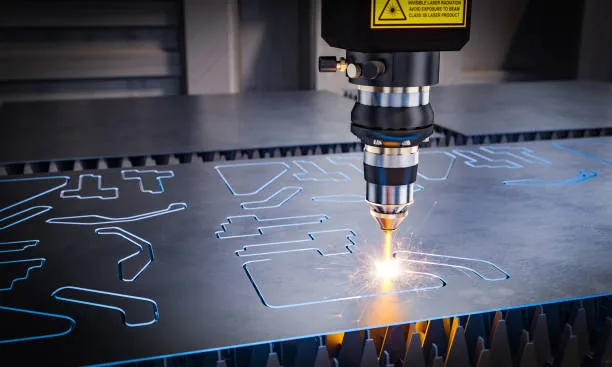
This integration provides greater creative freedom. Designers are not necessarily restricted to basic rectangles, circles, or straight cuts. Intricate contours, internal apertures, artistic patterns, and customised geometries can be incorporated into a project according to its functional or aesthetic requirements. Waterjet Cutting can support this level of design flexibility, making it an attractive option for projects where conventional cutting techniques may require multiple stages of processing.
Versatility Across Different Materials
Another factor driving interest in waterjet technology is material versatility. Depending on the machine, setup, and cutting requirements, waterjet processes can be used for materials such as stainless steel, aluminium, mild steel, stone, glass, ceramics, composites, rubber, and other specialised substrates.
This broad material compatibility can simplify fabrication planning for businesses working across different industries. A workshop may handle engineering components one day and architectural or decorative materials the next. Instead of depending exclusively on several specialised cutting processes, Waterjet Cutting can provide a versatile option for producing a broad range of profiles.
For custom fabrication, this flexibility can be especially valuable. Projects often involve materials selected for their structural characteristics, appearance, durability, or application-specific performance. Having a cutting method capable of handling different substrates allows the fabrication process to adapt more easily to those choices.
Reducing Heat-Related Material Concerns
Heat can be an important consideration in fabrication. Certain thermal cutting techniques introduce substantial temperatures into the material, which can affect areas around the cut depending on the substrate and application. Potential issues may include thermal distortion, changes in surface appearance, or the need for additional processing.
Because Waterjet Cutting does not rely on the same intense thermal action, it can be useful when heat exposure is undesirable. The cold-cutting nature of the process makes it suitable for applications where preserving the material around the cutting path is an important consideration. This does not mean every project will require waterjet technology, but it gives manufacturers another practical option when evaluating fabrication methods.
Supporting Prototypes and One-Off Components
Custom manufacturing frequently begins with an idea that has not yet been produced. Prototypes allow engineers and designers to examine dimensions, fit, functionality, and appearance before progressing to larger production quantities. A fabrication method that can accommodate rapid design changes can therefore be useful throughout product development.
With digitally controlled Waterjet Cutting, modifications to a design can often be incorporated into the cutting path without requiring an entirely new physical tooling arrangement. This can make the method suitable for prototype work, replacement components, experimental designs, and customised production. The ability to move from digital concept to physical part provides manufacturers with a practical connection between design development and real-world testing.
Improving Production Flexibility
Modern manufacturing often involves changing requirements. Customers may request different dimensions, new shapes, alternative materials, or smaller production runs. Businesses therefore need fabrication processes that can accommodate variation without causing excessive disruption.
Waterjet Cutting supports this type of flexibility by relying on programmable cutting paths. Instead of designing a dedicated cutting tool for every new profile, manufacturers can work from digital specifications. This can be particularly useful for businesses involved in custom fabrication, where no two projects are necessarily identical.
The ability to handle design variation can also help fabricators work across multiple industries. Architectural firms may require decorative panels, engineers may need machine components, and manufacturers may require specialised brackets or plates. A versatile cutting process can help accommodate these different requirements within a single fabrication environment.
The Role of Stressfree Waterjet in Modern Fabrication
As demand for customised manufacturing grows, choosing an experienced fabrication partner becomes an important part of the process. Stressfree Waterjet supports projects where precise cutting, detailed profiles, and material versatility are essential considerations. By working with digital designs and specialised waterjet technology, the company can assist with a range of custom fabrication requirements.
The value of a professional provider extends beyond operating the machinery. Understanding material characteristics, interpreting designs, selecting appropriate cutting parameters, and maintaining careful quality control all contribute to the final result. For projects involving complex geometries or specialised materials, these considerations can be just as important as the cutting technology itself.
Waterjet Cutting and the Future of Australian Manufacturing
Australian manufacturing is increasingly characterised by customisation, specialised production, and integration between digital design and physical fabrication. Businesses are looking for ways to create components that are not only accurate but also tailored to specific applications. This environment creates opportunities for technologies that provide both precision and adaptability.
Waterjet Cutting fits naturally into this changing landscape because it combines programmable fabrication with broad material compatibility and the ability to produce highly detailed profiles. It can support industries ranging from engineering and construction to architecture, interior design, manufacturing, and specialised industrial fabrication.
Rather than replacing every established cutting method, waterjet technology adds another capability to the modern fabrication toolbox. Manufacturers can assess each project according to its material, geometry, tolerance, quantity, and finishing requirements before selecting the most suitable process. In projects where intricate designs and minimal thermal influence are important, waterjet cutting can provide a valuable alternative.
Why Customisation Will Continue to Matter
The movement toward customised fabrication is unlikely to disappear as businesses seek products and components designed around increasingly specific requirements. Customers expect greater choice, engineers are developing more sophisticated systems, and designers are exploring forms that may not fit traditional manufacturing templates.
This changing environment makes adaptable fabrication technologies increasingly significant. Waterjet Cutting allows manufacturers to approach complex designs with a high degree of flexibility while working across numerous materials and applications. It can also support the development of prototypes and specialised parts without restricting projects to mass-production models.
For Australian manufacturers, the rise of custom fabrication represents an opportunity to combine creativity with technical accuracy. Companies such as Stressfree Waterjet can play a role in this transformation by providing specialised cutting capabilities for projects that demand carefully controlled, customised fabrication.
Ultimately, the growing use of Waterjet Cutting reflects a broader change in Australian manufacturing: a move toward smarter design integration, greater customisation, material flexibility, and precision-focused production. As industries continue to demand components tailored to specific purposes, advanced cutting technologies will remain an important part of how manufacturers turn complex ideas into finished products.












Sign in to leave a comment.