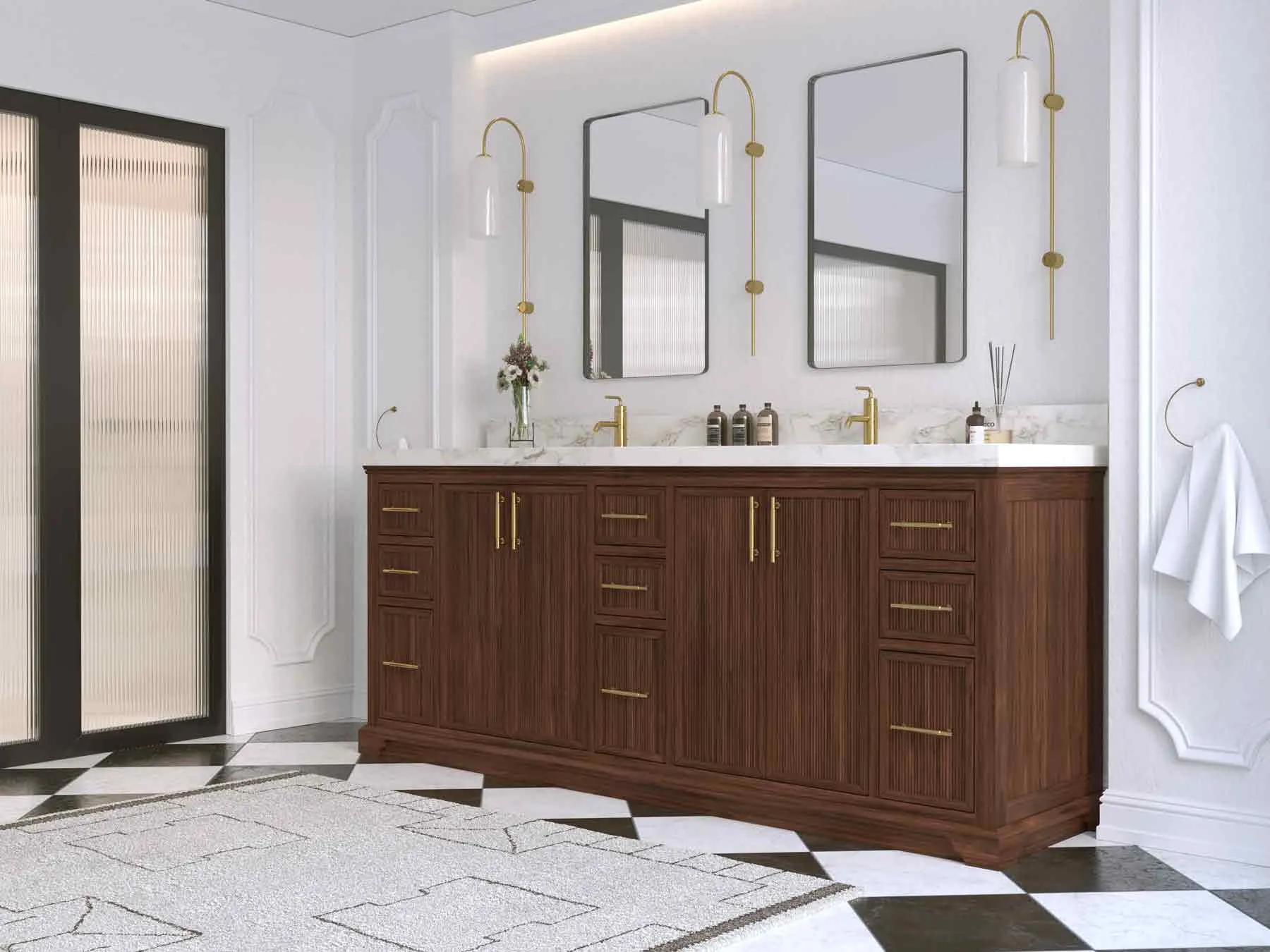

Small bathrooms often present a tough design balance. Homeowners want to create a clean, modern look, but sticking purely to minimal, flat surfaces can leave a compact space feeling cold or uninspired. When floor area is limited, relying on dynamic surface details becomes essential. This need for character without clutter has fueled the popularity of textured wood features, specifically vertical groove woodwork.
Incorporating fluted cabinetry into compact floor plans introduces light-catching architectural dimension that elevates the overall design. The repeating ridges create subtle shadows and highlight warm finishes, instantly transforming standard vanity bases into focal points. Understanding how to select, pair, and style ribbed wood elements helps turn small powder rooms and primary baths into sophisticated, spa-like retreats.
What Is Fluted Cabinetry and Why Is It Trending?
Fluted cabinetry features a series of parallel vertical grooves carved directly across the surface of cabinet doors or drawer fronts. Rooted in classical Greek and Roman column architecture, this technique has transitioned into contemporary residential interiors. Designers frequently choose this style to soften hard bathroom surfaces such as porcelain, stone, and polished glass.
The main appeal of vertical groove furniture comes from its ability to add depth without increasing physical footprints. Unlike bulky decorative molding or raised panels that consume visual breathing room, fluting stays sleek.
The Secret Power of Vertical Lines
Linear design details do incredible visual work in cramped settings. By drawing the eye upward from floor to ceiling, vertical detailing emphasizes vertical height. This simple shift in perspective makes compact powder rooms feel noticeably taller and airier.
Warmth Meets Modern Minimalism
Flat white or gray cabinets dominated bathroom renovations for over a decade, but modern preferences favor tactile, inviting spaces. Fluted wood fronts bridge the gap between mid-century warmth and modern minimalism, bringing natural organic textures into functional, high-moisture rooms.
Key Benefits of Fluted Furniture in Compact Bathrooms
Choosing fixtures for a tight room requires carefully weighing appearance, function, and spatial footprint. Textured wood cabinetry offers several practical advantages for compact layouts:
- Visual trick of height: Continuous vertical lines guide sightlines upward, making standard eight-foot ceilings feel higher.
- Conceals everyday wear: The play of light and shadow across shallow ridges naturally disguises minor water spots, fingerprints, and smudges better than high-gloss flat doors.
- Adds warmth without bulk: Deep wood tones like natural oak, teak, or walnut bring organic richness that keeps small rooms from feeling sterile.
- Complements existing tile: The gentle repeating rhythm pairs effortlessly with subway tile, large-format stone slabs, and terrazzo flooring without visual clashing.
How to Choose the Right Fluted Vanity for Small Spaces
Selecting the right piece involves matching your room layout with the proper installation style, width, and finish.
Floating Wall-Mounted vs. Freestanding Cabinets
Wall-mounted floating vanities work exceptionally well in small settings. Elevating the cabinet base off the floor exposes continuous floor tile underneath, creating the optical illusion of extra square footage. Floating fluted bases offer a light, suspended look that accentuates the textured door fronts.
Freestanding fluted cabinets remain a solid choice when maximizing internal storage space is your top priority. Look for freestanding bases supported by slim metal legs or recessed kick plates to keep the piece from appearing overly heavy.
Ideal Dimensions for Tight Layouts
Standard small vanities range between 24 inches and 36 inches in width. In narrow powder rooms, a 24-inch or 30-inch cabinet provides plenty of functional storage while leaving proper clearance for doorways and plumbing fixtures.
Choosing Finishes and Materials
High-humidity environments demand durable materials. Solid hardwoods such as white oak, teak, or high-grade treated birch perform best against ambient moisture. Light oak finishes reflect available ambient light, making windowless powder rooms feel bright. Darker walnut or painted charcoal finishes deliver dramatic contrast when paired with pale marble tops and soft warm lighting.
Design and Styling Tips for Textured Wood Cabinetry
To ensure your new feature cabinet looks cohesive rather than overwhelming, balance textured surfaces with surrounding materials, hardware, and lighting.
Balance with Smooth Countertops
Because fluted cabinet doors introduce plenty of surface pattern, pair them with smooth, simple countertop surfaces. Solid white quartz, subtle Carrara marble, or understated solid-surface sink tops maintain a clean visual balance. Avoid heavily veined counter slabs that might compete with the linear grooves below.
Hardware and Lighting Choices
Selecting hardware requires thoughtful placement so you do not disrupt the continuous vertical ridges.
- Edge-pull handles: Slim, top-mounted finger pulls preserve clean linear faces without drilling through central grooves.
- Integrated push-latches: Touch-to-open mechanisms eliminate handles entirely, letting the textured wood take center stage.
- Warm directional lighting: Wall sconces positioned at eye level cast gentle side illumination across cabinet fronts, emphasizing the subtle depth and shadow play of the grooves.
Maintenance and Upkeep for Fluted Surfaces
Keeping textured wood cabinet doors clean requires only a few targeted adjustments to your standard bathroom routine.
- Dust regularly: Use a microfiber cloth or soft brush attachment to clear ambient dust or towel lint from the vertical grooves.
- Wipe spills promptly: Microfiber cloths dampened with mild soapy water easily clean water drops before they dry in lower ridges.
- Avoid harsh chemical sprays: Abrasive cleaners can erode protective wood sealants, leading to moisture penetration inside the carved detail.
Frequently Asked Questions
Are fluted bathroom cabinets hard to keep clean?
No, everyday maintenance is straightforward. Cleaning the vertical ridges takes minimal effort when using a soft microfiber cloth along the direction of the grooves. Periodic dusting with a soft brush attachment prevents build-up in the corners.
Do fluted cabinets make a small bathroom look clutter-free?
Yes. The fine vertical pattern adds controlled texture that breaks up plain, flat surfaces. Because the pattern is rhythmic and structured, it creates architectural interest without introducing visual busyness or clutter.
What countertop materials pair best with fluted vanity bases?
Smooth, solid countertops pair best with textured bases. Options like low-vein quartz, seamless acrylic basins, or honed marble provide a crisp contrast that lets the carved cabinet texture stand out.
Transforming Your Small Bathroom Space
Adding architectural texture is one of the most effective ways to design a small bathroom that feels thoughtful, spacious, and upscale. Fluted cabinetry delivers the ideal blend of functional storage and tactile warmth, turning compact layouts into standout spaces.
When exploring premium furniture for your next project, explore the curated selections from Willow Bath and Vanity. Renowned for craftsmanship, durable solid wood construction, and sophisticated designs, their collections bring timeless warmth and character to modern homes.























Sign in to leave a comment.