The ROI of Tax Planning Services for Small Business: A Growth-Stage Perspective

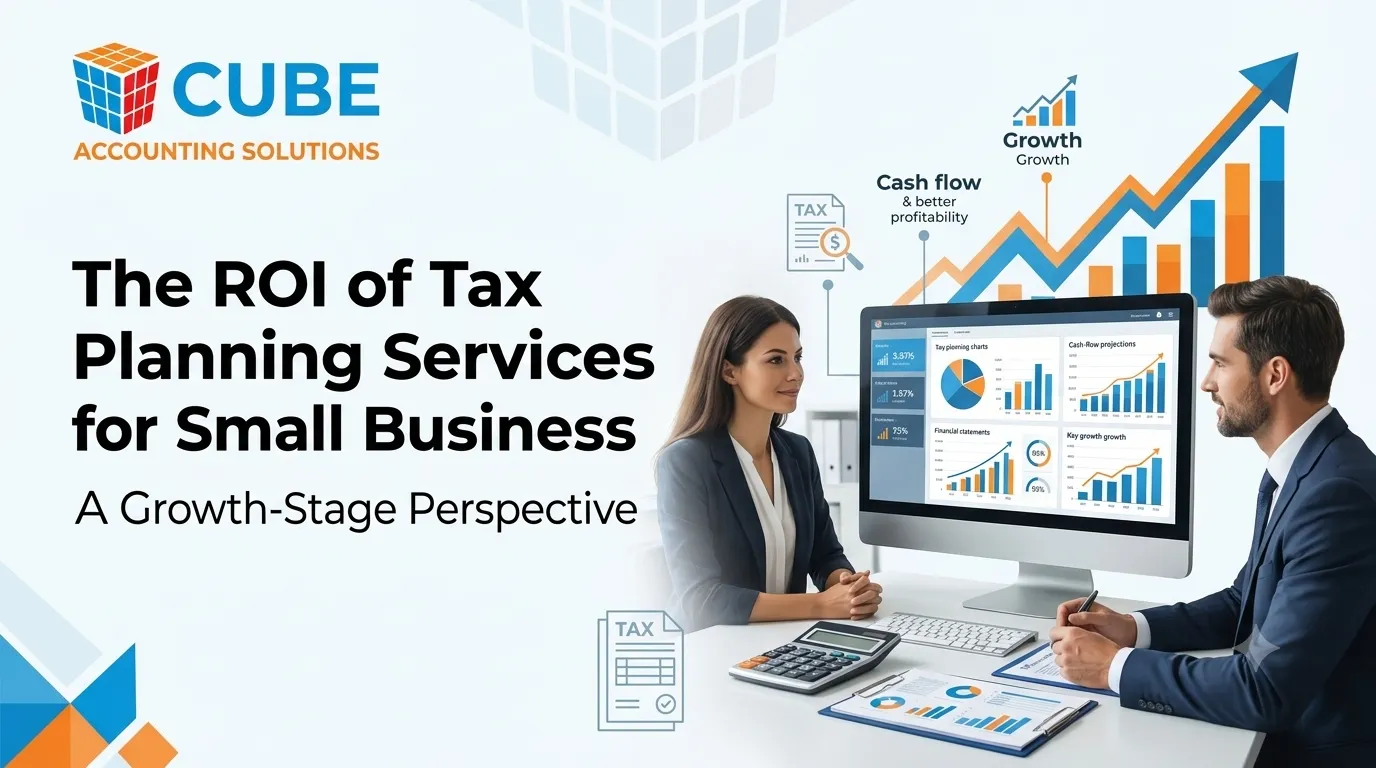
Tax planning is often viewed as a year-end task, but growing businesses have more to consider than simply preparing and filing a return. As revenue increases, expenses change, employees are added, and business decisions become more complex, tax consequences can affect cash flow and profitability throughout the year.
This is where Tax Planning Services for Small Business can become a valuable part of financial management. The return on that investment is not limited to reducing a tax bill. Effective planning can also help businesses improve cash management, prepare for major financial decisions, and avoid costly surprises.
What Does ROI Mean in Tax Planning?
Return on investment in tax planning is not always a simple calculation.
A business might save money through a planning opportunity, but the broader value can include better timing of expenses, improved cash-flow visibility, fewer compliance problems, and more informed business decisions.
For example, suppose a growing company expects significantly higher profits during the current year. Waiting until tax filing season to review the situation may leave limited opportunities to make meaningful changes.
A proactive review gives the business more time to evaluate its options.
The real question is not simply, "How much tax did we save?"
It is also:
"How much better positioned is the business because we planned ahead?"
Why Growth Changes the Tax Planning Equation
Tax planning that worked for a small company in its early stages may not remain appropriate as the business grows.
Growth can introduce:
- Higher revenue and profits
- Additional employees
- New equipment and assets
- Multiple locations
- New states or markets
- Changes in business structure
- Increased contractor expenses
- New financing arrangements
- Larger capital investments
Each change can affect the company's financial and tax position.
As the business becomes more complex, the value of reviewing these changes before decisions are finalized also increases.
Tax Planning Can Help Protect Cash Flow
For a growing business, cash is often more valuable than a theoretical reduction in expenses.
Taxes are a real cash obligation, and unexpected tax payments can disrupt plans for hiring, expansion, inventory, or other investments.
Tax planning allows management to estimate potential liabilities earlier and incorporate them into cash-flow planning.
For example, if projected profits indicate a larger tax obligation than expected, the business can account for that amount while planning its spending and reserves.
This creates fewer surprises and gives management a clearer picture of the cash actually available for growth.
The Value of Planning Before Major Purchases
Growing companies often make significant purchases as they expand.
These might include vehicles, equipment, technology, furniture, machinery, or other business assets.
The timing and structure of those purchases can have financial and tax implications. Making a purchase solely because there may be a tax benefit does not necessarily make good business sense.
A better approach is to consider the entire decision.
Does the company need the asset? Can it afford the purchase? How will it affect cash flow? What are the potential tax consequences? Would purchasing it now or later make more sense?
Tax planning can help bring those questions into the decision-making process before the transaction occurs.
Choosing the Right Business Structure
Business structure can become more important as a company grows.
A business may start with a relatively simple structure and later consider whether a different structure better fits its operations, ownership, profitability, or long-term plans.
There is no universally best structure for every company.
Changing a structure can have legal, tax, administrative, and financial consequences. That is why the decision should be based on the company's broader circumstances rather than a single tax consideration.
For a growing business, periodically reviewing whether the existing structure still makes sense can be an important part of financial planning.
Planning for Higher Profits
Growth is usually a positive development, but higher profits can also create larger tax obligations.
A business that suddenly moves from modest profitability to substantially higher earnings may be surprised by how much its tax position changes.
Waiting until the end of the year can make the situation harder to manage.
Regular reviews can help management understand how current performance is affecting expected tax liabilities. This gives the business more time to adjust financial plans where appropriate.
The goal is not to eliminate taxes. It is to avoid unnecessary surprises and make legitimate planning decisions before deadlines become urgent.
Tax Planning Can Support Hiring Decisions
Hiring is another area where growth-stage businesses should consider the financial impact beyond salary.
Adding employees can affect payroll costs, benefits, payroll taxes, and other expenses. Depending on the business and its circumstances, there may also be tax-related considerations associated with employee benefits, retirement plans, or other compensation arrangements.
A tax professional can help management understand the financial implications before making major hiring decisions.
This does not mean taxes should determine whether a company hires someone. The business need should come first. Tax considerations are simply one part of the overall financial analysis.
Multi-State Growth Can Increase Complexity
Expanding into another state can introduce new tax and compliance considerations.
A business may create additional obligations when it has employees, physical locations, property, or sufficient business activity in another jurisdiction.
The rules can vary significantly depending on the circumstances.
As companies expand geographically, tax planning becomes more important because an issue in one state can affect the company's broader compliance responsibilities.
Growth-stage businesses should consider these issues before expansion rather than discovering them after operations have already begun.
The Cost of Not Planning
It is easy to focus on the potential cost of professional tax planning and overlook the cost of poor planning.
A lack of planning can result in:
- Unexpected tax bills
- Missed planning opportunities
- Poor cash-flow decisions
- Late or inaccurate filings
- Interest and penalties
- Unnecessary administrative work
- Difficult year-end surprises
Not every problem can be prevented. Tax rules are complex, and business conditions change.
However, regular planning can reduce avoidable problems by identifying issues earlier.
Measuring the ROI of Professional Tax Planning
Businesses can evaluate the value of tax planning in several ways.
Direct Tax Savings
The most obvious measure is the amount of tax saved through legitimate planning strategies.
However, this should not be the only metric.
Improved Cash Management
Knowing expected tax obligations earlier can help businesses plan their cash reserves and spending more effectively.
Fewer Compliance Problems
Better organization and proactive reviews can reduce the risk of missed requirements and costly corrections.
Better Business Decisions
Tax considerations can be incorporated into decisions about investments, compensation, financing, expansion, and business structure.
Less Management Time
Business owners spend valuable time dealing with financial administration. Professional support can reduce the amount of time spent trying to interpret complicated tax issues independently.
The combined value of these benefits can be more meaningful than a single tax-saving figure.
When Should a Growing Business Start Tax Planning?
There is no specific revenue level at which every company suddenly needs professional tax planning.
Instead, businesses should consider their level of financial complexity.
Tax planning may become increasingly valuable when a company is:
- Experiencing rapid revenue growth
- Hiring employees
- Making significant investments
- Expanding into additional states
- Changing ownership or structure
- Preparing for financing
- Increasing profitability
- Planning an acquisition or sale
- Managing several revenue streams
The earlier a business identifies a potential issue, the more options it generally has to respond.
Tax Planning Should Work With the Rest of the Financial Strategy
Tax planning should not operate separately from accounting and financial management.
Accurate bookkeeping provides the information needed for tax analysis.
Cash-flow planning helps management understand whether tax obligations can be comfortably funded. Budgeting shows how changes in spending may affect profitability.
This is why growing businesses can benefit from viewing tax planning as part of their broader financial strategy rather than an isolated annual activity.
How Cube Accounting Solutions Supports Growing Businesses
Cube Accounting Solutions provides accounting, bookkeeping, tax, and Fractional CFO services for businesses across the U.S.
Its financial services are designed to help businesses maintain organized financial records, understand their financial position, plan ahead, and make informed decisions as they grow.
For a growing company, bringing accounting and tax considerations into the broader financial conversation can make planning more practical. Instead of looking at tax obligations only when filing deadlines approach, management can consider them alongside cash flow, profitability, budgeting, and growth decisions.
The Real ROI Is Better Financial Control
The value of tax planning is not simply measured by how much a business pays in taxes.
A stronger return can come from knowing what to expect, avoiding preventable problems, protecting cash flow, and making major business decisions with a clearer understanding of their financial consequences.
For growth-stage businesses, that forward-looking approach becomes increasingly important. As the company becomes more profitable and more complex, proactive tax planning can become another tool for maintaining financial control while pursuing sustainable growth.





Sign in to leave a comment.