

Manufacturing environments generate information continuously. Machines produce sensor data, ERP systems store business information, quality teams record inspection results, and supply chains generate procurement and inventory data.
Artificial intelligence and machine learning can connect these data points to practical manufacturing use cases.
Predictive Maintenance
One common application is predicting when equipment may need attention. Machine learning models can study historical maintenance records together with sensor readings such as temperature, vibration, and machine operating cycles.
If unusual patterns appear, the system can alert the appropriate team for investigation.
This approach gives maintenance professionals additional information when deciding which equipment should be inspected.
AI for Visual Quality Inspection
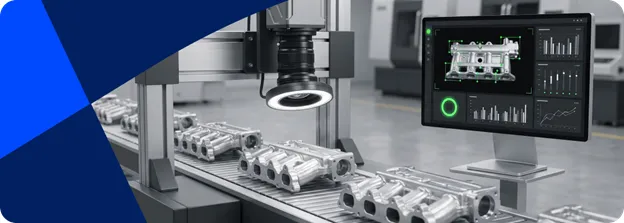
Computer vision allows AI systems to examine production-line images. Models can detect possible surface defects, misplaced components, or other visible inconsistencies.
For example, cameras can capture images of automotive parts as they move through production. AI can flag potentially defective parts so quality specialists can review them.
Forecasting Demand
Manufacturers need to balance production capacity with changing customer demand. Machine learning can analyze sales history, inventory information, seasonal patterns, and production data to generate forecasts.
Operations teams can use these forecasts while reviewing production and inventory plans.
AI-Powered Automation
AI can also assist with business processes that involve repetitive information handling.
Supplier invoice processing is one example. An AI workflow can extract relevant fields, classify documents, match information with purchase orders, and send exceptions to employees for review.
Data Is the Foundation
AI cannot provide reliable results without suitable data. Manufacturing organizations often have disconnected information sources.
Data engineering helps integrate databases, machines, IoT systems, ERP platforms, and quality applications. It can also create pipelines that make information available to AI applications in a controlled way.
Expanding Into Enterprise AI
Enterprise AI can combine machine learning with LLMs, RAG, computer vision, AI agents, and automation.
For example, an AI application could combine equipment information, maintenance history, and technical documentation to help a maintenance employee investigate an issue and locate relevant procedures.
MLOps supports the operational side of these systems through deployment, monitoring, versioning, and lifecycle management.
As manufacturers build this foundation, AI can become part of broader workflows across production, maintenance, quality, procurement, operations, and supply chain management.
Reference Blog: https://iconflux.com/blog/how-artificial-intelligence-and-machine-learning-are-used-in-manufacturing

























Sign in to leave a comment.